Rain pouring down, your favorite playlist humming through the speakers, and that impossibly tight parking spot staring back at you like a challenge. Now imagine stepping out of your car, tapping your phone, and watching your vehicle glide into that space like a choreographed dance. No sweating. No three point turns. No embarrassing bumper taps.
Welcome to the era where cars have learned to park themselves, and honestly, they might be better at it than most of us.
Self-parking technology isn’t some futuristic fantasy anymore. It’s here, it’s real, and it’s making parallel parking look like child’s play. But what’s actually happening under the hood? What kind of tech wizardry turns your regular ride into a parking pro? Buckle up because we’re diving deep into the sensors, software, and seriously cool innovations that make autonomous parking possible.
The Magic Behind Those Perfect Parking Jobs
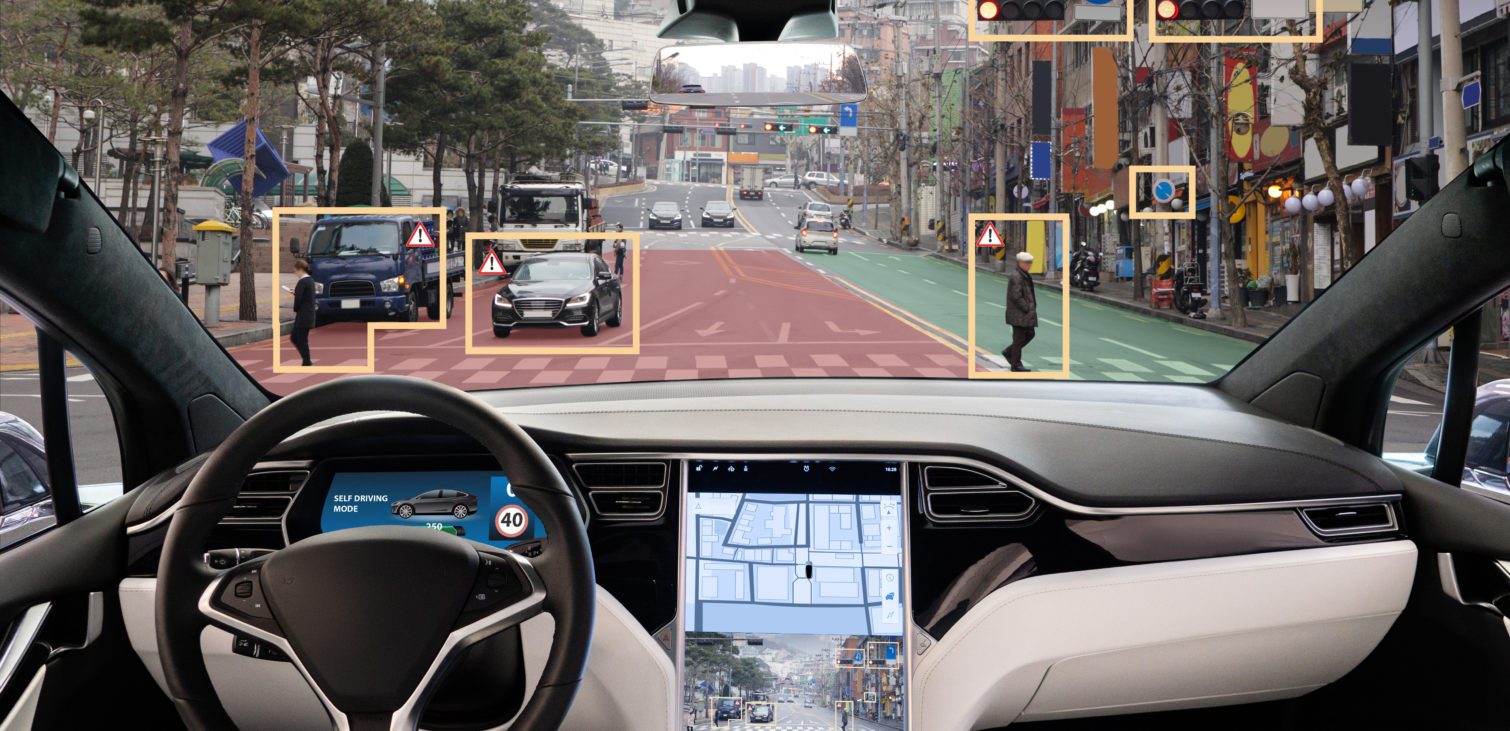
Self-parking modules rely on a symphony of sensors working together. Think of it as your car developing eyes, ears, and a surprisingly good sense of spatial awareness. These systems combine ultrasonic sensors, cameras, radar, and sometimes even LiDAR to create a complete picture of the surrounding environment.
Ultrasonic sensors are the workhorses here. Positioned around the bumpers, these little devices send out sound waves that bounce off nearby objects. When the waves return, the sensor calculates distance with impressive accuracy. Some systems use twelve or more sensors scattered around the vehicle to cover every blind spot. The refresh rate is lightning fast too, updating multiple times per second to track moving obstacles.
Cameras add visual context that sensors alone can’t provide. Wide angle lenses mounted on the front, rear, and sides capture overlapping views. Advanced image processing stitches these feeds together into a bird’s eye view, showing the car’s position relative to parking lines, curbs, and other vehicles. The software can even identify parking space markings and determine if a spot is big enough before attempting to park.
Radar takes things up another notch. Operating on electromagnetic waves, radar penetrates through fog, rain, and darkness where cameras might struggle. It excels at detecting movement and measuring velocity, which helps the system predict where other cars or pedestrians might be heading. Some premium systems layer short range and long range radar for comprehensive coverage.
Then there’s LiDAR, the tech that sounds like something from a sci-fi movie. Light Detection and Ranging shoots out laser beams and measures how long they take to bounce back. The result? A detailed three dimensional map of everything around the vehicle. LiDAR can spot a soda can from several meters away and create precise depth maps that other sensors simply can’t match.
From Sensors to Steering: How the System Takes Control
Collecting data is only half the battle. The real magic happens when sophisticated algorithms process all that sensor information and make split second decisions. Modern self-parking systems use machine learning models trained on millions of parking scenarios. These neural networks have seen it all: tight spots between SUVs, angled parking, parallel parking on hills, spaces with shopping carts lurking nearby.
The processing unit, often called the domain controller, acts like the car’s brain. It receives input from every sensor, fuses the data into a coherent understanding of the environment, and plans the optimal parking trajectory. This isn’t simple geometry. The software accounts for the vehicle’s turning radius, wheelbase, approach angle, and even factors like steering response time.
Once the system identifies a suitable parking space, it calculates the perfect path. For parallel parking, this usually involves positioning the car alongside the space, reversing at a specific angle while rotating the steering wheel, then straightening out at precisely the right moment. The whole sequence happens in smooth, continuous motion that would make a driving instructor proud.
Electronic power steering makes the actual maneuvering possible. The system sends commands directly to the steering motor, executing turns with mechanical precision. Meanwhile, the brake and accelerator are controlled through the existing drive by wire systems found in modern vehicles. Everything coordinates seamlessly, with the parking module essentially becoming a temporary pilot.
Safety layers run throughout the entire process. If a sensor detects an unexpected obstacle, the system halts immediately. Most implementations require the driver to keep their foot near the brake pedal, ready to intervene. Some advanced systems even have redundant sensor arrays, so if one fails, backups maintain coverage. The goal isn’t just successful parking but safe parking every single time.
Different Flavors of Self-Parking Tech
Not all self-parking systems are created equal. The automotive industry has developed several approaches, each with unique strengths and quirks.
Park Assist represents the entry level option. The car handles steering while the driver controls speed with the brake and accelerator. It’s like having a really skilled co-pilot who says “I’ll turn the wheel, you just back up slowly.” This semi-autonomous approach builds driver confidence while maintaining hands on involvement. Many mainstream vehicles now include this feature as standard equipment.
Fully Automated Park Assist takes things further. The driver simply selects the parking space and confirms, then the system manages everything: steering, acceleration, braking, gear shifts. Some versions let drivers exit the vehicle first, standing safely on the sidewalk while their car tucks itself into a spot. It feels almost surreal watching your car operate without anyone inside.
Remote Park Assist pushes boundaries even more. Using a smartphone app or key fob, drivers can command their vehicle to park from outside. This is incredibly useful for narrow garages where opening doors becomes impossible once parked. The car creeps forward or backward slowly while the driver monitors progress on their phone screen. Range limits typically keep the driver within a few meters, ensuring they can intervene if needed.
Valet Parking Systems represent the cutting edge. These operate in controlled environments like parking garages equipped with special infrastructure. The car drives itself from drop off point to available space, navigating ramps and levels autonomously. When summoned via app, it returns to pick up the owner. Several airports and shopping centers are testing these systems right now, and early results look promising.
The Brains: Software and AI Doing the Heavy Lifting
Hardware gets lots of attention, but software is where self-parking truly comes alive. Modern systems employ multiple layers of artificial intelligence working in concert.
Computer vision algorithms process camera feeds in real time. They identify lane markings, parking space boundaries, other vehicles, pedestrians, and obstacles. Convolutional neural networks, trained on diverse datasets, excel at recognizing patterns even in challenging conditions like shadows, reflections, or partially obscured markings. The models continuously improve through updates pushed over the air.
Path planning algorithms determine the optimal route from current position to final parking spot. These use techniques from robotics like rapidly exploring random trees or optimization based methods. The software considers kinematic constraints (how the car actually moves) and ensures the planned path is smooth, efficient, and collision free. Multiple candidate paths might be evaluated before selecting the best one.
Sensor fusion represents perhaps the most critical software component. Data from ultrasonic sensors, cameras, radar, and LiDAR arrives at different rates and formats. Fusion algorithms merge everything into a unified environmental model, resolving conflicts and filling gaps. Kalman filters and Bayesian methods track object positions and predict movement. The fused output provides a reliable foundation for decision making.
Localization software figures out exactly where the car sits in space. GPS helps but lacks the centimeter level precision needed for parking. Instead, systems use odometry (tracking wheel rotation), inertial measurement units (detecting acceleration and rotation), and visual landmarks. By combining these inputs, the car knows its position accurately enough to thread through tight spaces.
Machine learning models handle edge cases and unusual scenarios. What if someone painted parking lines at a weird angle? What about a space with a motorcycle taking up half the area? Traditional rule based programming struggles with such variability, but neural networks trained on massive datasets adapt naturally. They’ve learned from countless real world examples and can generalize to new situations.
Real World Performance: When Self-Parking Shines (And When It Doesn’t)
Self-parking technology performs impressively under the right conditions. Well marked parking lots with standard sized spaces? Piece of cake. Clear weather, good lighting, minimal traffic? The system handles it smoothly, often parking faster and more accurately than human drivers.
Parallel parking on city streets showcases the tech at its best. The car judges the space size, positions itself perfectly, and executes the maneuver in one fluid motion. No awkward repositioning, no curb scraping, no holding up traffic. Drivers report feeling genuine relief watching their vehicle nail a tricky parallel park that would have stressed them out.
Perpendicular parking in garages works wonderfully too. The system centers the car between the lines with mechanical precision. No more returning to find your vehicle crooked or too close to one side. Passengers can actually open their doors without squeezing through gaps.
However, the tech does have limits. Heavy rain or snow can interfere with sensor performance. Camera lenses get dirty or fogged up. Ultrasonic sensors might misread water puddles as obstacles. Most systems either disable themselves in bad weather or throw up warning messages urging extra caution.
Unconventional parking situations confuse the algorithms. Spaces without clear markings, oddly angled spots, or areas with unusual obstacles can stump the system. Some implementations refuse to park if confidence levels drop too low, which is actually smart programming but frustrating when you know a space is viable.
Pedestrians and cyclists add complexity. The system will stop if someone walks behind the car, which is safe but can prolong parking time in busy areas. False positives happen too, where shadows or reflections trigger unnecessary stops. Engineers continuously refine the algorithms to distinguish real hazards from benign visual noise.
Battery drain concerns some electric vehicle owners. Running all those sensors and processors consumes power. While the impact per parking session is minimal, frequent use throughout the day adds up. Manufacturers optimize energy efficiency, but it remains a consideration for range conscious drivers.
The Safety Question Everyone’s Asking
Anytime computers take control of vehicles, safety becomes paramount. Self-parking systems incorporate multiple protective measures to prevent accidents and give drivers peace of mind.
Redundant sensors provide backup coverage. If one ultrasonic sensor fails, others compensate. Camera systems often have overlapping fields of view. This redundancy ensures a single component failure doesn’t leave blind spots.
Conservative operating speeds keep kinetic energy low. Most self-parking systems limit speeds to walking pace or slower. At these speeds, even if something goes wrong, the consequences stay minimal. The car can stop within centimeters, and any contact would be a gentle tap rather than a damaging collision.
Emergency stop capabilities remain active throughout the parking process. Drivers can override the system instantly by pressing the brake, grabbing the steering wheel, or hitting a dedicated stop button. The vehicle immediately halts all autonomous control and returns to manual operation. This fail safe ensures humans always have the final say.
Regulatory testing and validation put systems through rigorous scenarios before they reach consumers. Engineers simulate thousands of parking situations, including edge cases and failure modes. Vehicles must demonstrate consistent safe operation across temperature extremes, various weather conditions, and diverse parking environments.
Real world data collection helps identify and fix issues. When equipped vehicles encounter problems, anonymized logs often get transmitted to manufacturers. Engineers analyze these incidents, update software, and push improvements to the fleet. This continuous learning cycle steadily enhances safety and performance.
What’s Coming Next: The Future Is Wild
Current self-parking tech is impressive, but what’s brewing in automotive labs looks absolutely bonkers. Developers are pushing boundaries in ways that’ll make today’s systems seem basic.
Fully autonomous parking garages are under development. Imagine driving to a garage entrance, hopping out, and walking away while your car navigates multiple levels, finds an open spot, and parks itself perfectly. When you return hours later, you summon it via app, and it drives back to meet you at the exit. No wasted time circling for parking, no stress about remembering which level you’re on.
Vehicle to infrastructure communication will transform parking. Smart parking lots will broadcast real time information about available spaces directly to approaching cars. The self-parking system could reserve a spot before arrival, plan the optimal route through the garage, and coordinate with other autonomous vehicles to avoid conflicts. This networked approach maximizes efficiency and minimizes delays.
Predictive parking using AI and big data sounds like science fiction but is actively in development. Systems will learn your habits and preferences. They’ll know you usually park near elevators, prefer end spots for easier door opening, or avoid tight spaces. As you approach your destination, the car could pre-select ideal parking options based on your history and current conditions.
Self-charging integration for electric vehicles presents exciting possibilities. Parking spots equipped with wireless charging pads could automatically begin charging once the car parks itself. The vehicle positions precisely over the charging coil, optimizes its orientation, and starts replenishing the battery. No plugging in cables, no forgetting to charge overnight.
Collaborative parking where multiple autonomous vehicles coordinate their parking could revolutionize space utilization. Cars could park bumper to bumper without leaving access gaps since they can move themselves when needed. Parking density could increase significantly while still providing convenient retrieval when owners return.
Enhanced personalization will tailor the parking experience to individual preferences. Some people want the quickest possible parking, while others prioritize finding shade or covered spots. Future systems might let users adjust parameters like parking speed, distance preferences, or willingness to accept tight spaces. The car adapts its behavior to match what the driver values most.
The Tech That Makes It All Possible
Understanding the specific technologies powering self-parking helps appreciate the engineering brilliance involved. Each component plays a crucial role in the overall system.
Ultrasonic sensors operate in the 40 to 50 kilohertz range, well above human hearing. They’re affordable, reliable, and effective at short ranges up to a few meters. Modern versions have improved resolution and can distinguish between different materials based on echo characteristics. Some advanced sensors use multiple frequencies to enhance accuracy.
Camera technology has evolved dramatically. Fish-eye lenses provide near 180 degree views with minimal blind spots. Image sensors now handle high dynamic range, capturing detail in both bright sunlight and dark shadows simultaneously. Resolution has increased to the point where software can read parking space numbers and detect small obstacles like parking stops.
Radar systems in parking applications typically use 24 gigahertz or 77 to 79 gigahertz frequencies. These millimeter wave radars can measure both distance and velocity using Doppler shift. Advanced implementations use MIMO (multiple input multiple output) antenna arrays to create high resolution imaging radar that rivals LiDAR in some aspects.
LiDAR units designed for automotive use have become more compact and affordable. Solid state LiDAR eliminates moving parts, improving reliability and reducing cost. Some systems use 905 nanometer lasers, while others employ 1550 nanometer wavelengths that are safer for human eyes. Point cloud processing algorithms extract meaningful information from the millions of data points generated each second.
Electronic control units process sensor data using powerful processors. Many systems now use system on chip designs that integrate CPU, GPU, and specialized AI accelerators. These chips handle complex neural network inference in real time while consuming minimal power. Over the air update capability ensures the software stays current with the latest improvements.
Actuators translate computer commands into physical action. Electric power steering motors provide precise control over wheel angle. Brake by wire systems modulate stopping force electronically. Electronic throttle control adjusts engine power or electric motor torque. The coordination between these systems must be flawless to achieve smooth, natural feeling automation.
Real Talk: What Drivers Actually Experience
The experience of using self-parking varies across different implementations, but common themes emerge from driver feedback. First time users almost universally report amazement mixed with nervousness. Watching the steering wheel turn on its own triggers a primal “this is weird” reaction even when intellectually knowing the tech is safe.
The learning curve tends to be short. After a few successful parking sessions, confidence builds rapidly. Drivers start trusting the system and appreciating how it handles situations they’d find stressful. The anxiety of parallel parking in traffic evaporates when the car does the hard work.
Some drivers become dependent on the feature, admittedly losing their manual parking skills through disuse. Others view it as a convenience for difficult situations but continue parking manually when conditions are easy. There’s no right answer; it comes down to personal preference and comfort level.
Limitations become apparent quickly. Drivers learn which scenarios work well and which don’t. They develop intuition for when to let the system take over versus when manual control makes more sense. This adaptive use pattern suggests the technology augments rather than replaces human judgment.
Social reactions add an unexpected dimension. Passengers often react with surprise or delight watching the car park itself. Bystanders sometimes stop to watch, curious about the technology. A few drivers report feeling self-conscious when the system takes longer than expected, aware that others are waiting and watching.
The Economics: Is Self-Parking Worth the Price?
Self-parking technology adds cost to vehicles, and shoppers naturally wonder if the benefits justify the expense. The answer depends on individual circumstances and priorities.
Entry level park assist on mainstream vehicles might add a few hundred dollars to the sticker price, often bundled with other driver assistance features. This represents reasonable value for drivers who park frequently in challenging situations. The stress reduction and time savings accumulate over ownership.
Premium fully automated systems appearing in luxury vehicles carry steeper price tags, sometimes thousands of dollars as part of advanced technology packages. Early adopters and tech enthusiasts see this as worthwhile, enjoying cutting edge capabilities and the convenience of hands free parking. More practical buyers might question whether the premium justifies occasional use.
Insurance implications remain unclear. Some insurers offer small discounts for vehicles equipped with advanced driver assistance systems, recognizing potential safety benefits. Others haven’t yet adjusted rates to account for self-parking technology. As data accumulates showing reduced parking related accidents, premium reductions might become standard.
Resale value considerations factor into the equation. Vehicles with popular technology features often retain value better than stripped down models. Self-parking could appeal to used car buyers seeking modern conveniences, potentially offsetting the initial cost through stronger resale prices.
Maintenance costs for self-parking systems are generally low. Sensors are solid state with no moving parts to wear out. Software updates happen over the air at no charge. Occasional sensor cleaning might be necessary, and damage from minor collisions could require expensive repairs since sensors and cameras integrate into bumpers and mirrors.
Challenges and Controversies Worth Noting
Despite impressive capabilities, self-parking technology faces legitimate criticisms and ongoing challenges that deserve acknowledgment.
Over reliance on automation worries some safety advocates. If drivers become too dependent on self-parking, their manual skills might atrophy. In situations where the system fails or isn’t available, would they struggle to park competently? This concern applies across all driver assistance technologies.
Cybersecurity presents real risks. Self-parking systems connect to vehicle networks and often communicate wirelessly. Security researchers have demonstrated vulnerabilities in some implementations, though manufacturers rapidly patch discovered flaws. As connectivity increases, protecting against hacking becomes increasingly critical.
Liability questions arise when automated systems cause accidents. If a self-parking car damages another vehicle, who’s responsible? The driver who activated the system? The manufacturer whose software made a mistake? Insurance companies and legal systems are still working through these scenarios.
Accessibility benefits and limitations create mixed outcomes. Self-parking helps people with limited mobility or physical disabilities park more easily. However, current systems often require drivers to remain in the vehicle during parking, limiting usefulness for those who most need assistance. Remote parking features address this but aren’t yet widely available.
Environmental impact from increased sensor and computing demands is minimal but non-zero. Manufacturing sensors requires materials and energy. Running processors consumes battery power in electric vehicles. These impacts pale compared to overall vehicle operation, but perfectionist critics note them nonetheless.
How Self-Parking Fits Into Bigger Autonomous Driving
Self-parking represents a stepping stone toward fully autonomous vehicles. The technologies and lessons learned directly feed into broader autonomy efforts.
Parking is actually one of the easier autonomous driving tasks. It happens at low speeds in relatively controlled environments. Success here builds confidence in sensors, software, and safety systems that will scale to highway autonomy. Every self-parking vehicle on the road serves as a testing platform, gathering data and validating approaches.
Regulatory acceptance of self-parking helps pave the way for broader automation. Governments and safety agencies have approved these systems after extensive testing. This regulatory familiarity makes future approvals for higher levels of autonomy potentially smoother.
Consumer acceptance follows similar patterns. Drivers who trust their car to park itself become more open to additional autonomous features. Adaptive cruise control, lane keeping assistance, and eventually hands free highway driving feel like natural progressions rather than scary leaps.
Technical building blocks developed for parking translate directly to other autonomous functions. Sensor fusion algorithms, path planning software, and safety validation processes apply across autonomy levels. Engineers leverage these foundational technologies, accelerating development timelines.
Share This If Your Car Is Smarter Than Your Last Date
The revolution happening in parking lots worldwide is just getting started. What seemed impossible a decade ago is now standard equipment on many vehicles. The sensors watching your bumper, the algorithms planning perfect paths, the actuators executing flawless maneuvers collectively represent human ingenuity at its finest.
Self-parking technology demonstrates that autonomous driving isn’t some distant dream. It’s here now, working reliably, making life easier for millions of drivers every day. The systems will only get better, smarter, and more capable as development continues.
Next time you watch a car glide smoothly into a tight parking space without anyone touching the wheel, remember the wild tech making it possible. Those sensors reading the environment dozens of times per second. That software processing terabytes of data. Those actuators responding with mechanical precision. It’s all working together in beautiful harmony.
Whether you’re a tech enthusiast excited about the future or a practical driver seeking convenience, self-parking represents the kind of innovation that genuinely improves daily life. Not flashy, not revolutionary, just solidly useful technology doing its job well.
The parking lots of tomorrow will look nothing like today. Cars will coordinate their movements, optimize space usage, and make finding a spot completely painless. Self-parking is the first chapter in that story, and it’s already amazing to watch unfold.
Now over to you: Have you tried self-parking tech yet? Drop a comment below sharing your experience. Was it smooth sailing or did something weird happen? Let’s talk about it. And hey, if you found this deep dive interesting, share it with someone who still thinks parallel parking is hard. Tag them right now. They need to know their car could be doing that for them.