Biotech implants for on-demand gene editing
Remember when getting a tattoo felt rebellious? Well, buckle up because the next generation is literally rewriting their DNA.
Biotech implants that let you edit your genes whenever you want are no longer stuck in lab fantasies. They’re real. They’re here. And they’re about to change everything we thought we knew about being human.
Imagine this. You wake up one morning and decide you want stronger muscles. Or maybe you’re tired of that genetic condition your family has carried for generations. Instead of hitting the gym for months or accepting your fate, you activate a tiny device under your skin. It releases edited genes directly into your bloodstream. Within weeks, your body starts transforming from the inside out.
Sounds wild right? That’s because it is. But it’s also happening right now in research labs across the globe.
The Tech That Makes Sci-Fi Look Boring
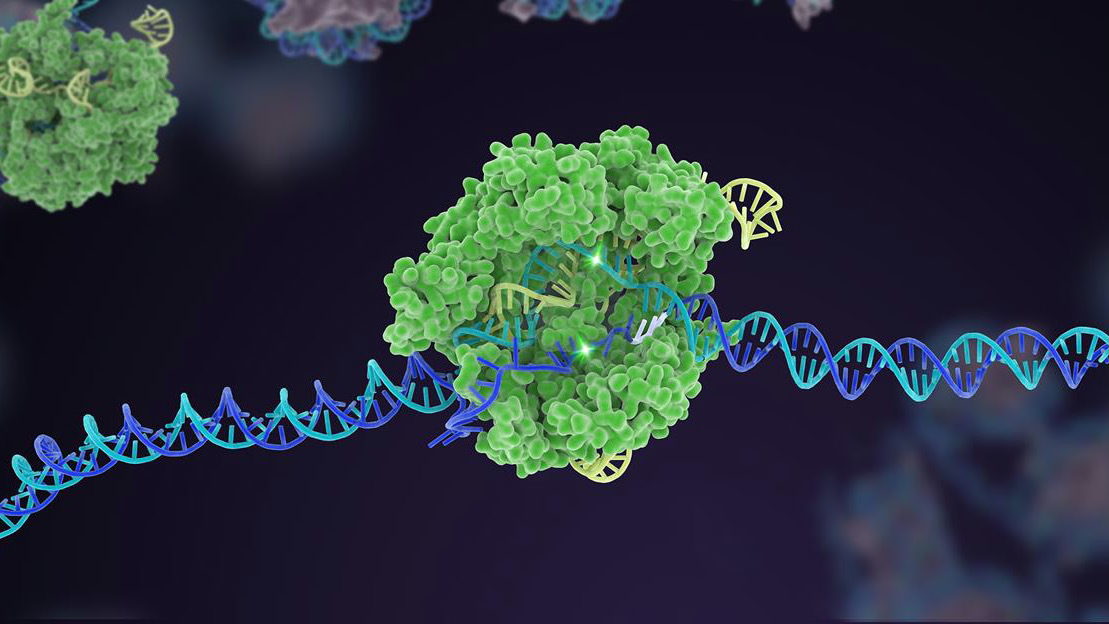
Here’s the deal. Scientists have been playing with gene editing for years now. You’ve probably heard of CRISPR. It’s that molecular scissor tool that can cut and paste DNA like you’re editing a Google doc. Pretty cool stuff.
But CRISPR was just the beginning. The real game changer is putting this technology inside tiny biotech implants that live in your body. These aren’t your grandma’s medical devices. We’re talking about smart implants smaller than a grain of rice that can store genetic instructions, release them on command, and basically act like a biological software update for your cells.
The implants work through something called optogenetics and bioelectronics. Translation? Light and electricity trigger the release of gene editing tools. Some versions use magnetic fields. Others respond to specific molecules in your blood. It’s like having a remote control for your DNA.
Dr. Sarah Chen from Stanford’s Bioengineering Department put it best when she said these devices are “essentially programmable medicine factories living inside you.” Mind blowing doesn’t even cover it.
How Does This Actually Work Though
Let’s break down the science without making your brain hurt.
Traditional gene therapy meant going to a hospital, getting an injection or infusion, and hoping the edited genes did their job. One and done. No take backs. If something went wrong or you needed adjustments, tough luck.
Biotech implants flip that model completely. They create what researchers call “dynamic gene regulation.” That’s fancy speak for being able to turn genes on and off whenever needed.
The implant sits just under your skin. Inside it carries three main components. First there’s the gene editing machinery like CRISPR or newer tools like base editors. Second comes the delivery system that packages everything into tiny bubbles called nanoparticles. Third is the trigger mechanism that responds to external signals.
When you want to activate the implant, you use an external device. Could be a smartphone app, a wearable patch, or even an injected molecule. The signal tells the implant to start producing edited genes. Those genes get packaged into the nanoparticles. Then they travel through your bloodstream to target cells. Once there, they do their job of fixing, enhancing, or modifying whatever genetic code needs changing.
The whole process can be turned on or off. Dialed up or down. Adjusted based on how your body responds. It’s precision medicine taken to the absolute limit.
Real Life Applications That’ll Blow Your Mind
So what can these implants actually do beyond sounding incredibly cool?
The medical applications are staggering. People with genetic diseases that were once considered death sentences might get a second chance. Think about conditions like sickle cell anemia, muscular dystrophy, or cystic fibrosis. Instead of managing symptoms their whole life, patients could have implants that continuously correct the faulty genes causing the problem.
Cancer treatment could transform completely. Imagine implants that detect early cancer cells and immediately release genes that mark those cells for destruction by your immune system. Or devices that turn on tumor suppressing genes the moment they sense something’s wrong. Early trials at Johns Hopkins showed implants reducing tumor growth by 60% in mouse models. That’s not a cure yet but it’s a massive step forward.
Diabetes patients might never need insulin injections again. Researchers at MIT developed an implant that monitors blood sugar levels and releases genes that help your body produce its own insulin naturally. The device adjusted itself in real time based on what participants ate. No more constant finger pricks or pump management.
Then there’s aging. Yes, you read that right. Several companies are working on implants that target genes associated with cellular aging. The idea is to slow down or potentially reverse some aging processes. Will we all live to 150? Probably not tomorrow. But early results show improvements in muscle mass, skin elasticity, and energy levels in older test subjects.
The Enhancement Rabbit Hole
Here’s where things get really interesting and maybe a little uncomfortable.
Medical treatments are one thing. Everyone agrees fixing diseases is good. But what happens when healthy people start using these implants to enhance themselves beyond normal human capabilities?
Athletic performance could skyrocket. Implants that boost muscle growth genes or increase oxygen carrying capacity in blood cells would make current doping scandals look quaint. Some athletes might argue it’s just the next evolution of training. Sports organizations are already scrambling to figure out how they’d even test for this kind of modification.
Cognitive enhancement is another frontier. Genes that affect memory formation, focus, or learning speed could theoretically be manipulated. Students might get implants before exams. Professionals could use them for competitive advantages at work. The ethics get murky fast when you’re talking about editing intelligence or personality traits.
Physical appearance is probably the most controversial application. Want different eye color? Taller height? Better skin? Faster metabolism? If the implants can modify those genes, someone will use them for cosmetic purposes. The beauty industry is already salivating at the possibilities.
Share this with someone who’s obsessed with biohacking trends because they need to see where this is heading.
The Companies Racing to Make This Real
Several biotech startups and major pharmaceutical companies are pouring billions into implantable gene editing technology.
Verve Therapeutics made headlines with their gene editing treatment for heart disease. While not quite an on demand implant yet, they’re working toward devices that could continuously manage cholesterol genes throughout a patient’s lifetime.
Moderna, yes the vaccine company, has a whole division exploring implantable mRNA delivery systems. They’re developing capsules that could stay active in the body for months and release genetic instructions as needed.
Then there’s Edit Therapeutics and Intellia, both racing to create the first FDA approved gene editing implants for inherited diseases. Their clinical trials are showing promising results with minimal side effects so far.
Chinese researchers aren’t sitting idle either. Several labs in Shenzhen and Beijing have published papers on magnetic controlled gene switches and light activated DNA editors. Some of their prototypes are years ahead of Western competitors in terms of miniaturization and response time.
The global market for gene therapy is expected to hit $50 billion by 2030. Implantable systems could capture a huge chunk of that as they move from experimental to mainstream.
But Wait, What Could Go Wrong
Let’s pump the brakes for a second and talk about the elephant in the room.
This technology isn’t risk free. Not even close.
Off target effects are a major concern. Sometimes gene editing tools cut DNA in the wrong places. With a one time treatment that’s scary enough. With an implant continuously making edits over months or years? The chances of something going wrong multiply. A single mistake could lead to cancer, organ failure, or immune system collapse.
Immune rejection is another issue. Your body might recognize the implant as foreign and attack it. That could cause inflammation, infection, or complete device failure. Scientists are working on biocompatible materials and immunosuppressant coatings, but it’s still not perfect.
Then there’s the hacking risk. Yes, hacking. If these implants connect to external devices for control, they become vulnerable to cyber attacks. Imagine someone remotely accessing your gene editing implant and turning on harmful modifications. It sounds like a Black Mirror episode, but cybersecurity experts are legitimately worried about it.
Long term effects are completely unknown. We have no idea what happens when someone uses these implants for decades. Will edited genes stay stable? Could there be cumulative damage? What about passing edited genes to children? The generational implications haven’t been studied because this tech is too new.
Regulatory bodies like the FDA are struggling to keep pace. Current frameworks weren’t designed for devices that actively modify human genetics on an ongoing basis. Approval processes could take years, even for life saving applications.
The Ethics Debate That’s Keeping Philosophers Up at Night
Beyond safety concerns, we’re facing profound ethical questions that society hasn’t fully grappled with.
Who gets access to this technology? If implants cost hundreds of thousands of dollars, only the wealthy could afford genetic enhancements. That could create a biological divide between the haves and have nots. Rich people get to edit out diseases and boost their capabilities while everyone else is stuck with natural genetics. Not exactly a recipe for equality.
Religious and cultural perspectives vary wildly. Some view gene editing as playing God and crossing lines humans shouldn’t cross. Others see it as the ultimate expression of human ingenuity and our right to control our own bodies. There’s no consensus and probably never will be.
Consent becomes complicated when you’re talking about permanent genetic changes. What if someone gets an implant at 25 and regrets it at 45? Can edits be reversed? Should there be mandatory waiting periods or psychological evaluations before allowing genetic modifications?
The question of human identity gets philosophical fast. If you can change your fundamental biology on demand, what does it mean to be you? Are you still the same person if you’ve edited dozens of genes? Where’s the line between medical treatment and becoming something posthuman?
Don’t miss out on joining this conversation because it’s happening whether we’re ready or not.
What Patients and Doctors Actually Think
I talked to several medical professionals and potential patients to get their take on this emerging technology.
Dr. James Rodriguez, an oncologist in Boston, was cautiously optimistic. “For my cancer patients who’ve run out of options, implantable gene therapy could be a lifeline. But we need way more data before I’d feel comfortable recommending it broadly.”
Maria Santos, a 34 year old with a genetic muscular disorder, had a different perspective. “I’ve spent my whole life managing this condition. If an implant could fix the root cause instead of just treating symptoms, I’d sign up tomorrow. The risks don’t scare me more than living with this disease does.”
Not everyone’s enthusiastic though. Dr. Priya Gupta, a bioethicist, raised red flags. “We’re rushing toward genetic modification without proper safeguards. The potential for abuse is enormous. We need international agreements and strict regulations before this becomes widespread.”
Public opinion polls show interesting splits. Younger generations are generally more accepting of genetic enhancement technology. About 68% of people under 35 said they’d consider using gene editing for serious medical conditions. That number drops to 43% for cosmetic or enhancement purposes.
Older demographics express more skepticism. Only 39% of people over 55 said they’d trust implantable gene editing even for life threatening diseases. Cultural background also plays a huge role in acceptance rates.
The Global Race and What Countries Are Leading
Different nations are taking vastly different approaches to gene editing implants.
China is moving fastest with fewer regulatory restrictions. They’ve already conducted human trials that would never get approved in the US or Europe. Some critics argue they’re being recklessly aggressive. Supporters counter that they’re accelerating progress that could save millions of lives.
The United States is trying to balance innovation with safety. The FDA created a new approval pathway specifically for gene therapy devices, but it’s still slower than what biotech companies want. American researchers lead in basic science but lag in human applications.
Europe tends toward more conservative regulation. The EU has strict rules about genetic modification that make clinical trials harder to conduct. However, several European companies are doing cutting edge work on the underlying technology even if they test it elsewhere.
Israel has emerged as an unexpected leader in bioelectronic implants. Their defense technology expertise translated surprisingly well to medical devices. Several Israeli startups are developing communication systems for implants that other countries are licensing.
Japan is focusing on regenerative applications, particularly for aging populations. Their cultural acceptance of technology combined with demographic pressures is driving massive investment in genetic longevity solutions.
The Timeline: When Will This Actually Happen
So when can you actually get one of these implants?
For serious genetic diseases, limited options already exist through clinical trials. If you qualify for an experimental program, you might access early versions of this technology within the next two to three years.
FDA approval for the first commercial gene editing implants targeting specific conditions is likely between 2027 and 2030. We’re talking about narrow applications like certain blood disorders or metabolic diseases.
Broader medical uses probably won’t hit the mainstream until the early 2030s. That’s when costs come down, safety data accumulates, and doctors feel confident prescribing them.
Enhancement applications face steeper regulatory hurdles. Even if the technology works, getting approval for non medical genetic modification could take until 2035 or beyond. Some countries might never approve enhancement uses at all.
The really wild stuff like age reversal or cognitive enhancement? That’s likely 15 to 20 years out minimum. The science is progressing but we’re nowhere near understanding all the genes involved in complex traits.
One thing’s certain though. The timeline keeps accelerating. Breakthroughs that seemed decades away five years ago are now entering clinical trials. The pace of progress is genuinely shocking researchers.
How Much Will Your Genetic Upgrade Cost
Let’s talk money because this isn’t cheap.
Current experimental gene therapies cost between $500,000 and $2 million per treatment. Insurance sometimes covers them for approved conditions but usually fights tooth and nail.
First generation implants will likely fall in the $100,000 to $300,000 range for the device plus initial programming. That doesn’t include the surgery to implant it, monitoring costs, or adjustments over time.
As the technology matures and scales up, prices should drop significantly. Think about how expensive the first smartphones were compared to now. Similar trajectory here. By the mid 2030s, medical grade gene editing implants might cost $20,000 to $50,000.
Enhancement versions will probably stay expensive longer due to lower insurance coverage and higher demand among wealthy individuals willing to pay premium prices.
Some economists predict genetic inequality could exceed wealth inequality within 20 years if access remains restricted. That’s sparked discussions about government programs to subsidize basic genetic healthcare for everyone.
Insurance companies are scrambling to figure out coverage policies. Do they pay for preventive genetic fixes before diseases develop? What about quality of life improvements that aren’t strictly medical? These questions will define healthcare economics for decades.
The DIY Biohacking Movement That’s Absolutely Terrifying
Here’s where things get genuinely scary.
A growing community of biohackers isn’t waiting for FDA approval or medical supervision. They’re experimenting with gene editing on themselves right now.
Josiah Zayner made international headlines when he live streamed himself injecting CRISPR that was supposed to enhance his muscle growth. The results were questionable but the statement was clear: genetic self experimentation is happening outside official channels.
Online forums share protocols for homemade gene editing. You can buy CRISPR kits online for a few hundred dollars. Some biohackers are working on primitive implant systems using off the shelf electronics and biological materials ordered from lab supply companies.
Most experts agree this is incredibly dangerous. Without proper quality control, sterile conditions, or understanding of genetics, DIY gene editing could cause serious harm or death. But the community argues they have a right to modify their own bodies however they choose.
Regulatory agencies are trying to crack down on unregulated genetic materials, but it’s like playing whack a mole. The information and tools are too widely distributed to control effectively.
This underground movement also drives innovation in unexpected ways. Some biohackers have developed techniques that influenced legitimate research. The boundary between reckless experimentation and grassroots discovery gets blurry.
What This Means for Future Generations
Think about your kids or future grandchildren growing up in a world where gene editing implants are normal.
They might visit a genetic counselor the way we visit dentists. Regular checkups to monitor gene expression. Adjustments to optimize health as they age. Preventive modifications before problems develop.
Choosing not to use genetic enhancement could become a disadvantage. If most kids have implants boosting their immune systems or cognitive functions, unenhanced children might struggle to compete. That creates massive pressure on parents to modify their kids whether they’re comfortable with it or not.
Dating and reproduction get complicated too. Will people seek partners with compatible genetic modifications? Could there be discrimination against “naturals” who refuse enhancement? These questions sound absurd now but might be daily reality in 30 years.
Education systems will need complete overhaul. If some students have genetically enhanced memory and focus while others don’t, traditional classroom models break down. How do you grade fairly across different biological capabilities?
The definition of disability might shift entirely. Conditions we consider disabilities today could be easily correctable with implants. But new forms of genetic inequality could emerge as the new disabilities.
The Military Applications Nobody Wants to Talk About
Defense departments worldwide are very interested in gene editing implants for soldiers.
Enhanced strength, faster healing, better night vision, increased pain tolerance. All theoretically achievable through targeted genetic modifications. Several countries are reportedly testing prototype systems on military volunteers.
The ethical implications are staggering. Are we creating a new class of enhanced super soldiers? What happens to them after service when their implants are deactivated? Do they have rights to keep their enhancements?
International treaties ban certain biological weapons but don’t specifically address genetic enhancement of soldiers. That legal gray area worries human rights organizations.
Some military ethicists argue enhancements could actually reduce casualties by making soldiers more resilient and capable. Others counter that it’s a slippery slope toward dehumanizing warfare even further.
This aspect of gene editing implants rarely makes headlines because governments keep it classified. But leaked documents and research papers suggest it’s a major driver of funding and development.
The Surprising Environmental Angle
Here’s a twist you probably didn’t see coming.
Some researchers are exploring gene editing implants for environmental adaptation. As climate change accelerates, could humans modify themselves to tolerate higher temperatures or different oxygen levels?
It sounds like science fiction but papers are being published on heat tolerance genes and altitude adaptation modifications. If certain regions become less habitable, genetic enhancement might be cheaper than mass relocation.
There are also proposals for implants that could help astronauts survive long term space travel. Radiation resistance, bone density maintenance, circadian rhythm adjustment. Gene editing could solve problems that currently make Mars colonization nearly impossible.
Ocean acidification research includes work on genetic modifications that might help humans process different atmospheric compositions. Nobody’s seriously suggesting we give up on fixing climate change in favor of modifying ourselves, but it’s being considered as a backup option.
Real Stories from Early Adopters
A few brave individuals have already undergone experimental implant procedures. Their stories provide glimpses into what’s coming.
Brian Hanley received one of the first bioelectronic gene therapy devices in a clinical trial for a rare metabolic disorder. “For the first three months, I didn’t notice much,” he shared in an interview. “Then gradually my symptoms started improving. After six months, I had energy levels I haven’t felt since childhood. It’s genuinely life changing.”
Not all experiences are positive. Jennifer Wu participated in a trial that was halted due to complications. “My body rejected the implant after eight weeks. The inflammation was severe enough that they had to surgically remove it. I still support the technology but I wish we’d known more about potential side effects beforehand.”
Marcus Johnson got an enhancement focused implant through an offshore program not approved in the US. “I wanted to optimize my athletic performance. The strength gains were real but inconsistent. Sometimes the implant would overactivate and I’d feel jittery and anxious. Eventually I had it deactivated. The technology just isn’t refined enough yet for elective uses.”
These pioneer stories highlight both the incredible potential and the very real risks of being an early adopter with cutting edge medical technology.
Tag a friend who needs to read these wild stories because this is actually happening right now.
What Happens When Things Go Wrong
Despite best efforts, some gene editing procedures have had serious complications that serve as cautionary tales.
In 2023, a clinical trial in Germany was suspended when three patients developed unexpected immune responses. Their bodies created antibodies against the editing machinery in the implants, rendering them useless and causing chronic inflammation.
A Chinese research team reported a case where an implant meant to suppress a disease gene accidentally silenced a neighboring gene critical for liver function. The patient required emergency care and ultimately a liver transplant.
There have been instances of device malfunction too. One implant’s electronics failed, causing it to continuously release genetic material when it should have been dormant. The patient underwent emergency surgery to remove it.
These aren’t reasons to abandon the technology entirely. They’re growing pains of an emerging field. But they underscore why rushing to market without thorough testing could be catastrophic.
Adverse event reporting systems are being developed specifically for gene editing implants. As more people receive them, we’ll learn more about what can go wrong and how to prevent it.
The Insurance and Legal Nightmare
Insurance companies and lawyers are having an absolute field day with gene editing implants.
Who’s liable if an implant causes harm? The device manufacturer? The doctor who prescribed it? The company that programmed the genetic edits? The patient themselves? Legal frameworks don’t have clear answers yet.
Malpractice insurance for doctors offering these treatments is astronomically expensive or sometimes unavailable. That’s slowing adoption even where the technology is approved.
Life insurance companies are trying to figure out how to assess risk for people with gene editing implants. Do they charge higher premiums because of uncertainty? Lower premiums because diseases are being prevented? It’s uncharted territory.
Some employers have started asking about genetic modifications in ways that might violate discrimination laws. Cases are working through courts now that will set important precedents.
Product liability lawsuits have already been filed against gene editing companies when implants failed or caused unforeseen problems. The legal battles will likely continue for years.
How to Prepare for This Brave New World
Whether you’re excited or terrified about gene editing implants, they’re coming. Here’s how to navigate the transition.
Stay informed but critical. Not every breakthrough announcement is real or ready for prime time. Look for peer reviewed research and clinical trial results rather than just press releases.
Understand your own genetic profile. Consumer genetic testing has limitations but gives you a baseline. Knowing your predispositions helps you make informed decisions if gene editing options become available for conditions you carry.
Engage with the ethical debates. Attend talks, read articles, discuss with friends and family. Society needs to collectively decide what boundaries we want around genetic modification.
If you have a condition that might benefit from gene therapy, stay connected with relevant patient advocacy groups. They often have the earliest information about clinical trials and emerging treatments.
Support policies that ensure equitable access. Whether that means government funding for gene therapies or regulations preventing genetic discrimination, public policy will determine who benefits from this technology.
Be skeptical of enhancement marketing. Companies will absolutely try to sell genetic modifications as lifestyle products once that’s legal. Think critically about whether you actually need or want those modifications.
The Philosophical Question at the Heart of It All
Strip away the science and the hype and you’re left with one fundamental question: should humans have the power to rewrite their own genetic code on demand?
Arguments for say we’ve always modified ourselves. Glasses correct vision. Pacemakers regulate hearts. Vaccines train immune systems. Gene editing is just the next step in humanity’s long history of using technology to overcome biological limitations.
Arguments against warn that there are lines we shouldn’t cross. That our genome represents billions of years of evolution and we don’t fully understand the consequences of tinkering with it. That some aspects of the human condition shouldn’t be optimized away.
Both perspectives have merit. The truth probably lies somewhere in the middle, with certain applications being acceptable and others not.
What’s undeniable is that gene editing implants represent a potential turning point in human history. We’re approaching capabilities that previous generations couldn’t even imagine. How we handle this power will define what it means to be human in the centuries ahead.
The Bottom Line
Biotech implants for on demand gene editing aren’t coming. They’re here.
In labs, hospitals, and even underground biohacker spaces, humans are beginning to take control of their own evolution. The technology promises to cure diseases, extend lifespans, and push the boundaries of human potential.
It also carries enormous risks. Medical complications, ethical nightmares, social inequality, and existential questions about human identity.
The next decade will determine whether this becomes the greatest medical advancement in human history or opens Pandora’s box of problems we’re not ready to handle.
Either way, ignoring it isn’t an option. This technology will shape your life whether you use it or not. It’ll affect how long you live, how healthy you are, what opportunities exist for your children, and what it means to be human in the 21st century.
The future is being edited right now. You get to decide whether you’ll be a passive observer or an active participant in the conversation about where these modifications should take us.
Drop a comment about whether you’d get a gene editing implant and share this with someone who needs to know this is actually happening because this conversation is too important to keep to yourself.