The Future Just Knocked on Your Door (And It Can See AND Talk)
You walk into your kitchen half asleep at 6 AM. Before you even say good morning, your coffee maker has already spotted you through its tiny camera and heard your shuffle across the floor. It knows you look tired today. The coffee starts brewing darker than usual because last Tuesday you mentioned liking strong coffee when you’re exhausted.
Sound like science fiction? It’s happening right now.
Multimodal AI systems that process both voice and vision are no longer stuck in tech labs or billion dollar companies. They’re in your phone, your car, your doorbell, and soon they’ll be everywhere else you can imagine. This isn’t just another tech trend that’ll fizzle out in six months. This is the real deal that’s about to flip everything upside down.
What Even IS Multimodal AI (Without the Boring Tech Speak)
Let’s break it down super simple. You know how humans use multiple senses at once? You see someone’s face, hear their voice, and instantly know if they’re happy, sad, or lying through their teeth. That’s basically what multimodal AI does, except with computers.
Traditional AI was like a person with only one working sense. Voice assistants could hear you but couldn’t see what you’re pointing at. Image recognition could spot a cat in a photo but couldn’t tell you anything about it. Pretty limiting, right?
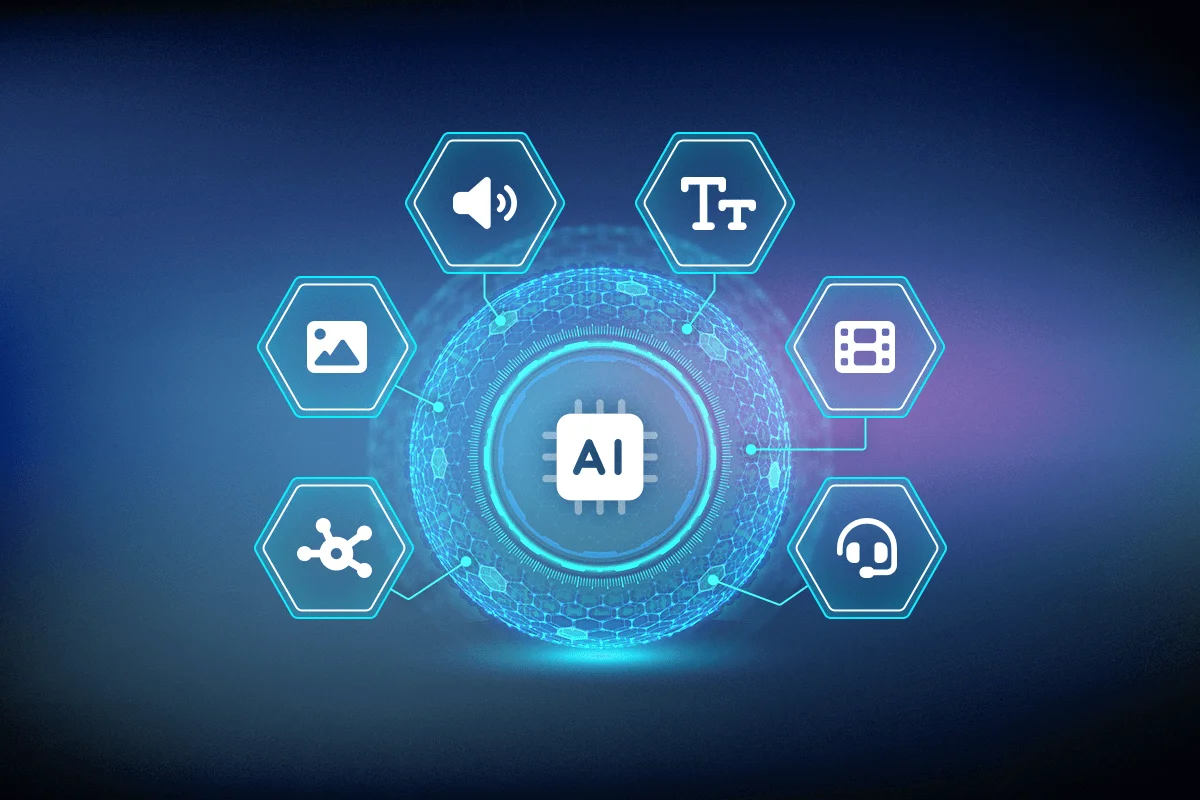
Multimodal AI smashes these limitations. It combines voice recognition with computer vision, sometimes throwing in text analysis and other data sources too. The result? Machines that understand context way better than ever before.
Think about asking your phone “What’s this?” while pointing your camera at a weird plant. The AI sees the plant through vision, hears your question through voice, understands what “this” means by connecting both inputs, and tells you it’s a rare orchid that needs watering twice a week. That’s the magic of multimodal processing.
The Wild Tech Behind the Scenes (Trust Us, It’s Cooler Than It Sounds)
Here’s where things get interesting. Making machines see and hear simultaneously isn’t like flipping a switch. It requires some seriously impressive engineering.
Vision Processing: The camera captures images or video at lightning speed. Neural networks analyze every pixel, identifying objects, faces, movements, and even emotions. Modern systems can spot a smile from across a crowded room or detect if you’re holding a coffee cup versus a phone.
Voice Recognition: Microphones pick up sound waves and convert them into digital signals. Advanced algorithms separate your voice from background noise, understand different accents, and even catch sarcasm sometimes. They’re getting scary good at this.
The Fusion Magic: This is where the real wizardry happens. The AI doesn’t just process voice and vision separately. It creates a unified understanding by merging both streams of information. When you say “Turn that off” while looking at a lamp, the system knows “that” means the lamp because it tracked your gaze direction.
The technology relies heavily on deep learning models trained on massive datasets. We’re talking millions of images paired with audio descriptions, videos with transcripts, and real world scenarios captured from every angle imaginable.
Share this with your tech obsessed friend who’s always talking about AI.
Why This Matters More Than Your Morning Coffee
You might be thinking “Cool tech, but why should I care?” Here’s why this revolution affects literally everyone.
Shopping Just Got Insanely Personal: Imagine walking into a store where AI cameras recognize you (with permission, hopefully) and voice assistants guide you to exactly what you need. “Hey, those jeans you liked last month just went on sale. They’re in aisle three, second rack on your left.” No more wandering around aimlessly for an hour.
Online shopping gets even wilder. Point your phone at your living room and say “I need a couch that fits here and matches my style.” The AI sees your space, understands your aesthetic from your voice description, and shows you perfect matches in real time with virtual placement. Some stores are already testing this.
Healthcare Revolution: Doctors using multimodal AI can analyze medical images while discussing symptoms with patients. The system listens to the conversation, examines X rays or MRI scans, and highlights potential concerns doctors might miss. Early detection rates for diseases are jumping up significantly.
Remote healthcare becomes actually useful. Instead of just describing your symptoms over a video call, the AI observes your physical condition through the camera while listening to your explanation. It can spot subtle signs like skin discoloration, unusual movements, or breathing patterns that indicate specific conditions.
Education Gets a Major Upgrade: Students learning complex subjects can now interact with AI tutors that watch their facial expressions and body language while listening to their questions. Confused about calculus? The AI notices your furrowed brow and frustrated tone, then adjusts its teaching approach instantly.
Language learning becomes way more natural. Practice conversations with AI that sees your gestures and hears your pronunciation, giving real time feedback on both. It’s like having a patient native speaker available 24/7.
Real World Examples That’ll Blow Your Mind
Let’s look at actual systems already changing the game.
Tesla’s Autopilot System: This beast combines cameras that see roads, other cars, pedestrians, and traffic signs with voice commands from drivers. Say “Take me home” while the car visually maps the route, monitors traffic, and adjusts driving behavior. The integration of visual data with voice control creates a surprisingly smooth experience.
Smart Home Security: New security systems don’t just record video anymore. They analyze who’s at your door through facial recognition while listening for sounds like breaking glass or shouting. If someone suspicious appears AND unusual sounds are detected, the AI confidence level shoots up and it alerts you immediately. False alarms drop dramatically.
Retail Analytics: Major stores use systems that track customer movements through vision while analyzing overhead conversations (anonymously). They learn which product displays attract attention, what people say about prices, and how long shoppers linger in different sections. This data reshapes store layouts and inventory decisions.
Medical Diagnostics: Certain hospitals deploy AI that examines skin conditions through high resolution cameras while asking patients targeted questions about symptoms. The combination of visual analysis and voice described medical history helps dermatologists catch melanoma earlier than traditional methods alone.
Don’t miss out on understanding the tech that’s reshaping your world right now.
The Challenges Nobody Talks About (But Totally Should)
Not everything is sunshine and roses in multimodal AI land. Some serious challenges need addressing before this technology reaches its full potential.
Privacy Concerns Are HUGE: When devices constantly watch and listen, privacy becomes a massive issue. Who owns the data? Where is it stored? Can companies sell your visual and audio information? These questions keep privacy advocates up at night. Recent surveys show 68% of people worry about AI surveillance even as they use smart devices daily.
The creep factor is real. Nobody wants their every movement tracked and every word recorded, even if it makes technology more convenient. Finding the balance between functionality and privacy remains one of the biggest hurdles.
Bias Problems Run Deep: AI systems learn from training data, and if that data contains biases, the AI inherits them. Facial recognition historically performs worse on darker skin tones. Voice recognition struggles with certain accents. When both systems combine, these biases can compound, creating seriously unfair outcomes.
Imagine a security system that’s less accurate at recognizing people of certain ethnicities or a voice assistant that barely understands non native English speakers. That’s not just annoying, it’s discriminatory and needs fixing urgently.
Technical Limitations Still Exist: Processing video and audio simultaneously requires immense computing power. Your phone might handle basic tasks fine, but complex multimodal AI often needs cloud processing, which means delays and internet dependency.
Battery drain is another issue. Running cameras and microphones constantly while performing heavy AI computations kills device batteries fast. Engineers are working on more efficient chips, but it’s an ongoing battle.
The Cost Factor: Developing and deploying multimodal AI systems isn’t cheap. High quality cameras, sensitive microphones, powerful processors, and sophisticated software all add up. This technology remains expensive for many businesses and consumers, though prices are dropping steadily.
Industries Getting Completely Transformed
The ripple effects of multimodal AI are touching practically every industry imaginable.
Automotive: Self driving cars depend entirely on multimodal processing. Cameras provide 360 degree vision while the system listens for sirens, honking, and other audio cues. The fusion of these inputs helps vehicles make split second decisions that keep passengers safe.
Car interiors are evolving too. Future vehicles will understand hand gestures, facial expressions, and voice commands simultaneously. Want the temperature lower? Just say it while glancing at the climate controls and the car handles the rest.
Entertainment: Streaming services are experimenting with multimodal interfaces that let you search by describing scenes or humming theme songs while the AI visually browses content. “Show me that movie with the guy in the red jacket running through Rome” actually works now.
Gaming experiences are reaching new levels. Games that watch your reactions and listen to your voice can adjust difficulty, pacing, and even storylines based on your emotional state. Horror games get genuinely scarier because they know when you’re already freaked out.
Manufacturing: Factory floors use AI vision to inspect products for defects while listening for unusual machine sounds that indicate maintenance needs. This dual monitoring catches problems human inspectors might miss and prevents costly breakdowns.
Quality control becomes almost foolproof. A system checking smartphones, for example, examines screens for visual defects while testing speaker quality through audio analysis, all in milliseconds.
Agriculture: Farmers deploy drones with cameras and microphones that survey crops from above. The AI spots plant diseases visually while listening for pest activity in the fields below. Early detection saves entire harvests and reduces pesticide use significantly.
Livestock monitoring gets smarter too. Systems watch animal behavior through cameras while listening for distress calls, illness indicators, or unusual activity patterns that signal problems before they become serious.
Share this article with anyone who thinks AI is just a buzzword.
The Social Media Explosion You Haven’t Noticed Yet
Social platforms are quietly integrating multimodal AI in ways that change how we interact online.
Content Moderation: Platforms now scan videos for problematic visual content while analyzing audio for hate speech or harassment simultaneously. This catches violations that text based filtering missed entirely. The systems understand context better by processing multiple data types at once.
Enhanced Accessibility: Multimodal AI creates automatic captions that actually make sense by watching videos and listening to audio together. It describes visual elements for blind users while transcribing dialogue for deaf users, making content accessible to everyone.
Augmented Reality Filters: Those fun face filters on Instagram and Snapchat? They’re multimodal AI in action. The technology tracks facial features through vision while sometimes responding to voice commands or sounds, creating interactive experiences that feel magical.
Live Translation: Streaming a video in another language? AI can now watch the video content for visual context while translating the audio in real time, producing subtitles that actually capture meaning instead of creating hilarious mistranslations.
What’s Coming Next (Spoiler: It’s Insane)
The future of multimodal AI looks absolutely wild based on current development trends.
Emotion Recognition Gets Real: Next generation systems will read micro expressions, voice tone, and body language simultaneously to understand human emotions with shocking accuracy. Imagine customer service AI that genuinely knows when you’re frustrated and adjusts its approach accordingly.
Holographic Interfaces: Combined voice and gesture control will power holographic displays that respond to natural human interaction. Think Tony Stark in Iron Man manipulating 3D projections through speech and hand movements. That’s closer to reality than most people realize.
Medical Diagnosis at Home: Future smartphones might analyze your appearance through the camera while you describe symptoms, providing preliminary medical assessments before you even visit a doctor. Early prototypes already detect conditions like anemia, jaundice, and some infections through visual cues.
Seamless Translation Everywhere: Real time translation glasses that see text and hear conversations, instantly converting everything to your language, will make international travel completely barrier free. The technology exists now but needs refinement for mass market use.
Predictive Assistance: AI that watches your activities and listens to your conversations (with permission) will anticipate your needs before you ask. Starting to cook dinner? The system might suggest recipes based on ingredients it sees in your fridge while offering to set timers as you mention them.
The Skills You Need for This AI Powered World
As multimodal AI becomes standard, certain skills will matter more than ever.
Digital Literacy: Understanding how these systems work, even at a basic level, becomes essential. You don’t need to code neural networks, but knowing what AI can and can’t do helps you use it effectively and spot when it’s making mistakes.
Critical Thinking: AI gets things wrong sometimes. Developing the ability to question AI suggestions and verify information remains crucial. Just because a sophisticated system says something doesn’t make it automatically true.
Privacy Awareness: Learning to manage your digital footprint, understanding privacy settings, and making informed choices about data sharing will protect you as surveillance capable AI proliferates.
Adaptability: Technology changes fast. People who can learn new interfaces, adapt to different AI assistants, and stay flexible will thrive while others struggle with constant updates and new systems.
Try explaining multimodal AI to someone today and watch their mind get blown.
The Ethical Minefield We’re Walking Through
Multimodal AI raises ethical questions society is barely starting to address.
Consent and Surveillance: When does helpful monitoring cross into invasive surveillance? Smart cities with cameras and microphones everywhere might reduce crime but at what cost to personal freedom? These trade offs need serious public discussion, not just tech company decisions.
Algorithmic Accountability: When multimodal AI makes a mistake with serious consequences, who’s responsible? The company that built it? The organization that deployed it? The programmers who trained it? Legal frameworks are struggling to catch up with technology.
Deepfake Concerns: The same technology that powers helpful multimodal AI can create incredibly convincing fake videos with matching fake audio. Distinguishing real from fake becomes harder every day, threatening everything from personal reputations to political stability.
Economic Displacement: As AI handles more tasks requiring both vision and hearing, certain jobs will vanish. Customer service roles, security positions, quality control jobs, and others face automation threats. Society needs plans for supporting displaced workers.
How Companies Are Racing to Win This Space
The competition in multimodal AI is fierce with tech giants and startups battling for dominance.
Google: Leading with products like Google Lens combined with Assistant, creating seamless experiences where visual search and voice queries work together. Their massive data advantage from YouTube and Search feeds incredibly sophisticated models.
Amazon: Alexa devices increasingly incorporate cameras for visual context alongside voice commands. The Echo Show family represents Amazon’s bet on multimodal interfaces becoming standard in homes.
Meta (Facebook): Investing heavily in AR and VR where multimodal AI is essential. Their smart glasses projects and metaverse ambitions depend entirely on perfecting combined voice, vision, and gesture recognition.
Apple: Known for privacy focused approaches, Apple’s integration of Siri with camera capabilities in recent iOS updates shows their multimodal AI direction while supposedly maintaining tighter data controls.
OpenAI: Recent models process text, images, and audio together, setting new benchmarks for multimodal understanding. Their technology powers numerous applications across industries.
Startups: Hundreds of smaller companies are innovating in specific niches like medical imaging, retail analytics, agricultural monitoring, and accessibility tools. Many will fail, but some will create breakthrough applications the giants missed.
Your Action Plan for This AI Revolution
So what should you actually DO with all this information? Here’s your practical guide.
Start Experimenting Now: Try multimodal features already available on your devices. Use visual search on Google, talk to your smart home devices, test AR features on social apps. Getting comfortable with these interfaces prepares you for more advanced versions coming soon.
Protect Your Privacy: Review privacy settings on devices with cameras and microphones. Disable features you don’t use. Cover cameras when not needed. Use voice assistants in privacy mode when discussing sensitive topics. Small actions accumulate into meaningful protection.
Stay Informed: Follow technology news about AI developments. Understanding what’s possible helps you make better decisions about adoption and usage. You don’t need to become an expert but basic awareness matters increasingly.
Provide Feedback: Companies developing these systems need user input to improve them. When you encounter problems, report them. When something works great, let them know. User feedback shapes how technology evolves.
Think Before Sharing: That cool AI powered app asking for camera and microphone access? Read what it actually does with your data before granting permissions. Free services often monetize your information in ways you might not like.
Don’t wait until everyone else has figured this out, get ahead now.
The Accessibility Revolution Nobody Expected
One of the most powerful impacts of multimodal AI is dramatically improving accessibility for people with disabilities.
Visual Impairment: Apps now describe surroundings in detail by combining what cameras see with contextual information from other sources. Walk into an unfamiliar room and the AI tells you where furniture is, who’s present, and what’s on the walls. Some systems even read facial expressions aloud so blind users know if someone’s smiling or frowning.
Hearing Impairment: Real time captioning improved massively with multimodal AI. Systems watching speakers’ mouths while processing audio create much more accurate transcriptions than audio alone ever could. Visual context helps interpret ambiguous sounds correctly.
Mobility Limitations: Voice control combined with gaze tracking lets people with limited mobility control devices through speech and eye movements together. The combination is far more precise than either input method alone.
Communication Disorders: People who struggle with traditional speech can use systems that interpret gestures, facial expressions, and whatever vocalizations they can make, translating these multimodal inputs into clear communication.
These accessibility applications aren’t afterthoughts, they’re driving innovation that benefits everyone. Features designed for disabled users often become standard for all users because they simply work better.
The Environmental Angle People Forget
Multimodal AI has environmental implications worth understanding.
Energy Consumption: Training large multimodal models requires enormous computational resources. Data centers running this AI consume massive amounts of electricity, contributing to carbon emissions unless powered by renewables. One study estimated training a single large model produces as much carbon as five cars over their lifetimes.
E-Waste: Devices with cameras, microphones, and processors for multimodal AI become obsolete faster than simpler electronics. This accelerates the e-waste problem as people discard old gadgets for newer AI capable versions.
Positive Applications: On the flip side, multimodal AI helps environmental monitoring through systems that watch wildlife populations while listening for ecosystem health indicators. Conservation efforts benefit from drones that see animal movements and hear species identifying calls simultaneously.
Smart agriculture using multimodal AI reduces water usage, pesticide application, and fertilizer waste by precisely monitoring crop needs through combined visual and audio data.
How Education Needs to Adapt (Like, Yesterday)
Schools and universities are scrambling to keep pace with multimodal AI’s rapid advancement.
Curriculum Changes: Computer science programs are adding multimodal AI courses covering vision and speech processing together. Traditional AI education focused on one modality at a time, which no longer matches industry needs.
Teaching Methods: Educators are exploring AI teaching assistants that watch student faces for confusion while listening to their questions, providing personalized help at scale. Early results show improved learning outcomes when multimodal AI supplements human teachers.
Assessment Evolution: Testing is changing as students gain access to powerful AI tools. Instead of testing pure knowledge recall, assessments increasingly measure how well students can work with AI systems to solve complex problems.
Preparing Future Workers: Schools need to teach not just technical skills but also critical thinking about AI, ethical considerations, and adaptive learning abilities for a workplace where multimodal AI becomes standard.
Tag someone who needs to read this before they get left behind in the AI age.
The Unexpected Creative Explosion
Artists, musicians, writers, and other creative professionals are discovering multimodal AI opens entirely new possibilities.
Music Production: Systems that listen to melodies while watching musicians play can suggest chord progressions, harmonies, or production techniques in real time. The AI understands both the sound and the physical performance, offering insights neither audio nor visual analysis alone could provide.
Visual Art: Digital artists use tools that respond to voice descriptions while watching their work in progress, suggesting colors, compositions, or techniques. “Make this feel more melancholic” actually works when the AI sees the current piece and understands the emotional direction.
Film and Video: Editors work with AI that watches footage while listening to director’s notes, automatically suggesting cuts, transitions, and pacing adjustments that match the creative vision. Production time drops dramatically without sacrificing artistic quality.
Writing Enhancement: Authors describe characters and scenes verbally while the AI analyzes visual references they’ve collected, helping maintain consistency and generating vivid descriptions that match both spoken intentions and visual inspiration.
These tools don’t replace human creativity, they amplify it. The best results come when artists and AI collaborate, each bringing unique strengths to the creative process.
The Business Models Being Built Right Now
How do companies actually make money from multimodal AI? Several models are emerging.
Hardware Sales: Devices with advanced cameras, microphones, and processors for multimodal AI command premium prices. Smartphones, smart speakers, security cameras, and wearables drive billions in revenue.
Subscription Services: Cloud based multimodal AI platforms charge monthly fees for access to sophisticated processing power. Businesses pay for features like visual search, voice analytics, or combined capabilities they can’t run on their own infrastructure.
Data Monetization: Companies collect multimodal data to improve their AI while also selling insights to advertisers and market researchers. Understanding how people look, move, and talk provides valuable consumer behavior information.
Licensing Technology: Tech companies license their multimodal AI engines to other businesses. Smaller companies can’t afford developing this technology themselves but will pay for ready made solutions they can customize.
Advertising Enhancement: Ads tailored using multimodal AI understanding of viewer reactions perform better. Advertisers pay premiums for placements where AI optimizes content based on combined visual and audio feedback from audiences.
Your Relationship with Technology Is Changing Forever
The proliferation of multimodal AI fundamentally alters how humans and machines interact.
Natural Interaction: Typing and clicking increasingly feel awkward compared to just talking and gesturing naturally. Multimodal interfaces let you communicate with devices the same way you communicate with people. This reduces the learning curve for new technology significantly.
Ambient Computing: Devices fade into the background, always watching and listening but only actively responding when needed. You stop thinking about “using technology” and just live your life while AI handles tasks invisibly.
Dependence vs Independence: As AI becomes more capable, people debate whether we’re gaining liberation from tedious tasks or losing important skills and self reliance. Both perspectives hold truth. The challenge is finding healthy balance.
Emotional Connections: Multimodal AI that reads emotions and responds appropriately can create surprisingly strong attachments. People develop relationships with AI assistants that feel almost human, raising questions about loneliness, manipulation, and authentic connection.
The Global Race and Geopolitical Implications
Multimodal AI isn’t just a tech story, it’s becoming a major geopolitical issue.
National Competition: Countries view AI supremacy as crucial to economic and military power. China, the United States, and the European Union are investing billions in AI research with multimodal capabilities as a key focus. Whoever leads in this technology gains enormous advantages in virtually every sector.
Regulatory Divergence: Different regions are taking vastly different regulatory approaches. Europe focuses heavily on privacy protection and algorithmic accountability. China emphasizes rapid deployment and social applications. The US largely lets markets drive development with minimal interference. These differences will shape how multimodal AI evolves globally.
Surveillance States: Authoritarian governments recognize multimodal AI’s potential for population monitoring. Systems that watch crowds while listening for conversations enable unprecedented social control. Democratic societies must grapple with preventing abuse while allowing beneficial applications.
Economic Advantages: Nations with advanced multimodal AI will dominate industries from manufacturing to entertainment. Countries falling behind risk economic marginalization as their industries can’t compete with AI enhanced competitors elsewhere.
Share this with policy makers who need to understand what’s at stake.
The Weird and Wonderful Applications You Haven’t Imagined
Some multimodal AI applications are just plain cool and unexpected.
Pet Communication: Systems analyzing pet facial expressions and body language while listening to vocalizations claim to interpret what your dog or cat is trying to tell you. While skeptics remain, some pet owners swear by these insights.
Dream Analysis: Experimental devices monitor sleep movements through cameras while listening for sleep talking, attempting to interpret dream content. Science is still out on accuracy but the concept fascinates researchers and consumers alike.
Cooking Assistants: AI watches what you’re cooking while listening to your questions, providing real time guidance adjusted to what it sees happening in your pan. “Is this sauce thick enough?” actually gets accurate answers when the system can see the sauce.
Dating Apps: Services analyze video profiles where users talk about themselves, using multimodal AI to assess personality traits, communication styles, and compatibility factors beyond what text profiles reveal.
Sports Training: Athletes use systems that watch their form while listening to coach instructions, providing immediate feedback on whether movements match the described techniques. Performance improvements are measurable and sometimes dramatic.
The Philosophical Questions We Need to Address
Multimodal AI forces us to reconsider fundamental questions about consciousness, intelligence, and what makes us human.
Is Understanding Happening?: When AI combines vision and hearing to respond appropriately, is it truly understanding or just pattern matching at massive scale? Philosophers and AI researchers debate whether current systems have genuine comprehension or merely simulate it convincingly.
The Chinese Room Problem: This classic thought experiment becomes more relevant as multimodal AI grows sophisticated. If a system perfectly mimics human responses to visual and auditory input, does it actually understand anything or is it just following rules without comprehension?
Consciousness and Sentience: As multimodal AI becomes more lifelike, will we ever cross a threshold into actual machine consciousness? Can systems that process multiple sensory inputs develop something resembling subjective experience? These questions move from philosophy into practical ethics.
Human Uniqueness: What remains uniquely human as machines master more of our capabilities? Multimodal AI erodes assumptions about human specialness, forcing us to redefine what gives human intelligence its value and meaning.
Making Smart Choices Right Now
You don’t need to become an AI expert to navigate this revolution successfully. Focus on these practical priorities.
Choose Thoughtfully: When adopting multimodal AI products, research company reputations regarding privacy and data handling. Not all AI is created equal, and some providers are far more trustworthy than others.
Set Boundaries: Decide which areas of your life benefit from AI enhancement and where you want to maintain human control and privacy. You don’t have to adopt every new feature just because it exists.
Educate Others: Help friends and family understand multimodal AI capabilities and risks. Many people use these systems without grasping their implications. Spreading awareness improves collective decision making.
Demand Better: Support companies and policies that prioritize user interests in AI development. Vote with your wallet for ethical AI and use your voice to advocate for responsible innovation.
Stay Human: Remember that technology serves humanity, not the other way around. Maintain real world relationships, experiences, and skills even as AI handles more tasks. Balance is everything.
Don’t just read about the future, be part of shaping it.
The Bottom Line That Changes Everything
Multimodal AI systems processing voice and vision aren’t coming, they’re here. This technology is reshaping how we work, play, communicate, and live at a pace that’s both thrilling and unsettling. Understanding what’s happening right now gives you power to make informed choices about your relationship with these powerful tools.
The next five years will see multimodal AI become as common as smartphones are today. Industries will transform, new opportunities will emerge, and old ways of doing things will vanish. People who understand this shift and adapt early will thrive. Those who ignore it risk getting left behind in a world that’s evolving faster than ever.
The most important thing? This isn’t just about technology. It’s about how humanity chooses to use powerful tools that can enhance our capabilities or diminish our autonomy depending on how we deploy them. Every person who understands multimodal AI and participates in conversations about its development helps steer this revolution toward positive outcomes.
So what’s your move? Are you jumping in to explore these capabilities, approaching cautiously with healthy skepticism, or waiting to see how things play out? Whatever you choose, make it a conscious choice based on understanding rather than fear or hype.
The future is multimodal, and it’s asking you to pay attention right now.
Drop a comment below and tell us: What excites you most about multimodal AI? What concerns you? Let’s get a conversation going because this affects absolutely everyone.