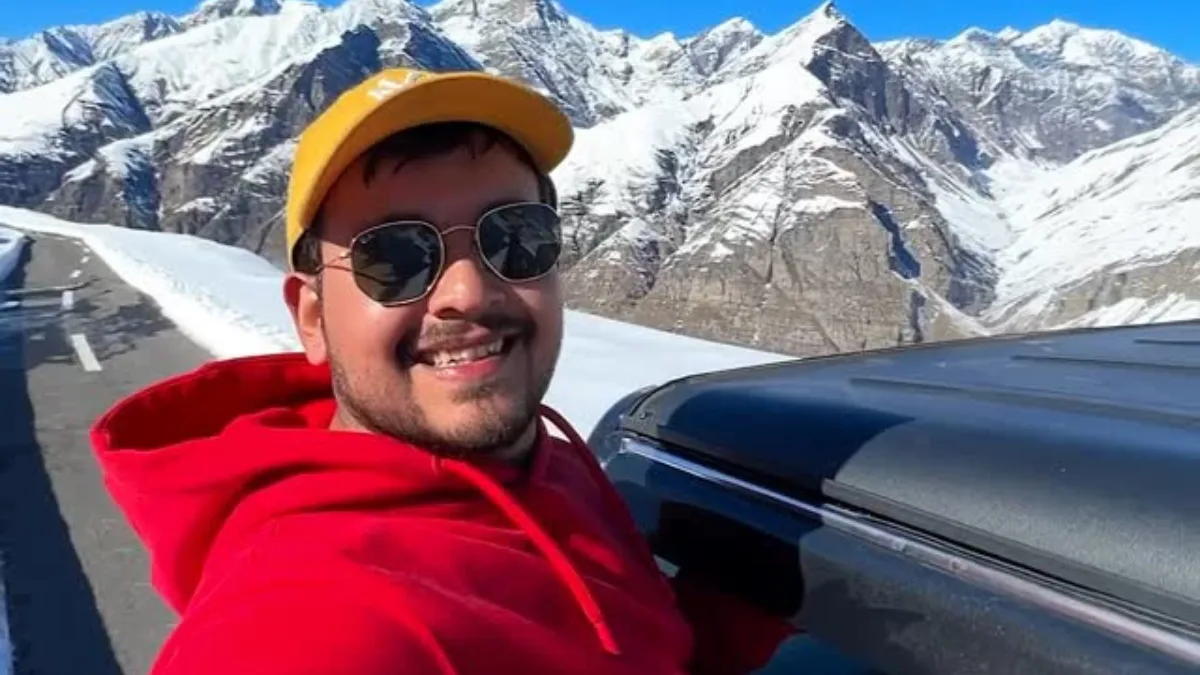
November 6, 2025, started like any other day on social media. Feeds filled with travel photos, luxury hotel stays and aspirational content. Then a single Instagram post stopped everyone mid scroll. The family of Anunay Sood, a Dubai based travel influencer with 1.4 million followers, announced his passing. No details. No explanation. Just heartbreak wrapped in a few carefully chosen words asking for privacy. The shock rippled through the creator community instantly. Anunay was only 32 years old. He was living the dream that millions chase. Traveling the world. Building a brand. Featured in Forbes three years running. Collaborating with global tourism boards and luxury brands. His life looked perfect from the outside. The kind of existence that makes people think maybe influencing really is the dream career. But behind the curated posts and stunning photographs, something went terribly wrong in a Las Vegas hotel room. More than a month after his death, the official coroner’s report finally revealed what happened. And the truth is devastating, complicated and a wake up call for an entire industry.
What Really Happened That Night In Las Vegas
Anunay Sood checked into the Wynn Las Vegas, one of the city’s most luxurious hotels. He was in town for a car show, the kind of high profile event that influencers attend to create content and network. His last Instagram post showed him surrounded by Bugatti supercars. The caption read, “Still can’t believe I spent the weekend surrounded by legends and dream machines.” It was the kind of content his followers expected. Aspirational. Exciting. A glimpse into a lifestyle most people only dream about. But somewhere between that post and the early morning hours of November 6, everything went horribly wrong. According to the official police report, people in Anunay’s hotel room thought he was in a deep sleep. They tried to wake him. When their efforts failed, panic set in. Someone called for help. First responders arrived quickly. They found Anunay unresponsive. The medical team immediately began CPR. They administered five packets of Narcan, a medication specifically used to reverse opioid overdoses. For context, one or two doses of Narcan are usually enough to revive someone experiencing an opioid overdose. The fact that five were used indicates how serious the situation was. Despite every effort, nothing worked. Anunay could not be revived.
The Coroner’s Report That Confirmed Everyone’s Worst Fears
The Clark County Coroner’s Office took over a month to release their findings. When the report finally came, it confirmed what witnesses had suspected. Anunay Sood died from combined fentanyl and ethanol toxicity. In simpler terms, a lethal combination of a powerful synthetic opioid and alcohol. The report did not label it an accidental overdose or intentional act. It simply stated the cause of death. But the details in the police report paint a clearer picture. Witnesses told investigators that Anunay’s group wanted to obtain drugs. They met with someone described as a dealer. Whether that transaction included fentanyl or if the drugs were laced without anyone’s knowledge remains unclear. The report leaves that question open. What is certain is that fentanyl entered Anunay’s system. Mixed with alcohol, it proved fatal. This combination is especially dangerous because both substances depress the central nervous system. Together they can slow breathing to the point where the body shuts down. Many people who die from fentanyl poisoning do not realize they are taking it. The drug is often mixed into other substances, cocaine, methamphetamine, counterfeit pills, without the user’s knowledge. It only takes a tiny amount to be lethal. Two milligrams, equivalent to a few grains of salt, can kill an adult.
Who Was Anunay Sood Before The Tragedy
To understand the impact of this loss, you need to know who Anunay was beyond the headlines. He was not just another influencer chasing likes. He was a storyteller. A photographer. A dreamer who turned his passion into a career that most people thought was impossible. Anunay grew up in India and studied at DPS Noida and later at Amity University. He did not come from a family of content creators or celebrities. He built everything from scratch. His journey started simply. He loved to travel. He picked up a camera. He started posting photos on Instagram. The early days were not glamorous. No brand deals. No luxury hotel partnerships. Just a guy sharing his experiences with whoever would listen. But his eye for composition was undeniable. His ability to capture not just places but feelings set him apart. Slowly, the followers came. Then the opportunities. Anunay’s big break came when tourism boards started noticing his work. Switzerland Tourism reached out. Then Visit Saudi. Then New Zealand Tourism. These were not small collaborations. Tourism boards are notoriously selective about who represents their countries. The fact that they trusted Anunay speaks volumes about his professionalism and talent.
The Forbes Recognition That Validated Everything
Between 2022 and 2024, Anunay Sood was featured in Forbes India’s Top 100 Digital Stars list three consecutive years. That achievement cannot be overstated. Forbes does not hand out those spots lightly. The list represents the most influential, successful and impactful digital creators in India. Being featured once is impressive. Three years in a row is rare. Forbes described Anunay as a Dubai based photographer who started his journey by sharing travel photos on Instagram. By the time of his death, he had visited 46 countries. His stated goal was to explore all 195 countries and regions in the world. He was barely a quarter of the way through that dream. Beyond Forbes, Anunay was featured in National Geographic India, Conde Nast Traveller India and Lonely Planet India. These are not influencer fluff pieces. These are legitimate editorial features in publications that have been around for decades. They represent credibility in the travel industry. Anunay also built a successful business. He founded a digital performance and marketing agency based in Dubai. He was not just creating content for himself. He was helping other brands tell their stories. According to reports, Anunay’s net worth was estimated between Rs 7 to 8 crore, roughly one million US dollars. His Instagram brand deals reportedly earned him between 3,800 and 5,200 dollars per month. YouTube ad revenue added another 400 to 9,000 dollars monthly depending on views and engagement. This was not hobby money. This was a legitimate career built through years of consistent work.
The Move To Dubai And What It Represented
Anunay relocated to Dubai, a city that has become a hub for digital creators, entrepreneurs and people chasing big dreams. Dubai offers certain advantages for content creators. No income tax. Proximity to Europe, Asia and Africa for travel. A multicultural environment. Access to luxury experiences that translate well to social media. For Anunay, Dubai was not just a home base. It was a strategic choice. The city allowed him to scale his business while maintaining the lifestyle that made his content aspirational. He was not the first Indian influencer to make this move. Dubai has become something of a creator colony. But Anunay stood out. His content was not just about showing off wealth. It was about storytelling. He had a way of making viewers feel like they were traveling with him. That authenticity is what built his loyal following.
The Personal Life He Kept Private
Unlike many influencers who monetize every aspect of their personal lives, Anunay kept his relationships relatively private. His girlfriend, Shivani Parihar, appeared occasionally in his content but was not a constant presence. After his death, Shivani posted a heartbreaking message on social media. She wrote, “I still can’t believe that you are gone. My heart feels heavy, and everything around me just feels empty. You were my person, my safe place, my life, my everything. I don’t even know how to process this. It doesn’t feel real. Every little thing reminds me of you, your laugh, your voice, your messages, everything. I don’t know how to move forward without you.” The grief in those words is palpable. It is a reminder that behind every influencer profile is a real person with real relationships and people who love them. Shivani’s post was liked and commented on by thousands of people who felt her pain. Many shared their own stories of loss. Others offered support. The outpouring showed just how connected people felt to Anunay even if they never met him in person.
The Fentanyl Crisis That Is Killing A Generation
Anunay’s death is not an isolated tragedy. It is part of a larger public health crisis that is claiming lives at an alarming rate. Fentanyl, a synthetic opioid originally developed for pain management in cancer patients, has flooded the illegal drug market. It is 50 times stronger than heroin and 100 times stronger than morphine. Drug dealers cut fentanyl into other drugs because it is cheap and highly addictive. Users often have no idea they are consuming it. The result has been catastrophic. In the United States alone, over 100,000 people die annually from drug overdoses. Fentanyl is involved in the majority of those deaths. The crisis has gotten so severe that organizations like the Ad Council have launched national awareness campaigns specifically targeting young adults. Tech companies including Google, Meta and Snap have partnered on initiatives to educate users about the dangers of fentanyl. The campaigns focus on social media platforms because that is where young people spend most of their time. Over three hours a day according to recent data. The message is simple. You cannot tell if something is laced with fentanyl by looking at it. Even experienced drug users cannot. One bad pill. One contaminated batch. That is all it takes.
Why Influencers Are At Risk
The influencer lifestyle comes with unique pressures that many people outside the industry do not understand. The need to constantly create. The fear of becoming irrelevant. The comparison culture. The financial instability. The blurred lines between work and personal life. Many creators struggle with mental health issues but feel they cannot talk about it publicly. Admitting vulnerability feels like brand suicide. Who wants to follow someone who is struggling? The pressure to maintain a perfect image can become suffocating. Add in access to exclusive events, parties and substances, and the risk factors multiply. Las Vegas, where Anunay died, is a city built on excess. It is a playground for people with money and access. For influencers attending events, there is often an expectation to party, to network, to be seen. Saying no can feel like career sabotage. This is not to excuse drug use. But it is important to understand the context. The influencer industry glorifies a lifestyle that is not sustainable or healthy for many people living it.
The Response From The Creator Community
When news of Anunay’s death first broke, the response was immediate. Fellow creators posted tributes. Brands he worked with expressed condolences. Tourism boards shared memories. But underneath the public mourning, there were also uncomfortable conversations. About substance abuse in the creator community. About the pressures that lead to self destructive behavior. About the lack of support systems for influencers who are struggling. Some creators spoke openly about their own battles with addiction, mental health and the darker side of the industry. Others stayed silent, perhaps afraid that being too honest would damage their careers. The tragedy sparked debates about responsibility. Do influencers have an obligation to be role models? Should they be more transparent about the challenges they face? Is it fair to expect perfection from people whose job is to sell a lifestyle? These are complex questions without easy answers. But Anunay’s death made it impossible to ignore them.
What His Last Post Tells Us
Anunay’s final Instagram post showed him at a luxury car event surrounded by Bugattis. He looked happy. Successful. Living the dream. The comments were full of admiration. People congratulating him on his success. Others expressing jealousy at his lifestyle. No one looking at that post would have guessed that within hours he would be dead. That disconnect is part of what makes social media so dangerous. It creates an illusion. A highlight reel that bears little resemblance to reality. Anunay might have been struggling. He might have been scared. He might have been in over his head. But you would never know from his Instagram. That is the curse of the curated life. Everyone sees the wins. No one sees the losses until it is too late.
The Family’s Request For Privacy
After announcing Anunay’s death, his family asked for one thing. Privacy. They requested that people avoid gathering near personal property. They did not give interviews. They did not release statements beyond the initial announcement. Even when the coroner’s report came out over a month later, the family remained silent. That silence speaks to how devastating this loss is. They are grieving. They are processing. They are trying to understand how someone so young and successful could be gone so suddenly. The family’s request for privacy should be respected. But it also highlights a problem. In the age of social media, privacy is nearly impossible. Every detail becomes public. Every theory gets amplified. The family has to mourn while the world watches.
The Bigger Conversation About Substance Abuse
Anunay’s death has forced a conversation that many people would rather avoid. Substance abuse does not discriminate. It affects people across all income levels, professions and backgrounds. The idea that successful people are immune is a myth. In fact, success can sometimes increase risk. More money means more access. More pressure means more temptation to escape. The stigma around addiction prevents people from seeking help. Admitting a problem feels like admitting failure. For influencers whose brand is built on success, that admission can feel career ending. But staying silent costs lives. If Anunay’s death accomplishes anything, it should be to reduce that stigma. To make it okay for people to say they are struggling. To normalize asking for help before it is too late.
What Narcan Is And Why It Matters
The fact that first responders used five doses of Narcan trying to save Anunay’s life is significant. Narcan, also known by its generic name naloxone, is a medication that rapidly reverses opioid overdoses. It works by blocking opioid receptors in the brain. Within minutes, it can restore normal breathing in someone whose respiratory system has been suppressed by opioids. Narcan is available without a prescription in many places. It comes in nasal spray or injectable forms. Family members of people who use opioids are encouraged to keep it on hand. The problem is that Narcan only works if someone is there to administer it. And it only works on opioids. If other substances are involved, like alcohol in Anunay’s case, Narcan alone may not be enough. Public health advocates have been pushing for wider Narcan distribution. Some states have laws requiring bars and nightclubs to stock it. Schools are starting to keep it alongside defibrillators. The goal is to make Narcan as accessible as possible so that more lives can be saved.
The Warning Signs People Miss
Looking back, were there signs that Anunay was in trouble? Maybe. Maybe not. One of the cruelest aspects of addiction and substance abuse is how well people can hide it. High functioning users can maintain careers, relationships and public images while struggling privately. They show up. They smile. They perform. No one knows until something goes wrong. That is why awareness is so important. Knowing the signs. Understanding the risks. Creating environments where people feel safe asking for help. Those things save lives. Anunay’s story should serve as a warning. Success does not protect you. Money does not protect you. A million followers do not protect you. The only thing that protects you is awareness, caution and having people around who will help when things go wrong.
How The Industry Needs To Change
The influencer industry is still relatively new. There are no unions. No employee assistance programs. No mandatory mental health resources. Creators are often treated as independent contractors, which means they do not get the support structures that traditional employees might access. This needs to change. Platforms like Instagram, YouTube and TikTok make billions of dollars from creator content. They have a responsibility to support the people generating that content. That support could look like mental health resources built into creator tools. Educational programs about substance abuse. Hotlines specifically for influencers in crisis. Brands that work with influencers also have a role to play. They should be asking questions. Are the creators they partner with okay? Are they being pushed too hard? Is the pressure to deliver content compromising their well-being? These are not comfortable questions. But they are necessary ones.
The Legacy Anunay Leaves Behind
Anunay Sood’s legacy is complicated. On one hand, he accomplished more in 32 years than many people do in a lifetime. He traveled the world. He built a business. He inspired millions. On the other hand, his death is a tragedy that could potentially have been prevented. His story is a reminder that external success does not equal internal peace. That reaching goals does not mean you have figured everything out. His legacy should be twofold. First, celebrate what he accomplished. The beauty he captured. The stories he told. The dreams he inspired. Second, learn from what happened. Use his death as a catalyst for change in the influencer industry. For better mental health support. For more honest conversations about substance abuse. For creating an environment where asking for help is not seen as weakness.
What Followers Can Learn
For the 1.4 million people who followed Anunay, his death is a harsh lesson about the reality behind the Instagram feed. Social media is a highlight reel. It shows the best moments. The wins. The celebrations. It rarely shows the struggles, the failures, the moments of doubt and fear. Followers need to remember that what they see online is curated. It is not the full picture. Comparing your behind the scenes to someone else’s highlight reel is a recipe for unhappiness. Anunay’s death should also prompt followers to think about their own relationship with substances. Young people, in particular, need to understand the risks. One bad decision can have permanent consequences. Fentanyl does not care about your age, your income or your number of followers.
Moving Forward With Awareness
The travel and influencer communities are still processing Anunay’s death. Tributes continue to pour in. His Instagram remains active, a digital memorial to a life cut short. But memorials are not enough. Real change requires action. It requires platforms taking responsibility. Brands prioritizing creator well-being over content output. Influencers being honest about their struggles. Followers understanding that what they see online is not reality. If Anunay’s death sparks these conversations, if it leads to even one person seeking help or one life being saved, then perhaps something meaningful can come from this tragedy.
The Final Message
Anunay Sood should still be here. He should be planning his next trip. Editing his next video. Working toward that goal of visiting all 195 countries. Instead, he is gone. Taken by a crisis that is claiming too many young lives. His story is heartbreaking. But it is also a wake up call. To the influencer industry. To the brands that profit from creator content. To the platforms that enable this lifestyle. To the fans who consume it. Everyone has a role to play in preventing the next tragedy. Share this article with someone who needs to read it. Start a conversation about mental health and substance abuse. Check in on the people you care about. Do not assume that success means someone is okay. Sometimes the people who seem to have it all together are the ones struggling the most. Anunay’s light went out too soon. But his story can still illuminate the path forward. Comment below with your thoughts. Share this to spread awareness. And if you or someone you know is struggling, reach out. Help is available. Lives can be saved. But only if we start talking about the things we would rather ignore. The conversation starts now.