Understanding the Foundation of Hands-Free Control
The way we interact with machines has undergone remarkable transformation over recent decades. What once required physical keyboards and mice now responds to our voices, follows our eye movements, and interprets our gestures. Voice vision action interfaces represent a convergence of technologies that enable users to control devices without touching them, creating an interaction paradigm that feels increasingly natural and intuitive.
These systems process multiple types of input simultaneously. A camera captures hand movements while a microphone picks up spoken commands. Sensors track where someone looks. Together, these channels create what researchers call multimodal interaction, where the computer understands context from various sources rather than relying on a single input method. The technology bridges the gap between human intention and machine response in ways that physical interfaces never could.
Modern implementations rely heavily on artificial intelligence to make sense of this complex data stream. Machine learning models trained on thousands of hours of human behavior can now recognize a thumbs up gesture, understand the command “turn on the lights,” or follow the path of someone’s gaze across a screen. The computational power required for these tasks has become accessible enough that even smartphones can perform real-time gesture recognition.
Voice Recognition as the Primary Interface
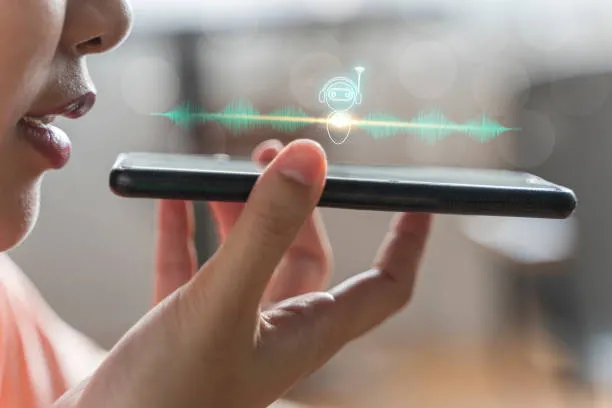
Speaking to machines has moved far beyond simple commands. Current voice interfaces leverage transformer based speech recognition models that process natural language with remarkable accuracy. These systems don’t just transcribe words. They interpret intent, understand context from previous interactions, and execute complex sequences of actions from a single spoken phrase.
The technology works by converting sound waves into spectrograms that neural networks analyze for phonetic patterns. Modern systems like Whisper AI can handle multiple languages, accents, and even background noise with impressive reliability. When someone says “set the thermostat to 72 degrees and dim the bedroom lights,” the system parses this into separate actionable commands while maintaining awareness that both requests came from the same user in the same moment.
Voice control shines in scenarios where hands are occupied or unavailable. Surgeons in operating rooms can pull up medical images without breaking sterility. Drivers adjust navigation without taking hands off the wheel. People with mobility limitations control their entire home environment through speech alone. The convenience factor extends beyond accessibility needs into everyday efficiency.
However, voice interfaces face challenges that researchers continue to address. Noisy environments can interfere with accurate recognition. Privacy concerns arise when microphones constantly listen for wake words. Some tasks remain more efficient with visual or tactile feedback. These limitations drive the development of multimodal systems that complement voice with other input methods.
Vision Based Gesture Recognition
Cameras have become powerful sensors for understanding human intention through movement. Computer vision algorithms track the position and orientation of hands, fingers, faces, and entire bodies in three dimensional space. This visual data gets translated into commands that control everything from video games to medical equipment.
MediaPipe, developed by Google, exemplifies the current state of gesture recognition technology. This framework detects 21 landmarks on each hand in real time, tracking their positions through space with millimeter precision. Developers can define custom gestures by analyzing the relationships between these points. An open palm means one thing, a pinched thumb and forefinger means another, and the system learns to distinguish between intentional gestures and random movements.
Facial gestures add another dimension to vision based control. Systems track eyebrow raises, mouth shapes, and head tilts. People with limited hand mobility can operate wheelchairs by inclining their head left or right while opening their mouth to move forward. This approach requires minimal physical effort while providing nuanced control over complex machinery.
The challenge lies in making these systems robust across different lighting conditions, backgrounds, and user appearances. Early gesture recognition failed frequently when lighting changed or when users wore gloves. Modern deep learning models trained on diverse datasets handle these variations much better, though they still require good camera placement and adequate illumination. Researchers continue developing algorithms that work reliably in challenging real world conditions.
Edge detection and statistical analysis help distinguish intentional gestures from ambient movement. When someone waves at their computer, the system needs to determine whether they’re issuing a command or just stretching. Temporal filtering examines gesture duration and consistency. If someone holds a specific hand position for more than a second, that suggests intent rather than coincidence. These techniques reduce false positives while keeping the interface responsive.
Eye Tracking Technology for Precise Control
Where we look reveals what captures our attention. Eye tracking interfaces leverage this natural behavior to enable control through gaze alone. High speed cameras and infrared sensors track the position and movement of pupils, calculating where on a screen someone focuses. This technology has progressed from expensive laboratory equipment to affordable consumer devices integrated into laptops and VR headsets.
The basic principle involves projecting infrared light toward the eyes and detecting the reflection from the cornea. Algorithms triangulate gaze direction from these reflections with accuracy down to a single degree of visual angle. At typical viewing distances, this translates to pinpointing focus within a centimeter on a monitor. The system calibrates to each user’s eye characteristics during a brief setup process.
Eye tracking offers particular value for individuals with severe physical disabilities. Someone unable to move their hands or speak can still control a computer cursor through sustained gaze. Looking at a virtual keyboard for specific durations types letters. Glancing at icons triggers applications. Blinking patterns can act as clicks. This technology literally opens digital worlds to people who would otherwise have no access.
Healthcare applications extend beyond accessibility. Researchers studying cognitive function analyze eye movement patterns to detect neurological conditions. Attention metrics from eye tracking inform user experience design. Surgeons review exactly where they looked during procedures for training purposes. The data reveals patterns invisible through other means.
Gaming and virtual reality represent rapidly growing eye tracking applications. Characters in games can make eye contact with players, creating more believable interactions. VR systems use foveated rendering, allocating processing power to whatever the user looks at while reducing detail in peripheral vision. This optimization enables more complex graphics without requiring additional computing resources.
Challenges persist around accuracy degradation over extended use sessions. Eyes naturally drift and fatigue. Calibration can decay. Users wearing glasses or contacts may experience reduced precision. The technology also struggles with very rapid eye movements called saccades, during which vision briefly suppresses. Developers work around these limitations through predictive algorithms and hybrid approaches that combine eye tracking with other input methods.
Multimodal Integration Creates Seamless Experiences
The real power emerges when voice, vision, and action inputs work together rather than separately. A truly multimodal interface lets users switch fluidly between communication methods based on what makes sense in the moment. Someone might point at an object while saying “move this there,” combining gesture and voice to convey intent more precisely than either modality alone could achieve.
Research into multimodal systems explores how different input types complement each other’s weaknesses. Voice excels at conveying complex instructions but struggles with spatial precision. Gestures provide excellent spatial information but lack semantic detail. Combining them creates an interaction vocabulary richer than either provides independently. The system disambiguates ambiguous voice commands using contextual information from gestures and gaze.
HandProxy, developed at the University of Michigan, demonstrates this integration in virtual reality environments. Users command a virtual hand through speech, asking it to grab objects or perform gestures. The AI interprets high level commands like “clear the table” without requiring step by step instructions. This approach solves a fundamental VR problem where users want to interact with virtual objects while keeping their physical hands free for other tasks.
Smart home implementations showcase practical multimodal integration. Someone might say “turn on the lights” while gesturing toward a specific room, clarifying which lights should activate. Eye gaze indicates which screen in a multi monitor setup should respond to voice commands. The system maintains awareness across all channels, creating a unified understanding of user intent.
Technical challenges in multimodal fusion involve synchronizing inputs with different latency characteristics. Video processing might introduce 50 milliseconds of delay while voice recognition takes 200 milliseconds. The system must correlate inputs that arrive at different times and determine which belong together. Machine learning models trained on multimodal datasets learn these temporal relationships, improving coordination between channels.
Applications in Healthcare and Rehabilitation
Medical environments demand interfaces that maintain sterility while enabling precise control. Surgeons cannot touch computers during procedures but frequently need to access imaging, adjust equipment, or document findings. Voice and gesture interfaces let them interact with systems without contaminating sterile fields. A surgeon can rotate a 3D model of a patient’s anatomy through hand movements while verbally requesting different views.
Rehabilitation technology uses hands-free interfaces to help patients recovering from injuries or managing disabilities. Physical therapists track patient movements through vision systems, providing real time feedback on exercise form. Gamified rehabilitation programs respond to gestures, making repetitive exercises more engaging. Patients see their progress visualized as they regain motor control.
Eye tracking interfaces enable communication for individuals with conditions like ALS or locked-in syndrome who retain cognitive function but lose voluntary muscle control. These systems provide access to computers, smartphones, and environmental controls through gaze alone. Someone can compose messages, browse the internet, or call for help using only eye movements. The technology restores a degree of independence that seemed impossible decades ago.
Wheelchair control through facial gestures and voice commands transforms mobility for people with limited hand function. Users tilt their head to steer while opening their mouth to move forward. Voice commands handle more complex navigation like “take me to the kitchen” or “go to the front door.” Ultrasonic and infrared sensors prevent collisions, creating a safer navigation experience than manual control.
Assistive technology development focuses on minimizing the physical effort required for control. Systems respond to subtle movements that even severely disabled individuals can produce consistently. Machine learning personalizes these interfaces to each user’s capabilities and preferences. The technology adapts to disease progression, adjusting sensitivity as conditions change over time.
Diagnostic applications analyze gesture patterns and eye movements for signs of neurological conditions. Parkinson’s disease affects hand movements in characteristic ways that computer vision can detect earlier than human observation. Concussion protocols incorporate eye tracking to assess visual tracking ability. These objective measurements complement traditional clinical assessments.
Smart Home Integration and Ambient Computing
The modern smart home responds to inhabitants without requiring them to carry controllers or activate apps. Voice assistants listen for commands that control lighting, temperature, entertainment systems, and appliances. Gesture recognition adds spatial context that voice alone cannot provide. Someone can point at a lamp while saying “turn off” instead of remembering and speaking the device’s specific name.
Internet of Things integration enables unified control across previously separate systems. A single voice command can lock doors, adjust thermostats, close blinds, and activate security cameras. Gesture interfaces let users control these elements through intuitive movements. Waving goodbye near the front door triggers a departure routine. Specific hand signals adjust lighting scenes without speaking.
Context awareness makes these systems more useful. Cameras detect occupancy in rooms, activating appropriate lighting and climate control automatically. When residents are detected in the kitchen at breakfast time, the coffee maker starts without explicit commands. Voice commands adapt based on location within the home. Saying “it’s too dark” in the bedroom adjusts different lights than the same phrase in the living room.
Accessibility features transform smart homes into enabling environments for elderly residents and those with disabilities. Voice control eliminates the need to physically reach switches and thermostats. Motion sensors alert caregivers if unusual patterns suggest a fall or medical emergency. These systems help people maintain independence in their own homes longer than traditional infrastructure would allow.
Privacy considerations shape smart home interface design. Always on microphones and cameras create surveillance concerns. Systems increasingly perform processing locally rather than sending data to cloud servers. Wake words prevent constant listening. Users can disable cameras through physical switches. Balancing convenience with privacy remains an ongoing design challenge.
Energy efficiency benefits from intelligent hands-free control. Systems optimize heating and cooling based on actual occupancy patterns rather than fixed schedules. Lights automatically turn off in empty rooms. Voice commands enable fine-grained control without the friction that makes people leave everything running. The cumulative effect significantly reduces energy consumption compared to traditional home automation.
Virtual and Augmented Reality Applications
Immersive computing environments present unique interface challenges. VR headsets block users from seeing their physical hands, while placing controllers on every surface would be impractical. Voice and gesture interfaces provide natural interaction methods that work within the constraints of virtual spaces. Users point at virtual objects, pinch to grab them, and speak commands to manipulate their digital surroundings.
Hand tracking in VR maps real hand movements onto virtual representations. MediaPipe and similar technologies enable this without requiring users to hold controllers. Someone can gesture naturally in physical space while seeing their actions reflected in the virtual environment. This creates more immersive experiences than button-based control schemes, particularly for activities like sculpting, painting, or manipulating objects.
Augmented reality layers digital information over the physical world, creating scenarios where traditional touch interfaces would be awkward. Someone wearing AR glasses cannot easily tap a screen that doesn’t exist physically. Voice commands and gesture recognition solve this problem. Users point at real objects while asking for information about them. Pinching fingers in space selects virtual UI elements overlaid on their vision.
Eye tracking enables foveated rendering that dramatically improves VR performance. The system renders high detail only where the user looks, reducing computational requirements by up to 70 percent. This optimization allows more complex virtual environments on the same hardware. It also creates more realistic depth of field effects, making virtual scenes appear more natural.
Social interactions in virtual spaces benefit from multimodal interfaces. Avatars mirror real facial expressions captured by cameras in VR headsets. Hand gestures translate into virtual body language. Voice capture with spatial audio creates natural conversation experiences. These elements combine to make remote collaboration feel more present and engaging than traditional video conferencing.
Training simulations leverage hands-free interfaces to create realistic practice environments. Medical students perform virtual surgeries using gesture control. Mechanics learn equipment repair through AR overlays that respond to voice queries. These applications reduce training costs while providing safe spaces to practice dangerous procedures. The interfaces must be intuitive enough that trainees focus on the task rather than struggling with controls.
Automotive Integration for Safer Driving
Distracted driving causes thousands of deaths annually. Automotive interfaces increasingly incorporate voice and gesture control to let drivers manage navigation, communication, and entertainment without taking their hands off the wheel or eyes off the road. Speaking destinations eliminates the dangerous practice of manually entering addresses. Gesture recognition lets drivers adjust volume or change tracks through hand waves.
Modern infotainment systems use natural language processing to understand conversational commands. Drivers can say “I’m cold” instead of memorizing specific climate control syntax. The system interprets intent and adjusts temperature accordingly. Follow-up commands like “a bit warmer” maintain context from previous interactions. This conversational approach reduces cognitive load compared to navigating nested menu systems.
Eye tracking monitors driver attention, issuing alerts if gaze wanders from the road for too long. Some systems track where drivers look to optimize heads-up display placement. Information appears in locations that require minimal eye movement from the road. Combining this with voice output creates a multimodal information delivery system that keeps drivers informed without demanding visual attention.
Gesture control faces unique automotive challenges. The system must distinguish intentional commands from natural hand movements while driving. Robust algorithms filter out coincidental gestures caused by road vibrations or reaching for objects. The interface requires gestures simple enough to perform safely while maintaining enough variety to control different functions. Most implementations use a small set of distinctive motions like swiping or pointing.
Future autonomous vehicles will rely heavily on voice and gesture interfaces. Without driving responsibilities occupying passengers, these vehicles become mobile living spaces. Intuitive hands-free control lets occupants adjust seating, lighting, entertainment, and climate through natural interactions. The car interprets gestures and commands within the context of the journey, suggesting restaurants when people discuss being hungry or adjusting routes based on conversational preferences.
Safety regulations increasingly mandate hands-free operation for certain vehicle functions. This regulatory pressure accelerates adoption of voice and gesture interfaces across the automotive industry. Manufacturers compete on interface naturalness and reliability rather than just adding more buttons. The most successful implementations fade into the background, letting drivers interact with vehicle systems as effortlessly as they would with a passenger.
Technical Architecture and Implementation
Building effective hands-free interfaces requires integrating multiple technologies into cohesive systems. The architecture typically includes sensor hardware for capturing input, processing pipelines that extract meaningful data, recognition engines that interpret this data as commands, and action systems that execute the intended operations. Each component must operate with low latency to create responsive experiences.
Computer vision pipelines begin with camera input at 30 or 60 frames per second. Image preprocessing enhances contrast and reduces noise. Landmark detection algorithms identify key points on hands, faces, or bodies. Feature extraction reduces these landmarks to vectors that capture relevant spatial relationships. Classification models compare these features against trained patterns to recognize specific gestures. The entire pipeline completes in under 50 milliseconds on modern hardware.
Voice recognition systems capture audio through microphone arrays that use beamforming to focus on the user’s voice while suppressing background noise. Acoustic models convert sound waves into phoneme probabilities. Language models evaluate likely word sequences given these phonemes. Intent recognition systems parse the resulting text to extract actionable commands. Cloud-based systems achieve better accuracy through access to larger models and datasets, while on-device processing provides privacy and works offline.
Eye tracking hardware combines infrared illuminators with high-speed cameras capturing hundreds of frames per second. Computer vision algorithms detect the position and orientation of pupils, calculating gaze vectors. Calibration maps these vectors to screen coordinates. Predictive algorithms compensate for the natural jitter in human gaze. The system updates gaze position every few milliseconds, enabling smooth cursor control and accurate selection.
Integration layers fuse inputs from multiple modalities into coherent commands. These systems maintain temporal buffers that hold recent inputs from each channel. Correlation algorithms identify inputs that likely belong together based on timing and semantic consistency. Machine learning models trained on multimodal datasets learn the relationships between different input types. The fusion layer outputs unified intent representations that downstream systems execute.
Action execution varies by application domain. Smart home systems send commands over protocols like MQTT or Zigbee to connected devices. Computer control systems inject simulated keyboard and mouse events into the operating system. VR environments manipulate scene graphs based on interpreted commands. Medical systems integrate with equipment through specialized APIs. Feedback mechanisms close the loop, confirming successful execution through visual, auditory, or haptic responses.
Accessibility and Inclusive Design
Hands-free interfaces fundamentally expand who can use technology. Traditional input devices exclude millions of people with mobility impairments, vision loss, or other disabilities. Voice, vision, and action interfaces create alternative pathways to digital access that accommodate diverse abilities and needs. This inclusion represents both moral imperative and significant market opportunity.
Design for accessibility requires understanding the spectrum of human capability. Someone with quadriplegia might rely entirely on eye tracking while another person with ALS might combine limited head movement with eye gaze. Interfaces must offer multiple ways to accomplish tasks rather than assuming users will employ the “default” method. Flexibility and customization become essential rather than optional features.
Testing with disabled users reveals interface assumptions that able-bodied designers miss. Gesture recognition trained primarily on able-bodied movements may fail for people with tremors or limited range of motion. Voice systems tuned for typical speech patterns struggle with dysarthria or speech impediments. Including diverse users throughout the design and testing process creates more robust and truly accessible systems.
Adaptive interfaces adjust to each user’s capabilities. Machine learning personalizes gesture recognition thresholds based on how someone moves. Voice systems learn individual speech patterns over time. Eye tracking calibrates to each person’s unique ocular characteristics. These adaptations make interfaces more accurate for everyone while being essential for users with atypical abilities.
Regulatory frameworks increasingly mandate digital accessibility. The Americans with Disabilities Act and similar legislation worldwide require that technology be usable by people with disabilities. Hands-free interfaces help organizations meet these legal obligations while expanding their potential user base. Companies find that designing for accessibility often improves usability for all users, not just those with disabilities.
Educational applications of accessible interfaces are transforming classrooms. Students with writing difficulties can compose essays through speech. Those with attention challenges benefit from multimodal engagement. Interactive lessons respond to gestures and voice, accommodating different learning styles. These tools help ensure that technology enhances education for all students rather than creating new barriers.
Challenges and Limitations
Despite impressive advances, hands-free interfaces still face significant technical and practical challenges. Accuracy remains imperfect, particularly in uncontrolled environments. A gesture recognition system that works reliably in a research lab may struggle in a crowded living room with varied lighting. Voice recognition fails in noisy settings. These limitations constrain where and how people can depend on hands-free control.
Latency affects user experience more than most realize. Even delays of 200 milliseconds feel sluggish and break the illusion of direct manipulation. Voice interfaces face unavoidable processing delays as audio buffers fill and cloud APIs respond. Reducing latency requires optimizing every pipeline stage and often moving processing closer to users through edge computing. Achieving consistently responsive interaction remains an engineering challenge.
Privacy concerns create hesitation around always-listening microphones and always-watching cameras. Users worry about who accesses recordings of their conversations and videos of their activities. Recent data breaches and revelations about corporate data practices have amplified these concerns. Effective hands-free interfaces must balance functionality with privacy protections that users find acceptable. On-device processing, encrypted communications, and transparent data policies help address these worries.
False positives and false negatives frustrate users in different ways. When a system activates from coincidental gestures or ambient conversation, users learn to distrust it. When systems fail to recognize intentional commands, users waste time repeating themselves. Tuning this balance requires extensive testing with diverse users in varied environments. Perfect accuracy remains elusive, though systems improve continuously.
Physical fatigue limits prolonged use of gesture interfaces. Holding arms up to gesture toward screens causes discomfort within minutes, a problem researchers call “gorilla arm.” Eye strain affects extended eye tracking use. Voice becomes hoarse from extended speaking. Effective interface design minimizes required physical effort and provides alternative interaction methods for extended sessions.
Cultural differences affect gesture and voice interaction patterns. Gestures considered normal in one culture may be offensive elsewhere. Speech patterns, accents, and languages vary tremendously. Systems trained primarily on data from one demographic perform worse for others. Building truly global interfaces requires training data and testing that encompasses human diversity. This remains an ongoing challenge for the industry.
Future Directions and Emerging Technologies
The trajectory points toward increasingly natural and ambient interfaces that fade into the background of daily life. Brain-computer interfaces currently in development could eventually eliminate the need for any physical action, responding directly to neural signals. While still experimental, these technologies hint at interaction paradigms beyond voice, vision, and gesture.
Haptic feedback will play a larger role in creating satisfying hands-free interactions. Ultrasonic arrays can create the sensation of touch without physical contact, providing confirmation when virtual buttons are pressed. Vibration patterns communicate system states without requiring visual attention. Spatial audio indicates the location of interface elements. These feedback mechanisms complete the interaction loop in ways that pure input recognition cannot.
Artificial intelligence advances will enable interfaces that better understand context and predict needs. Systems will recognize emotional states from voice tone and facial expressions, adapting their responses accordingly. Predictive models will anticipate commands based on routines and patterns, sometimes acting before explicit instructions. The line between giving commands and being assisted by an intelligent partner will blur.
Ambient computing envisions environments saturated with sensors and actuators that respond to human presence and behavior. Rather than explicitly controlling devices, people simply act naturally while systems infer intent and respond appropriately. Walking into a room turns on lights. Glancing at a smart display surfaces relevant information. This vision requires coordination between hands-free interfaces and contextual awareness systems.
Neuromorphic computing hardware inspired by brain architecture promises more efficient processing of sensory data. These specialized chips could enable real-time multimodal processing with a fraction of current power requirements. Better efficiency would allow more capable interfaces in portable devices and extend battery life. The technology remains in development but shows promising results in early implementations.
Standardization efforts aim to create interoperability between different hands-free interface systems. Universal gesture vocabularies and voice command standards would let users control devices from different manufacturers without learning multiple interaction schemes. Privacy-preserving protocols could let systems share contextual awareness while protecting user data. Industry cooperation on these standards will shape how seamlessly different technologies work together.
Ethical Considerations and Social Impact
The proliferation of hands-free interfaces raises important ethical questions about surveillance, consent, and autonomy. Systems that constantly watch and listen blur boundaries between helpful assistance and invasive monitoring. Who owns the data these systems collect? How long should it be retained? Can it be used for purposes beyond immediate functionality? These questions lack clear answers and require ongoing societal discussion.
Bias in recognition systems creates inequitable experiences for different groups. Facial recognition performs worse for people with darker skin tones. Voice recognition struggles more with non-native accents. Gesture recognition may fail for bodies that don’t match training data demographics. Addressing these biases requires conscious effort to include diverse data and test with representative user populations. Technical solutions exist but require commitment to implement.
Dependency on technology raises concerns about skill atrophy. As systems handle more tasks through automation, people may lose abilities they once practiced regularly. Navigation skills decline with ubiquitous GPS. Mental arithmetic suffers when calculators are always available. Will hands-free interfaces that minimize physical interaction affect motor skill development? Understanding these impacts requires longitudinal research that hasn’t yet been conducted.
Economic disruption from automation enabled by better interfaces affects employment. Voice and gesture control make certain jobs obsolete while creating demand for new skills. Customer service representatives, data entry workers, and others face displacement as AI-powered interfaces handle tasks previously requiring human labor. Society must grapple with supporting people whose skills become less relevant while developing new economic opportunities.
Access divides could widen if hands-free technology remains expensive. While costs decrease over time, early adopters gain advantages that compound. Students with access to advanced educational interfaces develop skills more quickly. Workers with better tools become more productive. Ensuring broad access to beneficial technology requires conscious policy choices rather than assuming market forces alone will achieve equitable distribution.
Security vulnerabilities in hands-free systems create new attack surfaces. Voice spoofing could let attackers impersonate authorized users. Adversarial patterns could fool gesture recognition. Eye tracking data might reveal passwords or sensitive information through gaze patterns. As these interfaces control more important systems, security becomes critical. Developers must implement authentication measures and encryption that balance security with usability.
The transformation of human-computer interaction through voice, vision, and action interfaces continues accelerating. What seemed like science fiction a decade ago now powers everyday devices. Smartphones respond to gestures, homes obey spoken commands, and virtual worlds react to natural movements. These interfaces expand access for people previously excluded by traditional input methods while offering everyone more intuitive ways to interact with technology. Technical challenges around accuracy, latency, and privacy persist but steadily yield to innovation. The future points toward increasingly ambient and intelligent systems that understand context and anticipate needs. As these technologies mature, they reshape not just how we use computers but how we live and work in technology-mediated environments. The implications extend far beyond convenience into questions of accessibility, equity, and what it means to interact naturally with machines that increasingly understand and respond to human behavior.