Why Your Favorite Fantasy Show Secretly Borrowed Everything From Ancient Storytellers
Ever wondered why that dragon in your favorite series feels oddly familiar? Or why the hero’s journey hits different every single time?
Here’s the truth nobody talks about. Every fantasy world you’ve binged on Netflix, every magical realm you’ve explored in books, every epic quest that kept you up past midnight is actually recycled magic from thousands of years ago. And that’s exactly what makes it brilliant.
Modern fantasy writers aren’t just making stuff up. They’re grave robbers of the best kind, digging up ancient folklore and mythology, dusting off the good bits and serving them to us with a fresh coat of paint. The results? Absolute gold that millions can’t stop consuming.
Let’s dive into this rabbit hole and see just how deep the mythology game goes.
The Dragon Didn’t Start With Daenerys
Dragons are everywhere now. Game of Thrones made them cool again. The Hobbit had Smaug. How to Train Your Dragon turned them into pets. But here’s something wild.
Dragons have been terrorizing human imagination since before written history existed. Chinese mythology celebrated them as symbols of power and wisdom. European folklore painted them as greedy treasure hoarders that knights needed to slay. Norse legends had Fafnir, a dwarf turned dragon because of cursed gold.
Same creature, different costumes across cultures. That’s the magic trick right there.
Modern fantasy just remixes these ancient blueprints. George R.R. Martin didn’t invent dragons, he just made them feel real enough that people genuinely mourned when one died. The emotional connection stays fresh even though the concept is older than your great great great grandmother’s grandmother.
Gods Walking Among Mortals Never Gets Old
Rick Riordan absolutely crushed it with Percy Jackson. Greek gods attending summer camp, fighting monsters in modern New York, dealing with annoying relatives. Genius move.
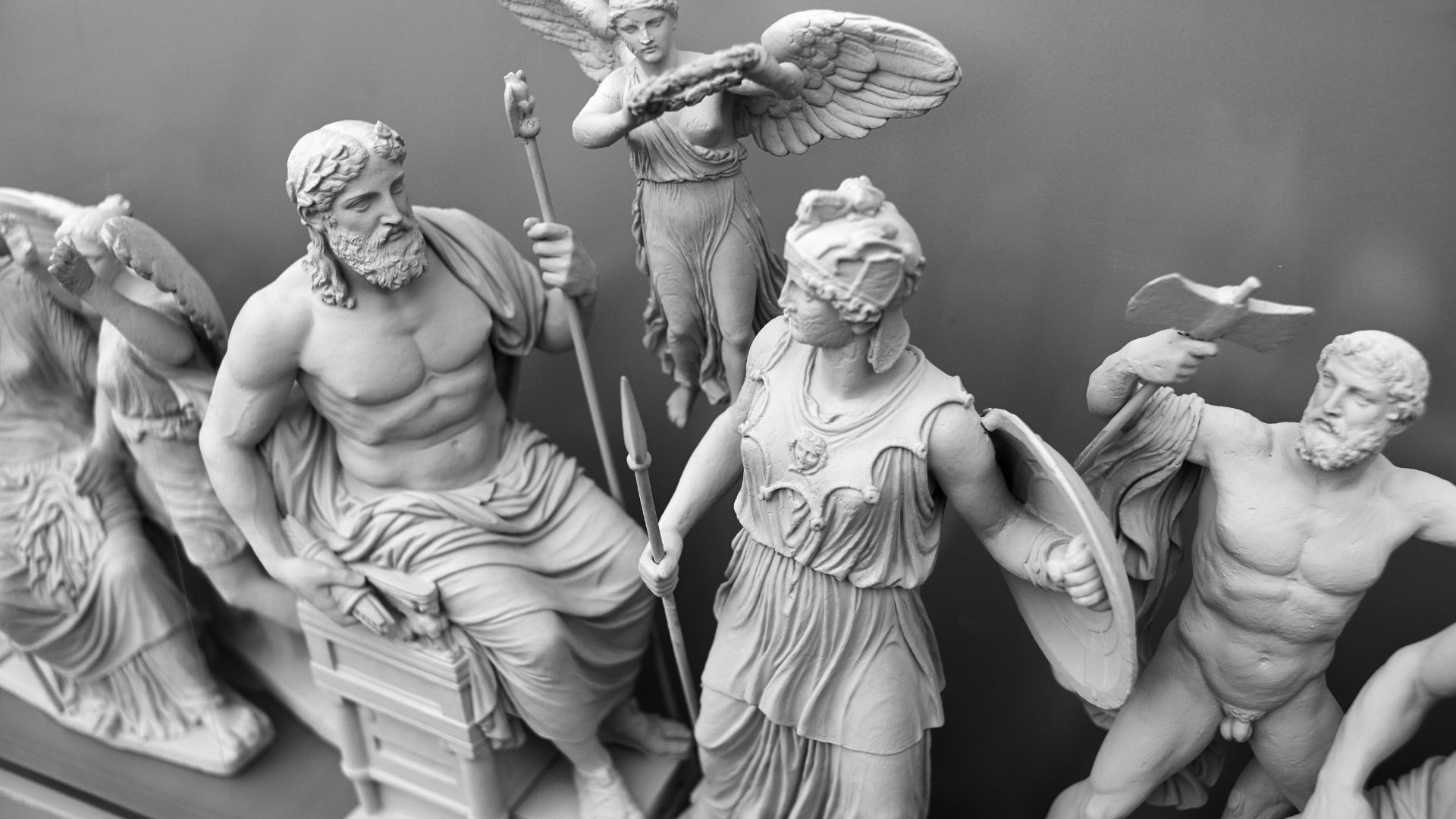
But Riordan didn’t create those gods. He borrowed Poseidon, Zeus, Athena and the whole chaotic family from ancient Greece and dropped them into contemporary settings. The myths were already there, packed with drama, betrayal, romance and epic battles. He just added smartphones and baseball caps.
Neil Gaiman did something similar in American Gods. Old deities struggling to survive in modern America where people worship technology and media instead. Odin working cons. Ancient gods driving cabs. It’s mythology meets reality TV.
The formula works because these gods were always meant to reflect human nature. Jealousy, pride, love, revenge. The ancient storytellers understood people, and modern writers tap into that same understanding.
Folklore Gives Fantasy Its Soul
Here’s where things get interesting. Mythology brings the big dramatic gods and heroes. Folklore brings the weird, creepy, beautiful stuff that makes a world feel lived in.
Think about the fairies in folk tales. Not the cute Disney version, the original ones. Those beings were dangerous, tricky and followed rules that made zero sense to humans. They’d steal children, grant wishes with horrible consequences and dance you to death if you weren’t careful.
Now look at shows like The Witcher or Carnival Row. The fae creatures there aren’t sweet. They’re complex, morally gray and genuinely unsettling. That’s pure folklore energy transplanted into modern storytelling.
Japanese folklore brings yokai and spirits that blur the line between helpful and harmful. Studio Ghibli films like Spirited Away pull directly from these traditions. You get bathhouse spirits, forest gods and creatures that feel both magical and ancient.
The Hero’s Journey Is Basically Mythology’s Greatest Hit
Every fantasy series follows a pattern. Ordinary person discovers they’re special. They go on a quest. Face impossible odds. Grow stronger. Save the world or die trying.
Sound familiar? That’s because Joseph Campbell literally mapped this out by studying myths from around the world. He called it the monomyth or hero’s journey. Luke Skywalker, Frodo, Harry Potter, Katniss Everdeen. All following the same ancient template.
Ancient myths had this down thousands of years ago. Gilgamesh seeking immortality. Odysseus trying to get home. Hercules completing impossible tasks. The structure works because it mirrors real human growth and transformation.
Modern fantasy writers don’t copy this by accident. They use it because audiences are hardwired to respond to these patterns. Our brains light up when we see someone overcome the odds because we’ve been telling ourselves these stories since humans first sat around fires.
Norse Mythology Owns Modern Fantasy
Thor isn’t just a Marvel character. He’s a Norse god who’s been smashing things with his hammer for over a thousand years.
The entire Marvel Cinematic Universe borrowed heavily from Norse myths. Odin, Loki, Asgard, Ragnarok. These weren’t Hollywood inventions. They came from Viking storytellers who needed to explain thunder, seasons and why bad things happen.
But Marvel isn’t alone. The TV show Vikings brought Norse culture back into mainstream awareness. Video games like God of War made Norse mythology feel visceral and relevant. Even The Lord of the Rings has Norse fingerprints all over it. Tolkien was obsessed with Nordic languages and legends.
Why does Norse mythology translate so well to modern fantasy? Maybe it’s the raw power. The inevitable doom of Ragnarok. The complex relationships between gods. Or maybe it’s just because Vikings are inherently cool and everyone knows it.
Fairy Tales Got a Serious Upgrade
Grimm’s fairy tales were never meant for kids despite what Disney wants you to believe. The original versions were dark, violent and psychologically twisted.
Modern fantasy remembered that. Shows like Once Upon a Time and Grimm brought fairy tale characters into contemporary settings but kept the edge. Snow White became a bandit. Red Riding Hood was a werewolf. The magic stayed but the stakes got real.
Fables comic series did this brilliantly. Fairy tale characters living in exile in modern New York, dealing with murder mysteries and political drama. The Big Bad Wolf as a detective. It shouldn’t work but it absolutely does because the source material was always darker than people remembered.
Mythology Makes World Building Easier
Creating a fantasy world from scratch is exhausting. You need languages, cultures, religions, histories, mythologies. That’s a massive amount of work.
But if you borrow from existing mythology? Half the work is already done.
Avatar The Last Airbender pulled from Asian philosophies and martial arts traditions. The elemental magic system reflects Taoist concepts. The spirit world draws from various Asian folklores. Result? A world that feels rich and authentic without needing twenty appendices to explain everything.
The Witcher series built its world using Slavic folklore. Leshy, kikimora, striga. These creatures existed in Eastern European tales long before Geralt started hunting them. Using established mythology gives instant depth and cultural weight.
Ancient Archetypes Never Go Out of Style
The wise old mentor. The trickster. The mother goddess. The fallen hero. These character types appear in every culture’s mythology for a reason.
Dumbledore is Merlin is Gandalf is Obi Wan. Same archetype, different robes. Loki is Coyote is Anansi. Trickster gods who cause chaos but sometimes save the day.
Modern fantasy keeps using these archetypes because they represent fundamental human experiences. We all need mentors. We all know someone who bends rules. These patterns resonate across time and culture.
Cultural Mythology Is Finally Getting Recognition
For too long, fantasy meant European mythology. Castles, knights, dragons, elves. That’s changing fast and it’s making fantasy infinitely better.
Black Panther brought Wakanda to life using African mythology and aesthetics. The ancestral plane, the power of vibranium, the traditions. All rooted in African cultural concepts.
Children of Blood and Bone by Tomi Adeyemi draws from West African mythology. The magic system, the gods, the culture. It’s fantasy that doesn’t default to European templates.
The Poppy War trilogy uses Chinese history and mythology. Shadow and Bone incorporates Russian folklore. We’re seeing mythology from every corner of the world finally get the fantasy treatment it deserves.
Share this with someone who thinks they know everything about fantasy. They don’t.
Why This Matters More Than You Think
Using mythology and folklore isn’t lazy writing. It’s smart storytelling that creates bridges between past and present.
When fantasy series tap into ancient myths, they’re connecting modern audiences to stories that shaped civilizations. They’re keeping oral traditions alive in new forms. They’re showing that human concerns like love, death, power and belonging haven’t changed much in thousands of years.
Plus, mythology gives fantasy series instant credibility. A dragon isn’t just a cool monster. It’s a symbol with weight and history. A trickster god isn’t just funny. They represent the chaos and creativity that drives change.
The Backlash Is Real Though
Not everyone loves the mythology borrowing trend. Some critics argue it’s cultural appropriation when writers take myths from cultures they don’t belong to and profit from them.
The debate gets heated. Is it appreciation or theft? Does it matter if the author respects the source material? Should certain mythologies be off limits?
These are valid questions without easy answers. What seems clear is that writers need to do their homework. Surface level borrowing that disrespects the culture feels hollow. Deep engagement that honors the traditions while adding something new? That’s where the magic happens.
Folklore Keeps Fantasy Grounded
Big mythological concepts are great for epic scale. But folklore brings the small details that make worlds believable.
Superstitions about salt and iron. Rituals for safe travel. Stories told to explain why crops failed or babies died. This is folklore’s domain and it makes fantasy feel textured.
The Witcher doesn’t just have monsters. It has specific folk remedies and beliefs about how to deal with them. Game of Thrones weaves in funeral rites and wedding traditions. These details come from real folklore practices.
Modern Twists on Ancient Stories
The best contemporary fantasy doesn’t just copy mythology. It remixes, subverts and reimagines.
Madeline Miller’s Circe retells Greek mythology from the witch’s perspective. Suddenly the villain becomes sympathetic and complex. The Song of Achilles gives the Trojan War a queer love story at its center.
These retellings ask new questions of old stories. What if the monster had reasons? What if the hero was actually terrible? What if the damsel saved herself?
It keeps mythology alive by refusing to let it calcify into museum pieces. These stories belong to everyone and every generation gets to reshape them.
The Future Looks Mythological
Fantasy isn’t moving away from mythology. It’s diving deeper.
Streaming services are mining global mythologies for fresh content. Amazon’s doing Lord of the Rings. Netflix adapted The Witcher. Disney Plus brought Percy Jackson back. Everyone wants that mythological magic.
Video games are ahead of the curve. God of War explored Greek then Norse mythology. Hades made Greek underworld management fun. Okami brought Japanese folklore to life in stunning visuals.
The appetite for mythology infused fantasy seems endless. As long as humans tell stories, we’ll keep returning to the ancient wells.
Why You Keep Coming Back
There’s something comforting about mythology in fantasy. These stories have survived centuries for a reason. They touch something primal.
When you watch a hero face impossible odds, you’re not just seeing special effects. You’re witnessing the same story humans have told since the beginning. You’re part of a tradition that spans cultures and millennia.
That’s powerful stuff wrapped in entertainment. It’s why you can’t stop watching, reading, playing these stories. They’re new and ancient at the same time.
The Verdict
Mythology and folklore aren’t crutches for lazy writers. They’re the foundation modern fantasy builds skyscrapers on. They provide tested frameworks, rich symbolism and emotional resonance that pure invention struggles to match.
The best contemporary fantasy series understand this. They borrow respectfully, remix creatively and deliver stories that feel both fresh and timeless. They prove that the oldest stories still have power when told with skill and passion.
Next time you’re deep into a fantasy binge, pay attention to the mythology hiding in plain sight. Notice the folklore woven into world building. See how ancient archetypes drive modern characters.
You’ll never look at fantasy the same way again.
Drop a comment below with your favorite mythology inspired fantasy series. Let’s settle this debate once and for all. And hit that share button because your friends need to know why they’re actually obsessed with thousand year old stories.