Grab your champagne and warm up those acceptance speeches because the 97th Academy Awards race is serving drama, surprises, and plot twists that would make any screenplay jealous. With just weeks until nominations drop on January 17, 2026, and the ceremony set for March 2 at the Dolby Theatre, Hollywood’s biggest guessing game has reached fever pitch. Adrien Brody has already secured virtually every precursor award for The Brutalist, making him the undisputed Best Actor frontrunner at age 51, twenty-two years after becoming the youngest ever winner for The Pianist. Timothée Chalamet’s Marty Supreme performance is racing him toward a potential third Oscar nomination before turning 30, cementing his status as the most nominated actor of his generation. Paul Thomas Anderson’s One Battle After Another swept early critics prizes and is the overwhelming Best Picture favorite, potentially earning PTA his first Oscar after eleven previous nominations. But here’s where it gets juicy: Cynthia Erivo, despite making history as the first Black actress with multiple Best Actress nominations in Musical/Comedy at the Globes, is suddenly at risk of being snubbed entirely as Wicked: For Good faces unexpected category confusion. Warner Bros is juggling three major contenders, Netflix and Neon are dominating with multiple nominees each, and the Supporting categories are absolute bloodbaths with no clear frontrunners. From Ryan Coogler’s vampire blues thriller Sinners submitting for multiple music categories to shocking snubs already materializing in precursor awards, the 2026 Oscar race is the most unpredictable, star-studded, and absolutely bonkers competition in recent memory. Ready to break down every category, every contender, and every wild prediction before nominations change everything? Let’s dive deep into who’s winning, who’s losing, and why this Oscar season will be talked about for years!
Best Picture: One Battle After Another’s Race To Lose
Credits: THR
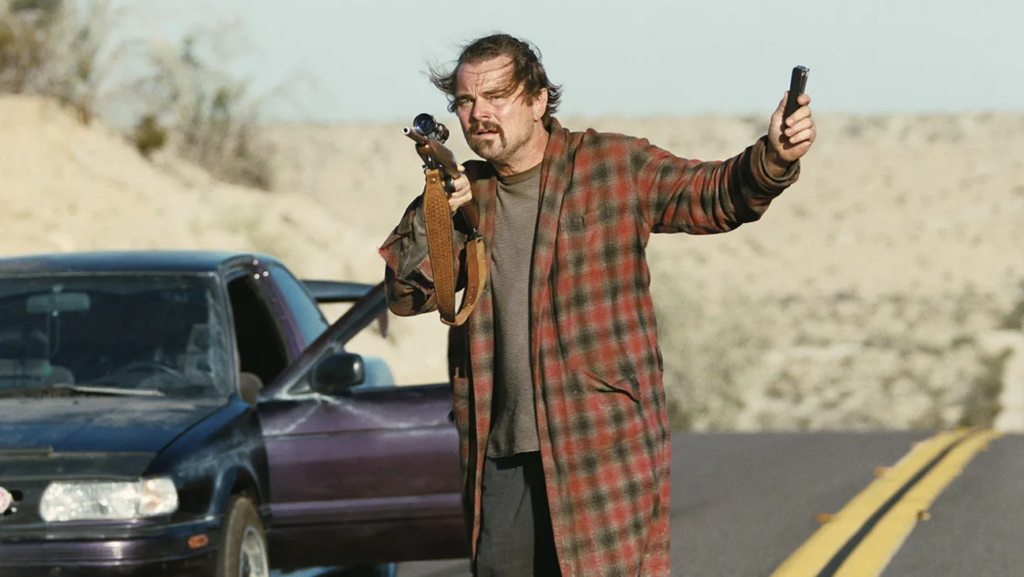
Let’s address the elephant wearing the Best Picture crown: Paul Thomas Anderson’s One Battle After Another isn’t just the frontrunner. It’s the overwhelming, undeniable, almost-certain winner unless something catastrophic happens between now and March. The film swept the earliest precursor awards with a dominance that hasn’t been seen in years.
On December 1, it won Best Film at the 35th Gotham Awards. The very next day, the New York Film Critics Circle named it Best Film. By Wednesday, the National Board of Review awarded it Best Film, Best Director for Anderson, and acting prizes for Leonardo DiCaprio, Benicio Del Toro, and newcomer Chase Infiniti. That’s three major wins in three consecutive days, establishing unstoppable momentum.
What makes One Battle After Another especially powerful is its timeliness. The film, loosely inspired by Thomas Pynchon’s novel Vineland, follows former revolutionaries reuniting to save a colleague’s daughter when an old enemy resurfaces. Its opening scene depicts a raid on an immigrant detention center, resonating powerfully during the current political climate. Both progressives praising its themes and conservatives like Ben Shapiro predicting it will “sweep all the Academy Awards” have created conversation that transcends typical Oscar buzz.
Warner Bros possesses the perfect vehicle to finally reward Anderson after years of near-misses. At 55, Anderson occupies the same position Martin Scorsese did when The Departed earned him his first Best Director Oscar in 2007. Hollywood loves correcting its mistakes by honoring filmmakers it previously overlooked, and Anderson’s time has come.
The ensemble cast provides ammunition across multiple categories. DiCaprio delivers what critics call transformative work. Sean Penn’s portrayal of Steven Locksmith, a white supremacist with unsettling charm, draws comparisons to Christoph Waltz’s Oscar-winning Inglourious Basterds performance. Penn, already a two-time Best Actor winner, has the inside track for a third Oscar in Supporting Actor, though only Ingrid Bergman, Walter Brennan, and Daniel Day-Lewis have achieved that feat.
Regina Hall, Ben Del Toro, and Chase Infiniti round out a cast where virtually everyone could receive nominations. The film’s genre-blending approach, combining action, political thriller, and dark comedy, gives it broad appeal beyond just prestige drama voters.
Competing against One Battle After Another feels almost futile, but several films are positioned as strong alternatives should the frontrunner stumble.
Share this with your Oscar-obsessed friend who’s already planning viewing parties!
The Best Picture Field: Who Else Has A Shot?
Hamnet, Chloé Zhao’s Shakespeare-inspired drama starring Jessie Buckley and Paul Mescal, sits comfortably in second place across most predictions. The Toronto International Film Festival People’s Choice Award winner combines prestige pedigree with genuine emotional resonance. Max Richter’s score has already received widespread acclaim, and the film’s exploration of grief, love, and artistic creation through the lens of Shakespeare’s family tragedy provides Oscar-friendly themes.
Zhao previously won Best Director and Best Picture for Nomadland, giving her Academy credibility that few contemporary filmmakers possess. If One Battle After Another falters, Hamnet represents the safest alternative for voters seeking quality without controversy.
Ryan Coogler’s Sinners occupies fascinating space as the wildcard blockbuster contender. The vampire thriller set in 1930s Mississippi features Michael B. Jordan in dual roles and addresses racism, exploitation, and the birth of blues music through genre filmmaking. Ludwig Göransson’s score, which depicts the horrifying origin of blues from lynching and suffering, has already earned Grammy nominations and critical raves.
Warner Bros faces the enviable problem of campaigning for both One Battle After Another and Sinners simultaneously, plus potentially Weapons if that fall release gains traction. Studios can push multiple contenders, but history shows campaigns conflict when resources and attention get divided. Warner Bros last secured two Best Picture nominations in 2022 with Dune and King Richard, but Denis Villeneuve’s director snub for Dune demonstrated the challenges of juggling multiple campaigns effectively.
Josh Safdie’s Marty Supreme, featuring Timothée Chalamet in a performance generating rapturous reviews, represents A24’s main Oscar play. The film opened in limited release with record-breaking numbers, demonstrating Chalamet’s box office pull beyond just his artistic credentials. Critics describe it as “the best movie of the year” and Chalamet’s finest performance to date.
Wicked: For Good enters the race in complicated position. The film shattered box office records with a $226 million global opening weekend, making it the highest-grossing Broadway adaptation ever. But commercial success doesn’t automatically translate to Oscar wins, and the musical’s crowding of the Actress and Supporting Actress categories creates potential for vote-splitting that could hurt its overall chances.
Other strong contenders include Brady Corbet’s The Brutalist, Kathryn Bigelow’s A House of Dynamite (if it lives up to expectations), Noah Baumbach’s Jay Kelly for Netflix, and Neon’s Sentimental Value, the Norwegian submission directed by Pål Sletaune that’s generating strong buzz.
The field remains surprisingly open beyond the top tier, with focus films like Bugonia, Train Dreams, and Roofman all positioned as potential spoilers if they catch fire with critics or connect emotionally with Academy voters.
Best Director: Anderson’s Crowning Achievement
Paul Thomas Anderson’s path to his first Oscar win looks clearer than any category outside Best Actor. His eleven previous nominations without a competitive win (he received an honorary Palme d’Or at Cannes) has become the kind of narrative Academy voters love correcting.
The Director category typically mirrors Best Picture, and Anderson’s sweep of early critics awards suggests he’s unstoppable. The combination of career achievement, timely subject matter, Warner Bros’ robust campaign, and genuine filmmaking excellence creates perfect conditions for victory.
Brady Corbet’s work on The Brutalist represents his strongest competition. The epic film about a Holocaust-surviving Hungarian architect building a new life in America showcases Corbet’s ambition and technical prowess. His previous feature, Vox Lux, established him as a director to watch, and The Brutalist delivers on that promise with 215-minute runtime, VistaVision cinematography, and performances critics call transformative.
Chloé Zhao enters as the most recently crowned winner, having taken Director for Nomadland in 2021. Repeat victories are rare, especially with minimal gap between wins. Clint Eastwood (Unforgiven, Million Dollar Baby) achieved it, but Zhao faces tougher competition and less narrative urgency than her first win provided.
Ryan Coogler’s genre-bending with Sinners gives him an outside shot. The Academy has historically struggled with recognizing horror or genre directors, but Coogler’s Black Panther nominations demonstrated his mainstream acceptance. Sinners’ artistic ambition combined with commercial appeal could make him a spoiler.
Josh Safdie, previously nominated for Uncut Gems screenplay, directs without brother Benny for the first time on Marty Supreme. If the film catches fire beyond just Chalamet’s performance, Safdie could ride momentum to a nomination, though winning seems unlikely against Anderson’s juggernaut.
Other possibilities include Jon M. Chu for Wicked: For Good (commercial success rarely translates to Director nominations for musicals), Guillermo del Toro for Frankenstein if Netflix’s campaign gains traction, and any number of international directors whose films break through in unexpected ways.
Don’t miss out on witnessing Paul Thomas Anderson finally get his Oscar!
Best Actor: Brody’s Second Triumph
This race is over. Adrien Brody winning Best Actor for The Brutalist is as close to guaranteed as Oscar predictions get. He’s swept virtually every precursor award including the Golden Globe, Critics’ Choice, and BAFTA. His only loss came at the Screen Actors Guild Awards, where Timothée Chalamet prevailed, but even that outlier hasn’t shaken Brody’s frontrunner status.
At 51, Brody maintains his record as the youngest ever Best Actor winner, having claimed the prize at 29 for The Pianist in 2003. Now he joins the exclusive club of actors with perfect Oscar win rates from multiple nominations, including Vivien Leigh, Hilary Swank, Louise Rainer, Christopher Waltz, Helen Hayes, and Mahershala Ali.
His portrayal of László Tóth, a Hungarian modernist architect surviving concentration camps to relocate to America where he designs a massive community center for a wealthy tycoon, showcases “angular fierceness and passion” according to The Guardian’s Peter Bradshaw, who called it likely Brody’s best performance surpassing even The Pianist.
The role’s physical and emotional demands, spanning decades and psychological torment, provides exactly the type of transformative performance Academy voters reward. Brody’s speeches during the campaign trail have been eloquent and moving, thanking his parents for instilling “respect, kindness, and a wonderful spirit” while noting the journey’s difficulty, likely referencing the Weinstein-adjacent scandals that have complicated his career narrative.
Timothée Chalamet’s Marty Supreme performance represents the only realistic threat, but even that feels like positioning for a nomination rather than an actual win. Chalamet, at 29, has already received two Best Actor nominations (Call Me By Your Name, A Complete Unknown), making him the youngest actor with multiple nods since James Dean. A third nomination would extend his remarkable streak, and if he somehow won, he’d become the second-youngest Best Actor winner after… Adrien Brody.
The delicious irony of Brody potentially denying Chalamet the record he himself set adds narrative spice to the race. Chalamet’s performance has earned rapturous reviews, with critics calling it his career-best, but Brody’s combination of overdue narrative, perfect campaigning, and universally acclaimed performance makes him unbeatable.
Leonardo DiCaprio’s work in One Battle After Another garners praise but likely lands him in Supporting Actor considerations instead. Ralph Fiennes in Conclave led predictions early but has faded as The Brutalist’s dominance became clear. Other possibilities like Mark Hamill for The Life of Chuck, Jeremy Strong for Springsteen: Deliver Me from Nowhere, and Jacob Elordi for Frankenstein fill out the nomination slots without threatening Brody’s victory.
Best Actress: The Year’s Most Chaotic Category
Unlike Best Actor’s foregone conclusion, Best Actress is absolute mayhem with no clear frontrunner and shocking potential snubs already materializing. Cynthia Erivo’s situation epitomizes the category’s confusion.
For Wicked: For Good, Erivo reprises her role as Elphaba, delivering what critics call a “terrific” performance with “rich, velvety voice cracking under the weight of rejections and ridicule.” She made history as the first Black actress with multiple Best Actress nominations in Musical/Comedy at the Golden Globes. She’s already earned nominations at Globes, Critics’ Choice, BAFTA, and SAG for the film.
But here’s the problem: she placed seventh (at best) in the Critics Choice Association voting, and their expanded six-nominee field still couldn’t find room for her. Since the Oscars only nominate five, Erivo faces genuine snub risk despite leading the Wicked campaign all year.
The crowded field includes Demi Moore for The Substance, whose comeback performance has stunned critics and won her the Golden Globe. Nicole Kidman for Babygirl delivers career-best work according to early reviews. Angelina Jolie’s Maria about opera singer Maria Callas showcases her dramatic range. Saoirse Ronan’s work in whatever film she’s campaigning (her name appears consistently in predictions without specific titles, suggesting multiple potential submissions) keeps her in contention.
Mikey Madison’s Anora performance from Cannes winner Sean Baker has maintained buzz despite releasing months ago. Tilda Swinton, Julianne Moore, Kate Winslet, and Amy Adams all appear in predictions for various films, demonstrating how split the votes could become.
The chaos benefits whoever emerges from pack with strong narrative and campaign execution. Moore’s comeback story provides powerful angle. Jolie’s return to prestige drama after years of directing offers another. Kidman’s continued excellence in challenging roles never gets old. Ronan is overdue after four previous nominations without a win.
Erivo’s potential snub would shock given Wicked: For Good’s commercial success and her critical acclaim, but it demonstrates how unpredictable this category has become. The musical confusion (is she lead or supporting? Is this a drama or comedy per precursor categories?) has muddied waters in ways that could prove fatal.
Share this with anyone who loves watching Oscar chaos unfold!
Best Supporting Actor: Sean Penn’s Third Oscar?
If Adrien Brody’s Best Actor victory seems certain, Sean Penn’s path to a third Oscar for One Battle After Another represents the Supporting Actor equivalent. His portrayal of Steven Locksmith, a white supremacist antagonist with disturbing charisma, draws comparisons to Christoph Waltz’s Inglourious Basterds win and Michael Fassbender’s 12 Years a Slave work.
Penn’s two previous wins (Mystic River, Milk) demonstrated his appeal to Academy voters. Only a handful of actors have won three Oscars, and none in recent years. But Penn’s performance is so commanding, so perfectly calibrated between loathsome and captivating, that voters cannot look away.
The challenge is that winning a third Oscar, particularly in Supporting Actor, is historically difficult. Only Ingrid Bergman (Murder on the Orient Express), Walter Brennan (three Supporting Actor wins), and Daniel Day-Lewis (three Best Actor wins) have achieved it. Brennan’s three wins all came in supporting, making him the category precedent.
Competition includes several formidable performances. Guy Pearce in The Brutalist plays the wealthy tycooon who hires László Tóth, delivering what critics call scene-stealing work opposite Brody. His supporting role benefits from The Brutalist’s overall strength while providing distinct character arc.
Stanley Tucci in Conclave represents the veteran character actor finally getting Oscar recognition. Jonathan Bailey’s work in Wicked: For Good as Fiyero showcases his Broadway-to-Hollywood transition. Benicio Del Toro in One Battle After Another could split votes with Penn, potentially benefiting both or hurting their chances depending on how ballots shake out.
Other possibilities include Mark Ruffalo, Colman Domingo, and various character actors whose performances in smaller films broke through critically. The category remains more open than Actor or Director but Penn holds slight edge through combination of acclaim, film’s strength, and career narrative.
Best Supporting Actress: Total Bloodbath
Supporting Actress makes the Best Actress chaos look organized by comparison. No clear frontrunner has emerged, multiple films are competing with several actresses in contention, and vote-splitting could produce genuinely shocking results.
Ariana Grande’s Glinda in Wicked: For Good represents the most fascinating case study. The pop superstar, making her first serious dramatic film appearance, earned widespread acclaim for balancing comedy, vulnerability, and vocal prowess. She received Golden Globe, Critics’ Choice, SAG, and BAFTA nominations, demonstrating industry acceptance beyond just her music fanbase.
But Grande faces several challenges. First, she’s campaigning in Supporting while Erivo is in Lead, and voters might not nominate one without the other out of perceived fairness. Second, her celebrity persona precedes her acting, making some voters skeptical despite critical consensus. Third, the category is simply too crowded with deserving performances.
Felicity Jones in The Brutalist plays László’s wife Erzsébet, providing emotional center to the epic’s sprawling narrative. Her work benefits from the film’s overall strength and her own established credibility (she was previously nominated for The Theory of Everything).
Margaret Qualley in The Substance delivers career-redefining work according to critics. Isabella Rossellini’s Conclave performance at age 72 showcases a legend still commanding screen presence. Zoe Saldaña’s Emilia Pérez work represents her first major dramatic role outside franchise filmmaking.
Other strong contenders include Jamie Lee Curtis (The Last Showgirl), Danielle Deadwyler (The Piano Lesson), Sophie Wilde, and numerous character actresses whose performances deserve recognition but face mathematical impossibility of five nomination slots.
The category could easily go to any of ten actresses depending on how votes split and which campaigns execute most effectively down the stretch. It’s the year’s most unpredictable major category.
The International Feature Race: Neon’s Dominance
Neon has positioned itself as the international cinema powerhouse with four of the top contenders: Norway’s Sentimental Value, France’s It Was Just an Accident, Brazil’s The Secret Agent, and Spain’s Sirāt. Having multiple horses in the race provides strategic advantages while also risking vote-splitting if Academy members divide loyalties between Neon titles.
Sentimental Value, directed by Pål Sletaune, currently leads predictions as Norway’s submission. The film’s exploration of memory, identity, and emotional connection has resonated with critics and festival audiences, generating buzz that few Norwegian submissions achieve.
France’s It Was Just an Accident entered the conversation following strong reviews. The title’s intriguing premise and execution make it a dark horse that could surprise if it connects with voters emotionally.
Denmark typically submits strong contenders, and their 2025 entry remains competitive. Germany, South Korea, Japan, and other traditional powers in this category are all jockeying for position with films that haven’t broken through to widespread American awareness yet.
The International Feature category often rewards films that combine artistic achievement with accessible storytelling, and Neon’s strategy of acquiring multiple potential nominees increases their odds while also complicating campaign focus. The studio must balance promoting all four without neglecting any single film’s chances.
Don’t miss out on discovering international cinema gems before Oscar nominations!
The Music Categories: Göransson vs. Richter
Best Original Score appears to be a two-horse race between Ludwig Göransson for Sinners and Max Richter for Hamnet, though Daniel Blumberg’s The Brutalist jazz-influenced work has generated passionate support.
Göransson, already a two-time Oscar winner (Black Panther, Oppenheimer), created a score for Sinners that critics call “the best film score not just of 2025 but of many years.” His blues-inflected composition captures the genre’s tragic origins through guitars, orchestration, and emotional depth that serves Ryan Coogler’s vision perfectly. The film’s depiction of blues music birthing from suffering and resistance provides Göransson with powerful thematic material.
Göransson’s score also earned six Grammy nominations, demonstrating crossover appeal beyond just film music circles. His track “Mount Bayou” accompanies the film’s most devastating sequence and has been cited as an instant classic of film composition.
Max Richter’s Hamnet score applies Elizabethan musical grammar and period instrumentation to contemporary composition, creating soundscapes that feel simultaneously authentic and modern. Richter’s reputation as one of his generation’s most influential composers (over three billion streams) gives him name recognition that helps during voting.
Daniel Blumberg revolutionized how jazz functions in cinema with The Brutalist. His innovative approach, composing parts on location during filming in Budapest and recording live performances with period instruments, produced a score unlike anything else this year. The “Jazz Club” track recreates 1950s party atmosphere through deliberate rhythmic disruption and wind instruments symbolizing exhaustion.
Other contenders include Hans Zimmer (potentially for multiple films), Trent Reznor and Atticus Ross (Challengers), Kris Bowers (The Wild Robot), and various composers whose work elevated their films beyond expectations.
Best Original Song remains wide open with Sinners submitting two tracks: “I Lied to You” and “Last Glimpse of the Sun.” The strategy of multiple submissions from one film rarely succeeds, as votes split between the songs, but both compositions are strong enough to overcome that historical pattern.
The Craft Categories: Where Films Build Momentum
Cinematography feels like The Brutalist’s to lose. Shot on 35mm VistaVision by Lol Crawley, the film’s visual splendor has been universally praised as some of 2025’s most stunning imagery. The format choice and technical execution make it the frontrunner with One Battle After Another’s cinematographer providing main competition.
Production Design could go several directions. The Brutalist’s mid-century architecture and period detail provide obvious appeal. Wicked: For Good’s fantasy world-building represents another approach. Hamnet’s Elizabethan settings showcase different skill set. Each film in this race demonstrates excellence in distinct areas, making predictions difficult.
Costume Design similarly splits between period pieces (Hamnet, The Brutalist) and fantasy spectacle (Wicked: For Good). The category often rewards whichever film made the biggest impression visually, regardless of historical accuracy versus imaginative creation.
Film Editing will likely follow Best Picture, with One Battle After Another’s rhythm and pacing showcasing expert cutting. The Brutalist’s 215-minute runtime that maintains engagement demonstrates editorial prowess. Action films and thrillers in the race provide different editing styles that appeal to specific voters.
Sound Design and Visual Effects categories favor the biggest technical achievements. Wicked: For Good’s musical numbers required extensive sound work. The Brutalist’s period recreation demanded subtle VFX. One Battle After Another’s action sequences needed both categories’ expertise.
Makeup and Hairstyling has The Substance as early frontrunner given the film’s transformation requirements. The Brutalist’s aging makeup across decades provides competition. Wicked: For Good’s fantasy character work represents another approach entirely.
Share this with your friend who appreciates behind-the-scenes artistry!
The Screenplay Categories: Original vs. Adapted
Best Original Screenplay appears to be Brady Corbet’s The Brutalist versus Paul Thomas Anderson’s One Battle After Another, with Josh Safdie’s Marty Supreme and Ryan Coogler’s Sinners as dark horses. Original Screenplay often provides consolation prizes for films that won’t win Best Picture, making this category especially unpredictable.
The Brutalist’s sweeping narrative about architecture, capitalism, and artistic integrity provides thematically rich material that screenplay voters appreciate. Corbet’s ambitious storytelling across 215 minutes without losing narrative thread demonstrates mastery of the form.
One Battle After Another’s genre-blending political thriller based loosely on Thomas Pynchon offers different appeal. Anderson’s dialogue and character work have always been screenplay strengths, and this film continues that tradition while adding timely political commentary.
Best Adapted Screenplay favors Conclave, based on Robert Harris’s novel, and potentially Hamnet from Maggie O’Farrell’s source material. Wicked: For Good adapts both the stage musical and Gregory Maguire’s novel, creating complicated adaptation questions about how much credit goes to previous versions versus the film’s screenplay.
The category rewards faithful adaptations that improve on source material or bring new perspective to familiar stories. Conclave’s thriller plotting and Hamnet’s emotional depth both fit that description.
The Snubs, Surprises, And Narratives To Watch
Several storylines beyond individual categories will define the 2026 Oscars. First, can Warner Bros successfully campaign three major contenders without any suffering? The studio’s strategy of spreading resources across One Battle After Another, Sinners, and potentially Weapons tests their campaign infrastructure’s limits.
Second, will Netflix finally win Best Picture? The streaming giant has Jay Kelly and Frankenstein in the race, plus potentially other titles. After years of nominations without the top prize, Netflix desperately wants validation that streaming films deserve equal respect.
Third, Neon’s dominance across multiple categories with limited resources compared to major studios demonstrates how savvy distribution and targeted campaigns can compete with deep-pocketed competitors.
Fourth, the generational shift in acting nominees continues with younger performers like Timothée Chalamet, Ariana Grande, and Chase Infiniti competing against established legends. The Academy’s membership changes over recent years have brought younger, more diverse voters who may have different preferences than traditional Oscar voters.
Fifth, genre filmmaking’s acceptance grows with Sinners and potentially other horror/thriller titles earning major nominations. The Academy historically dismissed genre work as “not serious enough” for Oscars, but that stigma continues eroding.
Sixth, international cinema’s increasing prominence as Hollywood becomes genuinely global rather than American-dominated with foreign distribution. The International Feature category gains prestige annually, and several foreign-language films compete in major categories beyond just their designated race.
What January 17 Nominations Will Reveal
Nominations announcement will either confirm or upend predictions. Several questions will be answered immediately:
Does Paul Thomas Anderson’s One Battle After Another secure double-digit nominations cementing Best Picture frontrunner status? Does The Brutalist match or exceed that total demonstrating serious threat?
How many acting nominations does Wicked: For Good receive and in which categories? The Grande/Erivo positioning will finally be resolved, and snubs or surprises will reshape Supporting Actress predictions completely.
Which dark horses break through with unexpected nominations? Every year produces at least one or two shockers, and 2026 will be no exception.
How does Warner Bros fare with its multiple contenders? Do all three make Best Picture or does pushing several campaigns hurt all of them?
What international films surprise with major category nominations beyond International Feature? This happens occasionally and signals potential upsets.
The nominations also establish narratives for the final campaign stretch. Snubs create controversy and conversation. Unexpected nominees generate feel-good stories. The configuration of each category’s five nominees determines strategy for final two months.
Don’t miss out on the most exciting Oscars race in years!
March 2: Ceremony Predictions
The 97th Academy Awards ceremony on March 2, 2026 at the Dolby Theatre will likely see One Battle After Another dominate major categories including Best Picture, Director, and potentially acting prizes for Sean Penn. Adrien Brody’s Best Actor win for The Brutalist is virtually certain barring unprecedented upsets.
The ceremony’s biggest suspense will be Best Actress, Supporting Actress, and whether any spoilers emerge in craft categories. Göransson vs. Richter in Score will be fascinating given both composers’ excellence. Original Song remains completely unpredictable.
The show itself, broadcast on ABC, faces pressure to maintain viewership gains from recent years. Moving the ceremony permanently to March from February appears sustainable, and avoiding conflicts with SXSW and other festivals helps international attendees participate.
Expect powerful speeches addressing political climate given One Battle After Another’s themes and Hollywood’s generally progressive bent. The balance between celebration and activism will test producers and winners’ communication skills.
The ceremony will also honor career achievements, likely including someone whose body of work deserves recognition regardless of competitive categories. These tributes provide emotional highlights that transcend individual year’s films.
So there you have it. Every prediction, every narrative, every potential upset for the 97th Academy Awards. From Adrien Brody’s coronation to Timothée Chalamet’s third nomination quest, from Paul Thomas Anderson finally winning to the chaos of Best Actress and Supporting Actress, from Warner Bros’ juggling act to Neon’s international dominance, this Oscar season has delivered surprises, confirmed expectations, and set up a ceremony that promises drama beyond just who wins gold. January 17 nominations will either validate these predictions or blow them up entirely. March 2’s ceremony will resolve months of speculation and campaigning. And through it all, film lovers get to celebrate an incredible year of cinema featuring performances and artistry worthy of recognition regardless of awards outcomes. What’s your boldest prediction? Who do you think gets snubbed? Which dark horse are you rooting for? Drop your hottest takes in the comments and let’s debate until nominations arrive! Tag your Oscar party planning friend who’s already stocking champagne. Follow for nomination day live coverage, ceremony predictions, and everything awards season that makes this the most wonderful time of the year for film fans. Because whether your favorites win or lose, the journey of celebrating cinema’s finest achievements never gets old. Here’s to the films, performances, and artistry that made 2025 unforgettable. May the best film, actor, and artist win. See you on Oscar night!