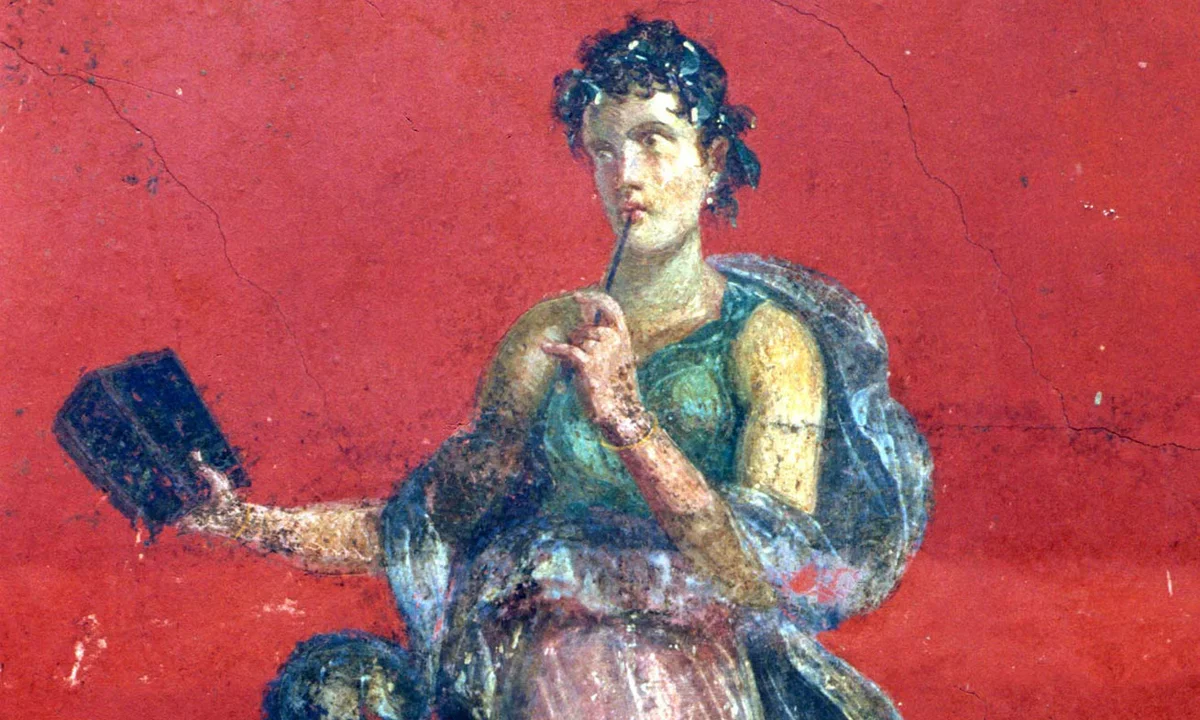
The women of ancient epics spent centuries trapped in footnotes. They existed as prizes to be won, monsters to be slain, or faithful wives waiting at home while men sailed off to glory. Penelope wove. Helen’s face launched ships. Medusa became a cautionary tale. But these women, if they were real or symbolic or something in between, had thoughts. They had rage. They had stories that no one bothered to write down because the men holding the pens decided which narratives mattered.
Something has shifted in contemporary literature. Women writers are taking those dusty epics off the shelf, blowing off thousands of years of accumulated male perspective, and asking a simple question: what if we told it differently? The result is a tidal wave of feminist retellings that are reshaping how readers understand classical texts. These aren’t just stories with female protagonists. They’re radical reimaginings that expose the violence, silencing, and erasure embedded in the original narratives.
The movement gained serious momentum with Margaret Atwood’s “The Penelopiad” in 2005, though she’d been playing with mythology since her early poetry. Atwood gave Penelope a voice from beyond the grave, letting her tell the truth about those twenty years of waiting. She also gave voice to the twelve hanged maids, the women Odysseus murdered upon his return home. In Homer’s version, their deaths merit barely a mention. Atwood made readers sit with that violence, made them see it as the war crime it was. The book sold well but didn’t dominate conversations the way some later retellings would.
Then Madeline Miller published “The Song of Achilles” in 2011 and “Circe” in 2018. Miller, who taught Latin and Greek for years, brought scholarly rigor and achingly beautiful prose to her retellings. “Circe” in particular struck a chord that reverberated through the publishing industry. The book spent weeks on bestseller lists. Readers who’d never cared about Greek mythology suddenly couldn’t stop talking about the witch who turned men into pigs. Miller took a character who existed primarily as an obstacle in Odysseus’s journey and gave her an entire life. Circe became a survivor, an artist, a mother, a woman who learned her power despite living among gods who despised her.
What made these books resonate wasn’t just good writing. They arrived at a cultural moment when conversations about women’s voices, experiences, and treatment had reached a critical mass. The Me Too movement was forcing reckonings across industries. Women were done being quiet about violence and dismissal. These retellings offered a framework for discussing ancient patterns of silencing that still echoed in contemporary life.
Reclaiming The Narrative
The feminist retelling boom isn’t about making ancient women into modern feminists. That would be dishonest and boring. These authors understand that women in ancient Greece or Troy or wherever lived within specific cultural constraints. The power of these retellings comes from showing how women navigated, resisted, or survived within those constraints. They show the gaps between official histories and lived experiences.
Pat Barker’s “The Silence of the Girls” takes on the Trojan War from Briseis’s perspective. In the “Iliad,” Briseis is the war prize that Agamemnon takes from Achilles, sparking the conflict that forms the epic’s core. She speaks maybe three times in the original text. Barker gives her the entire narrative. Briseis describes her city’s fall, her husband’s murder, her enslavement, her rape. She watches the great heroes squabble over honor while she and other enslaved women try to survive each day. Barker doesn’t soften the violence or pretend these women had choices they didn’t have. She shows war from the ground level, where glory looks like blood and shame.
The book’s title itself is a rebuke. These girls weren’t silent. They were silenced. There’s a difference, and it matters. Barker even plays with narrative voice, occasionally shifting to third person when Briseis’s trauma becomes too overwhelming for first person narration. It’s a brilliant formal choice that highlights how violence fractures identity and voice.
Natalie Haynes has made a career of these retellings. “A Thousand Ships” tells the Trojan War through multiple female perspectives: Briseis, Chryseis, Penelope, Calliope, Hecuba, and others. Each woman gets chapters or sections. The effect is kaleidoscopic. Readers see the same events from radically different angles. Haynes, who studied classics at Cambridge, brings deep knowledge of the source material. She’s not interested in simple reversals where women become warriors and men become victims. She wants to show the full humanity of people the original epics reduced to types.
“Pandora’s Jar,” Haynes’s nonfiction exploration of Greek myths, does something similar. She examines ten women from mythology and traces how their stories changed over centuries. Medusa wasn’t always a monster. Early versions of her myth tell different stories. Clytemnestra had reasons for murdering her husband beyond simple treachery. Haynes shows how patriarchal retellings stripped women of complexity, motive, and humanity.
The Monster’s Perspective
Several recent retellings focus specifically on women labeled as monsters. Monsters are useful for societies. They mark boundaries of acceptable behavior. They embody fears. Ancient Greek monsters were often women whose sexuality, power, or knowledge threatened male order. Looking at these figures through feminist lenses reveals how monstrosity gets constructed and weaponized.
Jessie Burton’s “Medusa” gives voice to the gorgon before and after her transformation. Burton draws on versions of the myth where Medusa was a beautiful priestess raped by Poseidon in Athena’s temple. Athena, rather than punishing Poseidon, transformed Medusa into a creature so hideous that anyone who looked at her turned to stone. The victim became the monster. Burton’s Medusa is furious at this injustice. She’s also lonely, trapped, and desperate for connection. When Perseus comes to kill her, Burton shows both perspectives. The hero needs glory. The monster wants to be seen as human.
Jennifer Saint’s “Ariadne” tackles the Minotaur’s story from the perspective of Ariadne and her sister Phaedra. The Minotaur, half man and half bull, is the product of their mother’s cursed union. He’s kept in a labyrinth and fed Athenian youths. He’s a monster, certainly. But he’s also their brother. Saint doesn’t excuse the violence but complicates the easy narrative of heroic Theseus slaying the beast and saving Athens. She shows the cost to the women who loved the monster, who understood him as family, who had to live with the aftermath of his death.
These retellings ask readers to sit with discomfort. Monsters did monstrous things. But how did they become monsters? Who benefits from calling them monsters? What does it cost to kill them? There aren’t always clear answers, which is precisely the point.
Reimagining Helen
Helen of Troy might be the most retold woman in Western literature. Her face launched a thousand ships and caused a ten year war. Except she didn’t launch anything. Men decided to fight over her. They made her beauty into a justification for violence. For centuries, writers blamed Helen for the war or debated whether she went to Troy willingly or was abducted. Either way, she bore responsibility for male violence.
Recent retellings reject this framework entirely. Laurie Lico Albanese’s “Hester” weaves together Hester Prynne and a reimagined early life, but Albanese had earlier engaged with classical revision. More directly, “Helen of Troy” by Margaret George takes the mythological queen and gives her full interiority. George’s Helen makes choices, has desires, and refuses to be simply beautiful. The book doesn’t pretend the war didn’t happen or that people didn’t die. It insists that Helen’s version of events matters.
Claire Heywood’s “Daughters of Sparta” tells the story of Helen and Clytemnestra as sisters navigating a world that treats them as commodities. Helen doesn’t want to be fought over. Clytemnestra doesn’t want her daughter sacrificed for good winds. The war happens to them, not because of them. Heywood shows how patriarchal power structures create no win situations for women, then blame women for the consequences.
The most radical move these retellings make regarding Helen is removing the question of blame entirely. It doesn’t matter if she loved Paris or was kidnapped. It doesn’t matter if she was faithful to Menelaus or not. Her choices, whatever they were, don’t justify war. Men chose war. They used Helen as an excuse. These retellings force readers to see that distinction clearly.
Gods And Power
Greek and Roman gods were terrible. They raped, murdered, cursed, and manipulated mortals for entertainment. Male gods faced few consequences for their actions. Female gods often punished other women rather than the gods who wronged them. These dynamics make mythology uncomfortable reading with modern sensibilities.
Feminist retellings don’t ignore divine violence. They center it. They show how gods embodied and legitimized the worst aspects of patriarchal power. When Zeus rapes women and transforms them into animals or stars, that’s not romance. It’s an abuse of power so extreme that the victim ceases to be human.
Miller’s “Circe” explores this dynamic in depth. Circe is a minor goddess, daughter of Helios and a nymph. She has some power but not much. Her family despises her. The male gods treat her as an object. Her transformation of men into pigs isn’t random cruelty. It’s self defense in a world where men, mortal and divine, see her as something to be used. The pigs at least are honest about their nature.
The novel also examines Circe’s relationship with other women. She struggles to connect with nymphs who’ve learned to survive through pleasing gods. She fails to save Scylla from transformation. She eventually finds connection through motherhood and through other outsiders. Miller shows how patriarchy pits women against each other while pretending that’s natural rather than constructed.
The Trojan Women
The Trojan War provides endless material for feminist revision because the original texts are so thoroughly male focused. The war is about male honor, glory, rage, and pride. Women exist as motivations or rewards. Their suffering after Troy falls gets mentioned but not explored. They’re distributed as prizes, enslaved, forced into concubinage. The texts move on to more heroic deeds.
Contemporary retellings don’t move on. They stay with the women in burning Troy and on the beaches afterward. They show enslavement, rape, forced labor, and trauma. They show women trying to protect children who will be murdered. They show mothers forced to watch sons die and daughters enslaved. They show the cost of male glory in female bodies.
Barker’s “The Silence of the Girls” does this unflinchingly. Briseis describes the night Troy fell. She describes what happened to Queen Hecuba, to Andromache, to Cassandra. She describes being passed from Achilles to Agamemnon to Achilles again like property. She describes other enslaved women’s strategies for survival. Some try to please their captors. Some withdraw entirely. Some maintain fierce dignity. None of them chose this.
The sequel, “The Women of Troy,” continues the story. The Greeks can’t sail home. They’re stuck on the beach with their captive women while priests try to figure out which god they’ve angered. The women know. The gods are angry because the Greeks defiled temples, murdered children, and committed endless atrocities. But the Greek men keep looking for external reasons for their suffering rather than examining their own actions.
These books are hard to read. They should be. They show war as it actually functions rather than as glorious adventure. They show what happens to women in conflict zones. They show how victors write histories that erase or justify violence.
Not Just Greece And Rome
While Greek and Roman mythology dominate the feminist retelling trend, authors are expanding into other traditions. The techniques developed for revising Homer work for other patriarchal texts too. Any tradition with silenced female characters is ripe for reimagining.
Nikita Gill’s poetry collection “Great Goddesses” explores female figures from various mythological traditions. Her work emphasizes the power these women held before later retellings diminished them. Many ancient goddesses were reduced over time, their attributes assigned to male gods, their stories rewritten to show them as lesser. Gill’s poetry reclaims that power.
The feminist retelling approach applies beyond mythology to legend, fairy tale, and history. Anything where women’s voices were suppressed can be opened up and examined. The key is adding voice and perspective without erasing the constraints these women faced. Modern readers need to understand the specific ways patriarchy functioned in different times and places, not just see ancient women as proto feminists who somehow thought like people from the 21st century.
Why Now
These retellings are popular now for several converging reasons. Publishing has slowly become more open to women’s stories, though it still has far to go. Social media allows readers to share enthusiasm for books they love, creating bestsellers through word of mouth rather than traditional gatekeeping. Online communities discuss mythology with fresh perspectives. Memes about Greek myths proliferate. Young readers especially engage with these old stories in new ways.
The political climate matters too. When voices are being suppressed in real time, when women’s rights are being rolled back in various places, stories about silenced women finding voice resonate. These books offer both mirror and map. They reflect contemporary struggles and provide frameworks for thinking about power, voice, and resistance.
There’s also simple hunger for different stories. Readers are tired of the hero’s journey where the hero is always male and always saves the princess. They’re tired of women existing in stories primarily to motivate male characters. They want complex female protagonists who have their own desires, make their own choices, and drive their own narratives. Feminist retellings provide that.
Literary Techniques
These retellings employ several common techniques. Many use first person narration to create intimacy and subjectivity. The reader experiences events through the protagonist’s eyes, thoughts, and feelings. This makes it impossible to dismiss her as a type or symbol. She becomes fully human.
Multiple perspectives are also popular. Books like “A Thousand Ships” or “Daughters of Sparta” show the same events from different angles. This technique emphasizes that there is no single true version of any story, only different perspectives shaped by position and power. The winners write history, but they don’t write the only history.
Some authors play with narrative structure to reflect trauma or silencing. Fragmented chapters, gaps in narration, shifts between first and third person, all signal how violence disrupts identity and voice. Form reflects content.
Intertextuality runs through these works. Authors assume readers know the original myths or will look them up. They play with reader expectations, sometimes following traditional plotlines and sometimes diverging sharply. The conversation between old text and new text creates meaning.
Academic Reception
Classicists have mixed feelings about feminist retellings. Some embrace them as making ancient texts relevant to new audiences. These books bring people to mythology who might never have picked up Homer. They spark conversations about gender in ancient texts. They make students question narratives they’d previously accepted without thought.
Other scholars worry about historical accuracy or oversimplification. They note that ancient Greece wasn’t a monolith. Different city states had different customs. The historical position of women varied considerably. Mythology isn’t history anyway. Treating myths as if they describe real events or real ancient attitudes misses important nuances.
Both perspectives have merit. The best retellings acknowledge complexity while still making strong arguments about silence and erasure. They don’t pretend ancient women were secretly equal to men. They show how patriarchal structures functioned and how women navigated them.
These books also send readers back to original texts. People read “Circe” then pick up “The Odyssey” to see what Miller changed. They read “The Silence of the Girls” then tackle “The Iliad” with new questions about whose perspective matters and whose suffering gets narrated. The retellings create a dialogue across centuries.
The Economics Of Publishing
Feminist retellings sell well, which means publishers want more of them. This creates both opportunities and problems. More women writers get book deals. More diverse voices enter the conversation. That’s good. But publishers also chase trends, looking for the next “Circe” rather than supporting genuinely innovative work. There’s pressure to follow formulas, hit familiar beats, please the algorithm.
The economics also shape which stories get told. Publishers favor mythology that mainstream readers already know. Greek and Roman myths dominate because people learned about them in school or saw them in movies. Norse mythology gets attention thanks to Marvel films. Other traditions remain underexplored not because they lack compelling female characters but because publishers doubt marketability.
Some writers push back against these constraints. They write the stories they want to tell regardless of trends. Small presses and independent publishers often take more risks than major houses. Self publishing allows authors complete control, though it also means less support and discoverability.
Cultural Appropriation Concerns
Who gets to retell which stories? This question creates tension in the current literary landscape. Greek and Roman mythology is considered Western cultural heritage, free for anyone to reimagine. But when non Greek writers retell Greek myths, questions arise about authenticity and interpretation. When white writers reimagine myths from other traditions, appropriation concerns intensify.
There’s no simple answer. Stories travel and transform across cultures and centuries. That’s what stories do. But power dynamics matter. When dominant cultures take stories from marginalized communities without understanding or respect, that’s different from cross cultural exchange. When profit goes to people outside the community that created the stories, that’s different from cultural appreciation.
The best practice seems to be: do the research, acknowledge sources, listen to critics, and be willing to learn. Writers should understand the cultural context of the stories they’re retelling. They should consider who has voice and platform in the literary marketplace. They should think about who benefits from their retelling.
Upcoming Directions
The feminist retelling wave shows no signs of stopping. Publishers keep releasing these books. Readers keep buying them. The genre is expanding beyond mythology into legend, fairy tale, and historical fiction about real women whose stories were suppressed or distorted.
There’s growing interest in exploring less famous myths. Readers want stories beyond Helen, Medusa, and Circe. They want deep cuts from various traditions. They want writers to do the research and surface compelling figures who’ve been neglected.
Authors are also experimenting with form. Some write verse novels. Others incorporate academic or historical apparatus. Still others blend mythology with contemporary settings or science fiction elements. The core impulse is giving voice to the silenced, but the execution varies wildly.
Questions about intersectionality are becoming more prominent. Early feminist retellings often centered white women’s experiences, implicitly or explicitly. Newer work examines how race, class, sexuality, and disability intersected with gender in ancient worlds. These analyses produce more nuanced and challenging texts.
The Power Of Voice
At their best, feminist retellings do more than swap gender roles or add female characters. They examine how stories function as power. They show how narratives shape what we believe about gender, violence, heroism, and justice. They reveal that the classics aren’t timeless universal truths but products of specific societies with specific biases.
These books argue that how we tell stories matters. Who speaks matters. Whose pain gets narrated and whose gets erased matters. When readers internalize stories where women exist as prizes or monsters or silent sufferers, that shapes assumptions about real women. When stories show women as full humans with complex motives and rich inner lives, that shifts what seems possible or normal.
The feminist retelling movement is fundamentally about justice. Not just justice for fictional characters, though that matters too. Justice in terms of whose stories get told, who gets to tell them, and who benefits from the telling. These books insist that women’s voices, perspectives, and experiences deserve space and attention. They insist that silencing is a choice, and we can choose differently.
Critics might argue these retellings are presentist, imposing modern values on ancient texts. But every era interprets old stories through its own concerns. The versions taught in schools aren’t neutral or pure. They reflect particular critical traditions and cultural biases. Feminist retellings just make their interpretive lens explicit.
The enduring popularity of these books suggests readers are hungry for narratives that center women’s experiences. They’re tired of being told women’s stories don’t sell, aren’t universal, aren’t important. They’re proving otherwise with their wallets and their enthusiasm. The market is speaking, and publishers are listening.
These retellings also create space for readers to imagine different futures. If stories about the past can be revised, questioned, and reopened, what about stories we tell about the present? If women who were silenced for millennia can suddenly speak, whose voice might we be missing now? These books train readers to ask who isn’t being heard, whose perspective is absent, whose pain is being ignored or normalized.
The Work Continues
New feminist retellings arrive monthly. Some achieve bestsellerdom. Others find devoted niche audiences. All contribute to an ongoing conversation about story, power, and voice. Writers keep finding new angles, new characters, new ways into familiar myths. Readers keep showing up, eager for fresh perspectives on old tales.
The trend has limitations. Not every retelling succeeds artistically or intellectually. Some are shallow, more interested in romance or revenge fantasy than serious engagement with the source material. Some replicate rather than challenge problematic dynamics. Quality varies enormously.
But even imperfect retellings matter. They signal that women’s stories have value. They create space for more experimental or challenging work. They build an audience for feminist approaches to literature. They make younger readers question texts they encounter in school.
The classics aren’t dead. They’re being interrogated, revised, and revitalized by writers who refuse to accept that the official version is the only version. These authors are doing what storytellers have always done: taking the raw material of older tales and reshaping it for new audiences with new concerns. They’re just doing it with feminist consciousness, asking questions previous generations of writers ignored or suppressed.
The women of ancient epics are speaking now. They’re telling stories that complicate, challenge, and enrich the canon. They’re insisting on their humanity, their complexity, their right to narrate their own experiences. And readers are listening.