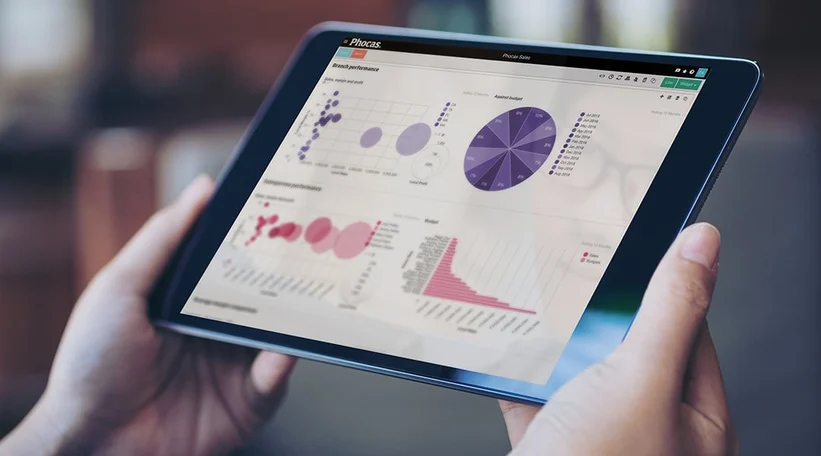
A factory floor buzzing with activity. Machines humming, workers moving, products rolling off assembly lines. But here’s the twist: every single piece of equipment is talking. Not to each other, but to tiny devices mounted right beside them. These devices are crunching numbers faster than you can blink, spotting problems before they happen, and displaying everything on sleek dashboards that fit in your pocket.
Welcome to the world of real-time analytics dashboards on edge devices. And trust us, it’s wilder than you think.
What Exactly Are We Talking About Here
Let’s break it down without the tech jargon that makes your eyes glaze over.
Edge devices are basically smart gadgets that process data right where it’s created. Think smartwatches, industrial sensors, security cameras, or even your car’s computer system. Instead of sending every bit of information to some massive data center in the clouds, these devices do the heavy lifting themselves.
Real-time analytics dashboards? Those are the visual displays that show you what’s happening right now. Not yesterday. Not five minutes ago. Right. This. Second.
When you combine these two concepts, you get something revolutionary. You get instant insights delivered exactly where you need them, without waiting for data to travel halfway across the internet and back.
The Speed Game Nobody Expected
Here’s a mind blowing fact that’ll make you rethink everything. Traditional cloud based analytics can take anywhere from a few seconds to several minutes to process data and send back results. Sounds fast, right? Wrong.
In some industries, a few seconds might as well be an eternity.
A self driving car making decisions based on data sent to the cloud would crash before getting a response. A hospital monitoring critical patients needs instant alerts, not delayed notifications. A retail store tracking inventory during Black Friday can’t wait around for cloud servers to catch up.
Edge analytics slashes this time to milliseconds. We’re talking about processing speeds that make traditional methods look like they’re moving in slow motion.
The Hidden Power Living in Your Pocket
Your smartphone is probably the edge device you interact with most. But have you ever stopped to think about what it’s actually doing?
Every time you use a fitness app, your phone is running real time analytics. It’s counting your steps, measuring your heart rate, calculating calories burned, and displaying everything on a neat little dashboard. All without sending constant streams of data to some server farm.
Smartwatches take this even further. Modern devices can detect irregular heartbeats, monitor blood oxygen levels, and even predict potential health issues. The analytics happen right there on your wrist. The dashboard updates instantly. The insights are immediate.
And that’s just consumer tech. Wait until you see what’s happening in industries you’d never expect.
Manufacturing Gets a Major Upgrade
Factory floors are becoming incredibly smart, and it’s honestly pretty amazing to witness.
Industrial edge devices now monitor every aspect of production. Temperature sensors, vibration detectors, pressure gauges, and quality control cameras all feed data into local analytics systems. Dashboards mounted throughout the facility show real time metrics that workers can actually understand and act on.
Here’s where it gets really interesting. These systems can predict when a machine is about to fail. Not after it breaks down. Before. Sometimes days or even weeks in advance.
One automotive manufacturer reported saving over twelve million dollars in a single year by preventing unexpected equipment failures. The edge analytics system spotted subtle patterns in vibration data that humans would never notice. The dashboard alerted maintenance teams with enough time to schedule repairs during planned downtime.
Share this with someone who works in manufacturing. They’ll probably have stories about how this tech is changing everything.
Healthcare Just Got Scary Good
Hospitals are deploying edge analytics in ways that sound like science fiction but are happening right now.
Patient monitoring systems process vital signs locally, running complex algorithms to detect early warning signs of deterioration. Dashboards at nursing stations update continuously, highlighting patients who need immediate attention.
But here’s the really cool part. These systems learn. They adapt to individual patient baselines, reducing false alarms while catching genuine emergencies earlier than ever before.
One hospital in Singapore implemented edge analytics for ICU monitoring and saw a thirty percent reduction in preventable complications. Nurses could focus on actual emergencies instead of chasing false alarms. Patients got better care. Everyone won.
Wearable medical devices are following the same path. Continuous glucose monitors for diabetics, cardiac monitors for heart patients, and epilepsy detection systems all run sophisticated analytics right on the device. The dashboards provide instant feedback without requiring constant cloud connectivity.
Retail Stores Are Reading Your Mind
Okay, not literally. But close enough to be slightly creepy and definitely impressive.
Modern retail stores use edge devices with cameras and sensors to track customer behavior in real time. Heat maps show which areas get the most foot traffic. Dashboards display conversion rates by store section. Analytics identify which displays are working and which ones are invisible.
Some stores have implemented smart shelves with weight sensors and cameras. When a product is running low, the edge analytics system updates inventory dashboards instantly. Store managers can restock before customers even notice empty shelves.
The fashion industry has taken this even further. Smart mirrors in fitting rooms use edge computing to suggest complementary items, track which pieces customers try on most, and provide analytics on why certain items aren’t selling. All displayed on intuitive dashboards that sales staff can access from tablets.
Don’t miss out on visiting a tech enabled store. The experience is genuinely different from traditional shopping.
The Energy Sector Goes Smart
Power grids are getting a massive intelligence boost through edge analytics, and it’s solving problems most people don’t even know exist.
Traditional power grids are basically dumb. They generate electricity, push it through wires, and hope for the best. Modern smart grids use thousands of edge devices monitoring every part of the system.
Transformers, substations, and even individual power poles have sensors feeding data to local analytics systems. Dashboards show grid operators exactly what’s happening across entire regions in real time.
When a tree falls on a power line, edge analytics can isolate the affected section in seconds, reroute power automatically, and display the problem on operator dashboards before most customers even notice a flicker. The system can predict equipment failures based on temperature patterns, load fluctuations, and environmental conditions.
Solar and wind farms use edge analytics to optimize power generation every single second. Dashboards show operators how to adjust panels and turbines for maximum efficiency based on current conditions, not yesterday’s weather forecast.
Transportation Networks That Think
Cities are deploying edge analytics across transportation systems with results that seem almost magical.
Traffic lights aren’t just following timed patterns anymore. Edge devices at intersections analyze traffic flow in real time, adjusting signal timing to reduce congestion. City traffic dashboards show transportation officials exactly where bottlenecks are forming and how interventions are working.
Public transit systems use edge analytics to optimize routes based on actual ridership patterns. Bus arrival predictions have gotten scary accurate because the analytics happen at the edge, processing GPS data, traffic conditions, and historical patterns locally.
Parking structures equipped with edge sensors can tell drivers exactly which spots are open and display this information on dashboards throughout the facility. No more circling endlessly looking for a space.
The Agriculture Revolution Nobody Talks About
Farming might seem low tech, but edge analytics is transforming agriculture in fascinating ways.
Modern farms use sensors in fields monitoring soil moisture, nutrient levels, and pest activity. Edge devices process this data locally, updating dashboards that farmers access from their phones or tablets.
Irrigation systems adjust water flow automatically based on real time soil conditions. Fertilizer application gets optimized for specific field sections. All driven by edge analytics that don’t require constant internet connectivity.
Livestock farms use wearable sensors on animals that monitor health indicators, feeding patterns, and movement. Edge analytics can detect when an animal is sick before visible symptoms appear. Dashboards alert farmers to specific animals needing attention.
One dairy farm in New Zealand implemented edge analytics for herd monitoring and increased milk production by eighteen percent while reducing veterinary costs. The system caught health issues so early that treatments became simpler and more effective.
Security Systems That Never Sleep
Physical security has been revolutionized by edge analytics in ways that make old systems look prehistoric.
Security cameras aren’t just recording anymore. They’re analyzing. Edge devices process video feeds locally, using artificial intelligence to detect unusual behavior, recognize faces, and identify potential threats.
Dashboards show security personnel what matters instead of forcing them to watch dozens of camera feeds simultaneously. The system highlights anomalies automatically. A person lingering in a restricted area. A package left unattended. A vehicle entering through the wrong gate.
One shopping mall deployed edge analytics for security and reduced theft by forty two percent in the first year. The system learned normal patterns and flagged suspicious behavior that human observers would miss.
Access control systems use edge analytics to manage entry across facilities. Dashboards show who’s where in real time, flag unauthorized access attempts, and maintain detailed audit logs without sending every access event to the cloud.
The Privacy Advantage Nobody Expected
Here’s something that surprises people. Edge analytics can actually be better for privacy than traditional cloud based systems.
When data gets processed locally on edge devices, less sensitive information needs to travel over networks or get stored in remote data centers. Your smartwatch can analyze your heart rate and display results without sending your actual biometric data anywhere.
Security cameras can detect and count people without identifying them individually or storing video in the cloud. The edge device processes the video locally, extracts anonymized metrics, and discards the raw footage.
Healthcare devices can run diagnostic algorithms locally and only transmit conclusions rather than raw patient data. Financial systems can detect fraudulent transactions at the point of sale without exposing complete transaction details to cloud servers.
Companies are starting to realize that edge analytics isn’t just faster and more efficient. It’s also a privacy win when implemented correctly.
The Technical Magic Behind the Scenes
Let’s peek under the hood without getting too nerdy about it.
Edge devices need serious computing power packed into tiny packages. Modern chips designed for edge computing can handle complex calculations while sipping power. We’re talking about processors that rival computers from just a few years ago but fit on a thumbnail.
Dashboard software has evolved to work on devices with limited screen real estate. The best edge dashboards prioritize information brilliantly, showing what matters most while hiding complexity.
Data compression and intelligent filtering happen at the edge. Instead of sending megabytes of raw sensor readings, edge devices might transmit just a few kilobytes of processed insights. This saves bandwidth, reduces costs, and enables systems to work even with spotty connectivity.
Machine learning models can now run directly on edge devices. These models get trained in the cloud initially but then deployed to the edge where they operate independently. Dashboards display the AI’s conclusions without requiring constant cloud connectivity.
The Cost Equation That Changed Everything
Edge analytics dashboards seemed expensive at first. But the math has completely flipped.
Cloud data processing costs add up fast. Every sensor reading sent to the cloud, every dashboard refresh, every analytics query generates charges. For systems generating millions of data points daily, these costs become astronomical.
Edge processing happens locally. Once you buy the device, there’s no per transaction cost. The more data you process, the better the economics look compared to cloud solutions.
Bandwidth savings alone can justify edge deployments. One industrial company calculated they were saving eighty thousand dollars monthly in data transmission costs by processing analytics at the edge instead of the cloud.
Reduced latency also saves money in unexpected ways. Faster problem detection prevents costly failures. Quicker decision making improves efficiency. Real time optimization reduces waste.
The Hybrid Future Taking Shape
Here’s the thing. Edge analytics isn’t replacing cloud computing. It’s creating something better through collaboration.
The most effective systems use edge devices for immediate analytics and local dashboards while sending summary data to the cloud for long term storage and deeper analysis. This hybrid approach combines the speed of edge processing with the power of cloud infrastructure.
Edge devices handle the now. Cloud systems handle the big picture. Dashboards can pull from both sources depending on what users need.
A retail chain might use edge analytics in stores for real time inventory and customer tracking. But corporate dashboards pull from cloud aggregated data to spot nationwide trends and plan strategy.
Manufacturers might run quality control analytics at the edge on production lines. Corporate dashboards in the cloud then analyze patterns across multiple facilities to optimize processes globally.
Getting Started Without Going Crazy
So you’re intrigued. Maybe even excited. But where do you actually begin with edge analytics dashboards?
Start small. Pick one specific problem that needs real time insights. Don’t try to revolutionize everything at once.
Focus on use cases where latency matters. If you can wait a few minutes for results, maybe you don’t need edge analytics yet. But if seconds count, you’ve found your opportunity.
Choose edge devices that match your needs. Consumer IoT devices work great for personal projects. Industrial applications need ruggedized equipment. Don’t overpay for features you won’t use.
Keep dashboards simple initially. It’s tempting to cram every possible metric onto a display. Resist this urge. Show what matters. Hide the rest until users need it.
Test in controlled environments before full deployment. Edge systems can behave differently in real world conditions. Better to discover issues during pilots than after company wide rollout.
The Skills Gap Creating Opportunities
Here’s something fascinating. The edge analytics field has more open positions than qualified candidates.
Companies are desperately seeking people who understand both analytics and edge computing. Traditional data scientists often lack experience with embedded systems. Embedded engineers often lack analytics expertise.
This creates incredible opportunities for anyone willing to learn. Online courses, certification programs, and hands on projects can build relevant skills faster than traditional education.
The field is young enough that self taught practitioners can compete with computer science graduates. Practical experience matters more than credentials right now.
Universities are scrambling to update curriculums. By the time academic programs catch up, self starters will have years of real world experience.
The Challenges Nobody Wants to Discuss
Edge analytics dashboards aren’t perfect. Let’s talk about the real problems.
Device management becomes nightmare level complicated at scale. Imagine updating software on thousands of edge devices scattered across remote locations. Now imagine some of those devices are underground, underwater, or otherwise hard to access.
Security is genuinely tricky. Edge devices can become vulnerable entry points into networks. Dashboards might display sensitive information on devices that aren’t as secure as centralized systems.
Standardization is still evolving. Different manufacturers use incompatible protocols. Dashboards from one vendor might not work with edge devices from another. Integration can be painful.
Power management creates real constraints. Edge devices often need to run for years on batteries. Complex analytics drain power fast. Balancing capability with energy efficiency requires careful design.
Debugging distributed edge systems is harder than debugging centralized applications. When something goes wrong across hundreds of edge devices, finding the root cause can be incredibly difficult.
The Environmental Angle Worth Considering
Edge analytics might actually help save the planet. Seriously.
Processing data locally requires less energy than transmitting it to distant data centers and back. Data centers consume massive amounts of electricity for both computing and cooling. Edge processing distributes this load.
Optimized systems reduce waste across industries. Smarter manufacturing produces less scrap. Better agriculture uses less water. Efficient energy grids reduce power losses.
Longer equipment life through predictive maintenance means less electronic waste. Catching problems early prevents catastrophic failures that require complete replacement.
The carbon footprint of edge analytics can be significantly lower than equivalent cloud based solutions when implemented thoughtfully.
What’s Coming Next
The edge analytics field is evolving so fast that predictions feel outdated before publication. But some trends are clear.
Edge devices will keep getting more powerful while using less energy. The processing capabilities available today will seem primitive in just a few years.
Dashboards will become more intelligent about what they display. Instead of showing every metric, future systems will highlight exactly what each user needs based on role, context, and current situation.
Augmented reality will merge with edge analytics dashboards. Imagine wearing smart glasses that overlay real time analytics directly onto the equipment you’re maintaining or the space you’re managing.
Collaboration between edge devices will increase. Instead of each device working independently, they’ll coordinate to solve problems collectively while still processing locally.
5G and future wireless technologies will enable edge analytics in mobile scenarios that aren’t practical today. Vehicle to vehicle communication, drone fleets, and mobile robotics will all benefit.
The Human Element That Makes It Work
Technology is cool, but people make these systems valuable.
The best edge analytics deployments involve end users from the start. Engineers and data scientists can build incredibly sophisticated systems that nobody actually uses if they don’t understand user needs.
Dashboard design matters more than most people realize. A cluttered confusing dashboard defeats the purpose of real time analytics. Clean intuitive interfaces turn data into action.
Training and change management can’t be afterthoughts. People need to understand not just how to use the dashboards but why the insights matter and what actions to take.
Success stories consistently feature teams that embrace edge analytics rather than viewing it as imposed technology. When workers see the system helping them do their jobs better, adoption accelerates naturally.
Making the Business Case That Actually Works
Convincing decision makers to invest in edge analytics requires more than technical arguments.
Focus on specific problems and measurable outcomes. Don’t pitch edge analytics as cool technology. Pitch it as the solution to expensive downtime, quality issues, safety risks, or lost revenue.
Calculate return on investment conservatively. If the numbers work with pessimistic assumptions, the business case becomes unassailable.
Start with pilot projects that demonstrate value without massive commitment. Success with one use case builds momentum for broader deployment.
Highlight competitive advantage. If competitors aren’t using edge analytics yet, early adoption creates differentiation. If they are using it, falling behind creates risk.
Don’t forget soft benefits. Improved employee satisfaction, enhanced safety, better customer experiences. These matter even if they’re harder to quantify.
The Global Perspective
Edge analytics adoption varies dramatically by region and culture.
Industrial powerhouses in Germany and Japan have embraced edge manufacturing analytics aggressively. Smart factory initiatives there are years ahead of most other regions.
Healthcare edge analytics is advancing rapidly in Scandinavia and Singapore where regulatory environments support innovation while protecting privacy.
Smart city projects in China are deploying edge analytics at scale that would be logistically impossible in other countries.
Agricultural edge analytics is growing fastest in regions facing water scarcity or labor shortages. Israel, Australia, and parts of California are leaders here.
Developing nations are sometimes leapfrogging traditional infrastructure entirely, deploying edge analytics systems as their first modern technology layer.
Why This Moment Matters
We’re at a unique inflection point where edge analytics is mature enough to work reliably but new enough that early adopters gain significant advantages.
The technology has moved past the experimental phase. Edge devices are reliable. Dashboards are polished. Integration is manageable. But widespread adoption hasn’t happened yet.
This creates a window of opportunity for organizations willing to move now. First movers in each industry are establishing best practices, training their teams, and building competitive moats.
The investment costs keep dropping. What required custom hardware two years ago now works with off the shelf devices. What needed specialized developers can increasingly be configured by technical staff.
But this window won’t stay open forever. As edge analytics becomes standard, the advantage shifts from early adopters to efficient executors.
Your Next Move
So here’s the real question. What are you going to do with this information?
Edge analytics dashboards aren’t some distant future technology. They’re here. Working. Delivering value across industries you interact with daily.
Maybe you’re thinking about how this could solve problems in your workplace. Maybe you’re considering a career shift into this growing field. Maybe you’re just fascinated by how fast technology is changing the world around us.
Whatever your angle, the edge analytics revolution is happening with or without you.
The factory floors are getting smarter. The hospitals are saving lives with instant insights. The stores are reading customer behavior in real time. The cities are optimizing traffic as it happens.
This technology is reshaping how we interact with data and make decisions. The organizations and individuals who understand edge analytics will have advantages over those who don’t.
The dashboards are updating. The insights are flowing. The future is processing at the edge.
Don’t just read about it. Find ways to engage with this technology. Visit facilities using edge analytics. Try apps that leverage edge processing. Ask questions. Experiment. Learn.
The real time analytics revolution isn’t coming. It’s already here. And it’s way more exciting than most people realize.
Drop a comment below about which industry application surprised you most or how you’ve seen edge analytics in action. Share this article with someone who geeks out over technology that actually changes things. And follow for more deep dives into tech trends that matter.
The edge is where it’s happening. Are you in?