The Dawn of a New Computing Era
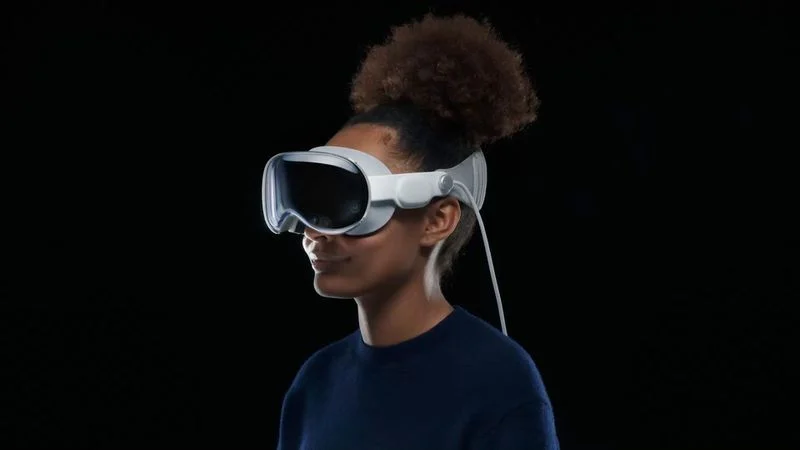
Spatial computing represents a fundamental shift in how humans interact with technology. Instead of viewing digital content on flat screens, spatial computing devices enable users to engage with three dimensional objects that exist within their physical environment. The Apple Vision Pro stands at the forefront of this revolution, introducing capabilities that seemed impossible just years ago. This device merges digital and physical worlds so seamlessly that virtual objects appear to coexist with real surroundings, creating experiences that challenge our traditional understanding of what computers can do.
The technology behind spatial computing extends far beyond simple display capabilities. These devices track user movements with extraordinary precision, interpret gestures naturally, and respond to eye movements instantaneously. Apple Vision Pro showcases this through its dual chip design, utilizing the M2 chip for computational power while the R1 chip processes input from 12 cameras, five sensors, and six microphones. This architecture ensures content appears directly in front of users’ eyes with only 12 milliseconds of latency, which is eight times faster than a human blink.
Understanding Vision Pro’s Technical Breakthrough
The hardware powering the Vision Pro pushes technological boundaries in multiple dimensions. Its ultra high resolution display system packs 23 million pixels across two displays, each roughly the size of a postage stamp. This micro OLED technology delivers wide color gamut and high dynamic range, creating visual fidelity that surpasses traditional screens by enormous margins. Custom catadioptric lenses work in conjunction with these displays to ensure incredible sharpness and clarity across the entire field of view.
Eye tracking technology represents another critical innovation. The device uses four dedicated eye tracking cameras to monitor precisely where users look, enabling a technique called foveated rendering. This approach renders sharp details exactly where the eye focuses while reducing processing demands for peripheral vision areas. The result is photorealistic imagery that appears natural while conserving computational resources. Users with vision correction needs can utilize ZEISS Optical Inserts to maintain visual fidelity without compromising eye tracking accuracy.
The audio system complements the visual experience through spatial audio with dynamic head tracking. Six microphones with directional beamforming capture sound while creating an acoustic environment that responds to head movements. Digital content produces audio that seems to emanate from specific locations in physical space, deepening the sense of immersion. This multisensory approach transforms how people perceive and interact with digital information.
VisionOS and the Spatial Computing Platform
Apple developed visionOS as the first operating system designed specifically for spatial computing. This platform allows applications to exist in a unified environment where multiple windows float naturally in physical space rather than being confined to rectangular screens. Developers can create experiences ranging from traditional windows containing familiar interface elements to fully immersive environments that transport users to entirely different realities.
The platform offers three fundamental building blocks for spatial experiences. Windows contain SwiftUI based interfaces with traditional controls, but developers can add three dimensional content to create depth. Volumes showcase 3D objects using RealityKit or Unity, enabling content viewable from any angle. Full immersive spaces allow applications to take over the user’s entire field of view, creating completely synthetic environments. Critically, experiences can transition fluidly between these modes, starting in a window before expanding into full immersion and returning seamlessly.
VisionOS supports thousands of existing iPad and iOS applications without modification, ensuring a robust software ecosystem from launch. Intensive applications like Adobe Lightroom and over 100 Apple Arcade titles run natively. Users can connect with contacts through FaceTime in mixed reality spaces where digital personas interact naturally. The 3D camera captures stereoscopic photos and videos that preserve spatial depth, creating memories viewable in their original three dimensional form.
The Competitive Spatial Computing Landscape
While Vision Pro dominates technical specifications, other devices target different market segments with varying capabilities and price points. The Meta Quest Pro represents a capable alternative at roughly one quarter the cost. This standalone headset offers 1,920 by 1,800 resolution per eye with 90Hz refresh rate, along with six degrees of freedom motion tracking. However, the visual difference becomes immediately apparent when comparing devices directly, with Vision Pro delivering noticeably sharper imagery.
Meta’s platform benefits from years of iteration across multiple hardware generations. Based distantly on Android, it requires applications developed specifically for its unique control schemes. Unlike visionOS with its seamless iPad app integration, Quest Pro cannot easily run Android tablet applications. Eye and hand tracking support varies across applications since these features were added later rather than being foundational to the platform design.
Microsoft HoloLens 2 takes an enterprise focused approach, positioning itself as a tool for industrial and commercial applications rather than consumer entertainment. This untethered holographic computer refines the mixed reality experience pioneered by its predecessor, offering a 43 degree horizontal and 29 degree vertical field of view. When connected to Azure cloud services, HoloLens 2 can render intricate three dimensional models that would be impossible using only onboard processing power.
Azure Remote Rendering allows companies to create detailed digital twins of products or facilities, enabling collaborative design reviews and training scenarios. Azure Spatial Anchors creates persistent holograms anchored to specific physical locations, accessible across multiple devices and platforms. This cloud integration proves essential for enterprise deployments where multiple team members need shared access to complex spatial data.
Magic Leap 2 targets professional users requiring clarity, performance, and extended wearability. Its 70 degree field of view nearly doubles that of its predecessor, allowing larger digital objects to remain visible without requiring constant head movements. Advanced optics with dynamic dimming deliver sharp, high contrast visuals even in bright industrial environments. The device’s computing and battery components reside in a separate tethered pack, shifting weight away from the head for all day comfort.
Transforming Healthcare Through Spatial Technology
Healthcare emerges as one of the most promising applications for spatial computing devices. Surgeons can overlay patient data directly onto their field of view during procedures, accessing critical information without looking away from the surgical site. Three dimensional visualization of anatomy based on CT or MRI scans allows physicians to plan complex operations with unprecedented precision. They can virtually explore tumors, blood vessels, and organs from every angle before making the first incision.
Medical education experiences a similar revolution. Students train in hyper realistic virtual environments, practicing procedures on interactive AI driven patient models without risk to actual patients. They can walk around holographic representations of human anatomy, examining structures from perspectives impossible with cadavers or textbooks. The systems track user movements and provide detailed feedback, accelerating skill development while identifying areas needing improvement.
Remote surgery becomes increasingly viable through spatial computing combined with robotics. Expert surgeons operate on patients thousands of miles away using robotic instruments guided by real time three dimensional visualizations. This capability proves especially transformative for rural or underserved regions lacking access to specialized care. The spatial interface gives surgeons better depth perception and spatial awareness compared to traditional monitor based systems.
Sharp HealthCare pioneered spatial computing adoption in clinical settings, using devices like Vision Pro to enhance surgery, radiology, and medical education. Their initiatives demonstrate how spatial computing reduces hospital admissions through early detection, remote monitoring, and home based care. Wearable devices using spatial computing track vital signs continuously, detecting early disease indicators before symptoms escalate. This proactive approach improves patient outcomes while reducing healthcare system burden.
Physical rehabilitation benefits from engaging spatial experiences that motivate patients through gamified exercises. Rather than performing repetitive movements, patients interact with virtual objects or environments that make therapy more enjoyable. The system precisely measures range of motion and movement quality, providing therapists with objective data for treatment optimization. Patients can continue therapy at home with guidance from virtual instructors, extending care beyond clinical visits.
Revolutionizing Education and Training
Educational institutions embrace spatial computing to create immersive learning experiences far beyond what traditional classrooms offer. Students explore three dimensional representations of historical locations, walking through ancient Rome or experiencing pivotal historical events as if present. Scientific concepts become tangible through interactive molecular models or astronomical simulations showing planetary motion and celestial mechanics at comprehensible scales.
Engineering and architecture students visualize their designs at full scale before construction begins. They walk through virtual buildings, identifying design flaws or optimization opportunities impossible to spot in two dimensional plans. Teams collaborate in shared virtual spaces regardless of physical location, reviewing projects together while making real time modifications. This capability extends to professional practice where clients experience proposed designs before committing resources to construction.
Language learning takes on new dimensions when students practice conversations with AI powered virtual characters in contextually appropriate environments. Rather than memorizing vocabulary lists, learners order food in a virtual restaurant or navigate a virtual city, applying language skills in realistic scenarios. The immersive context aids memory retention while building practical communication skills.
Dangerous or expensive training becomes safe and cost effective through virtual simulation. Firefighters practice responding to burning buildings without risk. Pilots log hours in flight simulators before touching actual aircraft controls. Military personnel rehearse complex operations in virtual environments that adapt and respond realistically. These simulations provide valuable experience while eliminating danger and reducing costs associated with real world training scenarios.
Enterprise and Industrial Applications
Manufacturing and industrial sectors realize substantial returns on spatial computing investments. Field technicians repairing complex machinery see digital annotations overlaid directly on equipment, with arrows pointing to specific components and step by step instructions floating nearby. Remote experts thousands of miles away provide real time guidance, seeing exactly what the technician sees and marking up their view with helpful indicators. This capability dramatically reduces equipment downtime while minimizing expensive expert travel.
Construction sites benefit from digital project visualization allowing workers to see what the finished structure should look like at any stage. Managers access three dimensional timelines showing expected progress two days or three weeks ahead based on current conditions. They identify potential conflicts between trades before they occur, optimizing scheduling and resource allocation. Safety information appears contextually when workers enter specific areas, reducing accidents through timely reminders of hazards and precautions.
SYNCHRO software for HoloLens 2 connects each device on construction sites to a master model constantly updating in Azure cloud. Everyone works from the same shared reality with latest information for sequencing jobs, planning crane movements, tracking progress, and maintaining safety. The cloud connectivity proves critical because information flow between field workers and design engineers remains continuous. Consequences of errors on infrastructure projects in the physical world carry serious implications, making accurate spatial information essential.
Retail environments use spatial computing to enhance customer experiences and streamline operations. Shoppers visualize furniture in their homes before purchasing, seeing exactly how pieces fit and complement existing decor. Automotive showrooms let potential buyers customize vehicles in real time, seeing different colors, wheel designs, and interior options overlaid on physical models. Store managers leave holographic instructions next to displays, showing employees exactly how merchandise should be arranged.
Warehouse operations improve through spatial guidance systems that show workers optimal paths for order fulfillment. Digital markers indicate exact shelf locations for items, reducing search time and errors. Inventory tracking becomes more accurate when spatial systems continuously monitor stock levels and item locations. The technology scales from small warehouses to massive fulfillment centers handling millions of products.
The Gaming and Entertainment Revolution
Gaming experiences on spatial computing platforms transcend traditional screen based play. Players physically move through game environments, using natural gestures to interact with objects and characters. Combat involves actual dodging and reaching rather than button presses. Puzzle solving requires examining objects from multiple angles, manipulating them in three dimensional space. This physicality creates engagement impossible with controllers and flat displays.
Multiplayer experiences gain new social dimensions when players share physical or virtual spaces. Friends gather in someone’s living room where virtual game elements integrate with real furniture and walls. Alternatively, they meet in purely virtual environments customized to match the game world. Either way, they see each other as realistic avatars with facial expressions and body language captured by the headset, maintaining social connection despite the digital medium.
Entertainment consumption transforms when viewers control their perspective within content. Sports fans watch games from courtside or choose aerial views showing entire field strategy. Concert recordings let viewers stand stage center surrounded by performers or move through the audience experiencing different vantage points. This agency over perspective creates personalized viewing experiences tailored to individual preferences.
Creative applications empower artists and designers with spatial canvases. Sculptors shape three dimensional forms using hand gestures, walking around their work to view from every angle. Architects sketch building designs at room scale, immediately experiencing how spaces feel. Musicians arrange virtual instruments in three dimensional space, creating immersive soundscapes impossible with traditional stereo or surround sound. These tools remove technical barriers between creative vision and realized work.
Privacy, Security, and Ethical Considerations
The data collection inherent to spatial computing raises significant privacy concerns requiring careful consideration. Devices continuously capture environmental information including room layouts, furniture placement, and people present in physical spaces. Eye tracking reveals precisely what users look at and for how long, potentially exposing private thoughts or interests. Biometric data including facial features, voice patterns, and even behavioral indicators gets collected during normal operation.
Location based data presents particular sensitivity. Geospatial analytics can track users’ movements throughout the day, creating detailed profiles of habits and routines. When mishandled, this information compromises user privacy in profound ways. Companies must implement robust encryption, transparent data handling practices, and strict access controls to protect this sensitive information from breaches or misuse.
Surveillance risks emerge when spatial computing devices with cameras and sensors become ubiquitous. The ability to record and analyze physical spaces raises questions about consent and boundaries. Should devices automatically blur faces of non users appearing in the field of view? How do we prevent surreptitious recording in private or sensitive locations? These questions require technical solutions combined with clear social norms and legal frameworks.
Data bias and inclusivity present ethical challenges as spatial computing systems train on datasets that may not represent all populations equally. If hand tracking algorithms optimize for certain hand sizes or skin tones, users outside those parameters experience degraded performance. Eye tracking calibration may work better for some eye shapes than others. Developers must prioritize diverse training data and extensive testing across varied user populations to ensure equitable access.
Consent mechanisms need fundamental rethinking for spatial computing. Traditional privacy policies designed for websites or mobile apps fail to address the nuanced data collection happening continuously in spatial environments. Users need granular controls over what data gets collected, how it’s used, and who can access it. These controls must be easily accessible and understandable without requiring legal or technical expertise to comprehend.
Market Growth and Economic Impact
The spatial computing market demonstrates explosive growth across all sectors and regions. Global market valuation reached approximately 102 billion dollars in 2025, with projections suggesting growth to 447 billion dollars by 2032. This represents a compound annual growth rate of 23.4 percent, driven by increasing adoption in gaming, healthcare, architecture, engineering, and construction sectors. Advancements in hardware capabilities combined with AI integration and IoT connectivity accelerate market expansion.
North America leads with 31.6 percent of total market revenue, benefiting from strong technological infrastructure and presence of major industry players including Apple, Microsoft, and NVIDIA. Significant investments in research and development fuel innovation across multiple application domains. The region’s focus on Industry 4.0 and smart manufacturing drives demand for spatial computing solutions in enterprise contexts. Defense spending on advanced training systems contributes substantial market volume.
Asia Pacific emerges as the fastest growing region, propelled by rapid digitalization and high consumer electronics demand in China and India. China’s 14th Five Year Plan allocates 1.4 trillion dollars for smart infrastructure through 2030, creating massive opportunities for spatial computing applications in urban planning, transportation, and public services. India’s growing technology sector and young population drive consumer adoption of immersive entertainment and education applications.
Europe’s spatial computing market reached 315 billion dollars in 2025, reflecting the region’s strong industrial base and widespread adoption of advanced AR and VR technologies. Automotive manufacturers use spatial computing extensively for design, engineering, and manufacturing processes. Healthcare systems implement virtual training and surgical planning tools. Cultural institutions create immersive historical and artistic experiences attracting millions of visitors.
Hardware components dominate the market with 65 percent share, reflecting the foundational role physical devices play in enabling spatial experiences. Key hardware includes AR and VR headsets, LiDAR sensors, depth cameras, spatial processors, motion tracking units, and edge computing modules. As hardware capabilities improve and costs decrease, broader market adoption accelerates. Software and services represent growing segments as the installed hardware base expands and demands increasingly sophisticated applications.
Network Infrastructure and Cloud Computing
Widespread 5G network deployment provides bandwidth and ultra low latency required for cloud based rendering. Complex graphical scenes render on powerful remote servers and stream seamlessly to lightweight headsets, enabling photorealistic graphics without requiring supercomputer level processing in wearable devices. This architecture shifts computational demands from edge devices to data centers where power consumption and heat dissipation present fewer constraints.
Edge computing complements cloud rendering by processing data closer to users, further reducing latency. This proves vital for applications requiring instant feedback such as remote surgery or industrial machinery operation where even milliseconds matter. Distributed computing architectures balance processing between edge devices, nearby edge servers, and remote cloud resources based on latency requirements and computational demands.
The convergence of 6G networks beginning in the late 2020s promises even more dramatic improvements. Theoretical speeds exceeding one terabit per second with latency under one millisecond enable applications currently impossible with 5G infrastructure. Entire virtual environments could stream with zero perceptible delay, making cloud based experiences indistinguishable from locally rendered content. This infrastructure evolution removes current technical limitations constraining spatial computing experiences.
Azure Spatial Anchors demonstrates cloud services specifically designed for spatial computing. This platform allows creation of persistent holograms anchored to specific physical locations, accessible across different devices and platforms. A facilities manager might leave virtual notes attached to equipment explaining maintenance procedures. The next technician accessing that location sees those notes regardless of device type, creating continuity across teams and time.
Artificial Intelligence Integration
AI serves as the intelligence layer making spatial computing devices truly smart. Computer vision algorithms process camera feeds in real time, identifying objects, surfaces, and people in the environment. This scene understanding allows devices to place virtual objects on appropriate surfaces, ensure they stay anchored as users move, and respond naturally to environmental changes like lighting shifts.
Natural language processing enables voice based interaction, letting users control devices through conversational commands rather than memorizing specific phrases. The AI infers intent from context, understanding that “show me that again” refers to previously displayed content even without explicit reference. This contextual awareness makes interaction feel natural rather than mechanical.
Gesture recognition powered by machine learning interprets hand movements as commands. The system distinguishes between intentional gestures and casual hand movements, responding only to deliberate input. It adapts to individual users over time, learning personal gesture styles and becoming more accurate with continued use. Some systems even incorporate electromyography sensors reading neural signals at the wrist, interpreting intended finger movements before they fully execute.
Predictive AI anticipates user needs based on environment and behavior. Looking at a landmark triggers historical information without explicit request. Entering a kitchen brings up recipe interfaces. Sitting at a desk surfaces productivity tools. This proactive assistance reduces friction between intent and action, making spatial computing feel increasingly intuitive. The AI learns individual preferences, personalizing suggestions based on past behavior and stated interests.
Future Trajectory and Emerging Trends
The convergence of AR, VR, and spatial computing into a unified field accelerates through 2025 and beyond. Historical distinctions between fully immersive VR experiences and augmented reality overlays become increasingly irrelevant. Devices toggle fluidly between modes based on user needs rather than hardware limitations. The underlying technology stack including spatial mapping, scene understanding, and gesture recognition becomes standardized across devices and platforms.
Form factor evolution moves toward lighter, more comfortable devices suitable for extended daily wear. Current headsets weigh hundreds of grams and become uncomfortable after hours of use. Future iterations approach eyeglass weight through innovations in display technology, battery efficiency, and distributed computing. Some concepts envision computational components in separate devices communicating wirelessly with lightweight display glasses.
Haptic feedback systems add touch sensation to spatial experiences. Gloves or wrist bands provide force feedback when virtual objects are grasped or touched. Ultrasonic arrays create touch sensations in midair without requiring worn devices. These tactile elements complete the sensory loop, making virtual objects feel physically present. The combination of visual, auditory, and haptic feedback creates convincing illusions of solidity and weight.
Social norms around spatial computing device usage will evolve similarly to how smartphone etiquette developed. Initial concerns about constant phone checking gave way to accepted social protocols. Spatial computing will undergo similar cultural adaptation as society determines appropriate times and places for augmented or immersive experiences. Legal frameworks will develop addressing privacy, recording consent, and public space usage.
Challenges and Limitations
Despite remarkable progress, spatial computing faces significant challenges limiting immediate mass adoption. Cost remains prohibitive for many potential users, with high end devices priced in thousands of dollars. While prices will decline as production scales and component costs decrease, spatial computing devices will remain premium products for years. This limits market penetration primarily to enthusiasts, professionals, and institutions rather than general consumers.
Battery life constrains mobile usage scenarios. Current devices offer only two to three hours of untethered operation, requiring frequent recharging or tethered power supplies. Users cannot wear devices throughout entire workdays without interruption. Breakthrough battery technologies or dramatic efficiency improvements in processors and displays will be necessary to achieve true all day operation.
Content availability lags behind hardware capabilities. While thousands of applications exist, truly compelling spatial experiences that justify hardware investment remain relatively scarce. Developers face steep learning curves mastering spatial interface design principles different from traditional screen based applications. As the installed user base grows and development tools mature, content libraries will expand, but the chicken and egg problem of needing content to drive hardware sales while needing hardware sales to justify content development persists.
Motion sickness affects some users during extended immersive experiences, particularly with poorly optimized applications. When visual motion contradicts vestibular signals from the inner ear, nausea and discomfort result. High refresh rates and low latency help minimize this issue, but individual sensitivity varies greatly. Some people tolerate extended VR sessions without problems while others feel ill within minutes. This biological limitation may permanently restrict certain user populations from immersive experiences.
Social acceptance presents another barrier. Wearing obvious headsets in public spaces currently carries social stigma. People appear isolated and unapproachable when wearing devices obscuring their faces and eyes. EyeSight features attempting to display users’ eyes externally help slightly but don’t fully resolve the social disconnect. Until form factors shrink to eyeglass proportions and social norms evolve, public spatial computing usage will remain limited.
The revolution in human computer interaction represented by spatial computing devices has only just begun. Apple Vision Pro and competing platforms demonstrate technical capabilities that seemed like science fiction mere years ago. These devices blend digital content with physical reality so convincingly that the boundaries between real and virtual blur in profound ways. Applications spanning healthcare, education, entertainment, and enterprise demonstrate transformative potential across virtually every sector of human activity.
Challenges around cost, battery life, content availability, and social acceptance will gradually resolve as technology matures and markets develop. Network infrastructure improvements enable increasingly sophisticated cloud powered experiences while AI integration makes interactions more natural and intuitive. The convergence of multiple technological trends including advanced sensors, powerful processors, ubiquitous connectivity, and machine learning creates conditions for spatial computing to become as fundamental to daily life as smartphones.
Within a decade, spatial computing devices may become as common as mobile phones are today, fundamentally changing how humans access information, communicate with each other, and interact with both digital and physical environments. The seeds planted by current generation devices will grow into ecosystems transforming society in ways we’re only beginning to imagine. This represents not merely an incremental improvement in computing but a fundamental shift in the relationship between humans and technology.