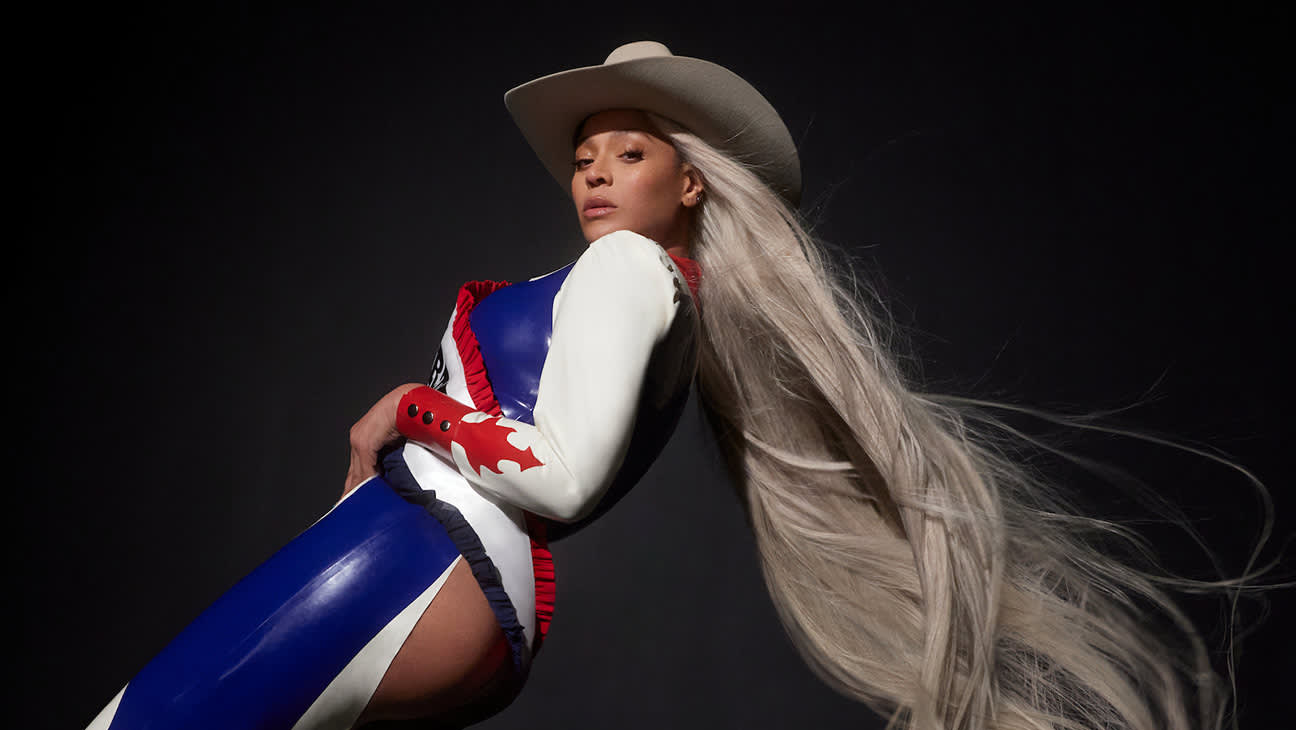
There are moments in pop culture history that arrive not just as entertainment news but as seismic events – moments that split time into a “before” and “after.” February 2, 2025, was one of those moments. At the 67th Annual Grammy Awards, held at Crypto.com Arena in Los Angeles, Beyoncé Knowles-Carter took the stage not once, not twice, but three times. She won Best Country Duo/Group Performance for “II Most Wanted” featuring Miley Cyrus. She won Best Country Album for Cowboy Carter. And then, in the most emotionally charged moment of the night, she won Album of the Year – the most prestigious prize in the music industry – for a country album that much of Nashville had refused to fully embrace.
“I just feel very full and very honored,” she said, visibly moved. “It’s been many, many years.”
Those seven words carried the weight of decades. They carried the echoes of a 2016 CMA performance where she was made to feel unwelcome. They carried the quiet pain of being ignored by the Country Music Association in 2024 despite Cowboy Carter becoming a global phenomenon. And they carried the triumphant declaration of a woman who refused to let the gatekeepers define her place in American music history.
This is the story of what happened after that night – and why the story is far from over.
The Night That Changed Everything
The 67th Grammy Awards were already historic before a single award was announced. Los Angeles was still reeling from catastrophic wildfires, and the ceremony opened with somber tributes to the firefighters who had battled the blazes. Beyoncé herself honored them in her acceptance speech, thanking first responders before expressing her gratitude to the Recording Academy. The juxtaposition of national tragedy and cultural triumph gave the evening an almost surreal weight.
Entering the ceremony with a record 11 nominations, Beyoncé had already shattered the all-time Grammy nomination record. But nominations had never been the issue. For years, even as she accumulated 32 total Grammy wins and became the most decorated artist in Grammy history, the major categories had eluded her. She had won dozens of genre-specific and craft awards, but Album of the Year – the category that signals industry-wide, generational recognition – had passed her by repeatedly in ways that had become a running cultural wound.
When Taylor Swift, of all people, announced Cowboy Carter as the winner of Best Country Album, the camera caught Beyoncé’s face in pure shock. It was a rare unguarded moment from one of the most composed performers in the world. And when Album of the Year was announced, the emotion in the room was palpable. Blue Ivy Carter joined her mother on stage. Jay-Z embraced his wife. The arena – the same city bruised by fire and grief – erupted.
In her speech, Beyoncé dedicated the Album of the Year award to Linda Martell, the pioneering Black country singer who appeared on Cowboy Carter and whose contributions to the genre had been largely erased from mainstream memory. “I hope we just keep pushing forward, opening doors,” Beyoncé said. “God bless y’all.”
It was more than an acceptance speech. It was a manifesto.
What Cowboy Carter Actually Was
To understand why these wins mattered so deeply, you have to understand what Cowboy Carter actually was – and what it wasn’t.
Released on March 29, 2024, Cowboy Carter was Beyoncé’s eighth studio album and the second installment of a planned trilogy that began with Renaissance in 2022. Where Renaissance explored Black queer influences in dance and electronic music, Cowboy Carter turned its gaze toward country, Americana, and the Western musical traditions that have their deepest roots in Black culture – roots that history, whitewashing, and industry gatekeeping had long obscured.
The album was a sprawling, 27-track journey through the American musical landscape. It featured collaborations with country legends Willie Nelson and Dolly Parton, as well as emerging Black country artists like Shaboozey, Tanner Adell, and Brittney Spencer. It sampled the Beatles’ “Blackbird” in a reimagined version featuring a chorus of young Black women singers. It interpolated classic country songs. It opened with a spoken-word introduction by Linda Martell herself, whose voice served as a spiritual anchor for the entire project.
It was also, from its very first note, a political act.
Beyoncé had been explicit about her intentions. In a statement accompanying the album’s announcement, she wrote that it was “born out of an experience I had years ago where I did not feel welcomed… and it was very clear that I wasn’t.” Most observers interpreted this as a reference to the backlash she experienced after performing “Daddy Lessons” at the 2016 Country Music Association Awards alongside The Chicks. The performance had been widely criticized by elements of the country establishment, and the CMA notably failed to include it in their year-end broadcast recap.
“The criticisms I faced when I first entered this genre forced me to propel past the limitations that were put on me,” she said. “Act II is a result of challenging myself, and taking my time to bend and blend genres together to create this body of work.”
Cowboy Carter debuted at No. 1 on the Billboard 200, marking Beyoncé’s eighth album to reach the top of the all-genre chart. It generated 407,000 equivalent album units in its first week. Every single track appeared on at least one Billboard chart. The lead single, “Texas Hold ‘Em,” became the first song by a Black woman to reach No. 1 on Billboard’s Hot Country Songs chart. These were not just commercial milestones – they were historical corrections.
The History the Album Was Reclaiming
One of the most powerful things Cowboy Carter did was force a global conversation about a history that had been deliberately buried: the undeniable Black origins of country music.
Country music, as a genre, draws heavily from the blues, spirituals, and folk traditions of African American communities in the American South. The banjo – perhaps country music’s most iconic instrument – has African roots. The genre’s foundational artists, including Jimmie Rodgers and Hank Williams, were deeply influenced by Black musicians. The cowboy archetype itself – so central to the mythology of the American West – was historically populated by Black cowboys, who made up roughly a quarter of all cowboys during the cattle drives of the late 19th century.
Yet by the mid-20th century, country music had become almost exclusively coded as white. Black artists who attempted to enter the genre faced extraordinary resistance. Linda Martell, who became the first Black woman to perform at the Grand Ole Opry in 1969, was largely pushed out of the industry within a few years. The country radio infrastructure systematically excluded Black artists; a 2021 study found that in 19 years of programming at major country stations, only 13 Black artists appeared among 11,484 songs.
Lil Nas X had briefly cracked this door open in 2019 with “Old Town Road,” a country-trap hybrid that topped the Billboard Hot 100 for a record 19 weeks. But “Old Town Road” was ultimately removed from Billboard’s country charts – a decision that sparked its own controversy about racial gatekeeping in genre classification.
Cowboy Carter arrived as a far more comprehensive, scholarly, and musically ambitious statement. Beyoncé wasn’t just making a country record – she was conducting an archaeological excavation of American music history and presenting its Black foundations to the world on a stadium-filling scale.
When the album was released, Linda Martell experienced a 275% increase in catalog streams. Rissi Palmer, a pioneering Black country artist and Apple Music Country radio host, saw her streams rise 110%. Rhiannon Giddens, who plays banjo on “Texas Hold ‘Em,” saw a 50% jump. The album didn’t just celebrate these artists – it actively restored their visibility and their commercial relevance.
Nashville’s Silence and the CMA Snub
Despite all of this – the chart records, the cultural significance, the critical acclaim – Nashville largely kept its doors closed.
The Country Music Association, the industry’s premier organization, did not nominate Cowboy Carter for a single award in 2024, despite it being one of the most commercially successful and culturally discussed country albums in years. The snub was stark and unmistakable. The CMA’s voting membership, drawn largely from Nashville’s traditional industry infrastructure, made a collective decision that whatever Cowboy Carter was, it wasn’t country enough to deserve their recognition.
The irony was scalding. An album that spent more time excavating the Black roots of country music than almost any major-label release in decades was deemed unworthy of recognition by the country music establishment. Meanwhile, the same album was winning multiple Grammys in the country category from the Recording Academy – an organization with a far broader and more diverse voter base.
Rolling Stone asked the question directly in a headline published days after the Grammy wins: “The Grammys Understood Beyoncé Was Country. Why Didn’t Nashville?”
There was no clean answer. Some argued that the CMA’s membership was simply upholding a consistent aesthetic standard. Others pointed to the racial demographics of Nashville’s decision-making power structures – and to decades of documented exclusion – as the more honest explanation. What was clear was that the gap between how Beyoncé was received by the Recording Academy and how she was received by Nashville’s country establishment represented a significant fracture in the definition of what American country music is, and who gets to be part of it.
The “Beyoncé Rule” and the Grammy Category Overhaul
If there was any remaining doubt about the seismic impact of Cowboy Carter‘s Grammy wins, it was dispelled by what the Recording Academy did next.
In the spring of 2025, just months after Beyoncé made history as the first Black woman to win Best Country Album, the Recording Academy announced a sweeping restructuring of its country music categories. Beginning with the 68th Grammy Awards in 2026, the Best Country Album category would be split into two distinct awards: Best Traditional Country Album and Best Contemporary Country Album.
The Academy’s official statement, delivered by CEO Harvey Mason Jr., framed the change as a celebration of country music’s evolving landscape. “Traditional country has a timeless, distinct sound that’s inspired generations,” he said. “It’s an important part of the country music story and deserves to be celebrated and recognized with intention.”
The timing, however, was impossible to ignore. The change came directly in the wake of Beyoncé’s victory – a victory that had itself come amid debate about whether Cowboy Carter was “really” country. The move was almost immediately dubbed the “Beyoncé Rule” by music journalists and fans alike.
Reactions were sharply divided. Many in the traditional country community welcomed the change, arguing it would preserve space for the genre’s roots while allowing more experimental work to compete in its own lane. But critics – particularly Black artists, journalists, and cultural commentators – saw the restructuring in a very different light.
“Beyoncé won Best Country Album, so they had to rename/create new categories like Best Contemporary Country Album and Best Traditional Country Album in an attempt to differentiate from ‘traditional’ (white) country music,” wrote journalist Mikeisha Dache on X. A sarcastic post on Bluesky from author Kashawn Cauley read: “Excited to see that Black people performing country music are only eligible for 3/5ths of a Grammy.”
The Recording Academy declined to respond directly to these critiques beyond its initial statement. But the controversy crystallized a profound question: Was the category split a genuine effort to honor country music’s diversity, or was it a structural response designed to ensure that a Cowboy Carter-type win would be harder to replicate in the future?
That question remains unanswered – and it may define Grammy politics for years to come.
The Cowboy Carter Tour: A $407 Million Cultural Earthquake
If the Grammy wins were the crown, the Cowboy Carter and the Rodeo Chitlin’ Circuit Tour was the throne.
Produced by Beyoncé’s Parkwood Entertainment and Live Nation, the tour launched in 2025 and became one of the most talked-about live events in recent memory. By the time it concluded, it had grossed a staggering $407,600,113 – making it the highest-grossing country tour of all time, despite visiting only nine stadiums. It sold 1.6 million tickets, broke more than 40 venue records, and established Beyoncé as the highest-grossing Black artist and the highest-grossing R&B artist in touring history.
She also became the first woman and the first American act to have two separate tours surpass $400 million, following her 2023 Renaissance Tour’s $579.8 million haul.
The show itself was a maximalist spectacle unlike anything country music – or arguably any genre – had ever produced. Beyoncé soared above crowds on a shimmering metallic horse, a giant golden horseshoe, and a red Cadillac Eldorado. A gleaming mechanical bull served as a visual centerpiece. The production wove together references to the Chitlin’ Circuit – the network of Black-owned venues that allowed African American performers to tour safely during segregation – with imagery of Black cowboy culture, Western Americana, and the hidden history that Cowboy Carter had sought to restore.
The tour’s name itself was a statement. The “Rodeo Chitlin’ Circuit” deliberately invoked a piece of Black American history – the Chitlin’ Circuit – that most of Beyoncé’s stadium audiences had likely never encountered in a mainstream context. Night after night, in arenas packed with tens of thousands of fans, that history was placed front and center.
Critics were unanimous in their praise. The tour was rated at the highest possible scores by virtually every major outlet that reviewed it. Beyoncé’s choreography, her vocal performance, the sociopolitical arguments embedded in the show’s staging – all were singled out for acclaim.
“The ‘Cowboy Carter Tour’ was more than a commercial triumph – it was a cultural landmark,” wrote Pollstar in their year-end assessment. “Beyoncé used her unparalleled platform to illuminate the stories, artists, and traditions that have shaped American music but have long been marginalized. She reframed the country-music canon in real time, not by rewriting history but by restoring it.”
The tour also had measurable economic effects. Cities that hosted Beyoncé’s shows saw hotel booking surges and documented booms for local small businesses. Economists described the tour as a case study in “event economics” – the ability of a single cultural figure to generate micro- and macro-economic ripple effects across an entire urban economy.
And in a particularly meaningful dimension, the tour actively uplifted Black-owned businesses. Through intentional vendor and partnership selections, the Cowboy Carter era extended its cultural mission into the economic sphere – creating opportunities for Black entrepreneurs in the Western fashion, food, and creative industries that the tour helped popularize.
The New Generation of Black Country Artists
One of the most lasting impacts of the Cowboy Carter era – and the one Beyoncé herself has spoken about most passionately – is what it has done and will continue to do for the next generation of Black country artists.
The numbers were immediate and unmistakable. When “Texas Hold ‘Em” debuted in February 2024, streaming numbers surged across the catalogs of Black country artists who had long been operating outside the mainstream spotlight. Tanner Adell, Brittney Spencer, Reyna Roberts, K. Michelle – all saw significant increases in listeners and streams. Linda Martell, at over 80 years old, found herself introduced to millions of new fans worldwide. Rhiannon Giddens, the banjo virtuoso who plays on the album, experienced a 50% catalog stream jump essentially overnight.
But beyond the streaming numbers, something more fundamental shifted: the cultural permission structure around Black artists in country music began to change.
For generations, Black artists who were drawn to country, folk, or Americana faced a specific kind of marginalization – not just from industry gatekeepers, but from the wider culture’s insistence that these genres were racially coded as white. Black artists who loved country music were often discouraged from pursuing it, or told they should stick to R&B, hip-hop, or gospel. The message, implicit and explicit, was that country music simply wasn’t for them.
Cowboy Carter dismantled that message with the force of a cultural bulldozer. By creating a No. 1 album that centered Black country history, featured Black country artists, and won the genre’s highest awards, Beyoncé effectively rewrote the imaginative landscape of what a Black artist in country music could look like – and what they could achieve.
Beyoncé herself articulated this vision with characteristic precision. “The impact of the Cowboy Carter era on the country genre will only continue to grow,” she told Pollstar. “It has reinvigorated a space that now has a new audience. And in ten years, the young girls and boys who saw the show will become adults who believe they can be respected as country stars and sing whatever music they love. That makes me proud.”
Artists like Shaboozey, who collaborated with Beyoncé on the album and went on to achieve his own country chart success in 2024 and 2025, represent the leading edge of a wave that the Cowboy Carter era helped accelerate. The genre’s demographics, its sound, and its story are shifting – and while there is still significant resistance from traditional power centers in Nashville, the direction of travel is increasingly clear.
The Question of Genre and Who Gets to Define It
At its heart, the entire Cowboy Carter conversation is about a question that goes far beyond music: who gets to define cultural categories, and whose authority is treated as legitimate when those definitions are contested?
Genre categories in music have always been porous. They are commercial constructs as much as aesthetic ones, shaped by radio programmers, label marketing departments, and industry organizations whose membership demographics have historically skewed toward certain racial and economic groups. “Country” has never had a single, pure, fixed definition – the genre has absorbed rock, pop, hip-hop, and folk influences at various points in its history, with varying degrees of industry acceptance depending on who was doing the absorbing.
What made the Cowboy Carter debate different was the explicitness with which race was deployed as a disqualifying criterion. The album that was deemed “not country” by Nashville’s establishment was, by virtually any sonic or thematic measure, one of the most deeply researched, historically engaged country albums in years. Its engagement with country’s Black roots was more thorough and more documented than the vast majority of albums that sailed through CMA nomination processes without controversy.
The double standard was visible, and a growing number of voices – inside and outside the country music world – named it directly. Experts including academics at major music schools noted that while Beyoncé’s victory may have accelerated certain conversations, the underlying questions about diversity and genre gatekeeping had been building for years. The influence of Lil Nas X’s “Old Town Road” in 2019, which blurred country and hip-hop to extraordinary commercial success before being controversially removed from country charts, had already exposed the fragility of the genre’s supposedly neutral classification systems.
What Beyoncé did was make those fault lines impossible to ignore. When the most commercially successful and critically acclaimed country album of the year wins the genre’s top Grammy and is simultaneously shut out of Nashville’s awards, the incoherence of the gatekeeping structure becomes undeniable. The “Beyoncé Rule” – the Grammy category split – may have been intended to restore a sense of order, but it arguably accomplished the opposite: it made the political dimensions of country music’s genre policing more visible and more contested than ever.
A New Model for Cultural Power
The Cowboy Carter era also offered something beyond the specific conversation about country music: a new model for how a global superstar can deploy cultural power with intention and precision.
Every element of the Cowboy Carter project – the album, the tour, the collaborations, the visual aesthetics, the historical references, the business partnerships – was designed to function as an integrated statement. Beyoncé didn’t just make a country record; she constructed an entire cultural ecosystem around a thesis about American identity, Black history, and artistic freedom.
The choice to name the tour the “Rodeo Chitlin’ Circuit” was not incidental. The visual choice to ride a mechanical bull and soar on a metallic horse was not arbitrary. The decision to open the album with Linda Martell’s voice, to feature Willie Nelson and Dolly Parton, to collaborate with Shaboozey and Brittney Spencer, to sample the Beatles – all of it was part of a coherent argument about what American music is, where it comes from, and who has the right to inhabit it.
That kind of intentionality – treating art not just as entertainment but as a form of historiography and activism – is rare at Beyoncé’s level of mainstream commercial success. It requires an extraordinary degree of artistic confidence and a willingness to absorb the inevitable backlash from those who feel that popular entertainment should stay in its lane and leave the cultural archaeology to academics.
Beyoncé has never done that. From Lemonade‘s unflinching examination of Black womanhood and infidelity to Renaissance‘s celebration of Black queer culture to Cowboy Carter‘s restoration of Black country history, she has consistently used the platform of superstardom to do work that goes beyond chart performance. The difference with Cowboy Carter was that the industry finally, fully acknowledged it – on the biggest stage it has.
The Legacy in Real Time
It is now more than a year since Cowboy Carter swept the Grammys, and the legacy of the album continues to evolve in real time.
The 68th Grammy Awards, scheduled for early 2026, will debut the new country category structure for the first time – a direct structural consequence of Beyoncé’s win. How those new categories are populated, which artists benefit and which are disadvantaged, and how the industry responds to the first cycle of nominations under the new system will offer significant data points about whether the Recording Academy’s restructuring represents genuine progress or structural regression dressed in the language of celebration.
The artists Beyoncé spotlighted – Shaboozey, Tanner Adell, Brittney Spencer, Rhiannon Giddens – have continued to build careers in the space that Cowboy Carter helped open. Shaboozey in particular went on to score a massive country hit of his own in 2024, suggesting that the appetite for Black voices in country music that Cowboy Carter helped cultivate is not simply a Beyoncé effect but a genuine cultural shift with staying power.
The tour, now concluded, has left an economic, cultural, and emotional imprint on every city it visited. Fans who saw the Cowboy Carter show in 2025 describe it in terms usually reserved for transcendent experiences – not just concerts, but events that changed how they understood American history, Black culture, and the relationship between the two.
And Beyoncé herself has signaled that Cowboy Carter was not the end of a story but the middle of one. The planned trilogy that began with Renaissance and continued with Cowboy Carter has a third installment still to come – a project whose shape and timing remain unknown, but whose cultural context has been irrevocably altered by everything that Cowboy Carter set in motion.
Why This Moment Will Be Studied for Decades
Historians of popular music will study the Cowboy Carter era not because a famous singer made a good album and won some awards – though she did, emphatically, do both of those things. They will study it because it represents a collision of forces that rarely converge so dramatically: commercial power, cultural politics, racial history, institutional resistance, and artistic vision, all concentrated in a single artist at the peak of her powers.
Beyoncé’s Grammy wins for Cowboy Carter were not just personal victories. They were a referendum on country music’s history, a challenge to its gatekeeping structures, and a validation of the argument that Black artists have always been central to the American musical tradition – not peripheral to it, not occasional visitors to it, but foundational architects of it.
The resistance she faced – from Nashville’s award bodies, from radio programmers, from corners of the internet that were vocal about their belief that she didn’t belong – was itself a form of historical documentation. It revealed, with uncomfortable clarity, the gap between country music’s self-mythology and its actual practices. And Beyoncé’s response to that resistance – not retreat, not capitulation, but deeper engagement, greater artistry, and ultimately, multiple Grammys – was a masterclass in what it means to refuse limitation.
She said it herself, in her acceptance speech at the 2025 Grammys, departing briefly from her prepared remarks to address the industry directly: “I think sometimes ‘genre’ is a code to keep us in our place as artists. I just want to encourage people to do what they’re passionate about and stay persistent.”
Those words – delivered by the most awarded artist in Grammy history, holding a trophy for a country album that Nashville didn’t want to claim – will outlast the evening that produced them. They are part of the permanent record now. And the story they are part of is still being written.
Cowboy Carter didn’t just win Album of the Year. It earned it. And in doing so, it changed not just what country music sounds like, but what it means, who it belongs to, and – perhaps most importantly – who gets to decide.