Understanding Edge AI and Autonomous Intelligence
The world stands at the threshold of a technological revolution where machines think, learn, and operate independently. Autonomous systems are no longer confined to science fiction narratives but have become integral components of modern infrastructure. These intelligent machines require computational power that can process enormous volumes of data instantaneously while consuming minimal energy. Edge AI represents the convergence of artificial intelligence with localized computing, enabling devices to make decisions without relying on distant cloud servers.
Traditional cloud computing architectures face inherent limitations when applied to autonomous systems. The time required for data to travel from sensors to remote servers and back creates delays that prove unacceptable for applications where milliseconds determine success or failure. Consider an autonomous vehicle navigating busy streets or a surgical robot performing delicate procedures. These scenarios demand immediate responses based on real time environmental data.
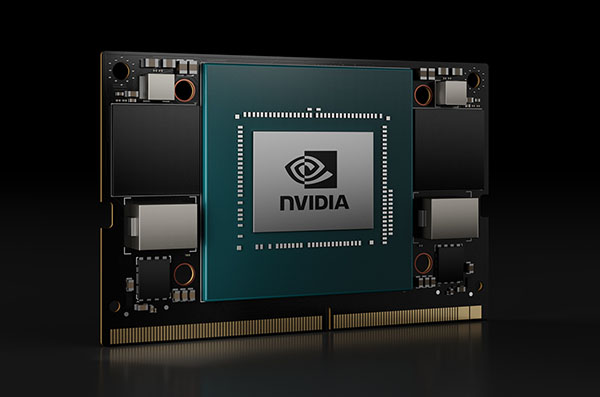
NVIDIA Jetson emerges as the cornerstone technology addressing these critical requirements. This platform brings supercomputer level performance to compact, energy efficient modules specifically designed for edge deployment. The Jetson family encompasses various models tailored to different performance requirements and use cases. From the entry level Nano suitable for educational projects to the powerful AGX Orin delivering up to 275 trillion operations per second, these modules provide scalable solutions for diverse autonomous applications.
Architecture and Technical Foundation
The Jetson platform integrates several sophisticated components into cohesive systems optimized for AI workloads. Each module combines ARM based processors with powerful GPU architectures featuring specialized tensor cores designed for accelerating neural network computations. This heterogeneous computing approach allows different types of processing tasks to run on the hardware best suited for their execution.
Memory bandwidth plays a crucial role in AI performance, and Jetson modules address this with high speed LPDDR memory configurations. The AGX Orin developer kit, for instance, includes 32 GB of LPDDR5 memory with options extending to 64 GB for demanding applications. This substantial memory capacity supports complex multi layered neural networks and enables simultaneous processing of multiple sensor streams.
Power efficiency distinguishes Jetson from traditional computing platforms. The modules operate within configurable power envelopes ranging from 7 watts to 60 watts depending on the model and workload requirements. This efficiency proves essential for battery powered autonomous systems like delivery robots and drones that must operate throughout entire work shifts without recharging. Mobile robots powered by Jetson AGX Orin can run for full days on single battery charges while executing computationally intensive tasks.
Connectivity options reflect the diverse requirements of autonomous systems. Multiple USB ports support cameras and peripheral devices while Ethernet interfaces enable network communication. The platforms include PCIe expansion capabilities, CAN bus interfaces for vehicle networks, and GPIO pins for custom sensor integration. Display outputs ranging from HDMI to DisplayPort facilitate development and debugging while also enabling human machine interfaces in deployed systems.
Autonomous Vehicles and Transportation
Self driving vehicles represent perhaps the most visible application of edge AI technology. These vehicles must process data from numerous sensors simultaneously, including LIDAR units creating three dimensional environmental maps, multiple cameras capturing visual information from different angles, radar systems detecting object velocities, and ultrasonic sensors monitoring close range obstacles. The computational demands are staggering, requiring systems capable of fusing this diverse sensor data into coherent environmental models while running perception algorithms, path planning systems, and control loops in real time.
Jetson platforms provide the processing capabilities necessary for this sensor fusion. The AGX Orin’s 2048 core Ampere GPU architecture with tensor cores accelerates the deep neural networks that identify pedestrians, vehicles, road signs, lane markings, and other critical elements in the driving environment. The 12 core ARM Cortex A78AE CPU handles traditional computing tasks including coordinate transformations, Kalman filtering, and trajectory optimization algorithms.
Latency requirements in autonomous driving are extraordinarily stringent. A vehicle traveling at highway speeds covers substantial distances in fractions of seconds. Processing delays measured in hundreds of milliseconds could mean the difference between safe navigation and collision. Edge computing eliminates the network round trip time inherent in cloud based architectures. All critical computations occur locally within the vehicle, ensuring deterministic response times independent of network conditions.
Commercial implementations demonstrate Jetson’s capabilities in real world conditions. Delivery robots navigating urban sidewalks utilize Jetson modules to identify faces, recognize traffic signals, and distinguish between various pedestrian behaviors. These robots must operate safely in environments shared with people, requiring robust perception systems that function reliably across diverse lighting conditions and weather scenarios.
Robotics and Mobile Autonomous Systems
The robotics industry has embraced Jetson as a foundational platform for creating intelligent machines across numerous domains. Mobile robots require sophisticated navigation capabilities to operate in dynamic, unpredictable environments. Simultaneous localization and mapping algorithms enable robots to construct maps of unknown spaces while determining their position within those spaces. These computationally intensive algorithms run continuously on Jetson platforms, processing visual data from multiple cameras to extract features used for localization.
Industrial mobile robots transporting materials within manufacturing facilities rely on Jetson for Level 4 autonomy. These systems navigate complex factory floors, avoiding obstacles including both stationary equipment and moving personnel. Visual processing based navigation offers advantages over systems dependent on GPS signals, which prove unreliable or unavailable indoors. Jetson powered robots localize using purely visual features, enabling deployment in warehouses, factories, and other enclosed spaces.
Delivery robots have proliferated in recent years, with companies offering robotics as a service models. These robots traverse sidewalks, cross streets, and navigate building interiors to transport food, packages, and supplies. Cartken, a prominent provider in this space, selected Jetson AGX Orin specifically for its ability to handle multiple sensors and cameras while maintaining energy efficiency. The platform runs six cameras supporting mapping and navigation alongside wheel odometry systems measuring travel distances. This sensor suite enables the robots to operate throughout entire days on single battery charges.
Agricultural robots demonstrate another application domain where Jetson’s capabilities prove transformative. Autonomous farming equipment must recognize crops, identify weeds, and execute precise actions based on visual data. Blue River Technology’s See and Spray system exemplifies this approach. The system employs 30 cameras capturing images of plants every 50 milliseconds. Twenty five Jetson AGX Xavier modules process these images, determining whether each plant constitutes a crop or weed faster than human reaction time. This analysis enables 200 precision nozzles to spray herbicides exclusively on weeds, dramatically reducing chemical usage compared to blanket application methods.
Drones and Aerial Systems
Unmanned aerial vehicles face unique computational challenges stemming from strict weight constraints, limited power budgets, and demanding real time requirements. Drones must process visual data for navigation, execute control algorithms maintaining stable flight, and perform mission specific tasks like package delivery or surveillance, all while operating on battery power.
Zipline operates a drone delivery network that has completed over 800,000 deliveries of food, medical supplies, and other goods. These drones rely on Jetson Orin modules delivering up to 275 TOPS while maintaining energy efficiency essential for extended flight times. The platform’s low power consumption helps businesses electrify their vehicle fleets while reducing carbon emissions aligned with sustainability objectives.
Chinese e commerce giant JD.com selected Jetson technology for both its JDrone aerial delivery vehicles and JDrover ground robots. The JDrones can fly at speeds reaching 100 kilometers per hour while carrying payloads up to 30 kilograms, with development underway for variants handling 200 kilogram loads. Over one million drones are planned for deployment over a five year period, all outfitted with Jetson modules providing advanced vision capabilities necessary for autonomous operation in agriculture, delivery, and search and rescue scenarios.
Navigation in outdoor environments requires situational awareness integrating data from multiple sensor types. Drones use Jetson to process GPS information, visual odometry from cameras, and inertial measurement unit data, fusing these inputs into robust position estimates. Computer vision algorithms running on the platform detect obstacles, identify landing zones, and recognize ground features used for localization when GPS signals become unreliable.
Industrial Automation and Manufacturing
Manufacturing environments increasingly incorporate AI driven automation systems improving efficiency, quality, and safety. Traditional industrial processes rely on rigid, programmed sequences unsuitable for variable conditions or complex inspection tasks. Machine learning approaches running on Jetson platforms bring adaptability and intelligence to factory equipment.
Machine vision applications represent a primary use case in manufacturing. Quality control systems must inspect products at production line speeds, identifying defects that might escape human inspectors or conventional computer vision algorithms. Jetson’s GPU architecture accelerates deep learning models trained to recognize subtle anomalies in surface finish, dimensional accuracy, and component placement. These systems achieve high accuracy rates with low false positive rates, ensuring defective products are identified without unnecessarily rejecting good units.
Predictive maintenance transforms equipment servicing from reactive or scheduled approaches to data driven strategies. Industrial machinery generates continuous streams of sensor data including vibration measurements, temperature readings, acoustic signatures, and visual information. Jetson modules process this data in real time, applying machine learning models that identify patterns indicating impending failures. Detection of anomalies like bearing wear, belt degradation, or component misalignment enables maintenance to be scheduled proactively before breakdowns occur.
Robotic systems in factories increasingly require flexibility and intelligence beyond traditional programmed motion sequences. Jetson enables robots to perform bin picking, where parts in random orientations must be identified, grasped, and oriented correctly. Vision systems running on the platform analyze scenes, generate grasp candidates, and provide feedback for closed loop control. Support for the Robot Operating System simplifies development and deployment of these applications.
Edge computing proves essential in manufacturing where data security concerns, network reliability requirements, and latency constraints make cloud dependence impractical. Processing occurring locally on Jetson powered devices keeps sensitive production data within facility boundaries while ensuring operations continue unaffected by network outages. Real time control loops maintain performance even under network congestion scenarios that would degrade cloud dependent systems.
Smart Cities and Urban Infrastructure
Urban areas worldwide pursue intelligent infrastructure initiatives aimed at improving safety, efficiency, and sustainability. These smart city deployments generate massive data volumes from thousands of sensors, cameras, and connected devices. Processing this data centrally proves impractical due to bandwidth limitations and latency requirements. Edge AI distributed throughout urban infrastructure addresses these challenges.
Traffic management systems exemplify smart city applications where Jetson makes substantial contributions. Multiple cities have deployed AI powered traffic sensors using Jetson and NVIDIA Metropolis platforms. These sensors analyze video feeds identifying vehicles, cyclists, and pedestrians while measuring speeds, detecting violations, and identifying safety hazards like close passes between road users. Dublin, Ireland has implemented a digital twin incorporating real time data from VivaCity AI sensors powered by Jetson technology.
Processing video locally at sensor locations provides several advantages. Network bandwidth requirements decrease dramatically compared to streaming high resolution video to central facilities. Privacy concerns are addressed by extracting only metadata rather than transmitting recognizable images. Most importantly, real time analytics enable immediate responses like adjusting traffic signal timing based on current conditions rather than predetermined schedules.
Surveillance and security applications benefit from Jetson’s capabilities in analyzing 24/7 video streams. The platform supports real time analysis of 4K and 8K resolution feeds, applying algorithms that detect unusual behaviors, count crowds, and identify potential threats. Unlike cloud based systems, edge processing ensures these critical security functions operate reliably without dependence on network connectivity. This proves particularly valuable during emergencies when networks may become congested or damaged.
Sustainability initiatives in urban environments leverage Jetson for environmental monitoring and resource optimization. Sensors monitoring air quality, noise levels, water systems, and energy consumption connect to edge computing nodes performing local analysis. Machine learning models identify pollution sources, detect leaks, and optimize resource distribution based on current demand patterns. The platforms can handle data from trillions of sensors and IoT devices, transforming raw measurements into actionable insights supporting urban sustainability goals.
Healthcare and Medical Applications
Medical settings present unique opportunities for edge AI while imposing stringent reliability and accuracy requirements. Healthcare generates vast data quantities including medical images, vital sign measurements, and diagnostic test results. Processing this information rapidly enables faster diagnoses and treatment decisions with potentially life saving implications.
Medical imaging analysis represents a major application area where Jetson makes meaningful contributions. Radiologists and pathologists review enormous numbers of images, a time consuming process subject to human fatigue and oversight. Deep learning models running on Jetson can analyze medical images including X rays, CT scans, MRI studies, and microscopy images. These models detect patterns indicative of conditions ranging from cancerous lesions to bone fractures to diabetic retinopathy.
Real time processing capabilities enable intraoperative applications where surgical teams require immediate feedback. Hyperspectral imaging systems powered by Jetson distinguish between different tissue types and identify blood oxygenation states during surgery. This information supports surgical planning and helps surgeons make better decisions during procedures. The technology’s ability to distinguish oxygenated from deoxygenated blood in real time could improve triage and continuous patient monitoring.
Patient monitoring systems increasingly incorporate AI capabilities for detecting adverse events. Fall detection systems use computer vision algorithms running on Jetson to identify when elderly patients fall, enabling rapid responses that may prevent serious injuries. Respiratory monitoring systems analyze video feeds to track breathing rates accurately without requiring contact sensors. Medication adherence monitoring employs computer vision to verify patients are taking prescribed medications correctly.
Edge computing proves particularly important in healthcare due to privacy regulations and security concerns. Processing patient data locally on Jetson devices reduces the need to transmit sensitive health information across networks or store it in cloud facilities. This approach aligns with regulations like HIPAA while maintaining the AI capabilities that improve care quality. Hospitals can deploy edge intelligence throughout their facilities, from operating rooms to patient wards to diagnostic labs, creating comprehensive AI assisted environments while maintaining data sovereignty.
Agriculture and Precision Farming
Modern agriculture faces increasing pressure to maximize yields while minimizing resource consumption and environmental impact. Precision farming techniques apply targeted interventions based on detailed knowledge of field conditions rather than uniform treatments across entire areas. Computer vision and AI enable implementation of these approaches at scales impossible through manual methods.
Weed identification and targeted herbicide application demonstrate how Jetson transforms agricultural practices. Traditional farming blankets entire fields with chemicals regardless of weed density or distribution. Vision based systems examine individual plants, distinguishing crops from weeds and spraying only where necessary. The See and Spray technology covers 12 rows simultaneously using cameras that capture images every 50 milliseconds. Jetson modules process these images determining plant classification faster than humanly possible, directing spray nozzles to apply herbicide exclusively to weeds. This precision reduces chemical usage substantially, lowering costs while minimizing environmental impacts.
Crop monitoring and disease detection benefit from mobile robots and drones equipped with Jetson platforms. Agricultural machinery traverses fields capturing images analyzed for signs of stress, disease, or pest infestation. Early detection enables targeted treatments preventing problems from spreading while crops remain salvageable. The small form factor and rugged construction of Jetson modules suit the demanding environmental conditions encountered in farming, including dust, vibration, temperature extremes, and moisture exposure.
Irrigation management systems use edge computing for optimizing water usage. Sensors distributed throughout fields measure soil moisture, plant stress levels, and environmental conditions. Jetson devices embedded in irrigation equipment process this data, making decisions about when and where to apply water. Machine learning models predict future conditions based on weather forecasts and historical patterns, enabling proactive irrigation strategies that maintain optimal growing conditions while conserving water resources.
Livestock monitoring represents another agricultural application where computer vision and AI provide value. Cameras monitoring barns and pastures analyze animal behavior, detecting signs of illness, distress, or calving. Automated systems identify individual animals, track movements, and measure feeding patterns. This continuous monitoring enables early intervention when health issues arise while reducing the labor required for manual observation.
Retail and Customer Analytics
Physical retail environments face competitive pressure from online shopping experiences that offer personalized recommendations and seamless transactions. Retailers increasingly deploy AI and computer vision technologies to bridge this gap, bringing digital intelligence into brick and mortar stores. Edge computing enables these applications while addressing privacy concerns associated with customer monitoring.
Customer behavior analytics provide insights previously available only in online contexts. Computer vision systems powered by Jetson track customer movements throughout stores, generating heat maps showing traffic patterns and popular areas. This information reveals which displays attract attention, how long customers spend in different sections, and which routes shoppers typically follow. Retailers use these insights for optimizing store layouts, improving product placement, and enhancing overall shopping experiences.
Inventory management becomes more sophisticated with computer vision monitoring shelves continuously. Systems detect when products are running low, misplaced, or missing price tags. Automated alerts notify staff about situations requiring attention, reducing out of stock conditions that frustrate customers and cost sales. The technology also identifies planogram compliance issues where products are stocked in incorrect locations.
Checkout automation represents a transformative application where AI eliminates traditional point of sale bottlenecks. Vision systems identify products as customers place them in carts or bags, automatically calculating totals without requiring barcode scanning. These frictionless checkout experiences reduce wait times while freeing staff for customer service roles adding greater value than operating cash registers.
Safety and security applications protect both customers and merchandise. AI powered cameras monitor for suspicious behaviors, detect spills or obstacles creating slip hazards, and identify situations requiring intervention. Access control systems use facial recognition or other biometric approaches for restricting entry to secured areas. Loss prevention systems track merchandise movements, alerting staff to potential shoplifting.
Processing occurring at the edge addresses privacy concerns while maintaining functionality. Rather than transmitting video streams to cloud servers or central facilities, Jetson modules extract only necessary metadata like counts, trajectories, and event detections. Raw video need not leave the premises, helping retailers maintain customer trust while complying with privacy regulations that vary by jurisdiction.
Software Ecosystem and Development Tools
Hardware capabilities alone prove insufficient for successful AI deployment. The software ecosystem supporting development, training, and deployment determines how effectively platforms can be utilized. NVIDIA provides comprehensive tools and frameworks specifically designed for Jetson, creating an integrated environment spanning from algorithm development through production deployment.
JetPack SDK serves as the foundational software platform, combining a Linux operating system with drivers, libraries, and tools optimized for Jetson hardware. This SDK includes accelerated computing libraries like CUDA for parallel processing, cuDNN for deep neural networks, and TensorRT for optimizing trained models. These libraries leverage the specific architectural features of Jetson GPUs, achieving performance levels impossible through generic software approaches.
Deep learning frameworks including TensorFlow, PyTorch, and others run natively on Jetson with GPU acceleration. Data scientists develop and train models using these familiar tools on workstation or cloud GPU systems, then deploy those models to Jetson devices with minimal modification. The unified CUDA platform means code written for one NVIDIA GPU architecture generally transfers to others, simplifying the workflow from development through deployment.
The Isaac platform specifically targets robotics applications, providing libraries and tools for perception, navigation, and manipulation. Isaac includes pre trained models for common robotics tasks like object detection, pose estimation, and semantic segmentation. Developers can use these models as starting points, fine tuning them for specific applications rather than training from scratch. The platform integrates with ROS, the widely adopted Robot Operating System, enabling developers to leverage existing robotics software while adding AI capabilities.
Metropolis focuses on intelligent video analytics applications relevant to smart cities, retail, and industrial monitoring. This framework includes optimized models for tasks like people counting, vehicle tracking, and anomaly detection. Pre built building blocks accelerate development of custom applications without requiring deep expertise in computer vision or machine learning.
Transfer learning approaches reduce the data and computational requirements for training models. Rather than training neural networks from random initializations requiring millions of labeled examples, developers start with models pre trained on large generic datasets. Fine tuning these models for specific tasks requires far fewer examples and less training time. NVIDIA provides model zoos containing pre trained networks for numerous applications, jumpstarting development efforts.
Containerization through Docker enables consistent deployment across development and production environments. Applications packaged as containers include all dependencies, ensuring software running on a developer’s workstation behaves identically when deployed to Jetson devices in the field. This approach simplifies the transition from prototype to production while facilitating updates and maintenance of deployed systems.
Performance Characteristics and Model Selection
The Jetson family spans a performance range addressing diverse application requirements and budget constraints. Understanding the characteristics of different models enables appropriate platform selection for specific use cases.
Jetson Nano targets educational applications, hobbyist projects, and cost sensitive deployments requiring modest AI performance. The module delivers 472 gigaflops of compute performance from its 128 core Maxwell GPU while consuming just 5 to 10 watts. This entry level platform proves sufficient for simple computer vision tasks like object detection in controlled environments or basic robotics applications. Educational institutions worldwide have adopted Nano for introducing students to AI and embedded systems development.
Jetson Xavier NX occupies a middle ground, offering substantially greater performance than Nano while maintaining compact form factor and moderate power consumption. The module includes a 384 core Volta GPU with tensor cores specifically designed for accelerating neural network inference. Performance reaches 21 TOPS in AI workloads while power consumption ranges from 10 to 15 watts. This balance makes Xavier NX popular for production deployments in robotics, drones, and industrial applications where performance requirements exceed Nano’s capabilities but power and thermal constraints prevent using larger platforms.
AGX Xavier targets applications demanding high performance in autonomous machines. The 512 core Volta GPU delivers 32 TOPS of AI compute while the 8 core ARM CPU handles traditional processing tasks. Memory bandwidth from 64 GB LPDDR4x memory ensures the platform can sustain high utilization rates across GPU and CPU simultaneously. AGX Xavier found widespread adoption in autonomous vehicles, industrial robots, and medical imaging applications where performance directly impacts system capabilities.
AGX Orin represents the current performance leader within the Jetson family. The platform achieves up to 275 TOPS from its 2048 core Ampere architecture GPU with next generation tensor cores. This represents nearly an order of magnitude improvement over AGX Xavier, enabling applications previously requiring multiple modules or workstation class hardware. The 12 core ARM Cortex A78AE CPU provides substantially improved single threaded and multi threaded performance compared to earlier generations. Memory options extending to 64 GB LPDDR5 with increased bandwidth support memory intensive workloads like simultaneous processing of multiple high resolution video streams.
Power scalability across the Orin family enables optimization for different scenarios. The same basic architecture spans from Orin Nano consuming 7 to 15 watts through Orin NX at 10 to 25 watts to AGX Orin at 15 to 60 watts. Developers can use identical software across this range, selecting the specific power performance point appropriate for each deployment. Applications might use lower power configurations for battery operation while utilizing maximum performance modes when external power is available.
Future Directions and Emerging Applications
The trajectory of edge AI and autonomous systems continues accelerating as both hardware capabilities and algorithmic approaches advance. Several emerging trends point toward future directions for Jetson and related technologies.
Transformer based neural network architectures that revolutionized natural language processing are increasingly applied to computer vision tasks. These models achieve state of the art results on challenging perception problems but demand substantial computational resources. Future Jetson platforms will likely emphasize capabilities specifically optimizing transformer inference, including attention mechanisms central to these architectures.
Generative AI applications represent another frontier where edge deployment offers advantages. Running large language models or image generation networks locally addresses latency requirements for interactive applications while maintaining privacy for sensitive prompts and generated content. The computational requirements remain substantial, but continued hardware evolution brings these capabilities within reach of edge platforms.
Multi modal AI systems integrate information across vision, language, audio, and other sensory modalities. Autonomous systems benefit from these holistic approaches rather than treating each input stream independently. A robot understanding both visual scenes and spoken commands can collaborate more naturally with humans. Edge platforms must efficiently support diverse neural network types processing different data types simultaneously.
Federated learning approaches enable devices to collectively improve AI models while keeping training data local. Autonomous systems deployed in various environments encounter diverse conditions and edge cases. Rather than centralizing data for training, which raises privacy concerns and network bandwidth challenges, federated approaches allow distributed learning. Each edge device trains locally on its experiences, sharing only model updates rather than raw data. These updates aggregate to improve global models while respecting data sovereignty and privacy requirements.
Energy efficiency remains a perpetual focus as autonomous systems expand into new domains. Battery powered applications always benefit from reduced power consumption extending operating times. Even grid powered systems increasingly consider energy efficiency for environmental and cost reasons. Specialized hardware accelerators targeting specific neural network operations continue evolving, providing increased performance per watt with each generation.
The convergence of 5G networks with edge computing creates opportunities for distributed intelligence spanning devices and network infrastructure. While edge processing handles latency critical tasks locally, nearby network edge nodes can augment capabilities for computationally intensive operations still requiring rapid response. This hierarchical approach balances local autonomy with access to greater computational resources when beneficial.
Autonomous systems increasingly operate in collaborative rather than isolated modes. Fleets of delivery robots share map information and coordinate routes. Autonomous vehicles communicate about traffic conditions and hazards. Factory robots coordinate activities through shared understanding of production status. These collaborative behaviors require edge platforms capable of real time communication and distributed decision making while maintaining safety even when communication degrades.
Conclusion
NVIDIA Jetson has established itself as the leading platform for edge AI in autonomous systems through a combination of powerful hardware, comprehensive software tools, and proven real world deployments across diverse industries. From autonomous vehicles navigating city streets to delivery robots traversing sidewalks, from factory automation systems improving manufacturing efficiency to agricultural robots reducing chemical usage, Jetson enables intelligent machines operating independently in complex environments.
The platform’s success stems from addressing the fundamental requirements of autonomous systems: processing sensor data in real time with minimal latency, operating within strict power budgets, maintaining reliability in mission critical applications, and providing developers with tools enabling rapid application development and deployment. This combination proves essential as autonomous systems transition from research curiosities to production technologies affecting daily life.
Looking forward, edge AI will only grow in importance as autonomous systems proliferate throughout society. The computational demands will continue increasing as applications tackle more complex tasks in less structured environments. NVIDIA’s ongoing investment in the Jetson platform, evidenced by successive generations delivering order of magnitude performance improvements, positions it to remain at the forefront of this transformation. The convergence of edge intelligence with advances in sensors, networking, and AI algorithms promises increasingly capable autonomous systems that enhance productivity, safety, and quality of life across countless domains.