The Quiet Revolution Happening on Our Bookshelves
Something shifted in the literary landscape over the past decade. It happened gradually at first, then all at once, like water finally breaking through a dam that had been cracking for years. Non binary and genderqueer protagonists moved from the margins of experimental fiction into the bright center of mainstream storytelling. They stopped being symbols or teaching moments. They became, simply, people. Complex, flawed, interesting people whose gender identity was one thread in a much larger tapestry.
This matters more than we might initially think. Fiction has always been a laboratory for identity, a space where readers can inhabit lives radically different from their own. When certain identities are absent from that laboratory, or present only as curiosities and cautionary tales, the message is clear. You don’t belong here. You aren’t worth imagining.
The emergence of non binary and genderqueer protagonists challenges that exclusion in powerful ways. But the journey to this moment has been anything but straightforward.
What We Talk About When We Talk About Representation
Before diving deeper, it helps to establish some shared understanding. Non binary refers to gender identities that fall outside the strict categories of male and female. Some non binary people feel they exist somewhere between these poles. Others feel they exist entirely outside the binary framework altogether. Still others experience their gender as fluid, shifting over time or context. Genderqueer is an umbrella term that often overlaps with non binary but can also encompass a broader range of experiences and expressions.
These aren’t new identities, despite what some cultural commentators suggest. Cultures across the world and throughout history have recognized genders beyond the binary. What is relatively new is the widespread vocabulary to describe these experiences in Western contexts, along with increasing social visibility and, crucially, the political will among publishers to bring these stories to market.
Representation in fiction operates on multiple levels. There’s the basic question of visibility. Can readers find characters who share their identity? There’s the question of quality. Are those characters rendered with depth and nuance, or are they stereotypes? And there’s the question of narrative function. Do these characters get to be heroes of their own stories, or are they perpetually supporting players in someone else’s journey?
Contemporary fiction has begun answering yes to all three questions when it comes to non binary and genderqueer protagonists. But the path to this point has been winding.
Early Appearances and the Burden of Explanation
Literature featuring characters we might now describe as non binary or genderqueer existed long before these terms entered common usage. Virginia Woolf’s Orlando, published in 1928, follows a protagonist who lives for centuries and changes sex partway through. The novel treats this transformation with remarkable matter of factness, though Woolf’s own understanding of gender identity was necessarily shaped by the frameworks available to her.
More recent decades saw scattered appearances of gender nonconforming characters in speculative fiction particularly. Ursula K. Le Guin’s The Left Hand of Darkness imagined an entire society of ambisexual beings, though the novel was written primarily as a thought experiment rather than an exploration of lived non binary experience. Samuel R. Delany’s work similarly pushed at the boundaries of gender in science fiction.
But these earlier works often positioned gender variance as fantastical, alien, or requiring extensive explanation. Characters existed to illustrate a point about gender as a concept. They carried the burden of representing an entire category of human experience while also educating readers who might never have encountered such identities.
This burden of explanation still exists today, but something important has changed. Many contemporary novels featuring non binary and genderqueer protagonists refuse to make their characters’ gender the central mystery or the primary source of conflict. Gender identity becomes simply one aspect of who these characters are. Sometimes it matters to the plot. Sometimes it doesn’t. Just like in real life.
Young Adult Fiction Leads the Charge
It probably shouldn’t surprise us that young adult fiction has been at the forefront of this shift. The genre has long served as a testing ground for diverse representation, in part because young readers demand it and in part because adolescence itself is a time of intense identity formation.
Books like I Wish You All the Best by Mason Deaver, published in 2019, center non binary teenagers navigating the challenges of family acceptance, romantic relationships, and self discovery. What makes Deaver’s novel notable isn’t just the presence of a non binary protagonist but the way the story treats Ben’s gender identity as settled fact rather than endless question. Ben knows who they are. The story is about everything else that comes with being a teenager. The friendships, the art, the anxiety, the slow process of learning to trust people again after being rejected by parents.
Alex Gino’s Melissa, originally published as George, tells the story of a transgender girl, but the book opened doors for other gender diverse narratives in middle grade fiction. Publishers realized these books would find audiences. Parents and educators sought them out. Young readers passed them between friends.
Other notable young adult titles include Felix Ever After by Kacen Callender, which features a Black transgender protagonist navigating love and identity in New York City. Callender’s work is particularly significant because it centers a character at the intersection of multiple marginalized identities without making the story a parade of trauma. Felix has problems. He also has joy, desire, ambition, and the full range of human experience.
Pet by Akwaeke Emezi brings a non binary protagonist named Jam into a speculative setting where monsters have supposedly been eradicated from society. The book challenges readers to think about what we mean by monstrosity and who gets defined as threatening. Jam’s gender identity is simply part of who they are, unremarked upon and unremarkable in the world of the novel.
Literary Fiction Gets on Board
While young adult fiction blazed trails, literary fiction has increasingly followed. The distinction between these categories is porous and somewhat arbitrary, but it matters in terms of critical attention, prize recognition, and the kinds of readers different books reach.
Akwaeke Emezi’s adult debut, Freshwater, draws on Igbo cosmology to tell a story that explodes Western categories of gender and selfhood entirely. The protagonist Ada hosts multiple selves called ogbanje. Their experience of gender is complex, shifting, and tied to spiritual realities that resist easy categorization. The novel refuses to explain itself in terms comfortable to Western readers. It demands that you enter its world on its own terms.
Paul Takes the Form of a Mortal Girl by Andrea Lawlor follows a protagonist in 1990s queer communities who can literally shapeshift their body. Paul moves between genders and presentations with fluid ease, and the novel uses this fantastical premise to explore very real questions about desire, community, and the limits of identity categories. The book is explicit, funny, messy, and deeply human despite its supernatural elements.
Detransition, Baby by Torrey Peters centers transgender women and engages thoughtfully with the broader landscape of gender transition, including characters who have detransitioned. While the protagonists are transgender women rather than non binary, the novel contributes to a literary conversation about gender that makes space for complexity and ambivalence.
These literary works share something important. They trust their readers. They don’t stop to explain what non binary means or offer glossaries of terminology. They assume a baseline of cultural competence or a willingness to learn through immersion. This represents a significant shift from earlier approaches that often positioned readers as outsiders being educated about exotic identities.
Genre Fiction Embraces Possibility
Speculative fiction has always offered unique opportunities for exploring gender. When you’re building entire worlds from scratch, you can imagine societies with different gender systems, technologies that change bodies, magic that transcends physical form. These tools allow authors to ask what if questions that illuminate our own reality.
Becky Chambers has received widespread acclaim for her Wayfarers series, which features a range of gender presentations and identities across various alien species. The books imagine futures where humanity has expanded into the galaxy and encountered beings with entirely different approaches to gender. More importantly, these differences are treated as simply part of the fabric of a diverse universe rather than sources of conflict or confusion.
Ann Leckie’s Imperial Radch trilogy uses exclusively she/her pronouns for all characters, not because everyone in the story is female but because the protagonist’s culture doesn’t distinguish gender in the same ways. This formal choice destabilizes readers’ assumptions and forces attention to how much we rely on gendered information when processing narratives.
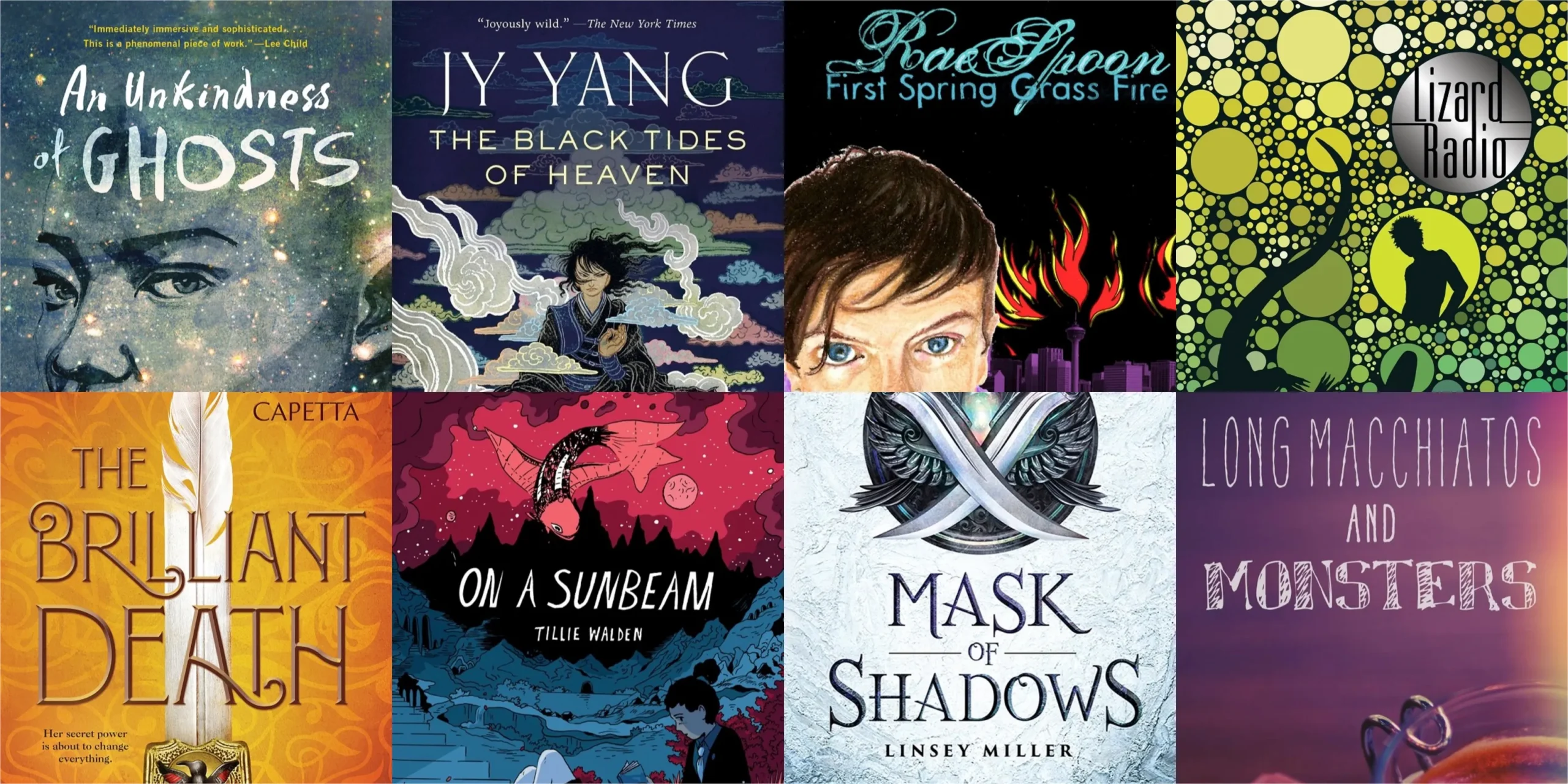
Rivers Solomon’s work, including An Unkindness of Ghosts and The Deep, centers Black queer and non binary characters in speculative settings that grapple with history, trauma, and liberation. Solomon’s prose is dense and demanding, refusing easy consumption. Their characters exist at intersections of marginalization that amplify and complicate each other.
Everina Maxwell’s space opera romances, beginning with Winter’s Orbit, feature characters who use they/them pronouns in worlds where this is simply normal. The romance genre, with its focus on relationships and emotional connection, proves surprisingly well suited to exploring gender identity. When the goal is intimacy between characters and between character and reader, authentic representation of identity becomes crucial.
The Question of Authenticity and Own Voices
A significant shift in publishing discourse over the past decade involves the concept of own voices, which originated as a hashtag and became a shorthand for books about marginalized identities written by authors who share those identities. The term has generated considerable debate and has even been retired by some of its original proponents, but the underlying questions remain important.
Should non binary and genderqueer protagonists be written only by non binary and genderqueer authors? There’s no simple answer. Own voices narratives often capture nuances of lived experience that outside observers miss. They provide economic opportunities to marginalized authors who have historically been excluded from publishing. They center community knowledge rather than extracting stories from communities for others’ benefit.
At the same time, rigid gatekeeping around who can write what can become its own problem. Not all non binary people have the same experiences. A white non binary author’s perspective on gender will differ from a Black non binary author’s perspective. Class, disability, nationality, religion all intersect with gender identity in ways that complicate any simple matching of author to character identity.
What seems clear is that the recent flourishing of non binary protagonists has been driven largely by non binary and genderqueer authors gaining access to publishing. This isn’t coincidental. When the people making decisions in publishing houses reflect the diversity of potential readers, different books get made.
Beyond the Coming Out Story
One of the most significant developments in recent fiction has been the movement beyond the coming out narrative as the default structure for queer stories. Coming out narratives have their place. They document real experiences and can provide crucial recognition for readers navigating similar journeys. But when every story about a non binary character is fundamentally about becoming non binary or being recognized as non binary, a ceiling is imposed on what these characters can do.
Contemporary fiction increasingly features non binary protagonists whose gender is simply a given. The story might be a mystery, a romance, a family drama, an adventure. The protagonist happens to be non binary, and this shapes their experience in various ways, but it isn’t the point of the narrative.
This represents a maturation of representation. Early visibility often requires justification. Characters must prove they deserve to exist by having their existence be the story. Later, once a presence has been established, characters can simply be. They can have adventures and fall in love and solve crimes and save the world while non binary, rather than having their story be about being non binary.
Not everyone agrees this is entirely positive. Some argue that the particular challenges non binary people face deserve continued centering. Coming out remains difficult. Discrimination is real. Family rejection, healthcare barriers, violence: these realities don’t disappear just because literary fashion moves toward casual representation. There’s a risk that in our eagerness to show non binary characters having fun adventures, we erase the specific struggles that make non binary community and solidarity necessary.
The best fiction probably threads this needle by offering both. Stories where gender identity is central alongside stories where it’s incidental. Narratives of struggle alongside narratives of joy. The full range of human experience, which includes fighting for recognition and also includes just living.
Pronouns on the Page
One technical challenge authors face involves pronouns. English hasn’t traditionally had widely accepted singular gender neutral pronouns, though singular they has a long history and has become increasingly accepted. Fiction featuring non binary protagonists must make choices about pronoun usage, and these choices have both practical and political dimensions.
Many contemporary novels use they/them pronouns for their non binary protagonists. This requires some craft to execute clearly. English can become ambiguous when they refers to a single character and also to groups of characters. Authors develop various strategies. Careful sentence construction, strategic use of character names, and occasional creative approaches to clarity.
Other novels introduce neopronouns, newly created pronouns like ze/hir or xe/xem. These appear more commonly in speculative fiction, where invented societies might reasonably have developed different linguistic tools. Some readers find neopronouns jarring or difficult to track. Others appreciate the explicit marking of difference.
Still other books feature non binary characters who use he or she pronouns, reflecting the reality that not all non binary people use they/them. Gender identity and pronoun usage don’t have a one to one relationship. A character can be non binary and use she/her pronouns, and fiction that reflects this complexity offers more accurate representation.
The practical challenges of pronoun usage might seem like a minor issue, but they matter. When readers stumble over pronouns, when the prose becomes awkward or confusing, it undermines the story. Authors committed to representing non binary characters must also be committed to developing craft sufficient to do so smoothly.
International Perspectives
The conversation about non binary representation in fiction has been heavily centered on Anglophone literature. But gender diversity exists worldwide, and writers from various traditions are telling stories that complicate any simple narrative of Western progressive enlightenment.
Japanese light novels and manga have long featured characters who cross gender boundaries, though the cultural frameworks differ from Western non binary identities. These works are increasingly translated for English speaking audiences, bringing different perspectives on gender into conversation with homegrown traditions.
Latin American literature has engaged with gender fluidity through works that draw on regional histories of queer and gender nonconforming people. The terms travesti and muxe describe identities that don’t map neatly onto English categories, and literature engaging these identities contributes to a global conversation while remaining rooted in specific cultural contexts.
African writers, including Akwaeke Emezi mentioned earlier, bring frameworks from various African traditions that have never aligned with the Western binary model. The presumption that gender binarism is universal and that non binary identities are a recent Western invention collapses under the weight of evidence from across the continent.
This international dimension matters because it reveals that what we’re witnessing isn’t simply Western liberalism being exported but rather a global conversation in which many voices are participating. Different traditions offer different resources for imagining gender, and fiction that draws on these traditions enriches the broader landscape.
The Publishing Industry and Market Forces
It would be naive to discuss representation in fiction without acknowledging the role of market forces. Publishers are businesses. They publish books they believe will sell. The increase in non binary protagonists reflects not just cultural shifts but calculations about what readers want.
This isn’t inherently cynical. Markets respond to demand, and the demand for diverse representation has grown because real people want to see themselves in stories. Young people particularly have driven this demand, creating economic incentive for publishers to seek out diverse voices.
But market logic has limitations. It tends toward what has already proven successful, which can lead to formulaic representation. The first few breakout books featuring non binary protagonists established templates that later books sometimes follow too closely. Publishers seeking the next I Wish You All the Best might overlook books that tell different kinds of stories.
There’s also the question of who benefits. When large corporate publishers profit from books about marginalized identities, do those communities see returns? The push for own voices narratives reflects in part a desire to ensure economic benefits flow to the communities being represented, not just to corporations extracting value from their stories.
Small presses and independent publishers have played crucial roles in developing non binary fiction, taking risks on books that larger houses might overlook. These publishers often have stronger connections to queer communities and more genuine investment in the work they produce. But they also have fewer resources for distribution and marketing, limiting the reach of books they publish.
Criticism and Controversy
Not everyone celebrates the rise of non binary protagonists in fiction. Social conservatives view this trend as evidence of cultural decay, part of a broader gender ideology they oppose. These critics often frame their objections in terms of protecting children, particularly when non binary characters appear in young adult or middle grade fiction.
Books featuring non binary protagonists have been targeted for banning and removal from school libraries. These efforts have intensified in recent years as broader political battles over gender identity play out in educational settings. Authors of these books have faced harassment and threats.
Within queer communities, different criticisms emerge. Some argue that mainstream representation dilutes radical politics, that being included in mainstream fiction means being domesticated into acceptable forms. The non binary protagonists who make it into published books might not represent the full diversity of non binary experience. They might be too young, too white, too able bodied, too conventionally attractive.
Others worry about the gap between representation in fiction and material conditions in the world. Non binary people continue to face discrimination in employment, housing, and healthcare. They experience violence at alarming rates. Fiction featuring non binary protagonists can create an illusion of acceptance that doesn’t match reality. Reading about non binary characters isn’t the same as advocating for non binary rights.
These criticisms deserve engagement rather than dismissal. Representation in fiction matters, but it isn’t sufficient. It’s one front in a broader struggle that includes policy, culture, economics, and direct community support.
What Comes Next
Predicting the future of literary trends is a fool’s errand, but some directions seem likely. Non binary and genderqueer protagonists will probably continue appearing in fiction at increasing rates, simply because the social visibility of these identities continues to grow. As more non binary people come of age as writers and enter publishing, the supply of authentic narratives will increase.
The kinds of stories being told will likely diversify further. We’ll see non binary protagonists in more genres, including genres like thrillers and horror that have been slower to embrace diverse representation. We’ll see more intersectional narratives that explore how gender identity interacts with race, class, disability, and other aspects of identity.
Formal experimentation will continue. Authors will develop new techniques for handling pronouns and representing internal experiences of gender that don’t fit neatly into existing narrative conventions. The tools available for telling these stories will expand.
Backlash will also continue. The political fight over gender is not resolved, and fiction exists within this contested terrain. Authors will face pressure to silence themselves. Publishers will face pressure to avoid controversy. Some books that should exist won’t get made because the environment becomes too hostile.
But stories persist. They find their way to readers through official channels when possible, through unofficial channels when necessary. The hunger for recognition, for seeing oneself reflected in narrative, doesn’t disappear because some people find it inconvenient. Non binary and genderqueer readers will continue seeking out stories that speak to their experience. Writers will continue creating them.
The books discussed here represent a snapshot of a ongoing transformation. They’re not endpoints but markers along a path whose destination remains unwritten. What seems certain is that the path continues forward. The genie won’t go back in the bottle. Non binary and genderqueer protagonists have claimed their place in contemporary fiction, and they’re not giving it up.
That’s worth celebrating, even as we recognize how much work remains. Stories matter. They shape how we understand ourselves and each other. They offer practice in empathy, rehearsal for recognizing humanity in people whose lives differ from our own. When non binary and genderqueer protagonists take their place alongside all the other protagonists in our collective literary imagination, something important happens. The circle of who counts as fully human expands. The map of possible selves grows larger.
This is what fiction does at its best. It shows us people we didn’t know we could be. It shows us people we didn’t know existed. And in showing us, it helps create the conditions for those people to exist more fully and freely in the world beyond the page. The non binary protagonists populating our bookshelves today are doing this work. They’re expanding what’s imaginable. And that expansion, once accomplished, becomes permanent. You can’t un-imagine a possibility. You can only imagine new ones.