
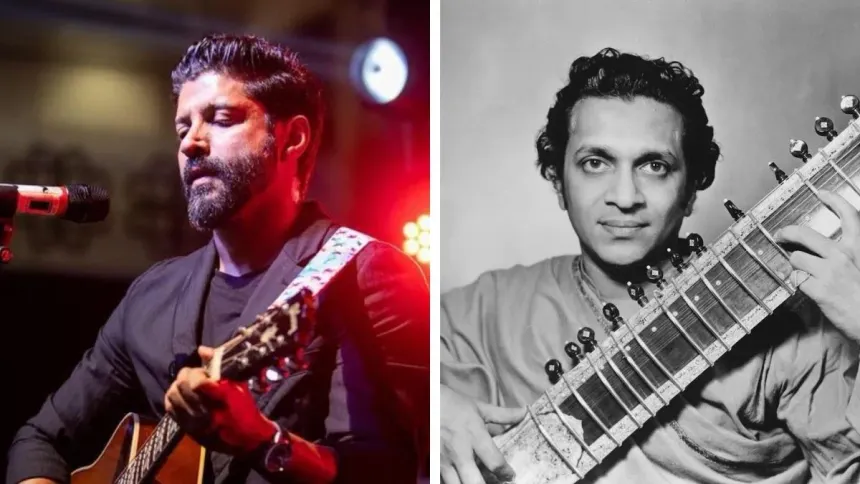
Farhan Akhtar, one of Indian cinema’s most versatile talents, is poised to make his significant Hollywood acting debut in Sam Mendes’ extraordinarily ambitious project, ‘The Beatles – A Four-Film Cinematic Event’ . This monumental career move positions the actor-director-producer at the intersection of two powerful cultural narratives: the global phenomenon of The Beatles and the growing presence of Indian artists in Western mainstream cinema . Akhtar will portray the legendary sitar maestro Ravi Shankar, a role that carries immense cultural significance and represents a perfect confluence of his artistic sensibilities and the historical importance of Indian classical music’s influence on Western popular culture .
The Role That Bridges Two Musical Worlds
The casting of Farhan Akhtar as Ravi Shankar represents far more than just another acting assignment; it embodies a deeply meaningful cultural exchange that defined a transformative era in music history . Ravi Shankar, the virtuoso sitarist who became a global ambassador for Indian classical music, played a pivotal role in shaping The Beatles’ sonic evolution, particularly through his profound influence on George Harrison . During the 1960s, when Western popular music was undergoing radical experimentation and expansion, Shankar’s introduction of Indian classical elements into The Beatles’ repertoire opened entirely new sonic territories and philosophical dimensions that would permanently alter the trajectory of rock and popular music .
Harrison’s fascination with the sitar and Indian spirituality led to some of The Beatles’ most innovative and contemplative work, from the sitar passages in “Norwegian Wood” to the transcendent explorations in songs like “Within You Without You” . This musical and spiritual relationship between Shankar and Harrison represented a genuine cross-cultural dialogue that transcended mere exoticism or superficial appropriation, instead fostering a deep respect for Indian classical traditions and introducing millions of Western listeners to an entirely different musical philosophy . For Farhan Akhtar, stepping into the shoes of this towering figure requires not just acting ability but also an understanding of classical Indian music, cultural diplomacy, and the delicate balance Shankar maintained between preserving traditional forms and engaging with contemporary Western audiences .
Akhtar’s selection for this role speaks volumes about his standing as an artist who can navigate multiple cultural contexts with authenticity and nuance . His background in the Indian entertainment industry, combined with his previous foray into Western productions, positions him uniquely to portray Shankar’s role as a cultural bridge-builder . The responsibility of representing such an iconic figure on screen, particularly in a project with the massive scope and visibility of Sam Mendes’ Beatles films, cannot be understated . Shankar’s legacy extends far beyond his musical contributions; he was a cultural diplomat who opened minds and challenged Western audiences to expand their understanding of music, spirituality, and artistic expression .
Sam Mendes’ Unprecedented Cinematic Vision
Director Sam Mendes has conceived what may be the most ambitious biographical film project in cinema history with ‘The Beatles – A Four-Film Cinematic Event’ . The innovative structure—four separate films, each told from the perspective of a different band member—represents a radical departure from traditional biographical storytelling . This multiperspectival approach acknowledges the complex reality that four distinct individuals, each with their own artistic vision, creative impulses, and personal narratives, comprised The Beatles . Rather than flattening these perspectives into a single, unified narrative, Mendes’ approach honors the individual experiences and viewpoints that collectively created one of the most influential musical phenomena in history .
The decision to create four interconnected yet distinct films allows for unprecedented depth and complexity in exploring The Beatles’ story . Each band member’s perspective will inevitably highlight different aspects of their journey from Liverpool working-class backgrounds to global superstardom and eventual dissolution . Paul McCartney’s film might emphasize the melodic craftsmanship and collaborative dynamics that drove much of the band’s output, while John Lennon’s perspective could delve into the intellectual and political dimensions of his artistic evolution . George Harrison’s narrative would naturally explore his spiritual seeking and growing frustration with his junior partner status, while Ringo Starr’s viewpoint might offer insights into the group dynamics and the often-underappreciated contributions of the band’s rhythmic foundation .
This narrative structure also presents fascinating possibilities for examining the same events through multiple lenses, revealing how differently the four musicians experienced shared moments . The creative tensions that eventually tore the band apart, the exhilaration of their unprecedented success, the crushing pressure of fame, and the artistic breakthroughs that defined their career will all be refracted through four distinct consciousnesses . Mendes, known for his meticulous attention to character psychology and emotional authenticity in films like “American Beauty,” “Revolutionary Road,” and “1917,” brings a directorial sensibility particularly suited to this complex narrative architecture .
The theatrical release strategy for all four films in April 2028 suggests a coordinated viewing experience that invites audiences to engage with multiple perspectives on the same story . This approach could revolutionize how biographical films are conceived and consumed, potentially establishing a new model for exploring lives and events too complex for single-perspective narratives . The unprecedented cooperation from The Beatles organization, including the granting of full life story and music rights for a scripted feature, indicates the principals’ confidence in Mendes’ vision and their willingness to participate in a truthful, comprehensive examination of their legacy .
An Ensemble of Extraordinary Talent
The casting for ‘The Beatles – A Four-Film Cinematic Event’ represents a carefully curated ensemble of some of the most compelling actors working today . Paul Mescal, who gained widespread recognition for his breakthrough performance in “Normal People” and subsequent film work, will portray Paul McCartney . Mescal brings an emotional openness and vulnerability to his roles that could reveal unexpected dimensions of McCartney’s personality beyond the charming public persona . Harris Dickinson, cast as John Lennon, possesses the intensity and intellectual presence necessary to capture Lennon’s sharp wit, political consciousness, and emotional complexity .
Barry Keoghan, known for his chameleonic ability to disappear into roles and his particular talent for playing outsiders and misunderstood figures, will portray Ringo Starr . This casting choice suggests a commitment to exploring Starr’s often-overlooked contributions and the unique perspective of someone who joined an already-formed group and navigated complex interpersonal dynamics with humor and resilience . Joseph Quinn, cast as George Harrison, brings a thoughtful, introspective quality to his performances that aligns well with Harrison’s spiritual seeking and quiet intensity .
Beyond the four principals, the supporting cast reads like a who’s who of contemporary British and Irish talent . Saoirse Ronan will portray Linda McCartney, bringing her considerable dramatic skills to the role of Paul’s partner and creative collaborator . Anna Sawai takes on the complex and often misunderstood role of Yoko Ono, a figure who has been unfairly scapegoated for The Beatles’ breakup and whose artistic contributions deserve serious consideration . Lucy Boynton joins as Jane Asher, Paul McCartney’s girlfriend during much of The Beatles’ peak years, while Morfydd Clark will portray Cynthia Lennon, John’s first wife .
The casting of James Norton as manager Brian Epstein recognizes the crucial role this figure played in The Beatles’ transformation from Liverpool club performers to international phenomena . Epstein’s vision, business acumen, and personal sacrifices shaped The Beatles’ early trajectory, and his tragic death in 1967 marked the beginning of the band’s organizational difficulties . Harry Lloyd’s casting as producer George Martin, often called “the fifth Beatle,” acknowledges the indispensable creative partnership between the band and their producer, whose classical training and studio innovations helped realize The Beatles’ increasingly ambitious sonic visions .
Additional casting includes Aimee Lou Wood as Pattie Boyd, George Harrison’s wife who would later marry Eric Clapton, and Mia McKenna-Bruce as Maureen Starkey, Ringo’s first wife . Harry Lawtey will portray Stuart Sutcliffe, The Beatles’ original bass guitarist whose artistic talent and tragic early death represent one of the band’s foundational losses . This comprehensive casting approach suggests Mendes’ commitment to exploring The Beatles’ story not just as the tale of four musicians but as a complex web of relationships, influences, and interconnected lives .
Farhan Akhtar’s Journey to Hollywood
Farhan Akhtar’s Hollywood debut as Ravi Shankar represents the culmination of a remarkable career trajectory that has seen him excel as an actor, director, producer, screenwriter, and musician . His previous Western venture came with the Disney+ series “Ms. Marvel,” where he played a small but significant role in launching Iman Vellani as the Marvel Cinematic Universe’s first Muslim superhero . That experience provided Akhtar with valuable insights into Western production methods and storytelling approaches, preparing him for this much larger Hollywood opportunity .
Akhtar’s career in Indian cinema has been marked by consistent innovation and willingness to challenge conventions . As a director, he redefined Hindi cinema’s approach to contemporary stories with films like “Dil Chahta Hai,” which captured the urban youth experience with unprecedented authenticity, and “Zindagi Na Milegi Dobara,” a road trip film that balanced commercial entertainment with emotional depth . His directorial work on “Lakshya,” a coming-of-age military drama, and the gritty underworld films “Don” and “Don 2” demonstrated his versatility across genres .
As an actor, Akhtar has consistently chosen challenging roles that showcase his range . His transformative performance as an athlete in “Bhaag Milkha Bhaag,” which required intense physical preparation and captured the legendary runner’s determination and trauma, earned widespread critical acclaim . His work in “Toofaan,” where he portrayed an aging boxer seeking redemption, further demonstrated his commitment to physically and emotionally demanding roles . More recently, his performances in ensemble pieces and his production work through Excel Entertainment have solidified his position as one of Indian cinema’s most influential multi-hyphenates .
This background makes Akhtar particularly well-suited to portray Ravi Shankar, another artist who excelled across multiple dimensions of his craft . Just as Shankar was not merely a performer but a composer, teacher, and cultural ambassador, Akhtar understands the multifaceted nature of artistic work and the responsibilities that come with cultural representation . His experience directing and producing films has given him insights into collaborative artistic processes, while his musical background—he performs with his band Farhan Live—provides a foundation for understanding the musical dimensions of Shankar’s work .
The role also represents an opportunity for Akhtar to introduce his talents to a global audience on an unprecedented scale . While Indian cinema has massive worldwide reach, particularly within South Asian diaspora communities, Hollywood productions still command certain types of international attention and critical consideration . Akhtar’s participation in this high-profile project could open doors for more substantial and meaningful roles in Western productions, potentially establishing him as a truly transnational star rather than simply a Bollywood export .
The Cultural Significance of Representation
Farhan Akhtar’s casting as Ravi Shankar carries profound significance for representation in global cinema . For decades, Indian and South Asian characters in Western films have too often been relegated to stereotypical roles or minor supporting parts . Even when historical Indian figures have been portrayed in Western productions, the results have sometimes been problematic, with whitewashing controversies or superficial representations that fail to capture the complexity and depth of these individuals .
Shankar’s role in The Beatles’ story, however, cannot be minimized or sidelined; it represents a crucial chapter in both popular music history and cultural exchange between East and West . By casting an actor of Indian origin who brings authentic cultural understanding to the role, the production signals its commitment to historical accuracy and respectful representation . Akhtar’s involvement suggests that Shankar will not be reduced to a mere exotic influence or background figure but will be portrayed with the depth and nuance that his historical importance demands .
This casting also reflects broader shifts in global entertainment toward more inclusive and authentic representation . As audiences worldwide become increasingly sophisticated and demanding regarding cultural accuracy, productions can no longer rely on shortcuts or stereotypes . The choice to cast actors who share cultural backgrounds with the characters they portray, when those backgrounds are central to the characters’ identities and experiences, represents an evolving understanding of what authentic storytelling requires .
Moreover, Akhtar’s prominent role in this prestigious project may help shift perceptions about Indian actors in Western markets . Rather than being confined to specifically “ethnic” roles or stories exclusively about Indian or South Asian characters, Indian actors are increasingly being recognized for their talent and craft across a broader range of opportunities . While Akhtar is indeed playing an Indian character, his participation in this ensemble—rubbing shoulders with some of the most celebrated actors working today—positions him as a peer and equal rather than a novelty or token inclusion .
The Don 3 Controversy: Contrasting Career Trajectories
Farhan Akhtar’s Hollywood breakthrough arrives amid significant controversy surrounding “Don 3,” the latest installment in the franchise he created . Recent reports suggest that Akhtar’s production company, Excel Entertainment, has sought Rs 40 crore in compensation from actor Ranveer Singh after he allegedly walked away from the project due to creative differences . This situation highlights the complex business and artistic dynamics that shape contemporary Indian cinema and the high stakes involved when major projects encounter difficulties .
The “Don” franchise holds particular significance in Akhtar’s career, representing both his directorial prowess and his ability to reimagine classic Bollywood properties for contemporary audiences . His 2006 remake of the 1978 classic “Don” starred Shah Rukh Khan and successfully updated the story with slick action sequences, contemporary styling, and a clever narrative twist that honored the original while establishing its own identity . The 2011 sequel “Don 2” expanded the franchise’s scope with international locations and even more ambitious action set pieces, cementing Khan’s iconic portrayal of the suave criminal mastermind .
The decision to recast the lead role for “Don 3” represented a significant creative choice, signaling either a fresh direction for the franchise or a potential reboot . Ranveer Singh, one of contemporary Bollywood’s most energetic and transformative performers, seemed like an interesting choice to bring new dimensions to the character . However, the reported breakdown between Singh and the production team illustrates how challenging it can be to balance creative visions when substantial financial investments and audience expectations are involved .
The timing of this controversy, coinciding with Akhtar’s Hollywood announcement, creates an intriguing contrast in his career trajectory . While domestic projects encounter turbulence, international opportunities are expanding, suggesting that Akhtar’s reputation and appeal transcend the sometimes volatile dynamics of the Indian film industry . The situation also underscores the different scales and structures of filmmaking across different markets—while a Rs 40 crore dispute represents a major issue in Indian cinema, Hollywood productions like The Beatles films operate at even larger budgetary scales with different risk tolerances and contractual frameworks .
For Akhtar personally, the convergence of these two narratives—the “Don 3” complications and The Beatles opportunity—might actually work in his favor . If domestic projects are encountering difficulties, having a prestigious international commitment provides professional security and demonstrates his value beyond any single market or franchise . His participation in The Beatles films also elevates his profile in ways that could benefit his future Indian projects, potentially giving him greater leverage in negotiations and creative discussions .
The Beatles’ Enduring Global Influence
The decision to create four films about The Beatles reflects the band’s continued cultural relevance more than five decades after their breakup . Few artistic phenomena have proven as durable or influential as The Beatles’ relatively brief period of active collaboration . From their formation in Liverpool in 1960 through their dissolution in 1970, the band not only dominated popular music but fundamentally transformed it, establishing new possibilities for what popular music could express and accomplish .
The Beatles’ journey from Liverpool club performers to global icons represents one of the most remarkable success stories in entertainment history . Their meteoric rise coincided with and helped catalyze broader social and cultural changes in the 1960s, as post-war generations began asserting their own values and perspectives . The band’s evolution from the clean-cut “mop tops” playing infectious pop songs to experimentalists exploring new sonic territories and addressing complex themes paralleled the decade’s tumultuous transformation .
Their musical innovations extended across virtually every aspect of popular music production and composition . The Beatles pioneered multi-track recording techniques, unconventional song structures, and the integration of diverse musical influences ranging from Indian classical music to avant-garde electronic experimentation . Albums like “Rubber Soul,” “Revolver,” “Sgt. Pepper’s Lonely Hearts Club Band,” and “The White Album” didn’t merely entertain; they expanded the conceptual possibilities of what popular music albums could be .
Beyond their musical contributions, The Beatles influenced fashion, language, social attitudes, and youth culture globally . They helped legitimize popular music as a serious artistic form worthy of critical attention and analysis . Their willingness to address social and political issues in their later work, combined with their exploration of Eastern spirituality and philosophy, encouraged fans to engage with ideas and perspectives beyond mainstream Western culture .
The band’s eventual breakup in 1970, while devastating to fans, has only enhanced their mystique and influence . Unlike artists who continue performing for decades, potentially diminishing their earlier achievements through uninspired later work, The Beatles’ active period remains concentrated and powerful . Their limited discography—just twelve official studio albums plus various compilations and live recordings—becomes even more impressive given its consistent quality and innovation .
This enduring influence makes The Beatles an ideal subject for ambitious cinematic treatment . Their story contains all the elements of great drama: humble origins, unprecedented success, creative brilliance, interpersonal tensions, philosophical exploration, and eventual dissolution . Sam Mendes’ four-film approach acknowledges that adequately exploring this story requires scope and complexity matching the subject’s significance .
April 2028: A Date with Cultural History
The planned theatrical release of all four Beatles films in April 2028 represents an unprecedented event in contemporary cinema . The logistical and marketing challenges of releasing four separate films simultaneously or in rapid succession are considerable, but the potential rewards include creating a genuine cultural moment that transcends typical film releases . Audiences might engage with these films not as isolated viewing experiences but as a comprehensive immersion into The Beatles’ world and story .
The release strategy invites various viewing approaches and audience discussions . Some viewers might choose to watch all four films in rapid succession, creating an extended Beatles marathon that allows for immediate comparison of perspectives and narrative threads . Others might space out their viewing, allowing time to process each perspective before encountering the next . The order in which audiences choose to watch the films could significantly affect their understanding and interpretation of events, as each film will inevitably frame the story through its protagonist’s consciousness .
This approach also creates opportunities for innovative theatrical experiences . Theaters might offer special packages allowing viewers to see all four films, potentially with intermissions and discussions between screenings . Film festivals and cultural institutions might create themed programming around the releases, including musical performances, panel discussions, and exhibitions exploring The Beatles’ cultural impact . Educational institutions might incorporate the films into curricula examining twentieth-century cultural history, popular music evolution, or narrative storytelling techniques .
The April 2028 release date also provides the production adequate time for the enormous undertaking of creating four distinct yet interconnected films . Pre-production, principal photography, and post-production for four features represent years of intensive work . The cast and crew will need to maintain consistency across all four films while also honoring each film’s distinct perspective and emotional tone . For actors like Farhan Akhtar portraying supporting characters, this might mean filming scenes multiple times from different angles or emotional registers to accommodate how different protagonists experienced the same moments .
The two-year lead time also allows for strategic marketing that builds anticipation and cultural conversation around the project . Behind-the-scenes materials, cast interviews, and carefully released footage can create sustained interest without overwhelming audiences . The production team can also gauge audience reactions and adjust their approach if early materials suggest particular aspects of the project resonate especially strongly or encounter unexpected resistance .
Ravi Shankar’s Complex Legacy
For Farhan Akhtar, portraying Ravi Shankar means grappling with a figure whose legacy combines musical genius, cultural diplomacy, and complex personal narratives . Shankar’s life story encompasses multiple phases and achievements that extend far beyond his association with The Beatles . Born in 1920 in Varanasi, Shankar trained under the legendary Allauddin Khan and emerged as one of the twentieth century’s great classical musicians .
Before his Western fame, Shankar had already established himself as a virtuoso sitarist and composer within Indian classical music circles . His mastery of the instrument and his compositions expanded the sitar’s repertoire and possibilities . He served as music director for All India Radio and composed scores for Satyajit Ray’s films, contributing to Indian artistic modernism . This foundation of serious artistic achievement meant that when Shankar engaged with Western audiences, he did so from a position of established authority and excellence rather than as a novelty act .
Shankar’s approach to introducing Indian classical music to Western audiences balanced accessibility with integrity . He could simplify complex concepts for newcomers without condescending or compromising the music’s essential character . His concerts educated audiences about raga structures, the relationship between improvisation and tradition in Indian classical music, and the spiritual dimensions of musical practice . He became not just a performer but an ambassador and teacher, opening minds to alternative approaches to musical expression .
His relationship with George Harrison began in the mid-1960s when Harrison’s interest in the sitar led him to seek instruction from the master . Shankar later reflected on this relationship with both affection and some ambivalence; while he appreciated Harrison’s genuine spiritual seeking and musical curiosity, he also grew concerned about Western fascination with Indian culture sometimes remaining superficial . Shankar criticized aspects of the 1960s counterculture, particularly recreational drug use, which he felt contradicted authentic spiritual practice .
Shankar’s later life included continued performance and composition, collaborations with Western classical musicians, and advocacy for Indian classical music . He received numerous honors including multiple Grammy Awards, the Bharat Ratna (India’s highest civilian honor), and recognition from cultural institutions worldwide . His influence extended through his daughters, Anoushka Shankar, who became an accomplished sitarist and composer, and Norah Jones, the successful singer-songwriter .
For Akhtar’s portrayal, understanding these multiple dimensions of Shankar’s life and work will be crucial . The challenge lies in representing Shankar neither as a one-dimensional “wise man from the East” stereotype nor as simply a supporting player in The Beatles’ story, but as a complex individual with his own artistic vision, cultural commitments, and personal complications . How the script and Akhtar’s performance navigate these dimensions will significantly impact the film’s authenticity and depth .
Bridging Indian and Global Entertainment Industries
Farhan Akhtar’s participation in The Beatles films represents a growing trend of collaboration and interchange between Indian and Western entertainment industries . For decades, these industries operated largely independently, with minimal crossover except for occasional exoticized portrayals or niche international co-productions . However, several factors have accelerated integration and collaboration in recent years .
The rise of streaming platforms has made content from different regions more accessible to global audiences . Indian films and series reach viewers worldwide, while Western productions increasingly recognize Indian markets as crucial for commercial success . This economic reality encourages productions to incorporate Indian characters, settings, and talent in substantial ways rather than token inclusions . The massive success of films like “RRR” in international markets demonstrates that Indian cinema can achieve crossover success when given proper distribution and marketing support .
Additionally, the Indian diaspora’s significant presence in Western countries creates audiences fluent in both cultural contexts who demand more nuanced and authentic representation . Second and third-generation Indian-origin individuals in the United States, United Kingdom, Canada, and elsewhere want to see their complex identities reflected on screen—characters who are neither completely assimilated nor stereotypically “ethnic” but who navigate multiple cultural influences . Artists like Farhan Akhtar, with significant profiles in India and growing international recognition, can serve as bridges between these audiences .
From a creative perspective, collaboration between industries brings fresh perspectives and techniques . Indian cinema’s particular strengths in musical integration, emotional expressiveness, and epic storytelling can complement Western cinema’s approaches to narrative structure, visual effects, and production design . Directors like Sam Mendes who engage with Indian talent and stories potentially enrich their work with new influences while providing platforms for Indian artists to reach wider audiences .
The business infrastructure supporting these collaborations has also matured . International talent agencies represent actors across multiple markets, production companies establish offices in different countries, and financing structures accommodate truly transnational projects . Legal frameworks for intellectual property, contracts, and distribution have evolved to handle complex international arrangements . These developments make it easier for artists like Akhtar to participate in international productions without sacrificing their commitments to domestic projects .
However, challenges remain in achieving genuine equality and mutual respect in these collaborations . Power dynamics still favor Western productions in terms of budgets, marketing reach, and critical attention . Indian artists participating in Western projects sometimes encounter limited roles or cultural misunderstandings . Ensuring that collaborations represent genuine partnerships rather than one-sided arrangements where Indian talent simply services Western projects requires ongoing vigilance and negotiation .
Akhtar’s prominent role in a prestigious project like The Beatles films, portraying a historically significant Indian figure, represents a positive model for how such collaborations can work . His casting affirms both his individual talent and the broader recognition of Indian actors as capable of delivering complex, significant performances in major international productions . The project’s success could encourage more substantial and respectful integration of Indian stories and talent in global cinema .
Conclusion: A New Chapter Begins
Farhan Akhtar’s casting as Ravi Shankar in Sam Mendes’ ambitious four-film Beatles project represents a convergence of artistic excellence, cultural significance, and historical moment . As Akhtar prepares to portray one of Indian classical music’s greatest ambassadors in a production exploring one of popular music’s most influential groups, he carries the hopes and expectations of multiple audiences . Indian viewers will watch closely to see how Shankar’s legacy is portrayed, Beatles fans worldwide will scrutinize every aspect of these highly anticipated films, and cinema enthusiasts will evaluate whether Mendes’ innovative multi-perspective approach successfully captures the complexity of his subjects .
For Akhtar personally, this role offers opportunities and challenges that could define the next phase of his career . Success in this high-profile project could establish him as a truly international star capable of moving fluidly between Indian and Western productions . It could lead to more substantial Hollywood opportunities while also enhancing his stature in Indian cinema . The role also allows him to portray a figure whose artistic philosophy and cultural work resonate with Akhtar’s own interests in music, cultural exchange, and meaningful storytelling .
The April 2028 release remains more than two years away, providing ample time for anticipation to build and for the production team to refine their ambitious vision . As filming proceeds and more details emerge, public interest will likely intensify, with each casting announcement, behind-the-scenes glimpse, and production update analyzed by eager fans . The unprecedented nature of releasing four interconnected films exploring the same story from different perspectives creates unique opportunities for audience engagement and cultural conversation .
Meanwhile, as Akhtar navigates the “Don 3” controversy and prepares for his Beatles role, his career exemplifies the complex, multi-dimensional nature of contemporary entertainment industry success . Artists today must manage multiple projects across different markets, balance creative vision with commercial realities, and maintain their artistic integrity while adapting to evolving industry structures . Akhtar’s ability to excel as actor, director, producer, and musician positions him uniquely to thrive in this environment .
The broader implications of this casting extend beyond individual career trajectories to questions of representation, cultural exchange, and the evolving nature of global entertainment . How do we tell stories that honor historical complexity while remaining accessible to diverse audiences? How can artists from different cultural backgrounds collaborate authentically without erasing differences or reinforcing stereotypes? What responsibilities come with portraying real historical figures, particularly those whose work bridged cultures and challenged audiences to expand their perspectives?
As Farhan Akhtar prepares to step into Ravi Shankar’s role, these questions will inform his preparation and performance . The result will not only impact his career but also contribute to ongoing conversations about how global cinema can reflect our interconnected world’s richness and complexity . In portraying the man who helped introduce millions to Indian classical music, Akhtar has the opportunity to introduce global audiences to his own considerable talents while honoring a legacy that remains relevant more than half a century after The Beatles first heard the sitar’s distinctive sound .















Get paid for every referral—sign up for our affiliate program now!
Join forces with us and profit from every click!
Unlock exclusive affiliate perks—register now!
Join our affiliate family and watch your profits soar—sign up today!
Promote, refer, earn—join our affiliate program now!
Sign up now and access top-converting affiliate offers!
Promote, refer, earn—join our affiliate program now!
Your audience, your profits—become an affiliate today!
Become our affiliate—tap into unlimited earning potential!