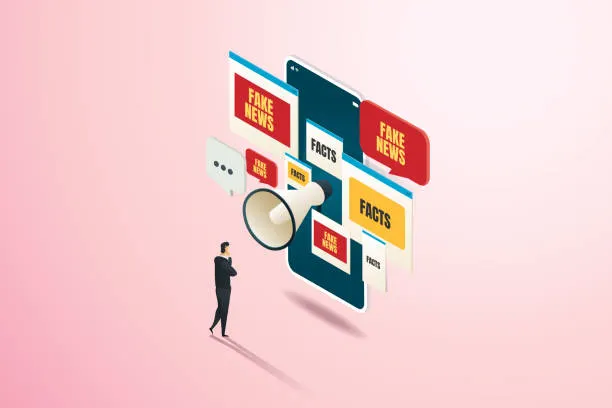
Fake News Virality and Fact-Checking Tools
False information travels at lightning speed across digital platforms, reaching thousands of people before truth even finishes tying its shoes. The modern internet has created a perfect storm where misinformation can flourish and multiply with devastating consequences for public discourse, democratic processes, and individual decision making. Research from MIT and Twitter data analysis revealed something shocking: false news stories reach 1,500 people six times faster than accurate information, with the most sensational false political stories routinely reaching well over 10,000 people while truthful content rarely passes 1,000 users.
The phenomenon of fake news virality represents one of the defining challenges of contemporary digital life. Every day, millions of people encounter manipulated images, fabricated quotes, deepfake videos, and outright fabrications designed to mislead, manipulate, or simply generate clicks and advertising revenue. What makes this problem particularly insidious is not just the volume of false information circulating online, but the sophisticated methods used to create and distribute it, combined with deeply ingrained psychological tendencies that make humans remarkably susceptible to believing and sharing false claims.
The Mechanics of Misinformation Spread
Understanding how fake news achieves viral status requires examining the complex interplay between platform algorithms, human psychology, and network effects. Social media platforms have fundamentally transformed how information moves through society. Unlike traditional media gatekeepers who exercised editorial control over what reached mass audiences, modern platforms democratized content distribution to such an extent that anyone with an internet connection can potentially reach millions.
The architecture of platforms like Facebook, Twitter, and TikTok prioritizes engagement above accuracy. Posts that generate strong emotional reactions, whether outrage, fear, or excitement, receive algorithmic amplification through increased visibility in news feeds and recommendation systems. This creates a perverse incentive structure where sensationalist false claims often outperform mundane truths in the competition for attention. A 2025 study from USC Marshall School of Management found that social media habits doubled and in some cases tripled the amount of fake news people shared, with frequent, habitual users forwarding six times more false information than occasional users.
Four primary mechanisms drive disinformation campaigns across social platforms. Social engineering provides frameworks to mischaracterize events and manipulate public discourse, often aimed at swaying opinion toward specific agendas. Inauthentic amplification employs trolls, spam bots, fake identity accounts called sock puppets, and paid influencers to increase the volume of malign content artificially. Micro targeting exploits advertising tools built into platforms to identify and engage audiences most likely to share and amplify disinformation. Harassment and abuse mobilize fake accounts and coordinated trolls to obscure, marginalize, and drown out journalists, fact checkers, and transparent content.
The role of automated systems in spreading false information cannot be overstated. While many people assume bots drive most misinformation spread, research shows humans remain the primary culprits. However, bots do play a supporting role by providing initial amplification that triggers network effects. Once a false story gains initial momentum through bot networks, real humans take over the sharing process, creating cascades that reach far beyond what the bots alone could achieve.
Content virality follows predictable patterns based on network homogeneity and polarization. Echo chambers, those homogeneous clusters where like minded individuals reinforce each other’s beliefs, serve as ideal breeding grounds for viral misinformation. Research on Facebook sharing patterns demonstrated that information cascades occur primarily within these polarized communities rather than across ideological divides. The majority of links between consecutively sharing users proved homogeneous, meaning information transmission happens inside clusters where everyone shares similar worldviews. This homogeneity acts as the preferential driver for content diffusion, with each echo chamber developing its own distinct cascade dynamics.
Psychology Behind Believing Fake News
The human mind, despite its remarkable capabilities, contains systematic vulnerabilities that fake news exploits with devastating effectiveness. Confirmation bias stands as perhaps the most significant psychological factor making people believe and spread false stories. This cognitive tendency makes us seek out, interpret, and remember information aligning with existing beliefs while dismissing contradictory evidence, even when factual. Someone holding negative views about a particular political figure, corporation, or social group will more readily accept and share fake news confirming those preconceptions without critical examination.
The bandwagon effect, rooted in evolutionary instincts for social survival and cognitive efficiency, combines our desire for group belonging with our brain’s tendency toward mental shortcuts. When individuals see news gaining traction through likes, shares, or comments, they perceive it as more credible and join spreading it, often without verification. This social proof overrides critical thinking as people assume that if many others believe something, it must be true. The psychology becomes self reinforcing: viral spread creates the appearance of credibility, which drives more viral spread.
Belief perseverance, also known as the backfire effect, represents another formidable obstacle to combating misinformation. Even when confronted with clear, contradictory evidence completely refuting their beliefs, people often double down rather than update their understanding. This cognitive rigidity makes challenging false narratives nearly impossible once they’ve embedded themselves in individual or group belief systems. Fact checks can paradoxically strengthen false beliefs when they threaten core identity or worldview, as people interpret corrections as attacks requiring defensive responses.
Recent research revealed that individuals with high levels of impulsivity, suspiciousness, and low analytical reasoning abilities show greater susceptibility to believing fake news. Fear induced by content significantly influences belief by impeding rational, factual analysis. When news stories trigger strong emotional reactions, particularly anxiety or outrage, the emotional processing centers of the brain essentially hijack the analytical faculties that would normally evaluate claims skeptically. This explains why fake news often employs sensationalist headlines and dramatic imagery designed to provoke immediate emotional responses before critical thinking can engage.
The relationship between AI recommendations and fake news sharing adds another layer of complexity. Studies conducted during the rise of generative AI found that labeling news stories as AI recommended encouraged users to rely more on fast, intuitive System 1 cognition rather than rational System 2 cognition. This resulted in increased likelihood of sharing fake news, with AI recommendations having similar effects as recommendations from human experts. The mechanism works through appealing to cognitive shortcuts: when content carries the imprimatur of algorithmic recommendation or expert endorsement, people process it less critically.
Evolution of Fake News in the AI Era
The year 2025 marked a significant turning point in disinformation evolution, with AI generated content, particularly short viral videos, gaining unprecedented traction. Some deepfakes served merely as amusing diversions, but others were strategically crafted to influence public opinion on geopolitical conflicts, elections, and public health matters. The sophistication of synthetic media reached levels where casual viewers found it nearly impossible to distinguish authentic from manipulated content without technological assistance.
Generative AI and deepfake technology blurred distinctions between truth and falsehood on an unprecedented scale. Synthetic footage began influencing electoral behavior in multiple countries, while misleading narratives heightened geopolitical tensions. The velocity and prevalence of AI powered disinformation posed systemic dangers to democratic institutions and public confidence. Unlike earlier forms of fake news that required human creation and editing, AI tools enabled mass production of convincing false content at scales previously unimaginable.
Deepfake videos emerged as particularly pernicious forms of misinformation because visual media carries inherent credibility that text lacks. People instinctively trust what they see with their own eyes, making video manipulation especially effective at deceiving audiences. Advanced deepfake technology can now replicate facial expressions, voice patterns, and mannerisms with shocking fidelity, creating videos where public figures appear to say or do things they never did. These fabrications spread rapidly across social platforms before fact checkers can identify and debunk them.
Audio deepfakes present similar challenges. Voice cloning technology can replicate someone’s speech patterns from relatively small audio samples, enabling creation of fake recordings used to manipulate people or spread false information. The applications range from financial fraud, where criminals use cloned voices to authorize fraudulent transactions, to political manipulation where fabricated audio clips create false impressions of what leaders said. Real time audio verification has become critical for live content like news reports and interviews, with AI systems comparing voice characteristics to detect synthetic versions.
The integration of AI into content creation pipelines also produced more subtle forms of manipulation. Rather than crude fabrications easily spotted by alert viewers, sophisticated disinformation campaigns now employ AI to create plausible sounding articles, generate realistic looking statistics, and fabricate expert opinions that appear legitimate on cursory inspection. These techniques proved particularly effective during major events bringing significant social influence, such as public health crises and elections, where public demand for information created opportunities for malicious actors to inject false narratives into the information ecosystem.
Fact Checking Tools and Technologies
The response to escalating misinformation has spurred development of increasingly sophisticated fact checking tools and verification technologies. Google Fact Check Explorer stands as a flagship platform, functioning as a specialized search engine compiling claim reviews from multiple fact checking organizations worldwide. Users can insert phrases, data points, or links to check whether someone has already verified them, with ratings clearly indicating whether content is true, false, or misleading. The tool aggregates fact checks from organizations across continents, creating a centralized repository of verified information accessible to anyone.
The Fact Check Markup Tool enables publishers to add structured data tags to fact checking articles so search engines can easily recognize and prioritize them in search results. This technical infrastructure helps verified information outcompete false claims in the attention economy by giving factual corrections better visibility. When someone searches for information, Google displays articles bearing fact check markup as verified results, offering greater transparency to users navigating complex information landscapes.
Full Fact, an independent UK based fact checking organization, combines human expertise with technological tools to find and verify claims made by politicians, public institutions, journalists, and viral content. The organization works directly with media outlets and technology platforms to flag and correct misleading content. Their approach includes detailed fact check articles backed by reliable sources and data, clear claim ratings labeling statements as true, false, or misleading, live fact checking during political speeches and major events, transparency in sources and methods for editorial accountability, and partnerships with platforms like Facebook to reduce false information spread.
Originality.ai offers automated fact checking technology that assists in cross referencing and verifying facts, figures, and events in real time. While initially known for detecting AI generated text and plagiarism, the platform expanded into fact checking to detect false facts and AI hallucinations. The automated approach provides complete real time fact checks, efficient and fast verification processes, and systematic mitigation of risks associated with publishing factually incorrect content. Publishers can upload documents for comprehensive information checking before publication.
Specialized tools for synthetic media detection have emerged as critical components of the fact checking ecosystem. Sensity AI and similar platforms employ all in one approaches guaranteeing best in class deepfake detection capabilities. These systems analyze visual and audio content for telltale signs of manipulation, including inconsistencies in lighting, unnatural facial movements, audio artifacts, and metadata anomalies. Detection accuracy has reached impressive levels, with some platforms achieving 94 to 98 percent accuracy in spotting AI generated or dubbed voices in videos.
Audio visual watermarking represents another promising approach to content authentication. Technologies like PerTH add invisible watermarks to audio and video, enabling tracking of content origin and reducing tampering risks. When media contains embedded watermarks, platforms and fact checkers can verify whether content has been altered from its original form, providing a technical backstop against manipulation. Real time deepfake detection systems can join video meetings and check participants frame by frame, instantly flagging fake voices, faces, or images to stop impersonation attacks before they succeed.
FactFlow, developed by Spanish fact checking organization Newtral, uses open source artificial intelligence trained on over one million messages collected from more than 2,000 suspicious accounts and channels on Telegram. The tool specifically targets coordinated disinformation campaigns operating through messaging platforms, where traditional fact checking struggles to maintain pace with rapidly evolving false narratives. Plans exist to scale FactFlow to other newsrooms and integrate it with additional platforms including TikTok and X.
Blockchain technology offers novel approaches to media authentication by creating immutable records of content. Once articles, videos, or images upload to blockchain networks, they become part of permanent, tamper proof records preventing falsification or alteration. Distributed ledger technology ensures every participant in blockchain networks has access to identical data in real time, meaning any attempt to alter media content on one node gets immediately flagged by others. Companies like Vbrick have announced blockchain powered solutions for media authentication that leverage the Coalition for Content Provenance and Authenticity (C2PA) initiative embedding sophisticated metadata fingerprints directly into media for source verification.
Global Effectiveness of Fact Checking
Simultaneous experiments conducted in Argentina, Nigeria, South Africa, and the United Kingdom provided compelling evidence about fact checking effectiveness across diverse cultural contexts. The research revealed that fact checks reduced false beliefs in all countries studied, with most effects remaining detectable more than two weeks after initial exposure. A meta analytic procedure indicated that on average, fact checks increased factual accuracy by 0.59 points on a five point scale, while exposure to misinformation decreased factual accuracy by less than 0.07 on the same scale, with that decrease proving statistically insignificant.
The observed accuracy increases attributable to fact checks proved durable over time, contradicting concerns about fleeting impacts. Despite fears that fact checking could backfire and increase false beliefs, particularly when fact checks challenged strongly held political beliefs, researchers found no instances of such behavior across four countries and numerous items tested. Instead, fact checks consistently reduced belief in misinformation, often for periods extending beyond immediate exposure. This research provided crucial validation that fact checking serves as a pivotal tool in fighting misinformation globally, not just in specific cultural contexts.
However, significant challenges limit fact checking reach and impact. Google Fact Check Explorer, when evaluated using 1,000 COVID-19 related false claims, could retrieve fact checking results for only 15.8 percent of input claims. While retrieved results proved relatively reliable, the low retrieval rate highlights a fundamental problem: fact checking organizations cannot possibly keep pace with the volume of false information spreading across platforms. For every claim that receives thorough fact checking attention, dozens or hundreds spread unchecked through social networks.
The asymmetry between creation and correction of false information fundamentally favors misinformation producers. Creating a convincing lie takes minutes, but thoroughly debunking it requires hours of research, source verification, and careful writing. By the time fact checkers publish corrections, false claims have often already achieved widespread circulation and embedded themselves in belief systems resistant to change through belief perseverance. This timing problem means fact checking functions more as damage control than prevention.
Platform cooperation remains essential for fact checking effectiveness. When social media companies integrate fact checking into their content moderation systems, flagging disputed content and reducing its algorithmic amplification, fact checks achieve far greater impact than when they exist on separate websites that audiences must actively seek out. However, platform commitment to fact checking has proven inconsistent, with some companies recently scaling back their fact checking partnerships in response to political pressure and concerns about content moderation costs.
The 2025 census of fact checking organizations revealed that the number of projects remained roughly consistent in recent years with a slight decrease, despite growing misinformation challenges. This stagnation reflects both resource constraints and the increasingly hostile environment fact checkers face. Politicians, partisan media outlets, and coordinated online campaigns frequently target fact checking organizations with harassment, accusations of bias, and attempts to undermine their credibility. The attacks create chilling effects, making fact checking work professionally risky and personally draining.
Media Literacy as Prevention Strategy
While technological solutions and professional fact checking play crucial roles, education represents perhaps the most sustainable long term approach to misinformation resilience. Media literacy programs teach people to critically evaluate information sources, recognize manipulation techniques, and verify claims before sharing them. Research consistently shows significant relationships between media literacy skills and prevention of hoax news consumption among students and general populations.
Effective media literacy education covers multiple dimensions. Students learn to identify reliable sources by examining author credentials, publication histories, and editorial standards. They practice lateral reading, the technique of opening multiple browser tabs to investigate claims and sources rather than reading straight down through questionable content. They develop awareness of common manipulation tactics including emotional manipulation, false authority, and statistical misrepresentation. They gain hands on experience using fact checking tools and verification techniques.
Projects integrating media literacy into formal curricula across subjects like literature, foreign languages, information technology, philosophy, and history have demonstrated positive outcomes. Students who participated in comprehensive media literacy programs acquired confidence navigating unfamiliar information environments and developed their digital, social, and critical thinking competencies. They learned how to detect and counter fake news while gaining insights into social, economic, and cultural changes shaping information ecosystems.
The four C competencies provide a framework for media literacy: critical thinking, communication, collaboration, and creativity. Critical thinking enables evaluation of claims and sources. Communication skills help articulate concerns about questionable content and explain fact checking findings to others. Collaboration allows collective verification efforts and community resilience building. Creativity supports generation of counter narratives and alternative information sources that compete with misinformation for attention.
Creating visual materials like posters, brochures, and videos highlighting problems observed in social media use helps students internalize lessons about online interaction rules and misinformation risks. When students actively produce educational content rather than passively consuming it, learning deepens and retention improves. Cultural exchange through international projects enables sharing of ideas and practical skills among young people of different nationalities, developing civic competences and fostering respect for diversity while building global awareness of information manipulation tactics.
Teacher involvement as mentors rather than traditional instructors supports student development of autonomous verification skills. Rather than simply telling students what is true or false, effective media literacy education guides them through processes of investigation and evaluation, building confidence in their own abilities to distinguish fact from fiction. School committees can establish transparent criteria for program participation, ensuring broad access to media literacy training rather than limiting it to high achieving students.
Challenges and Future Directions
Despite advances in detection technology, fact checking infrastructure, and media literacy education, formidable obstacles remain in combating fake news virality. The fundamental economics of digital platforms continue favoring engagement over accuracy, creating systematic incentives for sensationalist content regardless of veracity. Algorithmic recommendation systems optimize for user retention and advertising exposure rather than information quality, meaning platform business models structurally conflict with information integrity goals.
The sophistication of misinformation creation continues advancing faster than detection capabilities. Each generation of deepfake detection technology spawns a subsequent generation of synthesis technology designed to evade detection. This arms race dynamic means the problem cannot be solved purely through better detection algorithms; it requires addressing root causes including platform incentives, political polarization, and media ecosystem fragmentation.
Coordination among fact checking organizations, technology platforms, researchers, and policymakers remains insufficient relative to the challenge. While individual initiatives show promise, they operate largely in isolation without comprehensive strategies addressing systemic issues. International cooperation faces obstacles including varying free speech traditions, different regulatory approaches, and geopolitical tensions that complicate collective action against cross border disinformation campaigns.
The psychological dimensions of misinformation belief present perhaps the most intractable challenges. Cognitive biases, emotional reasoning, and identity protective cognition cannot be eliminated through technological fixes. Addressing these deeper issues requires long term cultural shifts in how societies value truth, expertise, and evidence based reasoning. Such transformations cannot be engineered quickly or easily.
Emerging technologies present both opportunities and risks. Artificial intelligence could enhance fact checking through better automation and scale, but also enables unprecedented misinformation creation. Blockchain might strengthen content authentication, yet introduces new complexity and potential points of failure. Augmented and virtual reality will create novel forms of experiential misinformation more psychologically powerful than text, images, or even video.
The path forward requires multi stakeholder collaboration combining technological innovation, regulatory frameworks, platform accountability, professional fact checking, media literacy education, and public engagement. No single solution will suffice; only comprehensive approaches addressing technical, social, psychological, and structural dimensions can hope to build resilient information ecosystems capable of withstanding sophisticated manipulation attempts while preserving the openness and dynamism that make digital communication valuable.
Research must continue investigating what interventions work under what conditions for which populations. The fact checking studies demonstrating global effectiveness provide encouraging evidence, but also reveal limitations in reach and timing. Understanding how to scale successful interventions while maintaining quality remains an ongoing challenge requiring sustained attention and resources.
Platform architecture reforms could shift incentive structures away from pure engagement maximization toward balanced objectives including information quality. Transparency requirements might expose algorithmic amplification of misinformation, creating accountability for companies whose systems spread false claims. Regulations mandating rapid response to identified misinformation could reduce the temporal advantage that current information asymmetries grant to malicious actors.
Building coalitions between journalists, researchers, technology companies, educators, and civil society organizations can create networks of resilience against coordinated disinformation campaigns. These partnerships enable rapid response to emerging threats, information sharing about new manipulation techniques, and collective advocacy for structural reforms. The work remains difficult, often thankless, and perpetually incomplete, yet essential for preserving informed public discourse in democratic societies.
The battle between truth and falsehood online will likely never conclude definitively. Human psychology, technological capabilities, and social dynamics ensure that misinformation will remain a permanent feature of information landscapes. The realistic goal involves not elimination but management: building sufficient resilience that false information cannot achieve the rapid, widespread, persistent belief necessary for seriously damaging public understanding and democratic processes. Progress toward that goal requires sustained commitment, adequate resources, and realistic expectations about what interventions can accomplish.
Human vulnerability to deception is not a bug to be patched but a feature of cognitive architecture shaped by evolutionary pressures prioritizing speed over accuracy in many contexts. Recognizing these limitations with humility can inform more realistic strategies that work with rather than against human nature, creating information environments that make truth more accessible and attractive than falsehood without requiring superhuman discernment from every individual user.
The proliferation of fake news and the development of fact checking tools represent opposing forces in an ongoing struggle over the integrity of shared information. While challenges remain formidable, the combination of technological innovation, organizational effort, educational investment, and growing public awareness provides reason for cautious optimism. The outcomes remain uncertain, the work never finished, but the stakes could hardly be higher for societies attempting to maintain informed citizenship in an age of unlimited information and limited attention.