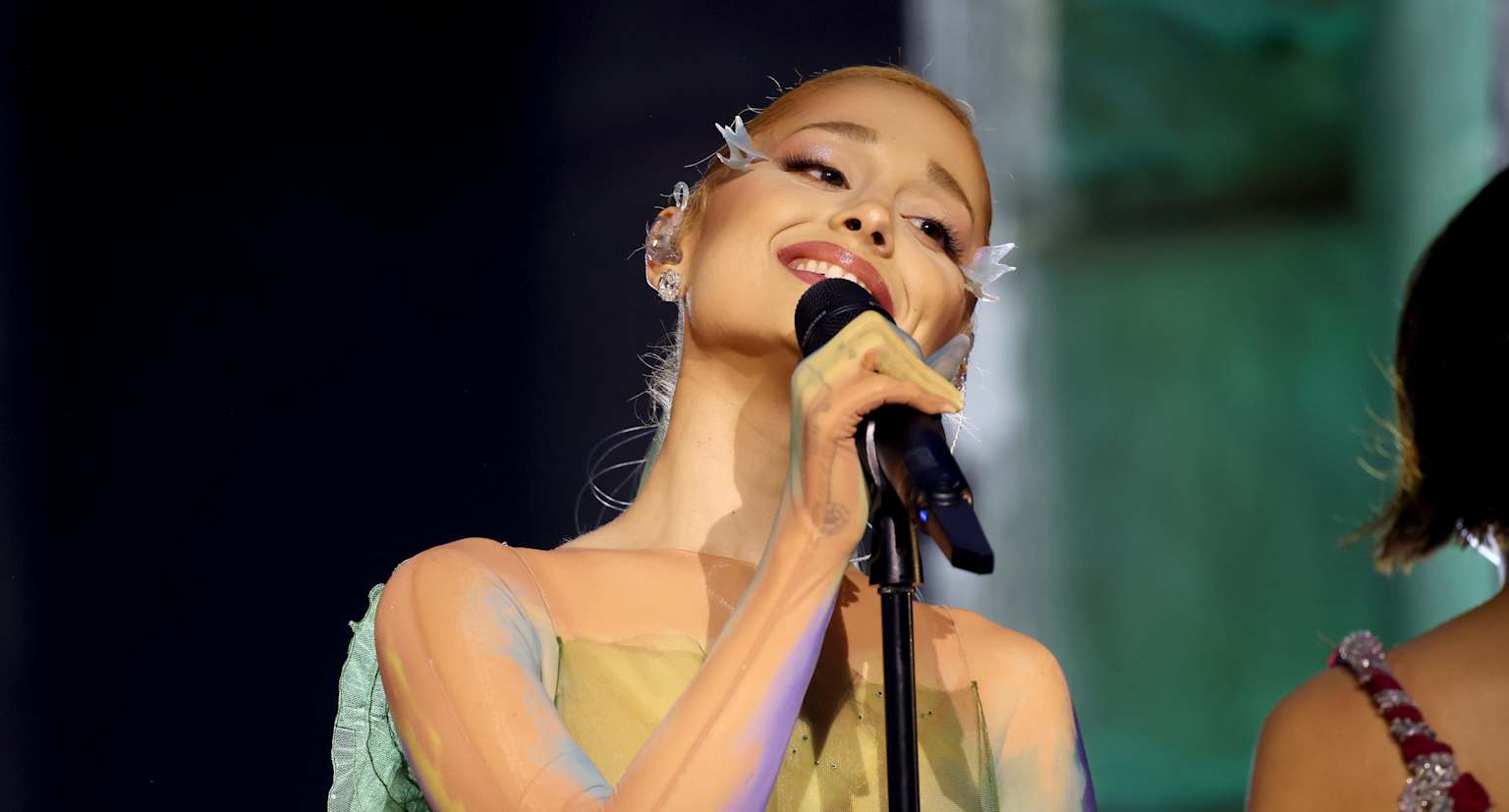
There are few moments in pop culture that can legitimately be called once-in-a-generation events, but Ariana Grande returning to the stage after a seven-year hiatus is unequivocally one of them. The Eternal Sunshine Tour, announced in August 2025 and set to kick off in June 2026, is not just a concert series. It is a cultural reckoning, a homecoming for millions of fans across the globe, and the triumphant next chapter of one of the most extraordinary artists of the 21st century. From the crystal-clear high notes that have made Ariana a vocal legend to the cinematic stage production that promises to redefine what an arena show can be, this tour is shaping up to be the event of the decade.
But how did we get here? Why does this particular tour feel so different, so emotionally loaded, so utterly monumental? To understand the Eternal Sunshine Tour, you have to understand the full journey – the album, the actress, the woman who almost walked away from touring entirely before deciding the world needed to feel the sunshine one more time.
The Album That Started It All
Eternal Sunshine, Ariana Grande’s seventh studio album, arrived in March 2024 and immediately made its presence known. Debuting at the top of the Billboard 200, the album was a masterclass in contemporary pop construction – intimate, emotionally layered, sonically adventurous, and deeply personal. Unlike the bombastic maximalism of Thank U, Next or the smooth R&B-laced grooves of Positions, Eternal Sunshine felt stripped back in the most powerful way. It was an album about emotional clarity, about choosing yourself, about standing in the warmth of your own healing.
The lead single, “yes, and?,” was a cultural earthquake. With its pulsating disco-tinged production and lyrics that ooze self-assurance and unflappable confidence, the song became an anthem for an entire generation navigating public scrutiny, personal reinvention, and the audacity to simply be. It debuted at number one on the Billboard Hot 100, cementing Ariana’s place as a permanent fixture at the very top of pop music even after years out of the touring spotlight.
The album’s subsequent singles – “we can’t be friends (wait for your love),” “the boy is mine,” “supernatural,” and the title track – each carved out their own emotional territory. “we can’t be friends” became a slow-burn heartbreaker that fans couldn’t stop looping, its tension-filled production perfectly mirroring the album’s central themes of longing and release. “supernatural” buzzed with sensuous, otherworldly energy. “the boy is mine” was a playful, cheeky bop that leaned into Grande’s ability to balance camp and sincerity effortlessly. Collectively, these tracks painted the portrait of a woman who had been through fire and emerged – warm, luminous, and undeniably herself.
Then came the deluxe edition. Released under the title Eternal Sunshine Deluxe: Brighter Days Ahead, this expanded version added six additional tracks and promptly shot back to the top of the Billboard 200. The deluxe release also came with a short film – “Brighter Days Ahead” – that offered fans a visual companion piece to the music and arguably became the creative catalyst for what would become the tour announcement. When Ariana shared a teaser video for the tour announcement styled in a near-identical aesthetic to that short film, the message was clear: the sun hadn’t set. It was just getting started.
Why Seven Years? The Emotional Weight of the Comeback
To fully appreciate what the Eternal Sunshine Tour means, you have to reckon with the silence that preceded it. Ariana Grande’s last major touring cycle concluded in 2019, following the iconic Sweetener World Tour, which was itself a tour wrapped in emotional complexity. That tour had merged with the Thank U, Next era, and it followed one of the darkest chapters in Ariana’s life – the 2017 Manchester Arena bombing that killed 22 concert-goers and forever scarred the artist who had been on stage just moments before.
The years between 2019 and 2026 were anything but quiet professionally – Ariana released Positions in 2020 and Eternal Sunshine in 2024, both to significant commercial and critical success – but touring remained off the table. In a candid December 2024 interview with Variety, Grande all but confirmed that a tour was not coming anytime soon, saying, “I feel so grateful to the acting, and I think my fans know that music and being on stage will always be a part of my life, but I don’t see it coming anytime soon.” She spoke about her love for acting, about how the stage in a film felt like home. She talked about wanting to explore different art forms. She was, by every indication, in no rush.
And then everything changed. The enormous success of Wicked – in which Ariana played Glinda the Good Witch opposite Cynthia Erivo’s Elphaba – reignited something in her. The film’s worldwide reception, its cultural dominance throughout late 2024 and into 2025, and the emotional resonance of bringing Glinda to life on screen reminded Ariana why performance had always been her truest language. By July 2025, the universe had shifted. The Eternal Sunshine Tour was officially back on. Just two months later, in August 2025, the full tour was announced to the world – and the internet promptly lost its collective mind.
The Wicked Effect: How Glinda Brought Ariana Back
It is impossible to discuss the Eternal Sunshine Tour without spending real time on Wicked, because that film is the bridge between the artist who said she was stepping back and the artist who decided to return to the arena stage in the most spectacular fashion possible.
Playing Glinda was not simply another acting credit for Ariana Grande. In her own words, the role became a deeply transformative experience that changed her relationship with performance. In a heartfelt interview, she revealed that embodying Glinda reignited her lost love for music and the stage. The discipline, the emotional preparation, the physical demands of a major Hollywood musical – all of it reminded her of what she loved most about being a performer, which was the ability to connect, to transport, and to tell stories through sound and movement.
Glinda is also, on a thematic level, a character who shares DNA with the Eternal Sunshine era. Glinda’s journey in Wicked is one of self-discovery, of choosing love over image, of recognizing that true transformation comes from within. When Ariana showed up on screen as the luminous, complex, occasionally hilarious, and heartbreakingly genuine Glinda, audiences saw a performer operating at a level of vulnerability and precision that felt entirely new. She was not just singing songs – she was embodying a soul. That same energy, critics and fans agree, is what she will bring to the Eternal Sunshine Tour.
The sequel, Wicked: For Good, has only amplified this momentum. Ariana has spoken about filming “For Good” – the iconic duet between Glinda and Elphaba – as one of the most emotionally shattering experiences of her career. “It was an emotionally charged process. I felt as though I left my body,” she said. “I haven’t even seen the final edit yet because I’m not sure I’m ready to experience it all again.” When an artist speaks about her work with that level of reverence and emotional truth, you know that what she brings to a live stage is going to be extraordinary.
Tour Dates: From Oakland to The O2
The Eternal Sunshine Tour spans North America and the United Kingdom, comprising 41 shows across some of the most iconic venues on the planet. It is, notably, a tightly focused tour – not a massive global sweep across 100 cities, but a carefully curated series of nights that will allow Ariana to give everything she has to every single show.
The tour begins on June 6, 2026 at Oakland Arena in Oakland, California, a choice that feels both deliberate and poetic – California as a starting point for an artist who has become as synonymous with Los Angeles culture as she is with pop music itself. From Oakland, the tour moves to Los Angeles for an extended run at two iconic venues: Crypto.com Arena (June 13 and 14) and the Kia Forum (June 17 and 19). The LA dates are already being called the hottest tickets in the city’s entertainment calendar for 2026.
After California, the tour heads to Austin, Texas at the Moody Center (June 24 and 26), followed by stops in Atlanta, New York City, and Boston’s TD Garden (July 24). Canadian fans are not forgotten, with dates in Montreal at Centre Bell on July 28 and 30, before the tour continues to United Center in Chicago on August 3 and 5. The grand finale takes place at The O2 Arena in London – one of the most storied music venues in the world – with a staggering five-night residency running from August 15 to August 23, 2026. The London run alone has generated enormous anticipation, with British fans who have waited years for Ariana to return to the UK finally getting their moment.
For fans who want more than just a great seat, the tour also offers a range of VIP packages and exclusive experiences that promise to bring them closer to the Eternal Sunshine world than ever before.
The Stage Design: A Universe Built Around Light
Details about the Eternal Sunshine Tour’s stage design began leaking in late 2025, and what fans have seen has set expectations sky-high. The stage layout, revealed through Ticketmaster and subsequently shared widely across social media, describes a structure enclosed within a sphere – a visual metaphor that could not be more perfectly aligned with the album’s themes of cosmic wonder, emotional warmth, and self-contained brilliance.
The stage structure extends from a pentagon-like formation into two circular extensions of varying sizes – a small circle and a large circle – creating a runway-style configuration that will allow Ariana to move through the audience space and perform in the round. This design is particularly exciting for fans seated far from the traditional main stage, as it ensures that every area of the arena will receive a moment of closeness with the performer. In an age where arena concert production has become increasingly about grandeur over intimacy, this stage layout suggests that Ariana and her creative team are committed to both.
The sphere motif is especially resonant. The album Eternal Sunshine trades heavily in imagery of light, warmth, celestial bodies, and the kind of soft golden glow that feels like a specific emotional temperature rather than just an aesthetic. From the album artwork to the music videos to the promotional visuals, the visual language of this era has always suggested something radiant and all-encompassing – and building the tour stage around a sphere brings that metaphor into three-dimensional life. Fans who attend any night of the Eternal Sunshine Tour will not simply be watching a concert. They will be stepping inside a world.
What to Expect from the Setlist
No official setlist has been confirmed yet, but based on the album’s tracklist, the deluxe edition additions, and what we know about Ariana’s previous touring patterns, the contours of what to expect are becoming clearer. The Eternal Sunshine Tour will undoubtedly draw heavily from the album itself – tracks like “yes, and?,” “we can’t be friends (wait for your love),” “the boy is mine,” “supernatural,” “eternal sunshine,” “imperfect for you,” and selections from the deluxe edition are all but certain to feature prominently.
What makes this tour particularly exciting from a setlist perspective is the depth of Ariana’s discography. She now has seven studio albums’ worth of material to draw from, and every era of her career has produced songs that feel genuinely essential. The Sweetener/Thank U, Next era alone could fill an entire concert: “no tears left to cry,” “thank u, next,” “7 rings,” “God is a woman,” “imagine,” “breathin,” and “break up with your girlfriend, i’m bored” are all songs that arenas will need to hear.
Beyond those, the earlier chapters of her career – tracks from Yours Truly, My Everything, and Dangerous Woman – offer incredible live showcase moments. “Into You,” “Problem,” “One Last Time,” “Break Free,” “Dangerous Woman,” and “Side to Side” are tracks that have proven their power in live settings time and again. The challenge for Ariana and her creative team is not having enough material – it is curating a show that feels like a complete emotional journey rather than simply a greatest hits run-through.
Based on fan speculation and the structural logic of Ariana’s previous tours, the Eternal Sunshine Tour is likely to be structured in acts – an opening that establishes the new era, a middle section that explores the emotional depth of her wider catalog, and a closing that builds to an euphoric, arena-wide singalong with her most beloved anthems. Interludes, spoken word segments, and cinematic video installations are all elements that fans expect given the album’s visual richness.
One element fans are particularly eager for is whether Ariana will incorporate any material that nods to her Wicked experience – not necessarily Wicked songs themselves, but performances that reflect the theatrical depth and classical vocal discipline she developed during that chapter of her career. Her voice, already one of the most technically impressive instruments in contemporary pop, has reportedly grown even more powerful and emotionally nuanced in the years since her last tour.
The Voice: Ariana’s Vocal Instrument in the Eternal Sunshine Era
No conversation about an Ariana Grande tour would be complete without a deep appreciation for what may be her most extraordinary gift: her voice. Ariana Grande possesses one of the most remarkable vocal instruments in contemporary popular music – a four-octave range that includes a stratospheric whistle register, a warm and chocolatey chest voice, and a middle register that is equal parts powerful and emotive. But it is not merely the range that makes her voice special. It is the control, the vibrato, the ability to pivot between breath and fullness in a single phrase, and the unmistakable emotional signature she places on every note.
The Eternal Sunshine era introduced fans to a slightly more restrained, studio-polished version of that voice. The album’s production – largely helmed in collaboration with producers like Max Martin, ILYA, and others – favored a contemporary pop sound that let Ariana’s voice serve as texture and warmth rather than pure vocal acrobatics. “imperfect for you,” for instance, showcases her ability to make quiet moments feel enormous. “we can’t be friends” builds from a barely-there exhale to something that threatens to burst through the ceiling. Even “yes, and?” – arguably her most uptempo, dance-floor-ready single – finds her approaching the material with a cool, almost conversational ease that is, paradoxically, more impressive than any whistle note.
Live, Ariana has always been one of the most reliable vocalists in pop music. Unlike many of her contemporaries who rely heavily on backing tracks and lip-sync assistance, Ariana has a well-documented history of delivering genuine live performances, particularly on shows like Saturday Night Live, award ceremonies, and her previous tours. Her SNL performance on the night after Eternal Sunshine dropped – where she sang “imperfect for you” in a stunning Vera Wang Haute Couture gown – was widely praised as a reminder that, stripped of everything else, she is simply a breathtaking singer.
For the Eternal Sunshine Tour, fans can expect her vocal instrument to be used in the full spectrum of its capabilities – delicate and tender in the album’s more vulnerable moments, soaring and electrifying in the big belt moments, and playfully conversational in the moments where Ariana lets the audience in close. The tour will be, among other things, a masterclass in what the human voice can do when wielded by someone who has spent their entire life learning its possibilities.
Fashion and Aesthetics: The Visual Language of Eternal Sunshine
Every major Ariana Grande era has been defined not just by its music but by its visual and fashion identity, and the Eternal Sunshine era is no exception. Aesthetically, this chapter of Ariana’s career has drawn from a fascinating range of references: early-60s and late-70s silhouettes, ballet core elements, soft Peter Pan collars paired with mini skirts, puffy sleeves, and a color palette that leans into warm neutrals, soft pinks, and the kind of gentle golden tones that suggest late-afternoon sunlight.
The fashion choices of the Eternal Sunshine era feel deliberately intimate and human-scale – a contrast to the more maximalist, high-fashion bombast of some of her earlier eras. Where the Dangerous Woman era trafficked in sensual edge and the Thank U, Next rollout experimented with oversized streetwear, the Eternal Sunshine aesthetic communicates softness, ease, and a kind of retro femininity that feels both nostalgic and entirely fresh. It is fashion as emotional autobiography – a woman dressed in the colors of her own healing.
For the tour, fans are expecting these aesthetic threads to be woven into a full visual world. The sphere-enclosed stage, the warm glow of the album’s visual palette, and the cinematic sensibility that Ariana has demonstrated throughout this era all suggest that the concert’s costume and production design will be extraordinary. Tour outfits are expected to play with layering, with light and shadow, with the contrast between delicacy and power – reflecting the emotional range of the album itself. If the stage is a sun, Ariana will be its radiant center.
The Cultural Moment: Why This Tour Matters Right Now
The Eternal Sunshine Tour arrives at a particular moment in pop culture that gives it an outsized significance. The live music industry has been through extraordinary upheaval in recent years – from the emotional recalibration that followed global shutdowns to the ongoing conversation about ticket prices, accessibility, and what it means to see your favorite artist in person in an era of algorithmic music and on-demand streaming.
In this context, Ariana Grande’s return to the stage feels genuinely historic. She is one of a handful of artists whose concert announcements generate the kind of cultural conversation that transcends music fandom – where people who have never considered buying a concert ticket suddenly find themselves trying to navigate presale queues and refreshing ticketing apps at 6 AM. The ticketing frenzy that accompanied the Eternal Sunshine Tour presale – tickets for the United States and Canada went on sale from September 9, 2025, with London presales from September 16 – was predictably enormous, reflecting just how intensely audiences have been waiting for this moment.
Beyond the commercial metrics, there is something genuinely meaningful about the timing of this tour. Eternal Sunshine is an album about survival and self-recognition – about choosing warmth over coldness, light over shadow, joy over the performance of pain. In a cultural moment that often feels saturated with irony and cynicism, Ariana is offering something sincere. She is an artist who has lived through genuine tragedy, navigated the peculiar cruelties of life under constant scrutiny, and arrived here – on the other side, in the sun – with something worth sharing.
The BBC has described the Eternal Sunshine Tour as a “last hurrah for a long time,” suggesting that after this run of shows, Ariana may return her focus to film, to the Wicked sequel, and to other creative endeavors. If that is true, then every single night of this tour carries the weight of an ending as much as a beginning. Every “yes, and?” sung back by an arena full of fans will be both a celebration and a treasure – a moment that will not come again for years.
The Superfan Experience: What Attending Means
For the millions of fans who grew up with Ariana Grande – who sang “The Way” in their bedrooms as preteens, who cried through Yours Truly and screamed through My Everything, who carried her music through every heartbreak and late-night drive and moment of quiet solitude – the Eternal Sunshine Tour is more than a concert. It is a ritual. A passage. A chance to stand in the same room as a voice that has been the soundtrack to enormous chapters of their lives.
Arianators – as Grande’s devoted fanbase is known – are among the most passionate and organized fan communities in pop music. They have spent years running fan accounts, creating elaborate tribute videos, theorizing about setlists, and maintaining a level of engagement with their artist that borders on devotional. The announcement of the tour was, for many of them, genuinely emotional – the culmination of years of hoping, of watching Ariana thrive in other creative spaces while quietly longing for the moment she would come back to them in an arena.
The VIP packages and exclusive experiences offered for the Eternal Sunshine Tour cater directly to this emotional investment, promising closer access to the show and to the world Ariana has built around this album. For fans who have the means to invest in these packages, they represent not just premium concert access but a kind of pilgrimage – a tangible acknowledgment of the relationship between artist and audience that makes live music irreplaceable.
And for those who simply have a standard ticket somewhere in the upper bowl of whatever arena they are attending? The calculus is the same. Because when Ariana Grande opens her mouth and begins to sing – when that voice fills the room and the lights come up and the first notes of “yes, and?” wash over 20,000 people at once – there will be no bad seat in the house. There will only be the sun.
A Legacy in Motion: Ariana’s Place in Pop History
It is worth taking a moment – in the midst of all the excitement about tour dates and setlists and stage designs – to appreciate what Ariana Grande has built over the course of her career and what the Eternal Sunshine era represents within that larger legacy.
From her debut as a teenage actress on Victorious to the release of her first studio album, Yours Truly, in 2013, Ariana has never stopped evolving. Each of her seven studio albums represents a genuinely distinct creative statement, a different facet of her artistry, a new emotional register being explored. She has topped charts across multiple decades, navigated personal tragedy with extraordinary grace, built one of the most recognizable voices in the history of recorded music, and – as her turn in Wicked proved – demonstrated that she possesses gifts as a dramatic actress that rival her gifts as a vocalist.
The Eternal Sunshine era, culminating in this 2026 tour, feels like the first time all of those threads are being woven together simultaneously. The actress who moved audiences to tears as Glinda. The vocalist who can reduce an arena to silence with a single held note. The songwriter who can excavate emotional truth with a cleverly turned lyric. The visual artist who understands how to build a world around a piece of music. The woman who has been through extraordinary things and arrived, somehow, at warmth.
This is not a comeback tour in the classic sense – Ariana Grande never really went away. She has been present, prolific, and impactful throughout the seven years since her last tour. But the Eternal Sunshine Tour is, undeniably, a return to the arena stage, to the arena-sized conversation, to the kind of communal experience that reminds audiences why live music remains, after all these years, irreplaceable.
The Road Ahead: After the Tour
When the final note is sung at The O2 in London on September 1, 2026, and the lights go down for the last night of the Eternal Sunshine Tour, what comes next? Ariana has been somewhat cryptic about her plans beyond this tour cycle, but the broad outlines are visible. Wicked: For Good, the sequel to the 2024 blockbuster, is scheduled to premiere on November 21, 2026 – meaning that by the time the tour ends, Ariana will be transitioning directly into what will almost certainly be another global cultural event. The emotional demands of that film, combined with the physical demands of a 41-date arena tour, suggest that a period of rest and creative recalibration will follow.
But artists like Ariana Grande do not truly rest. They absorb, they process, they transform experience into art. If the Eternal Sunshine era has taught us anything, it is that this artist is at her most powerful when she is operating from a place of emotional honesty – when she is willing to let the sun in, to let warmth replace armor, to let her voice carry not just melody but meaning. Whatever comes after the Eternal Sunshine Tour, it will be shaped by everything that happened on those 41 nights in arenas from Oakland to London.
The eternal sunshine is not just an album title or a tour name. It is, increasingly, a worldview – a commitment to keeping the light on, no matter what. And for the millions of people who will be there in those arenas, who will sing those songs back to the woman who wrote them, who will stand in the warmth of something genuinely extraordinary – the sun will never be brighter than in those moments.
The Eternal Sunshine Tour is not just a concert. It is proof that after everything, the sun still shines.