
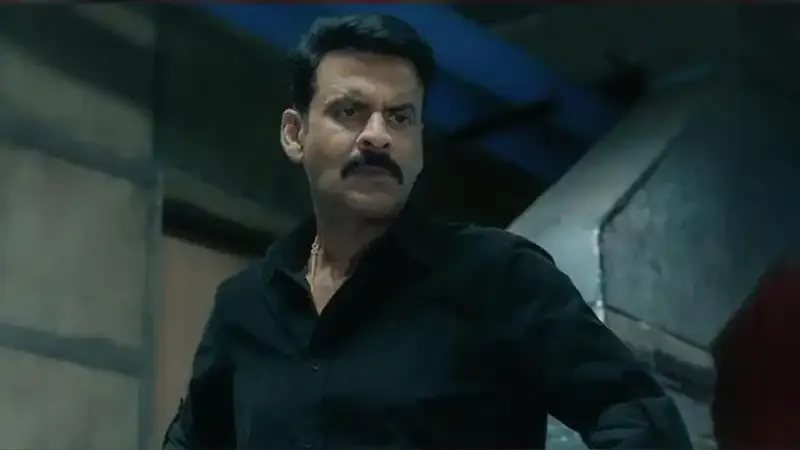
The Indian film industry finds itself embroiled in yet another controversy over content perceived as religiously or socially sensitive, as authorities in Uttar Pradesh have registered a First Information Report (FIR) against the makers of the upcoming Netflix film “Ghooskhor Pandat” . The legal action follows a directive from Chief Minister Yogi Adityanath, marking another instance where creative expression in cinema has collided with concerns about public sentiment and social harmony in India’s most populous state.
The Immediate Trigger
The controversy surrounding “Ghooskhor Pandat” began when multiple complaints surfaced regarding the film’s title, particularly the juxtaposition of the term “ghooskhor” — a colloquial Hindi word referring to someone who accepts bribes — with “Pandat,” which many interpreted as a reference to the Pandit community . The concerns quickly escalated from social media discussions to formal complaints, eventually reaching the office of the Chief Minister.
Following Chief Minister Yogi Adityanath’s instructions to law enforcement, Hazratganj Police Station in Lucknow registered an FIR against the director and various team members associated with the production . Inspector Vikram Singh formally lodged the complaint, which alleges that the film’s content has hurt public sentiments and disturbed social harmony, concerns that authorities in Uttar Pradesh have increasingly prioritized in recent years.
The swift administrative response reflects the Uttar Pradesh government’s proactive approach to addressing content perceived as potentially objectionable or capable of creating social discord. Law enforcement officials acted on the directive to investigate whether the film’s title and promotional materials violated any provisions related to maintaining communal harmony and respecting religious sentiments.
Understanding the Film’s Premise
“Ghooskhor Pandat” is a cop drama that was set to premiere on Netflix, featuring acclaimed actor Manoj Bajpayee in the lead role as Ajay Dikshit, a corrupt and morally compromised police officer who goes by the nickname “Pandat” . The narrative is structured as a single-night thriller, a format that has gained popularity in contemporary Indian cinema for its ability to create tension and maintain narrative momentum.
The film also stars Nushrat Bharuccha and Saqib Saleem in key roles, adding to the ensemble cast that brings this fictional police drama to life . The project represents a collaboration between established talent in the Indian film industry and the global streaming platform Netflix, which has been investing significantly in Indian original content to capture the country’s vast and diverse audience.
Director Neeraj Pandey, known for his thriller films, helmed this project with the intention of creating a character-driven narrative exploring themes of corruption, moral ambiguity, and the choices individuals make in compromising situations. However, the film’s title became a flashpoint for controversy before audiences could experience the complete narrative that the filmmakers intended to present.
The Community’s Concerns
The objections to the film’s title stem from the perception that “Pandat” is a deliberate reference to the Pandit or Brahmin community, one of India’s traditional upper castes historically associated with religious scholarship and priesthood . Critics of the film argue that pairing this community identifier with “ghooskhor” — a derogatory term for someone corrupt or bribe-taking — constitutes an attack on the entire Pandit community.
This interpretation gained traction among various groups and individuals who felt that the title stereotypes and maligns an entire community by associating it with corruption and moral compromise. In the current social and political climate, where questions of representation, cultural sensitivity, and community dignity occupy significant space in public discourse, such concerns can quickly mobilize opinion and prompt official action.
The Film Makers Combine, an industry organization, added another dimension to the controversy by issuing a notice claiming that the makers had not obtained mandatory approval for the title as required under industry rules . This procedural concern gave an additional legal angle to the objections beyond the content-related grievances.
The controversy reflects broader tensions in Indian society about how communities are portrayed in popular culture, who has the authority to tell certain stories, and what boundaries should exist around creative expression when it intersects with community identity and religious sentiment.
Director Neeraj Pandey’s Response
In response to the mounting controversy, director Neeraj Pandey issued a detailed statement attempting to clarify the creative intent behind the film and address the concerns raised by various sections of the public . His response represents an attempt to defuse the situation while maintaining the artistic integrity of the project.
Pandey emphasized that “Ghooskhor Pandat” is fundamentally a fictional cop drama, and that the term “Pandat” in the film serves simply as a colloquial name for a fictional character rather than any commentary on a particular community . He stressed that the story focuses on an individual’s actions and choices, and does not intend to comment on or represent any caste, religion, or community as a whole.
In his statement, the director articulated his approach to filmmaking: “As a filmmaker, I approach my work with a deep sense of responsibility – to tell stories that are thoughtful and respectful” . This assertion positions Pandey as a conscientious creator aware of the potential impact of his work, though it did not immediately satisfy all critics.
Significantly, Pandey announced that in light of the concerns raised, the team had decided to take down all promotional materials for the time being . This decision represents a strategic retreat, allowing time for passions to cool while the legal and administrative processes play out. The director expressed his belief that the film should be experienced in its entirety and understood in the context of the complete story rather than judged based on partial glimpses provided by promotional materials.
This response reveals the difficult position filmmakers find themselves in when controversies erupt before a film’s release. Promotional materials, designed to generate interest and attract audiences, can be misinterpreted or taken out of context, leading to controversies that the complete film might not have provoked.
The Broader Context of Film Controversies in India
The “Ghooskhor Pandat” controversy is far from an isolated incident in Indian cinema. In recent years, numerous films have faced challenges, protests, legal actions, and even bans over content perceived as objectionable by various groups. These controversies have involved films of all scales, from major studio productions to independent films, and have addressed themes ranging from historical events to religious figures, from political commentary to social issues.
The pattern often follows a familiar trajectory: complaints emerge, social media amplifies concerns, political or community leaders take positions, and administrative or legal action follows. In states with active governments on cultural and religious matters, such as Uttar Pradesh under Chief Minister Yogi Adityanath, the response can be particularly swift and decisive.
Filmmakers in India navigate a complex regulatory environment that includes the Central Board of Film Certification (commonly known as the Censor Board), various state-level authorities, and the ever-present possibility of legal action under provisions related to hurting religious sentiments, promoting enmity between groups, or disturbing public order. Beyond these formal mechanisms, informal pressures from organized groups can influence what stories get told and how.
The rise of streaming platforms like Netflix has added another dimension to these dynamics. Streaming content in India is regulated differently from theatrical releases, operating under the Information Technology Rules rather than the Cinematograph Act. However, as the “Ghooskhor Pandat” case demonstrates, this does not shield such content from scrutiny or legal action based on complaints about its potential to disturb social harmony.
The Role of Titles in Film Marketing and Controversy
Film titles carry enormous weight in the Indian market, serving not just as identifiers but as marketing tools, conversation starters, and sometimes lightning rods for controversy. A provocative or attention-grabbing title can generate publicity, but it can also become the primary focus of objections, overshadowing the actual content of the film.
In the case of “Ghooskhor Pandat,” the title immediately conveys information about the protagonist — a corrupt individual with a name or nickname that critics argue references a specific community. Even before anyone could view the film to understand how the character is portrayed, what arc he undergoes, or what broader themes the narrative explores, the title itself became the subject of intense debate.
This phenomenon reflects a broader challenge in the digital age, where reactions and controversies can explode based on limited information. A title, a poster, a trailer, or even a still image can trigger responses that might be different if audiences experienced the complete work. However, in the current ecosystem where content spreads rapidly and opinions form quickly, filmmakers must anticipate how every element of their project might be received.
The decision by the “Ghooskhor Pandat” team to pull down promotional materials suggests a recognition that the fragments being shared were contributing to misunderstanding or controversy, and that the complete film might tell a different story than what critics imagined based on the title alone.
Legal and Constitutional Dimensions
The FIR filed against the “Ghooskhor Pandat” team raises important questions about the balance between creative expression and legal restrictions in India. Article 19(1)(a) of the Indian Constitution guarantees freedom of speech and expression, which courts have repeatedly held to include artistic and creative expression. However, this freedom is not absolute, and Article 19(2) permits “reasonable restrictions” on grounds including public order, morality, and in the interests of maintaining friendly relations between different groups.
Various provisions of the Indian Penal Code can be invoked when content is alleged to hurt religious sentiments or promote enmity between groups. Sections 153A (promoting enmity between different groups), 295A (deliberate and malicious acts intended to outrage religious feelings), and related provisions have been used in numerous cases involving films, books, and other creative works.
However, legal experts often point out that the threshold for establishing that content actually violates these provisions should be high. The Supreme Court of India has held that mere offense or hurt to feelings is not sufficient; there must be a genuine threat to public order or a deliberate and malicious intent to outrage religious feelings. The court has emphasized that creative works should be judged holistically rather than by cherry-picking potentially objectionable elements.
In the “Ghooskhor Pandat” case, the investigation following the FIR will presumably examine whether the film actually meets the legal criteria for action or whether the concerns, while sincerely felt by some, do not rise to the level of legal violation. The outcome could have implications for how similar cases are handled in the future.
The Impact on Creative Freedom
Controversies like the one surrounding “Ghooskhor Pandat” inevitably raise concerns among filmmakers, writers, and artists about the space available for creative expression in India. When legal action can be initiated based on a title before a film is even released, or when promotional materials must be pulled down in response to complaints, it creates a chilling effect on creativity.
Some filmmakers may respond by avoiding potentially controversial subjects or treatments, self-censoring to prevent the personal, professional, and financial costs that come with such controversies. Others may view these challenges as tests of their commitment to telling stories they believe need to be told, whatever the obstacles.
The streaming platform context adds another layer to these considerations. Netflix and other global platforms have invested heavily in Indian content, seeing the country as a crucial market. However, they must navigate local sensitivities, regulatory requirements, and political pressures that may differ from their experiences in other markets. The “Ghooskhor Pandat” controversy will likely inform how such platforms approach content decisions in India going forward.
For actors like Manoj Bajpayee, who has built a reputation for choosing challenging and unconventional roles, being associated with a controversial project presents both risks and potential benefits. While controversy can generate publicity, it can also overshadow the artistic merits of the work and create unwanted complications.
Community Representation in Indian Cinema
The underlying issue in the “Ghooskhor Pandat” controversy — how communities are represented in films — reflects longstanding debates about stereotyping, representation, and whose stories get told in Indian cinema. Various communities have at different times objected to how they are portrayed in films, arguing that stereotypical, negative, or inaccurate representations cause real harm.
The question of whether a character with a particular community identity who exhibits negative traits constitutes an attack on the entire community is complex. On one hand, members of any community can be criminals, corrupt, or morally compromised, and depicting such characters could be viewed as simply reflecting reality. On the other hand, when certain communities are repeatedly portrayed in negative lights or when negative characteristics become associated with community markers, it can reinforce prejudices and stereotypes.
Filmmakers argue that they should be free to create complex characters of any background, including flawed or villainous ones, without being seen as making statements about entire communities. Critics counter that in a society where prejudices and discrimination persist, creators have a responsibility to consider the impact of their representational choices.
Director Neeraj Pandey’s assertion that “Pandat” is merely a colloquial name for an individual character attempts to navigate this tension, but whether this explanation satisfies critics depends on how they weigh creative freedom against concerns about community dignity.
The Path Forward
As of now, the FIR against the “Ghooskhor Pandat” team remains active, and the investigation will proceed according to legal procedures . The filmmakers face several possible paths forward: they could maintain their current position and await the investigation’s outcome, potentially seeking legal remedies if they believe their creative expression is being unfairly restricted. They could negotiate with concerned parties, potentially agreeing to modifications such as a title change or additional disclaimers. Or they could decide to significantly rework or even shelve the project, though this would represent a substantial financial and creative loss.
The decision to pull down promotional materials suggests the team is open to dialogue and willing to make adjustments, though the extent of any changes remains to be seen. The involvement of Netflix as the distribution platform adds another stakeholder to these deliberations, as the company must balance its content strategy against regulatory and social pressures.
For Chief Minister Yogi Adityanath and the Uttar Pradesh government, the action taken demonstrates responsiveness to constituent concerns and a commitment to maintaining social harmony, priorities that have characterized the administration’s approach to cultural and religious matters. However, the case also raises questions about where the line should be drawn between legitimate regulation and overreach that constrains creative expression.
Lessons and Implications
The “Ghooskhor Pandat” controversy offers several lessons for the Indian film industry and beyond. First, it underscores the importance of anticipating how every element of a film — including its title — might be received in the current social and political climate. While filmmakers should not necessarily be driven entirely by fear of controversy, strategic thinking about framing and communication can help navigate sensitive terrain.
Second, it highlights the value of dialogue and engagement with communities who may have concerns about representation. While filmmakers cannot please everyone, proactive communication about creative intent can sometimes prevent misunderstandings from escalating into major controversies.
Third, it demonstrates the speed at which controversies can develop in the digital age and how social media amplifies concerns, creating pressure for rapid official responses. This dynamic favors those who can mobilize quickly around perceived objections, potentially disadvantaging creators who need time to explain nuanced artistic choices.
Finally, the controversy reinforces ongoing debates about the appropriate balance between creative freedom and respect for community sentiments in a diverse, democratic society. These are not questions with easy answers, and different stakeholders will continue to draw the lines in different places.
Conclusion
The FIR filed against the makers of “Ghooskhor Pandat” following Chief Minister Yogi Adityanath’s directive represents more than just a single controversy over one film . It encapsulates broader tensions in contemporary India about representation, creative freedom, community identity, and the role of the state in regulating cultural expression.
As the investigation proceeds and the various parties consider their next moves, the case will be watched closely by filmmakers, streaming platforms, artists, community groups, and legal observers as a potential indicator of where boundaries currently lie in India’s complex cultural landscape. Whether “Ghooskhor Pandat” ultimately reaches audiences in its intended form, in a modified version, or not at all, the controversy surrounding it has already sparked important conversations about how India negotiates the sometimes conflicting values of artistic expression and social harmony.
For Manoj Bajpayee, Neeraj Pandey, and the rest of the team, the project they created to tell a fictional story about individual choices and moral compromise has instead become a real-world case study in the challenges of filmmaking in contemporary India. Their experience, whatever its outcome, will inform how future films are conceived, titled, marketed, and defended in an environment where every creative choice can become a matter of public, political, and legal scrutiny.















Share our link, earn real money—signup for our affiliate program!
Become our partner and turn clicks into cash—join the affiliate program today!
Promote our brand, reap the rewards—apply to our affiliate program today!
Start profiting from your network—sign up today!
Boost your profits with our affiliate program—apply today!
Become our partner and turn referrals into revenue—join now!
8xbet प्लेटफ़ॉर्म के साथ व्यवहार करते समय सतर्क रहें।
Visit us: 8xbet 无存款赌场奖金
सभी को qwnvp.sa.com की सावधानीपूर्वक जांच करनी चाहिए। किसी भी पैसे को जोखिम में डालने से पहले WHOIS जांच चलाएं और हाल की 8XBet Trustpilot रिपोर्ट पढ़ें – अपनी जमा राशि खोने से बेहतर सुरक्षित।
Visit us: 8XBet Où est-ce ? kadwyn.za.com Enquête et signaux d’alarme 2026
Évitez à tout prix Removeme.za.com. Date de création en février 2026, confidentialité totale du propriétaire, zéro historique – identique à chaque domaine qui a volé de l’argent et a disparu en quelques jours.
Visit us: Removeme.za.com تحذير من عملية احتيال قاتلة: موقع جديد تمامًا مزود بدرع خصوصية كامل – اركض!