
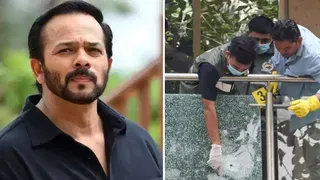
The pre-dawn silence of Mumbai’s upscale Juhu neighborhood was shattered by the staccato crack of gunfire on February 1, 2026, when unidentified assailants fired four to five rounds at the residence of acclaimed filmmaker Rohit Shetty. The brazen attack, which occurred around 12:43 AM at Shetty Tower on Hasya Kalakar Mehmood Chowk, has sent shockwaves through India’s entertainment industry and reignited urgent conversations about the infiltration of organized crime syndicates into Bollywood’s glamorous facade. While Shetty and his family escaped unharmed, the incident has exposed vulnerabilities that threaten to undermine the confidence of one of the world’s most prolific film industries.
The Attack: A Meticulously Planned Operation
According to preliminary investigations by the Mumbai Police, the attack involved at least one bike-borne gunman who approached Shetty’s multi-story residential complex in the dead of night. The bullets struck the first floor of the building and its outer walls, causing property damage but fortunately no physical injuries to the occupants. Forensic teams were immediately dispatched to the scene, where they meticulously documented evidence, including shattered glass panes from the balcony and bullet casings that would prove crucial to the investigation.
Security guards stationed at the building were temporarily away from their posts when the attack occurred, with at least one having gone to use the toilet facilities. This timing suggests either careful reconnaissance by the perpetrators or an unfortunate coincidence that facilitated the attack. The guards rushed out upon hearing the gunshots, but the assailant had already fled the scene. Shetty himself immediately contacted the police, initiating what would become a multi-agency investigation involving the Mumbai Police, Crime Branch, and forensic specialists.
CCTV footage obtained by investigators revealed the accused smoking in the area prior to the attack, suggesting a level of comfort and confidence that indicates familiarity with the location or extensive planning. The video evidence has proven instrumental in identifying suspects and reconstructing the timeline of events leading up to the shooting.
Swift Police Response and Arrests
The Mumbai Police’s response to the incident was both swift and comprehensive. Within hours of the attack, law enforcement agencies had detained five suspects in Pune, approximately 150 kilometers from Mumbai. The detained individuals, all young men aged between 19 and 23, were quickly handed over to the Mumbai Crime Branch for intensive interrogation.
During questioning, the arrested suspects revealed themselves to be hired operatives rather than the principal conspirators behind the attack. This revelation pointed investigators toward a more sophisticated criminal network with hierarchical structures and specialized roles. The suspects provided crucial information about the logistics of the operation, including details about how they were recruited, funded, and armed for the mission.
Mumbai Police have deployed twelve special teams to investigate various aspects of the case, examining everything from the procurement of weapons to the communication channels used by the conspirators. Heavy security has been maintained around Shetty’s residence since the incident, with continuous police presence and enhanced surveillance measures to prevent any repeat attempts.
The Lawrence Bishnoi Connection
Perhaps the most alarming development in the investigation came when members of the notorious Lawrence Bishnoi gang claimed responsibility for the attack through social media channels. Shubham Lonkar, identified as an associate of the Lawrence Bishnoi syndicate, posted a message in both Hindi and English stating: “Ram Ram, Jai Bajrang Bali, to all brothers. We, Shubham Lonkar, Aarzoo Bhishnoi, Hari Boxer, and Harman Shandu, take responsibility for the firing that took place today at film director Rohit Shetty’s house (Shetty Tower) in Mumbai”.
Investigators believe that Lonkar served as the mastermind who orchestrated the attack, arranging funding, procuring weapons, and coordinating the logistics necessary for the operation. An audio message allegedly linked to the gang has surfaced, suggesting that the attack was designed to send a warning message to Bollywood, possibly as part of a broader extortion campaign. This modus operandi bears striking similarities to previous attacks attributed to the Bishnoi network, most notably the April 2024 firing incident outside the Galaxy Apartments residence of superstar Salman Khan.
The Lawrence Bishnoi gang has emerged as one of India’s most formidable organized crime syndicates, with an estimated membership of 700 individuals operating across state and international borders. The National Investigation Agency (NIA) has identified a comprehensive hit list maintained by the organization, targeting high-profile individuals across the entertainment industry, business sector, and political landscape.
The gang’s entry into Bollywood extortion and intimidation represents a deliberate strategy to establish dominance in a lucrative sphere once controlled by underworld figure Dawood Ibrahim. According to senior Delhi Police officers, the Bishnoi network harbors ambitions to create their own version of the infamous “D-Company,” leveraging fear and violence to extract money from wealthy entertainers and establish territorial control.
Why Rohit Shetty?
The targeting of Rohit Shetty raises important questions about the gang’s selection criteria and ultimate objectives. Shetty, 51, ranks among Bollywood’s most commercially successful filmmakers, having created the immensely popular Cop Universe franchise that includes blockbuster films such as Singham (2011), Singham Returns (2014), Simmba (2018), and Sooryavanshi. His 2024 release Singham Again introduced new characters to the franchise, including Deepika Padukone as DCP Shakti Shetty and Tiger Shroff as Inspector Satya Bali.
Beyond his Cop Universe, Shetty has directed the wildly successful Golmaal comedy series and has established himself as a director whose films consistently perform well at the box office. His reputation for creating action-packed entertainers with mass appeal has made him one of the industry’s most bankable filmmakers, commanding substantial budgets and generating significant revenues.
Several theories have emerged regarding why Shetty was targeted. First, his financial success makes him a potentially lucrative target for extortion demands. Second, his Cop Universe films, which celebrate law enforcement and portray police officers as heroic figures fighting corruption and crime, may have been perceived as antagonistic by criminal organizations. Third, the attack may have been intended less as a personal vendetta against Shetty and more as a symbolic warning to the broader film industry, demonstrating the gang’s reach and willingness to target even the most prominent figures.
Investigators have noted that Shetty had not received any prior direct threats, distinguishing this case from the Salman Khan situation, where the actor had been explicitly warned and threatened over many years. This absence of preliminary communication suggests the attack may have been part of a campaign to instill general fear rather than resolve a specific grievance.
Industry Response: IFTDA’s Intervention
The Indian Film & Television Directors’ Association (IFTDA), a trade union organization representing over 10,000 film and television directors across India, responded swiftly to the incident with a strongly worded letter to Maharashtra Chief Minister Devendra Fadnavis. The association, currently led by president Ashoke Pandit, has historically advocated for the interests and welfare of directors since its founding in 1960.
In their communication to the Chief Minister, IFTDA members expressed “shock and concern” at the firing incident, emphasizing the broader implications for industry safety. The letter stated: “The entire film fraternity is deeply shocked and concerned about the safety and well-being of one of the most respected and iconic filmmakers of the Indian entertainment industry. Such incidents create an atmosphere of fear and insecurity, which is unacceptable”.
Critically, the association appealed for Fadnavis’s “personal intervention” in the investigation, requesting that the Chief Minister directly oversee the case given its gravity and potential ramifications. “We appeal to our Honourable Chief Minister Shri Devendra Fadnavis Ji to personally look into the matter, as this grave incident should not shake the morality and confidence of the entertainment industry,” the letter emphasized.
While expressing confidence in the Mumbai Police’s capabilities, IFTDA urged swift and decisive action: “We are confident that the efficient Mumbai Police will take swift and strict action, identify and book the culprits at the earliest, and ensure complete protection to Mr Rohit Shetty and his family”.
This intervention by IFTDA reflects growing anxiety within Bollywood about the resurgence of organized crime’s interest in the film industry. The association’s call for high-level political involvement underscores the perception that these threats require not merely routine police work but coordinated government attention at the highest levels.
Chief Minister Fadnavis: The Man Who Must Respond
The responsibility for addressing this crisis now falls significantly on the shoulders of Devendra Fadnavis, who is serving his third term as Chief Minister of Maharashtra. Fadnavis, a dynamic and experienced politician from the Bharatiya Janata Party (BJP), has previously demonstrated competence in managing complex security and governance challenges during his earlier tenures.
During his first term as Chief Minister, Fadnavis oversaw major infrastructure projects including the Mumbai-Nagpur Expressway, expansions of the Mumbai and Pune Metro systems, the Coastal Road project, and the Mumbai Trans Harbour Link. He established a dedicated “War Room” to monitor major projects and address implementation bottlenecks, demonstrating a hands-on administrative approach.
More relevantly for the current crisis, Fadnavis served as Deputy Chief Minister from 2022 to 2024, holding critical portfolios including Home Affairs, Law and Judiciary, and Energy. This experience managing Maharashtra’s security apparatus positions him uniquely to coordinate an effective response to the growing threat of organized crime targeting Bollywood personalities.
Fadnavis was sworn in for his third term as Chief Minister on December 5, 2024, following BJP’s strong performance in the legislative elections where it secured 132 seats. Both Eknath Shinde and Ajit Pawar serve as Deputy Chief Ministers in his government. The Chief Minister’s response to IFTDA’s appeal and his handling of the Rohit Shetty case will likely be viewed as a litmus test of his administration’s commitment to protecting the state’s vital entertainment industry.
The Broader Pattern: Bollywood in the Crosshairs
The attack on Rohit Shetty’s residence cannot be viewed in isolation but must be understood as part of a disturbing pattern of organized crime targeting Bollywood personalities. The Lawrence Bishnoi gang’s hit list, as revealed through NIA investigations, includes numerous high-profile entertainment figures.
Salman Khan remains the gang’s primary target, with the vendetta rooted in the actor’s involvement in the 1998 blackbuck poaching case. The Bishnoi community, which the gangster’s family belongs to, holds the blackbuck as sacred, and Lawrence Bishnoi himself issued public threats to kill Khan during a 2018 court appearance. In April 2024, gunmen fired shots outside Khan’s Galaxy Apartments residence in Bandra, an attack that bears remarkable similarities to the incident at Shetty’s home.
Punjabi singer and politician Sidhu Moosewala was assassinated in what Canada-based gangster Goldy Brar claimed was orchestrated by the Bishnoi gang as revenge for the murder of associate Vikramjit Singh. This killing demonstrated the organization’s willingness to execute high-profile targets, not merely threaten them.
Baba Siddique, a politician and NCP leader, was murdered, with the Lawrence Bishnoi gang claiming responsibility. Significantly, this murder plot was reportedly hatched in Pune, the same city where the suspects in the Rohit Shetty case were arrested, suggesting the gang has established operational infrastructure in that location.
Other individuals reportedly on the gang’s radar include comedian Munawar Faruqui and various businessmen, liquor traders, and nightclub operators across India. The gang operates extortion rackets across state and international borders, demonstrating sophisticated coordination and communication capabilities.
According to India’s internal security assessments, the extortion racket involving organized gangs led by jailed gangster Lawrence Bishnoi has become a significant new challenge for law enforcement agencies. The group openly sends death threats while demanding money from various business sectors, creating an atmosphere of intimidation that extends far beyond the entertainment industry.
Historical Context: Underworld and Bollywood
The current situation echoes darker chapters in Bollywood’s history when underworld figures like Dawood Ibrahim wielded considerable influence over film production, casting, and distribution. During the 1980s and 1990s, organized crime syndicates invested heavily in film production, using the industry both for money laundering and as a source of prestige and power.
That era saw numerous incidents of intimidation, extortion, and violence targeting film personalities. The 1997 murder of music baron Gulshan Kumar and threats against various actors and producers created an atmosphere of fear that required significant law enforcement intervention to dismantle. The implementation of stricter anti-organized crime legislation, enhanced police capabilities, and international cooperation gradually reduced the underworld’s visible presence in Bollywood.
However, the current resurgence suggests that new criminal organizations view Bollywood’s financial success and cultural influence as attractive targets. Unlike the previous generation of underworld figures who sought to become film producers and insiders, the Lawrence Bishnoi gang appears focused on extracting money through extortion and establishing dominance through intimidation.
The Security Dilemma
The Rohit Shetty incident highlights critical vulnerabilities in the security arrangements for high-profile entertainment personalities in India. Despite living in what would be considered a secure residential complex in one of Mumbai’s most affluent neighborhoods, Shetty was still vulnerable to a determined attack.
The fact that security guards were temporarily away from their posts when the attack occurred raises questions about security protocols and coordination. High-profile individuals in India typically rely on a combination of private security personnel, residential security systems, and, in some cases, police protection. However, the sophistication and determination of organized crime networks often surpass these standard measures.
Several factors complicate security provision in the Indian context. First, many celebrities and filmmakers value privacy and resist the intrusive presence of extensive security details that would be routine for equivalently prominent individuals in some other countries. Second, the sheer number of high-profile personalities in Bollywood makes it impractical for police to provide comprehensive protection to everyone potentially at risk. Third, criminal organizations have demonstrated adaptability, using reconnaissance, insider information, and technological surveillance to identify vulnerabilities.
Following the attack, Mumbai Police significantly enhanced security around Shetty’s residence, deploying additional personnel and implementing tighter access controls. However, this reactive approach, while necessary, does not constitute a comprehensive solution to the broader challenge of protecting the entertainment industry from organized crime.
Legal and Investigative Challenges
Investigating and prosecuting cases involving organized crime syndicates presents formidable challenges for law enforcement agencies. The hierarchical structure of gangs like the Lawrence Bishnoi network creates multiple layers of separation between the ultimate decision-makers and the individuals who execute attacks. The hired gunmen arrested in Pune, for instance, can provide information about their immediate handlers but may have limited knowledge of the organization’s top leadership.
Lawrence Bishnoi himself is currently incarcerated, yet his organization continues to operate, plan attacks, and issue threats. This demonstrates the resilience and adaptability of the criminal network, which maintains communication channels and operational capabilities despite the imprisonment of its nominal leader. Associates like Shubham Lonkar, who remains at large and is being actively sought by police, can coordinate operations from safe locations, possibly abroad.
The use of social media to claim responsibility for attacks adds another dimension to the investigation. While these public claims provide investigators with valuable information and can be used as evidence, they also serve the perpetrators’ purposes by amplifying fear and demonstrating reach. The performative nature of these claims—often invoking religious phrases like “Ram Ram, Jai Bajrang Bali”—suggests the gang seeks to construct a particular public image that combines criminal power with cultural or religious identity.
Cross-border elements further complicate investigations. With gang members operating from locations in Canada and other countries, securing evidence, conducting interrogations, and executing arrests requires international cooperation that can be slow and bureaucratically complex. Extradition proceedings, when possible, often take years, allowing wanted individuals to continue coordinating criminal activities from abroad.
Cases against organized crime figures must be built meticulously to withstand legal challenges. Investigators must establish clear chains of conspiracy, document communication between various levels of the organization, and present evidence that meets stringent legal standards. The use of sophisticated encryption technology, burner phones, and intermediaries by criminal organizations makes this evidence-gathering process extremely challenging.
Economic Implications for the Film Industry
Beyond the immediate security concerns, the targeting of prominent filmmakers has significant economic implications for India’s entertainment sector. Bollywood is not merely a cultural institution but a multi-billion dollar industry that employs hundreds of thousands of people across production, distribution, exhibition, and ancillary services.
The fear and insecurity generated by attacks like the one on Rohit Shetty’s residence could influence various business decisions. International investors may become more cautious about funding Indian film projects if security risks are perceived as significant. Insurance costs for productions could increase substantially if insurers view key personnel as being under threat. Filmmakers might become more conservative in their creative choices, potentially avoiding subjects that could be perceived as controversial or antagonistic to criminal organizations.
Location shooting in Mumbai and Maharashtra could be affected if the perception develops that the state government cannot adequately protect high-profile film personalities. Production companies might shift operations to other states or countries with better security environments, depriving Maharashtra of substantial economic activity and employment.
For individual filmmakers, directors, and actors, the psychological toll of operating under threat cannot be underestimated. Creative work requires a degree of freedom and peace of mind that is difficult to maintain when facing potential violence. The need to coordinate extensive security arrangements, restrict movements, and remain constantly vigilant can significantly impact productivity and creative output.
The Role of Media and Public Perception
Media coverage of attacks like the Rohit Shetty incident plays a complex role in shaping public perception and potentially influencing the perpetrators’ objectives. Extensive news coverage, while serving the public’s right to information, also amplifies the intimidation effect that the attackers seek to achieve. Each headline about Bollywood being “under siege” or “under threat” reinforces the criminal organization’s narrative of power and reach.
Social media has become a particular challenge in this context. Platforms that allow gang members to post claims of responsibility, issue threats, and build followings create unprecedented opportunities for criminal organizations to communicate directly with large audiences. While law enforcement agencies monitor these channels for investigative leads, the speed and reach of social media make it difficult to prevent the dissemination of intimidating messages.
Some observers have noted a troubling phenomenon where certain segments of social media users treat gangsters like Lawrence Bishnoi as anti-establishment figures or folk heroes, a romanticization that overlooks the violence and criminality at the core of their activities. This perception, while limited, can complicate law enforcement efforts and potentially inspire copycat behavior.
Responsible journalism requires balancing comprehensive coverage of security threats with an approach that doesn’t inadvertently serve the perpetrators’ purposes. Focusing on the effectiveness of police response, the resilience of the film industry, and the inevitable consequences facing criminals may provide a more constructive narrative than emphasizing fear and vulnerability.
Government Response and Policy Options
The Maharashtra government, under Chief Minister Fadnavis’s leadership, faces several policy options in addressing the threat to Bollywood personalities:
Enhanced Security Protocols: Implementing a risk assessment system that categorizes entertainment industry figures based on threat levels and provides appropriate security accordingly. This could involve a combination of police protection, private security coordination, and technological surveillance systems.
Special Investigation Units: Establishing dedicated police units focused specifically on organized crime’s targeting of the entertainment industry. These units would develop expertise in the modus operandi of gangs, maintain intelligence networks, and coordinate with other law enforcement agencies nationally and internationally.
Legislative Measures: Strengthening existing laws to provide more severe penalties for those who threaten, extort, or attack individuals in the public eye. Creating specific offenses related to the use of social media for criminal intimidation could address one of the tools frequently employed by organized crime.
Coordination Mechanisms: Creating formal channels for communication between the film industry and law enforcement agencies, allowing for the rapid reporting of threats, sharing of security intelligence, and coordination of protective measures. IFTDA and similar organizations could serve as institutional bridges facilitating this coordination.
International Cooperation: Working with foreign governments, particularly Canada where several gang members reside, to secure extraditions, share intelligence, and coordinate operations against international criminal networks.
Technology Deployment: Utilizing advanced surveillance technology, facial recognition systems, and predictive analytics to identify potential threats before they materialize. Smart city infrastructure in Mumbai could be leveraged to enhance security in areas with concentrations of entertainment industry residences and workplaces.
Financial Investigation: Targeting the economic foundations of organized crime through aggressive investigation of money laundering, asset seizure, and disruption of funding sources. Criminal organizations require financial resources to operate; cutting off these resources can significantly degrade their capabilities.
Industry Self-Protection Measures
While government action is essential, the film industry itself must take proactive measures to enhance security:
Professional Security Assessment: High-profile individuals should engage professional security consultants to conduct thorough vulnerability assessments of their homes, workplaces, and routine movements. These assessments should inform comprehensive security plans that address identified weaknesses.
Collective Security Initiatives: Industry organizations like IFTDA could establish collective security arrangements, pooling resources to hire expert security professionals, develop best practices, and coordinate protective measures for members.
Information Sharing: Creating secure channels through which filmmakers and actors can share information about threats, suspicious activity, and security concerns without fear of public exposure that might increase vulnerability.
Residential Security Standards: Developing and promoting security standards for residential complexes housing entertainment industry figures, including requirements for guard training, surveillance systems, access controls, and emergency response protocols.
Digital Security: Protecting personal information, limiting public disclosure of addresses and routines, and implementing cybersecurity measures to prevent criminals from gathering intelligence through digital means.
Legal Preparation: Maintaining relationships with legal counsel experienced in dealing with extortion, intimidation, and organized crime, ensuring rapid response capability if threats emerge.
Cultural and Social Dimensions
The attack on Rohit Shetty also raises important questions about the cultural relationship between crime, power, and celebrity in Indian society. The targeting of filmmakers who create content celebrating law enforcement and heroism suggests criminal organizations are sensitive to cultural narratives and seek to assert their own power through violence against those who might challenge it symbolically.
Shetty’s Cop Universe films, which portray police officers as incorruptible heroes fighting against systemic corruption and criminal enterprises, directly contradict the narrative that organized crime is powerful and untouchable. While there is no confirmed evidence that these specific films motivated the attack, the thematic content creates an interesting dynamic where a filmmaker’s creative work might potentially influence how criminals perceive him.
This raises difficult questions about creative freedom and self-censorship. Should filmmakers consider potential security implications when choosing subjects and themes? Does the threat of violence from organized crime constitute a form of censorship that society should resist? How can the principle of artistic freedom be balanced against legitimate security concerns?
The broader cultural fascination with gangsters and crime, evident in numerous films, web series, and popular culture products, creates a complex environment where criminals are simultaneously condemned and, in some contexts, glamorized. This cultural ambivalence may inadvertently contribute to an environment where criminal organizations feel emboldened to assert themselves publicly.
The Pune Connection
The arrest of suspects in Pune, the same city where the murder of NCP leader Baba Siddique was allegedly planned, suggests that location has become a significant operational hub for the Lawrence Bishnoi network. This geographic pattern indicates the gang has established infrastructure, safe houses, recruitment networks, and logistical support systems in Maharashtra’s second-largest city.
Pune’s proximity to Mumbai—approximately 150 kilometers—makes it strategically valuable for planning operations in the state capital while maintaining some distance from the intense law enforcement presence that Mumbai commands. The city’s large population, numerous educational institutions, and expanding economy provide cover for criminal operatives and potential recruitment pools.
Law enforcement agencies must now focus significant attention on disrupting these Pune-based networks, identifying local facilitators, dismantling safe houses, and cutting off the supply chains that provide weapons, vehicles, and communications infrastructure to criminal operatives. This will require coordination between Pune and Mumbai police jurisdictions, sharing of intelligence, and sustained investigative pressure.
Comparative International Perspectives
India is not unique in facing challenges related to organized crime targeting entertainment industries. Los Angeles, the home of Hollywood, has extensive experience with security threats to celebrities, leading to sophisticated private security industries and close cooperation between law enforcement and entertainment companies. The Los Angeles Police Department maintains specialized units focused on crimes against high-profile individuals and has developed protocols for threat assessment and protection.
In Italy, anti-mafia legislation developed over decades provides a potential model for aggressive legal approaches to organized crime. Italian law includes provisions for extended detention of suspected mafia members, asset seizure based on unexplained wealth, and protection programs for witnesses and threatened individuals. While India’s legal system differs significantly, some principles from the Italian experience might be adaptable.
Mexico has faced particularly severe challenges with drug cartels targeting musicians, particularly performers of narcocorridos (ballads about drug traffickers). The violence has been extensive, with numerous musicians killed or forced into exile. The Mexican experience demonstrates the potential severity of organized crime’s interest in controlling or intimidating entertainment figures and underscores the importance of early, decisive intervention.
Long-term Implications and Future Outlook
The Rohit Shetty incident represents a critical juncture for the relationship between Bollywood and organized crime. How the government, law enforcement agencies, and the film industry respond will significantly influence whether this becomes an isolated incident or the beginning of a sustained campaign of intimidation and extortion.
Several possible trajectories exist. In an optimistic scenario, swift police action leads to the arrest and prosecution of all individuals involved, including masterminds like Shubham Lonkar. Aggressive investigation dismantles the Lawrence Bishnoi network’s operational capabilities, and enhanced security measures protect high-profile targets. The government’s strong response deters future attempts, and the film industry continues its creative work without fear.
A pessimistic scenario would see the investigation stall, with key figures remaining at large and continuing to issue threats and coordinate attacks. Additional incidents targeting other filmmakers, actors, or producers create an atmosphere of pervasive fear. Some industry figures begin paying extortion money to avoid violence, establishing a lucrative criminal revenue stream that attracts additional criminal organizations. International investment and collaboration decrease due to security concerns, and the vibrancy of Indian cinema suffers.
The most likely outcome probably lies between these extremes. Law enforcement will achieve some successes while facing ongoing challenges. Security will improve for the most prominent individuals, but risks will remain. The industry will adapt, implementing better protective measures while maintaining productivity. Periodic incidents will occur, requiring continued vigilance and response.
What remains clear is that this moment demands action. The IFTDA’s call for Chief Minister Fadnavis’s personal intervention reflects an understanding that routine police work, while essential, is insufficient. This situation requires high-level political commitment, resource allocation, inter-agency coordination, and sustained pressure on criminal networks.
Conclusion: A Test of Governance and Resilience
The firing incident at Rohit Shetty’s residence transcends a simple criminal act; it represents a direct challenge to the safety, security, and creative freedom of India’s entertainment industry. The filmmaker, known for creating blockbuster films celebrating law enforcement heroism, now finds himself a target of the very criminal elements his movies often portray as antagonists.
For Maharashtra Chief Minister Devendra Fadnavis, this crisis presents both a challenge and an opportunity. How his administration responds will be closely watched not only by the film industry but by all those concerned with governance, security, and the rule of law. A strong, effective response that protects Bollywood personalities while aggressively dismantling criminal networks would demonstrate governmental competence and commitment to public safety.
For the Mumbai Police and Crime Branch, the investigation of this case must be thorough, professional, and relentless. Beyond arresting the gunmen, investigators must dismantle the networks that funded, armed, and directed them. Shubham Lonkar and other masterminds must be apprehended and prosecuted. The Lawrence Bishnoi gang’s capacity to threaten and intimidate must be systematically degraded.
For the film industry itself, this moment calls for unity, resilience, and proactive engagement with security challenges. The IFTDA’s intervention represents an important first step, but sustained organizational effort will be required. Directors, producers, actors, and industry organizations must work collaboratively with law enforcement to create comprehensive security frameworks that protect individuals while preserving the creative freedom essential to artistic excellence.
Ultimately, the response to this incident will determine whether organized crime can successfully intimidate one of India’s most important cultural and economic sectors or whether the combined efforts of government, law enforcement, and the industry itself can safeguard the people who entertain, inspire, and engage millions across the nation and around the world. The stakes extend far beyond one filmmaker’s safety; they encompass the fundamental question of whether creativity can flourish in an environment of security and freedom or whether fear and intimidation will cast a shadow over Bollywood’s bright lights.
As forensic teams continue their examination, as investigators pursue leads, and as security personnel maintain their vigilant watch, Rohit Shetty’s films about heroic police officers fighting against crime take on new resonance. The question now is whether reality can match the cinematic vision of justice prevailing over criminality, or whether the gap between screen heroism and actual security will continue to widen. The entire film fraternity, as IFTDA noted, is watching with concern. So too is the nation.














Join our affiliate community and start earning instantly!
Refer friends, collect commissions—sign up now!
Partner with us and enjoy recurring commission payouts!
Unlock exclusive rewards with every referral—apply to our affiliate program now!
Sign up now and access top-converting affiliate offers!
Join our affiliate community and earn more—register now!
Invite your network, boost your income—sign up for our affiliate program now!