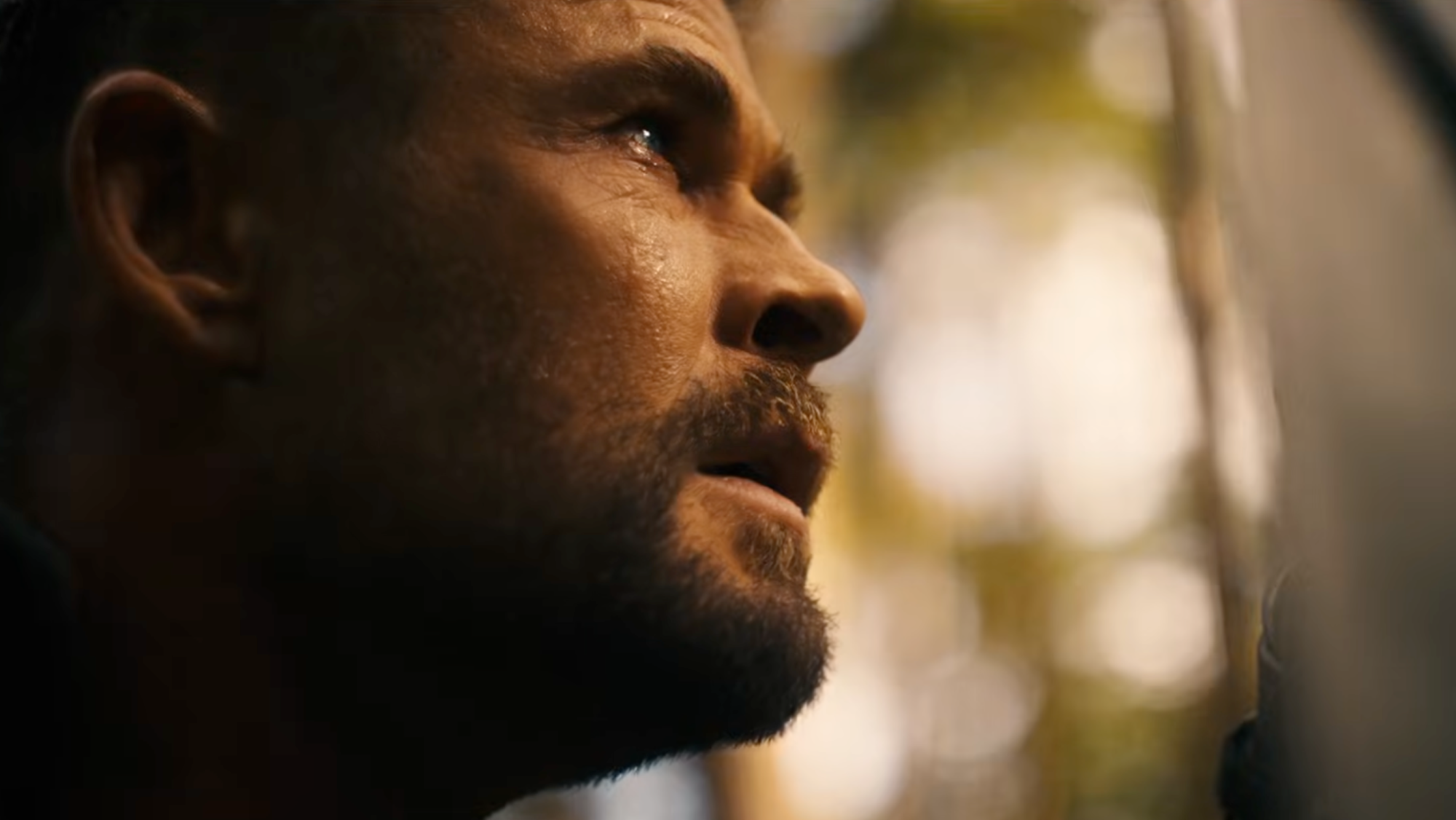
Marvel just dropped a bomb and the explosion radius is massive. The first official teaser for Avengers: Doomsday arrived online after being leaked and shown in theaters attached to Avatar: Fire and Ash. Within hours, the internet erupted into full scale war. Not because the teaser was bad. Not because it looked cheap. But because it confirmed what many feared and what leaks had already suggested. Chris Evans is back as Steve Rogers. Captain America is returning. And a significant portion of the MCU fandom is furious. The teaser itself is simple, almost nostalgic in its restraint. A wide shot of 1950s American suburbia. A man on a Triumph motorcycle pulling up to a house. Inside, Steve Rogers holds a baby, presumably his child with Peggy Carter. He reveals his old Captain America uniform. The message flashes: Steve Rogers will be back in Avengers: Doomsday. That is it. No explosions. No Doctor Doom reveal. Just Steve Rogers and the promise of his return. For some fans, this is the best news ever. The OG Captain America is coming back. The Russo Brothers are back. Robert Downey Jr is already confirmed as Doctor Doom. It is Endgame energy all over again. But for others, this teaser represents everything wrong with modern blockbuster filmmaking. Nostalgia baiting. Creative bankruptcy. A franchise so desperate for a win that it is resurrecting characters whose stories ended perfectly. This is not just a casting announcement. This is a referendum on what the MCU has become. Share this with every Marvel fan you know because this debate is not ending anytime soon.
What The Teaser Actually Shows
The Avengers: Doomsday teaser runs less than a minute but it packs in enough visual storytelling to spark a thousand theories. The setting is clearly the 1950s or early 1960s based on the architecture, the cars and the general aesthetic. Steve Rogers rides a Triumph motorcycle, a nice nod to his love of vintage vehicles. He parks outside a modest suburban home. The scene shifts inside where Steve, looking peaceful and content, holds a baby. This confirms that he and Peggy Carter had a family during his time travel adventure at the end of Endgame. The baby could be their child or even a grandchild depending on how much time has passed in this reality. Steve then walks to a closet or storage area and pulls out his Captain America uniform. The suit looks like the classic version he wore during his time as Cap, not the scaled armor from later films. The reveal is emotional. Steve stares at the suit with a mix of nostalgia and possibly regret. The implication is clear. He is being pulled back into action. The teaser ends with the simple text: Steve Rogers will be back in Avengers: Doomsday. No footage of him in costume. No action sequences. Just the promise that Captain America’s story is not over. The Russo Brothers shared the teaser on their social media channels making it official. Fans who had seen leaked versions or caught it in theaters now had confirmation. Chris Evans is back in the MCU and he is playing Steve Rogers, not a variant, not a multiverse version, but the actual Steve Rogers who rode off into the sunset at the end of Endgame.
Why Fans Are Calling It Desperate
The backlash was immediate and brutal. Social media exploded with fans calling Marvel desperate, creatively bankrupt and disrespectful to newer characters. The criticism falls into several categories. First, bringing back Steve Rogers undermines the perfect ending he received in Avengers: Endgame. After spending a lifetime fighting for others, Steve finally chose himself. He went back in time, lived a full life with Peggy Carter and returned as an old man to pass the shield to Sam Wilson. It was poetic. It was earned. It gave closure to one of the MCU’s most beloved characters. Pulling him out of retirement negates that ending. It says that happy ending was temporary. That Steve Rogers cannot escape his destiny as Captain America. That his story was not really finished. For fans who found Endgame’s conclusion emotionally satisfying, this feels like a betrayal. Second, Steve’s return overshadows Anthony Mackie’s Sam Wilson. Sam took up the mantle of Captain America in The Falcon and the Winter Soldier. The Disney Plus series dedicated six episodes to exploring whether Sam was worthy of the shield and what it meant for a Black man to represent America as Captain America. By the end, Sam earned the title. He became Captain America. His solo film, Captain America: Brave New World, is set to explore his tenure as the new Cap. But now Steve Rogers is back. How is Sam supposed to establish himself as Captain America when the original is around? In the comics, Marvel has featured multiple heroes with the same title simultaneously. Peter Parker and Miles Morales are both Spider-Man. Steve Rogers and Sam Wilson could both be Captain America. But in the MCU, which has always prioritized clear character hierarchies, having two Captains America dilutes Sam’s standing. Fans who have championed Sam’s journey feel like Marvel is saying his version of Captain America is not enough to carry a tentpole film. Third, the decision reeks of nostalgia baiting. Marvel is not bringing back Chris Evans because the story demands it. They are bringing him back because they need a win. MCU Phase 5 has been the franchise’s lowest grossing phase in history. Films that should have been slam dunks underperformed or outright flopped. The Marvels became the MCU’s biggest bomb. Ant-Man and the Wasp: Quantumania disappointed. Even critically praised films like Eternals could not find audiences. Only Guardians of the Galaxy Vol. 3 and Deadpool and Wolverine delivered. Marvel is in crisis mode. So they are reaching back to the Infinity Saga and pulling out the stars who made that era so successful. Chris Evans as Steve Rogers. Robert Downey Jr as Doctor Doom. Possibly Chris Hemsworth as Thor in future trailers. This is not bold storytelling. This is panic.
The Robert Downey Jr Problem
Chris Evans’ return would be controversial enough on its own. But it is happening alongside Robert Downey Jr’s casting as Doctor Doom, which adds another layer to the nostalgia critique. Downey played Tony Stark for over a decade. Iron Man was the foundation of the MCU. His death in Endgame was the emotional climax of the Infinity Saga. Bringing him back, even as a villain, undermines the weight of that sacrifice. The argument from Marvel and the Russo Brothers is that Downey is not playing Tony Stark. He is playing Victor von Doom, one of Marvel Comics’ greatest villains. Doctor Doom is a complex character. A genius. A sorcerer. A dictator who believes he is the only one capable of saving the world. In the right hands, Doom could be an incredible villain. But why cast Robert Downey Jr? The most popular theory is that Downey’s Doom will be a multiverse variant of Tony Stark. Maybe in another universe, Tony never became Iron Man. Maybe he followed a darker path. Maybe he is a Tony Stark who never learned humility and let his ego consume him. That would explain why Marvel is paying Downey a reported 100 million dollars to return. It justifies the casting by making Doom and Stark connected. But it also feels like a shortcut. Instead of introducing a fresh take on Doctor Doom with a new actor who can make the role their own, Marvel is doubling down on a familiar face. It is the same strategy they used with bringing back Steve Rogers. When in doubt, return to what worked before.
What Happened To The MCU
To understand why Avengers: Doomsday feels desperate, you have to understand what happened to the MCU after Endgame. Phase 4 and Phase 5 were supposed to be the Multiverse Saga, a new era with new heroes and new threats. Marvel introduced a huge roster of characters. Shang-Chi. The Eternals. Moon Knight. Ms. Marvel. She-Hulk. America Chavez. Kate Bishop. Yelena Belova. The Young Avengers were being assembled. The Fantastic Four were finally joining the MCU. The X-Men were on the horizon. But instead of building momentum, the MCU lost it. Phase 4 felt scattered. There was no clear narrative thread connecting the films and shows. Fans did not know where the story was going. Phase 5 tried to course correct but the damage was done. The numbers tell the story. Phase 5 grossed approximately 3.66 billion dollars worldwide. That is less than Phase 1, which made 3.81 billion. Phase 1 was six films made before the MCU was a proven concept. Phase 5 had massive budgets, established characters and the weight of the entire franchise behind it. Yet it made less money. The Marvels grossed only 206 million dollars worldwide, making it the biggest bomb in MCU history. Ant-Man and the Wasp: Quantumania underperformed despite being positioned as a major Kang introduction. Kevin Feige himself admitted that Captain America: Brave New World struggled because it was the first Captain America film without Chris Evans. That comment revealed the problem. Marvel built a franchise on stars, not stories. When those stars left, audiences did not follow the new characters.
The Kevin Feige Quote That Says Everything
After Captain America: Brave New World underperformed in test screenings and faced production issues, Kevin Feige made a comment that haunts this entire discussion. He said the film struggled because it was the first Captain America movie without Chris Evans. That statement is both honest and damning. On one hand, Feige is acknowledging reality. Chris Evans was Captain America for a decade. Audiences associate the character with him. Asking them to accept Anthony Mackie in the role was always going to be a challenge. On the other hand, that statement reveals that Marvel did not do the work to make Sam Wilson Captain America feel essential. If your franchise is so dependent on one actor that his absence tanks a film, you have not built a sustainable universe. You have built a house of cards. The MCU was supposed to be different. It was supposed to prove that the interconnected universe model could transcend individual actors. That is why recasting Rhodey and Bruce Banner worked. The story mattered more than the actor. But somewhere along the way, Marvel forgot that lesson. They started chasing stars instead of stories. They prioritized cameos over character development. They assumed audiences would show up for the brand regardless of quality. That strategy worked until it did not. Now Marvel is in damage control mode. Hence the return of Chris Evans and Robert Downey Jr. Feige is betting that nostalgia can save the franchise. That bringing back the OG Avengers will remind audiences why they fell in love with the MCU in the first place. It might work in the short term. Avengers: Doomsday will probably be a massive hit. But what happens after? When the nostalgia fades and Marvel has to build another saga without those safety nets? That is the real test.
The Russo Brothers Track Record
The fact that the Russo Brothers are directing Avengers: Doomsday is both a blessing and a concern. Joe and Anthony Russo directed Captain America: The Winter Soldier, Captain America: Civil War, Avengers: Infinity War and Avengers: Endgame. That is four of the MCU’s best films. They understand the characters. They know how to balance large ensemble casts. They delivered the most emotionally satisfying conclusion in franchise history with Endgame. But the Russos have not directed a film since Endgame. They spent the last few years producing other projects including the critically panned Netflix film The Gray Man. They are coming back to Marvel because the studio needs them. Because fans trust them. But are they coming back with fresh ideas or are they rehashing what worked before? The Avengers: Doomsday teaser suggests the latter. It leans heavily on nostalgia. On familiar imagery. On the promise of seeing beloved characters again. There is nothing in that teaser that feels new or risky. It feels like a greatest hits compilation. The Russos breaking their silence on Chris Evans’ return did not help. They said bringing back Steve Rogers was always part of the plan. That his story had more to tell. But they did not explain what that story is. They did not justify why undoing his Endgame ending serves the narrative. They just asked fans to trust them. For some, that trust is still there. For others, it has run out.
Anthony Mackie Deserved Better
The biggest casualty of Steve Rogers’ return is Anthony Mackie. Mackie has been in the MCU since 2014 when he debuted as Sam Wilson in Captain America: The Winter Soldier. He has been a loyal player. He took on the difficult task of carrying The Falcon and the Winter Soldier, a show that grappled with race, legacy and what it means to be a symbol. By the end of that series, Sam earned the right to be Captain America. He delivered one of the MCU’s best speeches about the responsibility of carrying the shield. His solo film, Captain America: Brave New World, was supposed to be his moment. His chance to prove he could lead a franchise. But now that film is being positioned as a bridge to Avengers: Doomsday. And Doomsday is being sold on the return of Chris Evans and Robert Downey Jr. Sam Wilson is not even part of the marketing conversation. Fans have rightfully called this disrespectful. Marvel asked audiences to invest in Sam’s journey. They spent a six episode series building his credibility. They gave him a movie. But at the first sign of trouble, they ran back to Steve Rogers. The message is clear. Sam Wilson Captain America is not enough. That is not just bad storytelling. It is bad business. If Marvel does not believe in the characters they are introducing, why should audiences?
What The Comics Did Differently
Marvel Comics has decades of experience bringing back characters who seemingly had definitive endings. Comic book death is rarely permanent. Heroes return. Villains come back. Timelines get rewritten. But the best comic book resurrections happen because the story demands it, not because the publisher needs a sales boost. When Steve Rogers returned in the comics after being presumed dead, it was part of a larger story about legacy and identity. Bucky Barnes had taken over as Captain America and was doing an excellent job. Steve’s return did not erase Bucky’s tenure. It added complexity. The two versions of Captain America coexisted and the story explored what that meant. The MCU has not set up that dynamic. There is no indication that Steve and Sam will share the mantle or that Steve’s return will add anything meaningful to Sam’s story. Instead, it looks like Steve is being brought back to sell tickets. That is the comic book trope that should have stayed on the page. The endless cycle of death and resurrection that makes nothing feel permanent. The MCU was supposed to be different. It was supposed to have stakes. When Tony Stark died, he stayed dead. When Natasha Romanoff sacrificed herself, it mattered. But now the cracks are showing. If Steve Rogers can come back, who else can? Is death meaningless in the MCU now? Do endings not count if the box office demands a return?
The Marketing Strategy Reveals Everything
The Avengers: Doomsday marketing plan was reportedly leaked and it reveals Marvel’s entire strategy. The plan includes multiple teaser trailers, each focused on one OG Avenger. The first was Chris Evans as Steve Rogers. The next will reportedly focus on Chris Hemsworth as Thor. A third will reveal Robert Downey Jr as Doctor Doom in full costume. Only after those three character focused teasers will Marvel release a general trailer showing the current roster of heroes. That strategy is telling. Marvel is not leading with the new characters. They are not selling audiences on the Multiverse Saga heroes who have been introduced over the last five years. They are selling nostalgia. They are banking on audiences wanting to see the OG Avengers one more time. It is a short term strategy that might work for Doomsday but does nothing to build confidence in the MCU’s future. What happens when the OG Avengers are done? When Chris Evans, Robert Downey Jr and Chris Hemsworth are no longer available? Does Marvel have a plan or are they just kicking the problem down the road?
Why Some Fans Defend The Decision
Not everyone is angry about Steve Rogers returning. A vocal portion of the fandom is thrilled. They argue that the MCU is a comic book universe and comic book universes bring characters back all the time. They point out that fans complained about the Multiverse Saga being too scattered and now that Marvel is bringing back familiar faces, people are still complaining. They say you cannot please everyone. Some fans believe Steve Rogers’ story was not finished. That passing the shield to Sam was a beginning, not an ending. That there are still stories to tell with Steve as a character even if he is no longer the active Captain America. They trust the Russo Brothers to deliver something meaningful. They believe the teaser is intentionally vague and that the full story will justify the decision. These fans also argue that Marvel is a business. If bringing back Chris Evans and Robert Downey Jr ensures Avengers: Doomsday is a hit, that is good for everyone. A successful Doomsday means more MCU content. It means the franchise survives. It means jobs for cast and crew. It means entertainment for fans. The debate boils down to a fundamental question. Is the MCU a film franchise that should prioritize bold storytelling and artistic integrity? Or is it a commercial product that should do whatever it takes to maximize profits? Both perspectives are valid. But they represent very different visions for what the MCU should be.
The Bigger Problem With Franchise Filmmaking
The Avengers: Doomsday controversy is not just about Marvel. It is about the state of franchise filmmaking in 2025. Studios are terrified of risk. They are making fewer original films. They are doubling down on sequels, prequels, reboots and revivals. When a franchise starts to decline, the instinct is to return to what worked before. Bring back legacy characters. Hire directors who made the best entries. Market to nostalgia instead of innovation. That strategy works until audiences get tired of it. Box office numbers across the industry show that franchise fatigue is real. Audiences are more selective about which blockbusters they see in theaters. Streaming has trained them to wait for home release. The theatrical window is shrinking. The MCU is not immune to these trends. In fact, as the most successful franchise of the last two decades, it is feeling the pressure more than anyone. Marvel set an impossible standard with the Infinity Saga. Endgame made 2.79 billion dollars worldwide. It was a cultural event. Topping that was always going to be difficult. But instead of trying to build something new, Marvel is chasing that high again. Avengers: Doomsday is being positioned as Endgame 2.0. That is the problem. You cannot recreate magic. You can only create something new and hope it resonates.
What Avengers Doomsday Needs To Do
If Avengers: Doomsday is going to work, it needs to justify every controversial choice. Bringing back Steve Rogers cannot just be fan service. There needs to be a story reason. Maybe Steve is pulled from his timeline against his will. Maybe Doctor Doom is manipulating reality and Steve is the only one who remembers what things were supposed to be like. Maybe Steve has to make an impossible choice that forces him to sacrifice his happy ending. Whatever the reason, it needs to feel earned. Robert Downey Jr as Doctor Doom needs to be more than just a stunt casting. If Doom is a Tony Stark variant, that connection needs to be explored in a meaningful way. If Doom is a completely separate character, then Downey needs to disappear into the role and make audiences forget they are watching the actor who played Iron Man. The new generation of heroes needs to matter. Sam Wilson, Shuri, Shang-Chi, Kate Bishop, Yelena Belova and everyone else introduced in Phases 4 and 5 cannot be sidelined. They need to be central to the story. They need to prove they can carry the franchise. If Avengers: Doomsday is just about the OG Avengers saving the day one more time, it will be a huge missed opportunity. The Russo Brothers have a tall order. They need to deliver a film that satisfies longtime fans while also moving the franchise forward. That is possible but it requires confidence in the new characters and a willingness to take risks. The Avengers: Doomsday teaser does not inspire confidence on either front. But it is just a teaser. The full film could surprise everyone.
What Happens After Doomsday
Avengers: Doomsday is not the end. Marvel has already announced Avengers: Secret Wars, which will close out the Multiverse Saga. That film will likely feature even more legacy characters and multiverse variants. After Secret Wars, Marvel will need to rebuild. Phase 7 and beyond will require a new foundation. New heroes. New stories. A clear vision for where the MCU is going. The question is whether Marvel has learned anything from the struggles of Phases 4 and 5. Will they invest in character development? Will they trust new actors to carry the franchise? Will they resist the urge to constantly look backward? Or will they continue to rely on nostalgia and legacy characters because it is the safest bet? The future of the MCU depends on the answers to those questions. Avengers: Doomsday might be a hit. But hits do not guarantee longevity. Only strong storytelling does.
The Fan Divide That Is Not Going Away
The reaction to the Avengers: Doomsday teaser has split the MCU fandom in a way that few things have. This is not just casual disagreement. This is a fundamental divide over what the franchise should be. On one side are fans who want bold new stories with fresh characters. They want the MCU to take risks. They want to see Sam Wilson succeed as Captain America without Steve Rogers overshadowing him. They want Doctor Doom introduced as a new character, not a Tony Stark variant. They believe the franchise needs to move forward, not backward. On the other side are fans who want the MCU to recapture what made the Infinity Saga special. They want to see the OG Avengers one more time. They trust the Russo Brothers and believe the decision to bring back Evans and Downey has a story justification. They are excited, not cynical. Both sides love Marvel. Both sides want the MCU to succeed. But they have very different ideas about how to get there. This divide will not be resolved until Avengers: Doomsday is released in December 2026. Until then, the arguments will continue. The debates will rage. The internet will be divided.
The Final Verdict Before The Movie Arrives
Avengers: Doomsday is the most important film in MCU history since Endgame. It will either prove that Marvel can still deliver or confirm that the franchise is running on fumes. Bringing back Chris Evans and Robert Downey Jr is a gamble. It could reinvigorate the franchise. It could also confirm every criticism that Marvel is creatively bankrupt. The teaser alone has sparked more conversation than any MCU project in years. That is both good and bad. Good because it proves people still care. Bad because much of that conversation is negative. Marvel is at a crossroads. Avengers: Doomsday is either the beginning of a new era or the last gasp of a franchise that peaked six years ago. Only time will tell which it is. But one thing is certain. The stakes have never been higher. Drop your take in the comments. Are you excited or disappointed by Steve Rogers’ return? Do you think Marvel is desperate or genius? Share this article with everyone you know who has an opinion on the MCU. Because in 2026, we will all find out if this gamble paid off or if Marvel made the biggest mistake in franchise history. The countdown to Doomsday starts now.