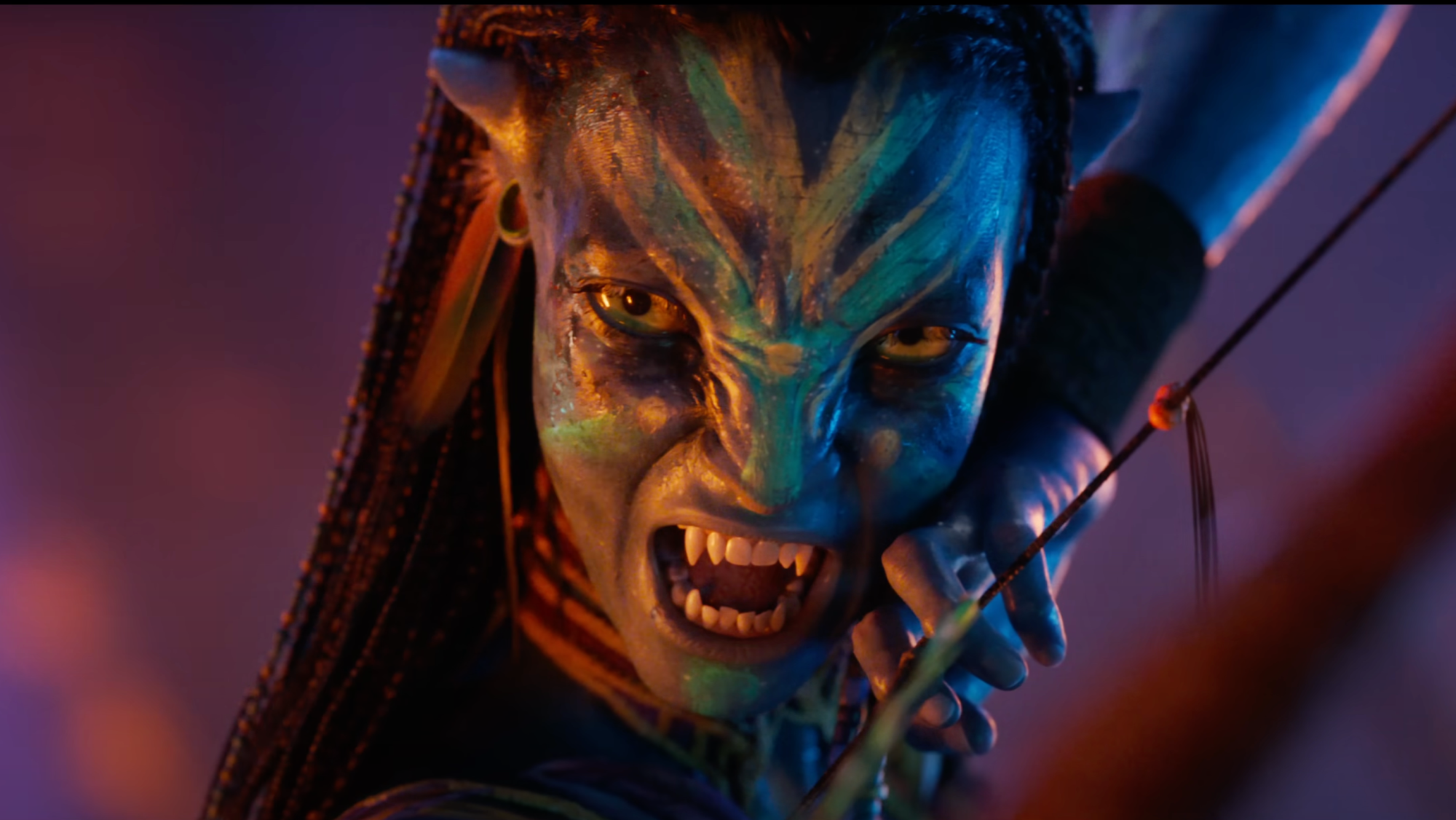
Buckle up because James Cameron just dropped Avatar: Fire and Ash into theaters and the internet is absolutely losing its mind for all the right and wrong reasons. The third installment in the blue alien saga opened to a massive $345 million globally, securing the second-largest opening weekend of 2025 behind only Zootopia 2. That’s billion-dollar franchise energy right there. But here’s the twist that nobody saw coming: despite being the most visually stunning Avatar film to date with jaw-dropping action sequences and world-building that makes other sci-fi look like amateur hour, critics and audiences can’t stop debating whether this movie is actually good or just expensive eye candy that repeats everything we’ve already seen twice before. Sam Worthington and Zoe Saldana return as Jake and Neytiri one year after losing their son Neteyam, this time facing the volcanic Mangkwan clan led by the absolutely fierce Varang played by Game of Thrones alum Oona Chaplin who’s being called the franchise’s best villain yet. The Sullys deal with family drama, Spider’s identity crisis, Quaritch returning for round three, and battles that make The Way of Water’s climax look like a kiddie pool scuffle. James Cameron spent over three years in post-production crafting sequences so technically perfect they belong in film school textbooks, yet the story feels weirdly familiar in ways that leave even devoted fans wondering if he’s run out of new ideas. The cultural impact debate has reignited with people arguing whether Avatar even matters beyond box office numbers when nobody quotes it, memes it, or discusses it between movies like Star Wars or Marvel. With Avatar 4 scheduled for 2029 and Avatar 5 for 2031, Cameron’s commitment to this franchise for another decade has everyone asking: is this genius or madness? From IMAX 3D experiences that changed how people view cinema to repetitive character arcs that make you question if Cameron watched his own previous films, Avatar: Fire and Ash delivers both transcendent artistry and frustrating flaws in equal measure. Ready to dive into every shocking truth, surprising detail, and controversial opinion about the movie everyone’s talking about but can’t agree on? Let’s break down the 15 most important things you absolutely need to know about Avatar 3!
1. The Box Office Numbers Are Absolutely Insane But Also Weirdly Disappointing
Let’s start with the elephant in the IMAX theater: Avatar: Fire and Ash opened to $345 million worldwide, which sounds like an absolute triumph until you realize it’s actually underperforming expectations in key markets.
Domestically in North America, the film earned $88 million over its opening weekend, landing it at number three on the domestic charts behind Dhurandhar and Zootopia 2. That $88 million figure placed it as the 7th biggest December opening ever, surpassing The Hobbit: An Unexpected Journey’s $84.6 million but falling well short of the projections that ranged between $85 million and $100 million on the higher end.
In India, the film struggled even more noticeably. After five days, Avatar: Fire and Ash collected approximately 80 crore rupees, which sounds impressive until you realize Ranveer Singh’s spy thriller Dhurandhar was dominating with over 870 crore rupees and showing no signs of slowing down. Indian audiences apparently preferred homegrown action to Cameron’s blue aliens.
The international numbers tell a more complicated story. IMAX generated $43.6 million globally, marking the biggest IMAX opening of 2025 and the fifth-biggest in the format’s history. That’s genuinely impressive and demonstrates that people willing to pay premium prices for the full theatrical experience remain committed to the Avatar franchise.
But here’s the concerning part for Disney and Cameron: The Way of Water opened to $441 million globally back in 2022, meaning Fire and Ash dropped about $96 million from its predecessor’s debut. That’s a nearly 22% decline, which in franchise terms signals potential audience fatigue.
The sustained box office performance will ultimately determine whether Fire and Ash is considered a success. Avatar and The Way of Water both had relatively modest openings compared to their eventual totals because they played in theaters for months, not weeks. Fire and Ash needs similar legs to justify its reported $400 million budget.
Trade analysts are watching the second weekend drop closely. If it holds well and continues playing through January and February, it could still reach $2 billion worldwide. But if it crashes hard after opening weekend like so many blockbusters do in the streaming era, Disney faces serious questions about whether Avatar 4 and 5 are financially viable.
The box office performance demonstrates Avatar’s weird position in modern cinema: huge by almost any standard, yet somehow disappointing compared to its own legacy and the expectations Cameron’s previous films set.
Share this with your friend who’s obsessed with box office numbers!
2. Oona Chaplin’s Varang Is The Franchise’s First Genuinely Interesting Villain
Let’s talk about the breakout star of Fire and Ash: Oona Chaplin as Varang, leader of the Mangkwan Ash People. Critics and audiences agree that she’s easily the most compelling antagonist the franchise has produced across three films.
Varang rules her volcanic dwelling tribe with a combination of ruthless violence and feral sensuality that makes her terrifying and magnetic in equal measure. The Ash People have been devastated by Pandora’s volcanic eruptions for generations, leading them to reject the Na’vi spiritual connection to Eywa and embrace survival through strength and domination.
Chaplin, granddaughter of Charlie Chaplin and known for her role as Robb Stark’s wife Talisa in Game of Thrones, reportedly beat out three other major actresses for the role after an audition that left Cameron “mesmerized.” Her chemistry with Stephen Lang’s Quaritch creates one of the film’s most interesting dynamics, a volatile partnership between the human-consciousness-in-avatar-body and the disillusioned Na’vi leader.
What makes Varang fascinating is that she’s not evil for evil’s sake. Her people have suffered unimaginable losses from natural disasters. Their rejection of Eywa comes from genuine trauma and the belief that their goddess abandoned them. Varang’s ruthlessness stems from desperation to protect her clan, even if her methods are brutal.
The character also brings sexuality to the Avatar franchise in ways previous films avoided. Varang is described as “oversexed” in reviews, and her relationship with Quaritch apparently includes intimate elements that add complexity to both characters. This adult edge differentiates Fire and Ash from the more family-friendly tone of previous installments.
Chaplin’s performance required mastering the signature Ash People hiss, a vocalization that took extensive practice to perfect. She also underwent months of physical training to embody a warrior leader whose strength comes from volcanic survival rather than forest or ocean environments.
The introduction of Varang and the Mangkwan demonstrates Cameron’s ability to create visually distinctive cultures within Pandora. The Ash People’s aesthetic, influenced by volcanic destruction and adaptation to extreme heat, looks completely different from the forest Omaticaya or reef Metkayina clans.
Critics note that Varang makes a better antagonist than Quaritch has been for the past two films. While Stephen Lang delivers a solid performance, his character’s motivations and arc have become stale. Varang brings fresh conflict that isn’t just “humans bad, Na’vi good,” which gives the story moral complexity it desperately needed.
The only disappointment is that Cameron doesn’t fully explore Varang’s perspective or give her enough screen time. She’s interesting enough to carry her own story, but the film keeps returning to Jake, Neytiri, and Quaritch’s repetitive dynamics instead of diving deeper into the Ash People’s culture and Varang’s leadership.
3. The Movie Looks Absolutely Stunning But You’ve Seen This Story Twice Already
Here’s the central paradox of Avatar: Fire and Ash: it’s simultaneously the best-looking film of the trilogy and the most narratively repetitive. James Cameron’s technical mastery has never been more evident, yet his storytelling feels stuck on a loop.
The visual effects represent the absolute pinnacle of what modern filmmaking technology can achieve. Every frame is meticulously crafted, with performance capture so refined that micro-expressions on Na’vi faces convey emotions as clearly as live-action performances. The underwater sequences, volcanic landscapes, and aerial battles showcase cinematography that will be studied in film schools for decades.
But the plot hits beats viewers have already experienced. Jake treats his family like a military unit, causing friction particularly with Lo’ak who blames himself for Neteyam’s death. Neytiri harbors resentment toward humans and Spider specifically, creating family tension. Quaritch pursues the Sullys for revenge. A climactic battle erupts between human forces and Na’vi allies. The Sullys prevail but suffer losses that set up future conflicts.
Sound familiar? That’s basically the structure of both previous Avatar films with some surface-level details changed. Even specific sequences feel recycled: there’s another confrontation between Jake and Quaritch, another massive battle with General Ardmore’s forces, another moment where Spider must choose between his human heritage and Na’vi family, another scene of Jake connecting with Pandora’s creatures.
Critics point out that Cameron seems to believe all his characters are equally interesting and beloved, leading him to repeat dynamics and conflicts that audiences have moved past. Quaritch and his Marine grunts stopped being compelling antagonists halfway through The Way of Water. Jake’s authoritarian parenting was already tired in the second film. Giving these elements even more screen time in Fire and Ash feels like spinning wheels.
The film’s runtime of over three hours (exact length varies by format, but most reports suggest around 190 minutes) amplifies the repetition problem. There’s simply too much movie dedicated to retreading familiar ground. A tighter, more focused narrative that spent less time on Quaritch and more on Varang and the Mangkwan would have been more satisfying.
What’s especially frustrating is that Cameron introduces genuinely new elements like the Ash People’s culture, the moral implications of the Sullys dropping Spider off with human allies, and interesting philosophical questions about whether Jake’s becoming more like the Marines he used to fight against. But he doesn’t give these fresh ideas enough room to breathe because he’s too busy staging another Jake vs. Quaritch confrontation.
The movie also brings back characters audiences thought were done. The Australian Tulkun hunter Mick Scoresby returns despite losing his arm in the last film, which feels unnecessary when Pandora has so much unexplored material. There’s even a sequence where a whale goes on trial, which could have been fascinating if it wasn’t sandwiched between repetitive battle scenes.
Some critics describe Fire and Ash as feeling more like a season of prestige television than a standalone film. It’s treading water, spinning its wheels, padding time before a game-changing finale that presumably comes in Avatar 4. That’s fine for a streaming series where episodes are an hour long. It’s less acceptable for a three-hour movie people paid $20-30 to see in IMAX 3D.
The irony is that Cameron’s unrestrained creativity in visual design isn’t matched by narrative innovation. He’ll spend years perfecting how light refracts through bioluminescent plant life or how volcanic ash particles float in Pandora’s atmosphere, but he won’t rethink whether audiences need to watch Quaritch hunt Jake for the third consecutive film.
Don’t miss out on the visual spectacle even if the story’s familiar!
4. The IMAX 3D Experience Is Literally The Only Way To Watch This Movie
Avatar: Fire and Ash isn’t just best viewed in IMAX 3D. It’s practically unwatchable in any other format if you care about experiencing Cameron’s vision as intended.
The film was shot using cutting-edge cameras specifically designed for 3D high frame rate capture at resolutions suitable for IMAX projection. Every creative decision from cinematography to production design to editing assumes viewers will see it in premium large format with 3D glasses.
Cameron pioneered modern 3D cinema with the first Avatar in 2009, and he’s continued refining the technology with each subsequent film. Fire and Ash represents the culmination of 16 years of innovation, with 3D that’s so good it doesn’t feel like 3D anymore but rather like looking through a window into an actual world.
The high frame rate presentation (48fps in most IMAX venues, doubled from the standard 24fps) eliminates motion blur during fast action sequences, creating crystal-clear imagery even during the most chaotic battles. This technology makes the difference between seeing a film and experiencing one.
Audience members who saw Fire and Ash in standard 2D formats reported feeling like they’d watched a completely different, significantly worse movie. The framing, depth of field, and pacing all work in 3D but feel off in flat projection. Action sequences that are breathtaking in IMAX 3D become confusing and hard to follow on regular screens.
The aspect ratio also changes depending on format. IMAX 3D presentations use 1.85:1, filling the entire massive screen with image. Standard screenings use 2.40:1 scope ratio, cutting off significant portions of the frame that Cameron specifically composed to be visible.
Some theaters offered 4DX presentations with moving seats, environmental effects like mist and scents, and other immersive elements. While 4DX can be fun for shorter films, the three-hour runtime of Fire and Ash makes the constant motion exhausting rather than enhancing. Multiple viewers reported feeling physically drained or nauseous from 4DX presentations of this movie.
The IMAX 3D requirement raises accessibility concerns. Not every city has IMAX theaters. Ticket prices for premium formats can be prohibitively expensive, especially for families. And viewers with certain vision conditions can’t properly perceive 3D effects, leaving them unable to experience the film as designed.
Critics argue that Cameron’s insistence on 3D being essential actually hurts the Avatar franchise’s cultural impact. The movies aren’t designed to work on television or streaming platforms where most people consume content. This makes them events rather than films you can revisit casually, which affects how they live in cultural memory versus franchises that work in any format.
But for those who can access IMAX 3D, the experience is genuinely unlike anything else in contemporary cinema. The immersion and technical perfection create moments that justify the premium price and inconvenience of getting to an IMAX theater.
5. Spider’s Storyline Is Still Confusing And Nobody Cares About Him
Jack Champion returns as Spider, the human teenager adopted by the Sullys but struggling with his identity between human and Na’vi cultures. And despite Cameron dedicating significant screen time to his character arc, audiences still don’t connect with him.
Spider’s central conflict revolves around which culture he belongs to. He can’t breathe Pandora’s atmosphere without a mask. He’s biologically human but culturally Na’vi. His biological father Quaritch represents everything he should hate, yet he saved Quaritch’s life in the previous film.
Fire and Ash puts Spider in situations where he must repeatedly make the same choice about loyalty that he seemingly already decided in The Way of Water. He chooses Na’vi culture over human multiple times, yet characters keep questioning his allegiance and he keeps having to prove himself.
The frustrating part is that these trust issues are somewhat justified. Neytiri particularly resents Spider because he’s human and saved Quaritch, leading to her son Neteyam’s death. Her coldness toward him drives Jake’s decision to take Spider to the human allies rather than keep him with the family.
But the movie can’t decide whether Spider’s journey is about earning acceptance from the Na’vi or accepting himself regardless of others’ opinions. It awkwardly tries to do both, resulting in a muddled character arc that doesn’t satisfy either direction.
Critics point out that Champion gives his all to the performance, committing fully to Spider’s emotional struggles. The problem isn’t the acting but the writing, which puts Spider through redundant beats and doesn’t give him enough agency in his own story.
There’s also the practical issue that Spider as a human teenager looks significantly older than the Na’vi teenagers he’s supposed to be peers with, creating a visual dissonance that’s distracting. The aging of human actors versus ageless CGI characters will become increasingly problematic as the Avatar franchise continues.
The most interesting element of Spider’s story is how it exposes prejudice within Na’vi culture. Despite Eywa preaching connection and unity, many Na’vi including Neytiri can’t see past Spider’s species to accept him as family. That hypocrisy could be fascinating to explore, but Fire and Ash treats it more as background tension than central theme.
Cameron has said Spider plays an important role in future films, suggesting his storyline will eventually payoff. But three movies in, audiences remain unconvinced that his character deserves the screen time he’s getting when so many more interesting elements of Pandora remain unexplored.
Share this with your friend who also doesn’t get the Spider obsession!
6. James Cameron’s Visual Imagination Is Unmatched But His Storytelling Instincts Are Rusty
James Cameron built his reputation on films that combined spectacular visuals with propulsive narratives. Aliens, Terminator 2, The Abyss, and True Lies are all technical marvels that also work as gripping stories with memorable characters.
But Avatar: Fire and Ash demonstrates that after spending 16 years exclusively focused on this franchise, Cameron’s storytelling instincts have atrophied while his visual genius has only sharpened.
The action sequences in Fire and Ash are among the best Cameron has ever directed. There’s a prison breakout scene that critics say rivals anything in his filmography, combining suspense, character work, visual spectacle, and narrative purpose into one perfect sequence. When Cameron’s firing on all cylinders, nobody in cinema can touch him.
But the connective tissue between those spectacular setpieces is where problems emerge. Character conversations repeat information audiences already know. Emotional beats feel forced rather than earned. Conflicts resolve through convenient plot mechanics rather than character growth.
Part of the issue is that Cameron co-wrote the screenplay with Rick Jaffa and Amanda Silver, the duo behind the rebooted Planet of the Apes films. Those movies work because they’re tightly constructed three-act narratives with clear themes and arcs. Avatar: Fire and Ash meanders, its three-hour runtime bloated with unnecessary subplots and redundant scenes.
Cameron’s confidence in his vision means nobody can tell him no or suggest cuts. The first Avatar benefited from studio oversight that forced him to tighten the script. The Way of Water had less interference, and Fire and Ash appears to have had virtually none. The result is Cameron at his most unrestrained for better and worse.
His world-building remains extraordinary. The Mangkwan culture feels fully realized, with distinct aesthetics, values, and history that differentiate them from other Na’vi clans. The volcanic environments introduce new flora and fauna that expand Pandora’s ecosystem in logical ways. The attention to how different atmospheric conditions affect bioluminescence or how Na’vi adapted to volcanic ash shows Cameron’s scientific mind.
But individual scenes drag. Conversations belabor points. The pacing sags in the middle even as the action sequences dazzle. It’s filmmaking that’s simultaneously too much and not enough: too much repetition, not enough new ideas.
Cameron also seems reluctant to let go of characters even when they’ve served their purpose. Quaritch should have died at the end of The Way of Water. His continued presence in Fire and Ash adds nothing except diminishing returns on a character whose arc completed two films ago.
The filmmaker has publicly wondered whether audiences will embrace Fire and Ash enough to greenlight Avatar 4 and 5. That uncertainty is telling. Cameron knows the story didn’t land as powerfully as the visuals, and he’s unsure whether spectacle alone can sustain interest for two more films.
At 71 years old, Cameron shows no signs of slowing down physically or creatively in terms of visual ambition. But his narrative instincts need sharpening, and it’s unclear who in his orbit has the relationship or courage to tell him that truth.
7. The Movie’s Cultural Impact Debate Just Reached Peak Absurdity
No discussion of Avatar: Fire and Ash is complete without addressing the elephant that’s been in the room since 2009: does this franchise have cultural impact?
It’s a genuinely strange debate because by any objective measure, Avatar is massively culturally significant. The first film became the highest-grossing movie of all time (until Avengers: Endgame briefly surpassed it before Avatar’s rerelease reclaimed the title). The Way of Water earned over $2.3 billion. Fire and Ash will likely cross $1 billion globally.
But the argument isn’t really about commercial success. It’s about cultural penetration in the social media age. Unlike Star Wars, Marvel, Harry Potter, or Lord of the Rings, Avatar hasn’t spawned endless memes. People don’t quote lines from these films. There’s minimal merchandising compared to other blockbuster franchises. Between movie releases, Avatar largely disappears from online discourse.
Critics of the franchise point out that more people watched Avatar than can name a single character besides Jake and Neytiri without looking it up. The Na’vi language hasn’t entered pop culture vernacular. There are no Avatar cosplayers at conventions. It exists in a weird space where it’s simultaneously the most successful film franchise ever and somehow culturally invisible.
Defenders counter that this criticism applies a Marvel/Star Wars template to a fundamentally different type of cinema. Avatar isn’t designed for memetic spread or franchise extension through television series and spin-offs. It’s crafted as pure theatrical experience, meant to be seen in IMAX 3D and then remembered as an event rather than consumed repeatedly on streaming platforms.
The lack of quotable dialogue or memorable character moments is arguably by design. Cameron’s not trying to create catchphrases or iconic one-liners. He’s building immersive worlds that function through visuals and experience rather than verbal wit.
The merchandising argument is complicated because Cameron intentionally limited Avatar tie-in products. He didn’t want cheap plastic toys diluting the brand. This strategy maximizes the films’ perceived prestige but sacrifices the constant cultural presence that merchandising provides.
Some analysts trace Avatar’s “cultural invisibility” to its release schedule. The first film came out in 2009, before social media platforms like TikTok, Instagram, and Twitter reached their current ubiquity. By the time The Way of Water released in 2022, the franchise was trying to recapture attention rather than capitalize on existing momentum.
The most interesting counter-argument is that Avatar’s cultural impact manifests differently than franchise-driven properties. It influenced how movies are made, not how they’re discussed. Every filmmaker who uses performance capture, 3D cinematography, or high frame rate technology is working in Avatar’s shadow. The franchise revolutionized cinema as a medium even if it didn’t spawn endless fan theories and online discourse.
But there’s also the possibility that both things are true: Avatar is commercially successful and technologically influential while also lacking the cultural footprint its box office suggests it should have. It’s an anomaly, a franchise that breaks all the rules about how modern blockbusters achieve and maintain relevance.
Fire and Ash won’t resolve this debate. It’ll make a billion dollars, people will see it in IMAX 3D, enjoy the spectacle, and then largely forget about it until Avatar 4 releases in 2029. And the cycle of “does Avatar matter?” arguments will begin anew.
Don’t miss being part of the cultural conversation in the comments!
8. The Climactic Battle Is Bigger But Basically The Same As Before
Avatar: Fire and Ash climaxes with another massive battle between General Ardmore’s human forces and the Na’vi coalition. It’s spectacular, technically perfect, and frustratingly repetitive if you’ve seen the previous two films.
The action beats follow predictable patterns. Humans arrive with overwhelming technological superiority. Na’vi forces seem outmatched. Various clan leaders rally their people. Animals and environment turn the tide. Individuals face off in dramatic confrontations. The humans retreat or are defeated. Casualties on both sides create emotional stakes for the next film.
This structure worked brilliantly in the first Avatar because it was new. It worked adequately in The Way of Water because the aquatic setting provided fresh visuals. In Fire and Ash, even with volcanic terrain and the Mangkwan’s different fighting style, it feels overly familiar.
Cameron’s action choreography remains flawless. Individual moments within the battle are breathtaking. There’s a sequence involving aerial combat around volcanic vents that’s stunning. Another moment where Mangkwan warriors use volcanic glass weapons in close quarters fighting is visceral and intense.
But the overall structure and stakes mirror what came before to the point where even devoted fans may feel déjà vu. How many times can audiences watch the same battle with slightly different set dressing before it stops being exciting?
The problem is compounded by the fact that the humans never learn from previous defeats. Ardmore keeps sending forces against Na’vi who’ve proven repeatedly they can win through guerrilla tactics and environmental advantages. It strains credibility that the military would repeat failed strategies without adapting.
Similarly, the Na’vi coalition always waits until just before disaster to unite. Despite knowing the humans are relentless and won’t stop attacking, they remain stubbornly unwilling to prepare defensive strategies until it’s almost too late. Three films in, this pattern is tiresome.
The emotional core of the battle involves Jake and Neytiri protecting their family while dealing with lingering grief over Neteyam and tension around Spider. These personal stakes elevate the action beyond just spectacle, but they’re the same personal stakes from The Way of Water’s climax with minor variations.
Critics note that Cameron conceives and executes these sequences with such confidence and technical mastery that they’re engrossing despite the repetition. His ability to maintain clarity during chaos, his sense of spatial geography, and his understanding of how to pace action for maximum impact are second to none.
But even masterful execution of a familiar formula eventually feels stale. Fire and Ash needed either a completely different climax structure or to spend less time on the battle and more on character resolution and thematic exploration.
The aftermath sets up future conflicts in ways that feel obligatory rather than organic. Characters survive who probably should have died for narrative impact. New threats are teased without payoff. It’s all setup for Avatar 4, which is fine for a franchise but less satisfying for a standalone film that cost $400 million and runs three hours.
9. Lo’ak And The Family Dynamics Needed More Focus, Less Military Stuff
Britain Dalton returns as Lo’ak, Jake and Neytiri’s second son who blames himself for Neteyam’s death and struggles under his father’s military-style parenting. His storyline is one of Fire and Ash’s strongest elements, but it doesn’t get enough room to breathe.
Lo’ak represents the second-generation Na’vi who’ve never known peace. He was born into war, raised during conflict, and now grieves a brother lost to violence. His coming-of-age involves reconciling his father’s expectations with his own identity and values.
The character’s journey in The Way of Water established him as impulsive, rebellious, and desperate to prove himself. Fire and Ash deepens that characterization, showing how grief and guilt are eating him alive while his father emotionally withdraws rather than processes the loss together.
Jake’s treatment of Lo’ak borders on emotional abuse. He’s distant, critical, and unwilling to acknowledge his own role in Neteyam’s death despite Lo’ak essentially being a child who made a mistake. This toxic dynamic creates fascinating drama that the film doesn’t fully explore.
Neytiri’s relationship with her surviving children is equally compelling. She’s consumed by hatred for humans and grief for Neteyam to the point where she’s pushing away the children she still has. Her resentment of Spider creates impossible situations for Lo’ak and his siblings who care about their adopted brother.
The Sully family dysfunction is far more interesting than watching Quaritch hunt them for the third time, yet Cameron devotes more screen time to the latter. Critics argue the film should have focused on family healing and Spider’s integration rather than repetitive action.
There’s material here for a genuinely moving drama about grief, blame, and learning to be a family again after tragedy. Instead, it’s treated as B-plot while A-plot remains “Jake fights bad guys.” That’s a waste of the story’s emotional potential and the actors’ abilities.
The younger Sully children, Tuk and Kiri, also get short-changed. Sigourney Weaver’s performance-capture work as Kiri showed promise in The Way of Water, but Fire and Ash sidelines her for long stretches. Tuk exists primarily to be in danger so other characters can rescue her.
Cameron created a large ensemble family but doesn’t seem interested in developing most of them beyond archetypes. Jake is the warrior dad. Neytiri is the protective mother. Lo’ak is the rebellious son. Kiri is the spiritual one. Tuk is the cute kid. Spider is the outsider. These are starting points, not full characterizations.
The family dynamics deserved to be Fire and Ash’s central focus. The film should have been about healing, forgiveness, and choosing to be a family despite pain rather than defaulting to instinct. Instead, Cameron uses family as emotional backdrop for action rather than making family the story itself.
Share this with your friend who loves character-driven narratives!
10. The Tulkun Whale Trial Scene Is Either Brilliant Or Bizarre Depending On Who You Ask
One of Fire and Ash’s most divisive sequences involves a Tulkun whale going on trial. Yes, you read that correctly. A whale. On trial.
The Tulkun are the intelligent, pacifistic whale-like creatures introduced in The Way of Water. They communicate telepathically, live in complex social structures, and have deep spiritual connections with the reef Na’vi clans. One member of the Tulkun community apparently broke their code in some way that requires judgment from the collective.
Cameron stages this scene with complete sincerity, treating the whale trial as seriously as any courtroom drama. Multiple Tulkun gather, telepathic communication happens (represented through subtitles and visual effects), and a verdict is reached with consequences for the accused.
Some critics praise the sequence as bold and imaginative world-building that explores non-human justice systems and culture. It demonstrates that Pandora’s intelligent species have sophisticated social structures beyond what humans or Na’vi recognize. It’s the kind of creative swing that only James Cameron would attempt in a blockbuster.
Others find it unintentionally hilarious. The imagery of a massive whale on trial strikes them as absurd, the kind of thing that belongs in parody rather than serious science fiction. They question whether precious runtime should be devoted to whale justice when human and Na’vi stories remain underdeveloped.
The scene also raises questions about how telepathic communication and collective decision-making function in Tulkun society. Are individuals held accountable, or is the entire pod responsible? How do they define crimes when they’re pacifists? What punishments exist for creatures who live in the ocean?
Cameron clearly intends the whale trial to parallels with human justice systems and questions about individual versus collective responsibility. But the execution, no matter how technically perfect, strikes some viewers as too strange to take seriously.
The sequence exemplifies Fire and Ash’s broader issue: Cameron’s imagination for world-building far exceeds his interest in streamlining narratives for accessibility. He’ll spend five minutes on a whale trial because he finds Tulkun culture fascinating, even if it slows momentum and confuses audiences wondering why we’re watching whale court when the Sullys face existential threats.
For Avatar devotees who love every detail of Pandora’s ecosystem and cultures, the whale trial is a gift. For casual viewers who want tighter storytelling, it’s a head-scratcher that should have been cut or shortened.
This polarization is typical of Fire and Ash overall. Every creative choice has defenders and critics, rarely middle ground. You either embrace Cameron’s unrestrained vision completely, or you wish someone would edit his films down to their essential elements.
11. Neytiri’s Character Arc Is Stuck In A Loop And Zoe Saldana Deserves Better
Zoe Saldana has portrayed Neytiri across three films and 16 years, delivering emotional, physical performances that ground the Avatar franchise in relatable feeling despite the blue CGI exterior. But Fire and Ash gives her character the same arc she’s already played twice.
Neytiri loses someone she loves (her father in Avatar, her son Neteyam in The Way of Water). She becomes consumed by hatred for humans and desire for revenge. Her rage creates conflict with Jake and threatens to tear the family apart. Eventually, circumstances force her to channel that anger productively rather than destructively.
This works narratively once. It becomes repetitive twice. By the third film, it’s frustrating that Neytiri hasn’t grown beyond the cycle of loss-rage-revenge-acceptance. She’s trapped repeating the same emotional journey without progressing.
The specific issue in Fire and Ash is her treatment of Spider. Neytiri blames him for Neteyam’s death because Spider saved Quaritch, who then returned to hunt them, leading to the battle where Neteyam died. This blame isn’t entirely irrational, but it’s also targeting a teenager who was in an impossible situation rather than the adults making violent choices.
Neytiri’s inability to separate her grief from her relationship with Spider creates genuine tension. Her coldness pushes Jake toward sending Spider away, which fractures the family further. These are meaty dramatic elements that deserve exploration.
But the film treats Neytiri’s anger as an obstacle to overcome rather than valid emotion to process. Her arc involves learning (again) not to let hatred consume her and recognizing that not all humans are responsible for the sins of some humans. It’s character work she’s already done in previous films.
Zoe Saldana brings depth to material that doesn’t always earn it. Her performance makes Neytiri’s pain palpable, her maternal love fierce, her internal conflict visible. Saldana does everything right with what she’s given.
The problem is what she’s given: a talented, complex actress playing the same notes repeatedly. Neytiri deserves storylines that push her character into new territory, challenge her assumptions, or force growth beyond cycles of rage and acceptance.
Imagine if Fire and Ash explored Neytiri as a leader rather than just a mother and warrior. What if her grief drove her to organize Na’vi clans into a unified resistance rather than just fighting individual battles? What if she had to confront the fact that her hatred of all humans includes good ones like Norm and Max who’ve sacrificed for Pandora?
These directions would give Neytiri agency and development while honoring her grief. Instead, she’s reactive, stuck in patterns, waiting for Jake or circumstances to show her the path forward.
The Avatar franchise needs to decide whether Neytiri is a protagonist with her own arc or a supporting character whose primary function is being Jake’s wife and the children’s mother. Right now, she occupies an uncomfortable middle ground where she’s too important to ignore but not developed enough to satisfy.
Zoe Saldana’s talent and commitment to Neytiri deserve scripts that match her abilities. Fire and Ash doesn’t provide that, and it’s one of the film’s most disappointing missed opportunities.
Don’t miss celebrating Zoe Saldana’s incredible performance in the comments!
12. The Technology Is So Perfect It’s Almost Scary
Let’s talk about just how technically advanced Avatar: Fire and Ash actually is, because the leap from The Way of Water to this film is substantial despite only three years passing.
The performance capture technology Cameron and his team have developed allows actors’ performances to translate into Na’vi characters with near-perfect fidelity. Micro-expressions, eye movements, breathing patterns, all the subtle elements that make performances feel genuine are captured and rendered.
The environments are photorealistic to the point where telling what’s CGI versus what’s practical becomes impossible. Volcanic landscapes required simulating how heat distorts air, how ash particles interact with wind and moisture, how bioluminescent plants adapt to volcanic environments. Every detail was researched scientifically and rendered technically.
The water simulation in The Way of Water was groundbreaking, but Fire and Ash’s fire and volcanic effects take simulation to new levels. Getting fire to behave realistically around Na’vi characters, interact properly with water and organic materials, and look dangerous without being visually overwhelming required years of R&D.
The high frame rate presentation eliminates motion blur during rapid camera movements and action sequences. This allows Cameron to shoot and edit action with kinetic energy that would be unwatchable in standard 24fps, knowing IMAX HFR will render it clearly.
The 3D depth isn’t just gimmicky pop-out effects but carefully calibrated to create genuine sense of space. Objects have weight and dimensional presence that makes the world feel real rather than projected.
Lighting in CGI environments remains one of the hardest technical challenges, but Fire and Ash achieves lighting that matches what you’d see in nature. The way volcanic glow illuminates clouds, how bioluminescence interacts with moonlight, how shadows behave in complex environments all works correctly based on physics.
The scary part is that this level of technical perfection is approaching the uncanny valley from the other side. When CGI becomes indistinguishable from reality, what does that mean for filmmaking? If any environment or creature can be created with photo-real accuracy, does practical filmmaking become obsolete except for specific artistic choices?
Cameron has always been at the forefront of pushing cinema technology forward. Terminator 2’s liquid metal effects, Titanic’s digital water and crowd replication, Avatar’s performance capture revolution, all moved the industry forward. Fire and Ash represents another leap that other filmmakers will spend the next decade catching up to.
But technical perfection raises questions about whether hyper-realism is actually the goal cinema should pursue. Some argue that stylization, artistic interpretation, and visible craft create more emotionally resonant experiences than flawless replication of reality.
The technology also creates expectations that box office must match production costs. Fire and Ash’s $400 million budget (possibly more) requires enormous commercial success to break even. That financial pressure influences creative choices in ways that might not always serve the story.
There’s something both awe-inspiring and slightly disturbing about the level of control Cameron exercises over every pixel of these films. Nothing is accidental. Every element is deliberate, planned, and refined through years of post-production. The films feel less like captured reality and more like digital paintings that happen to move.
The technology also raises questions about the future of acting. If performance capture becomes the standard, does physical appearance matter for lead roles? Does age become irrelevant if actors can be de-aged or rendered as different species? These aren’t hypothetical futures; they’re questions the Avatar franchise already answers with every film.
Cameron’s mastery of technology is undeniable and genuinely impressive. Whether that mastery creates better movies than less technically perfect but more narratively focused filmmaking is the core question Fire and Ash can’t definitively answer.
13. The Runtime Is Three Hours And You Feel Every Minute Of It
Avatar: Fire and Ash clocks in somewhere around 190 minutes (exact runtime varies slightly by format), making it one of 2025’s longest theatrical releases. And unlike some three-hour films that breeze by, Fire and Ash’s length is felt, particularly in the saggy middle section.
The pacing issues stem from Cameron’s refusal to cut scenes even when they’re redundant or slow momentum. He’s earned the right to final cut, and no studio executive is going to tell James Cameron his movie is too long. But the lack of objective editing hurts the film.
The first act efficiently sets up the Sullys’ current situation, introduces the Mangkwan, and establishes conflicts. It moves briskly and hooks viewers into the story. The third act delivers spectacular action and emotional payoffs. But the middle act drags, filled with conversations that repeat information, character beats we’ve seen before, and detours that don’t meaningfully advance the narrative.
There’s a sequence where the Sullys travel to deliver Spider that could have been condensed to five minutes but stretches to fifteen. Multiple scenes of Jake and Neytiri arguing about Spider cover the same ground repeatedly without pushing their relationship forward. Quaritch’s alliance with Varang is established, then re-established, then established again as if Cameron doesn’t trust audiences to remember.
The whale trial alone adds ten minutes that, while interesting for world-building enthusiasts, stops the story dead for casual viewers. Mick Scoresby’s return adds another subplot that goes nowhere and could have been entirely cut.
Three-hour runtimes work when every scene earns its place through character development, plot progression, or thematic exploration. Fire and Ash has about 140 minutes of essential material stretched to 190, meaning roughly fifty minutes could be trimmed without losing anything substantial.
The length also affects repeat viewability. Avatar and The Way of Water had long legs at the box office partly because people returned for multiple IMAX 3D viewings. Fire and Ash’s runtime makes repeat viewings more daunting, potentially affecting its commercial sustainability.
Bladder concerns become legitimate considerations for three-hour films. Theaters increasingly hesitate to include intermissions despite long runtimes, leaving audiences uncomfortable and distracted during crucial sequences.
The runtime affects word-of-mouth too. When friends ask “should I see Avatar 3,” the response often includes “it’s really long” as a caveat. That qualifier makes casual moviegoers less likely to commit time and money when they could stream something at home.
Cameron has argued that his films need length to properly explore Pandora and develop characters. That’s valid for world-building epics. But there’s a difference between necessary length and indulgent length, and Fire and Ash crosses that line.
Tighter editing would have made Fire and Ash a better movie. It would have increased commercial viability, improved critical reception, and made the genuine highlights land more effectively. But Cameron’s unwillingness to compromise his vision means audiences get the film he wants to make, not necessarily the film they want to watch.
Share this with your friend who needs to plan bathroom breaks!
14. Stephen Lang’s Quaritch Is Overstaying His Welcome By About Two Films
Stephen Lang is a talented actor delivering a committed performance as Colonel Miles Quaritch. But his character should have died permanently at the end of the first Avatar, and keeping him around for three films has created diminishing returns.
Quaritch worked brilliantly as the antagonist in Avatar. He represented human arrogance, military ruthlessness, and colonial exploitation. His death at the end felt earned and satisfying, a clear consequence of his actions and symbolic defeat of the values he embodied.
Bringing him back as a Recom (human consciousness uploaded into Na’vi avatar body) in The Way of Water was an interesting choice. It created identity crisis potential and questions about whether someone in a Na’vi body could maintain human prejudices. The film didn’t fully explore those questions, but the concept had merit.
By Fire and Ash, Quaritch is just…there. He’s hunting Jake again. He’s forming alliances with antagonists again. He’s representing human military force again. Nothing about his character has meaningfully evolved across three films despite his radical physical transformation and the relationships he’s formed with Na’vi like Varang.
The problem is that Quaritch’s motivations haven’t changed. He still wants revenge on Jake. He still serves human interests despite being in a Na’vi body. He still thinks like a Marine despite evidence that those tactics don’t work on Pandora. Three films of character stasis is inexcusable for someone with this much screen time.
His partnership with Varang had potential to challenge his worldview. Here’s a Na’vi leader who’s powerful, intelligent, and seductive in ways that should make Quaritch question his assumptions about Na’vi being primitive savages. But the film doesn’t go there. Varang remains a tool for Quaritch’s plans rather than a character who changes him.
The repetition of Jake vs. Quaritch confrontations has become tedious. How many times can audiences watch these two have essentially the same argument about honor, duty, and family? Their conflict was interesting once. By the third film, it’s like watching Rocky and Apollo fight again when both should have retired.
Stephen Lang deserves credit for finding new notes to play in a character who doesn’t develop. He brings intensity and physical presence that makes Quaritch threatening despite his stale arc. But even great acting can’t overcome writing that refuses to evolve.
Quaritch’s continued presence also prevents new antagonists from fully emerging. Varang should be Fire and Ash’s primary villain, allowing the film to explore Na’vi-on-Na’vi conflict and moral complexity beyond humans-bad-Na’vi-good. But she’s sidelined to keep Quaritch central.
The character should have either died at the end of The Way of Water or undergone radical transformation that made him someone new in Fire and Ash. Keeping him locked in the same revenge-driven military mindset wastes the reincarnation concept’s potential.
If Quaritch appears again in Avatar 4, it will officially become a running joke. The franchise needs to let him go, allow new conflicts to emerge, and stop relying on a character whose arc completed two films ago.
15. Whether Avatar 4 And 5 Happen Now Depends On Fire And Ash’s Legs, Not Opening
Here’s the reality that will determine Avatar’s future: opening weekend is less important than sustained performance. Fire and Ash needs to play in theaters for months, not weeks, to prove the franchise remains viable.
James Cameron has been uncharacteristically uncertain about Avatar 4 and 5’s future. He’s described them as “vaporware right now” and suggested they tell a complete saga separate from the first three films. That hedging is unusual for Cameron, who’s typically confident about his projects.
The hedging makes sense financially. Avatar 4 is reportedly 25-30% filmed already, shot simultaneously with Fire and Ash to save costs. But the remaining 70-75% plus all of Avatar 5 requires massive investment that Disney won’t approve without confidence in returns.
Fire and Ash needs to cross $2 billion worldwide to be considered fully successful given its production and marketing costs. That’s achievable but not guaranteed. The franchise’s staying power depends on whether casual audiences embrace this entry or only hardcore fans show up.
Word of mouth will be crucial. If general audiences find Fire and Ash too long, too repetitive, or not engaging enough despite spectacular visuals, they won’t return for repeat viewings or recommend it to friends. That kills the sustained runs Avatar films need.
International markets particularly matter. Avatar’s box office success has always been globally driven rather than domestically dependent. Fire and Ash needs China, Europe, Latin America, and other territories to carry it commercially even if North American performance disappoints.
The December 19 release date provides runway through January and February without major competition until March. If Fire and Ash can hold well through that period, accumulating revenue gradually like its predecessors, it hits profitability targets.
But if it collapses after opening weekend following typical blockbuster patterns, Disney faces tough decisions.