
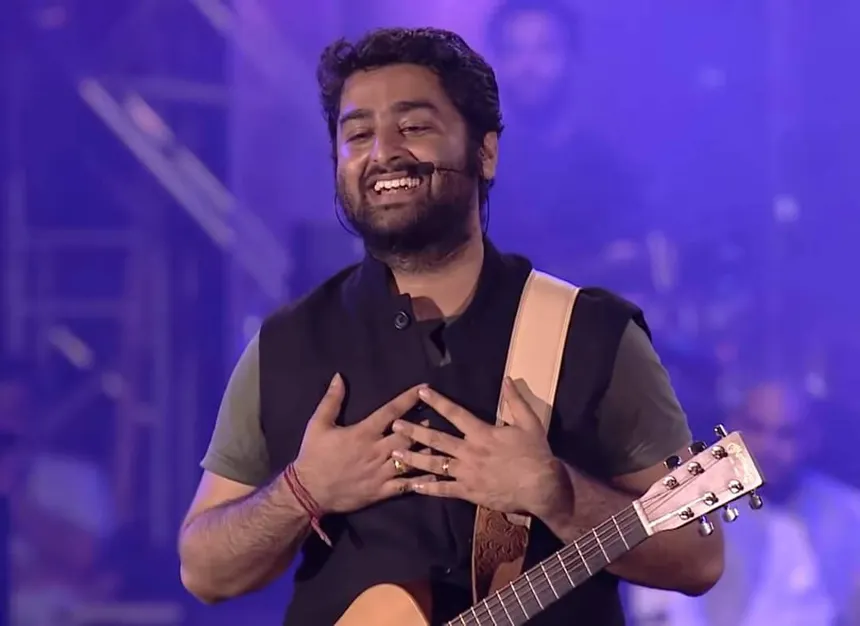
The Indian film music industry experienced a seismic shock on January 27, 2026, when Arijit Singh, arguably the most prolific and celebrated playback singer of contemporary Bollywood, announced his decision to step away from film playback singing. This announcement, made through his personal social media account on the platform X (formerly Twitter), sent ripples of disbelief and melancholy through millions of fans worldwide who have grown to associate his soulful voice with some of the most memorable romantic ballads and emotional compositions of the past decade.
The Announcement That Shook Bollywood
On a Tuesday evening that would become historic in the annals of Indian cinema music, Arijit Singh took to his private X account to share news that many found difficult to process. In a heartfelt message that combined gratitude with finality, the singer penned words that would mark the end of an era in Bollywood playback singing. His announcement was simple yet profound, carrying the weight of a decision that had been brewing in his mind for considerably longer than most would have imagined.
The singer began his message with warm New Year greetings, extending his wishes to all his listeners before delivering the news that would dominate entertainment headlines for days to come. He expressed deep gratitude for the overwhelming love and support he had received throughout his journey as a playback vocalist, acknowledging that his success was intrinsically linked to the affection showered upon him by music lovers across generations. With characteristic humility, he stated that he would no longer be accepting new assignments as a playback singer, effectively calling it off and bringing closure to what he described as a wonderful journey.
The timing of this announcement was particularly striking, coming just days after the release of his latest composition, “Maatrubhumi,” featured in Salman Khan’s highly anticipated film “Battle of Galwan”. This song, along with two other recent releases-“Gehra Hua” and “Ghar Kab Aaoge”-were still resonating with audiences when the news broke, making the announcement even more unexpected and poignant for fans who were still savoring these fresh musical offerings.
Clarifications and Future Commitments
Understanding that such a major announcement would naturally lead to speculation and questions, Arijit Singh was quick to provide clarifications that would help his fans and industry colleagues understand the nuances of his decision. In a follow-up post that appeared shortly after his initial announcement, he addressed what would happen to his pending professional commitments and future relationship with music.
The singer made it abundantly clear that while he was stepping back from accepting new playback singing assignments, this did not signify the end of his musical journey altogether. He emphasized that divine grace had been exceptionally kind to him throughout his career, and he remained, at his core, an ardent admirer of quality music. His future plans, he revealed, would involve continued learning and exploration of music on his own terms, albeit as what he humbly referred to as “a small little artist”.
Addressing concerns about projects already in the pipeline, Arijit assured industry stakeholders and fans that he would honor all existing commitments. He specified that he still had several pending assignments that required completion, and he intended to finish them all. This meant that listeners could expect some releases featuring his voice throughout 2026, even though these would be from previously recorded material rather than new projects undertaken after his announcement.
The Multiple Reasons Behind the Decision
As speculation mounted regarding what could have prompted such a dramatic career shift at what many considered the zenith of his success, Arijit Singh took it upon himself to provide detailed explanations. In subsequent posts and interactions, he revealed that his decision was not the result of a single incident or reason but rather a confluence of multiple factors that had been accumulating over an extended period.
One of the primary reasons he cited was his inherent tendency toward creative restlessness and boredom with monotony. The singer candidly admitted that he tends to lose interest in repetitive patterns rather quickly, which explained why he frequently experimented with arrangements of the same songs during live performances. This constant need for variation and innovation in his stage renditions was symptomatic of a larger creative appetite that craved fresh challenges and unexplored musical territories. With refreshing honesty, he stated that he had simply grown weary of the established pattern and needed to explore different forms of music to truly feel alive as an artist.
Another significant factor he mentioned was his anticipation and excitement about the emergence of new vocal talent in the industry. Arijit expressed a genuine desire to hear fresh singers rise to prominence, voices that would provide him with real motivation and inspiration. This revelation showcased his magnanimous approach to the industry-rather than viewing new talent as competition, he saw them as sources of rejuvenation for the entire musical ecosystem. His statement reflected the mindset of an artist who had achieved everything there was to achieve in his domain and was now ready to step aside and make room for the next generation while pursuing his own evolutionary path.
The singer also revealed that this decision had been percolating in his mind for quite some time. He had been contemplating this major career transition for several years but had lacked the courage to take the final step. Now, having finally mustered the necessary resolve, he felt ready to embrace this change. This admission highlighted the internal struggle and deliberation that preceded his public announcement, indicating that this was not an impulsive decision made in haste but rather a carefully considered choice that aligned with his artistic and personal evolution.
Emotional Authenticity and Fan Interactions
As news of his announcement spread like wildfire across social media platforms, fans responded with a mixture of disbelief, sadness, and, in some cases, hope that this might be a temporary decision or perhaps even a playful statement. Some admirers questioned whether the singer was simply “jumping and playing with emotions” through his posts, unable to reconcile the news with their expectations of his continued presence in Bollywood soundtracks.
Arijit Singh responded to these doubts with sincerity and firmness. He categorically denied any intention to toy with people’s emotions, stating unequivocally that he would never want to play with anyone’s feelings in such a manner. His direct and earnest responses to fan queries demonstrated his respect for the audience that had supported him throughout his career. He wanted to ensure that his decision was understood as genuine and final, not a publicity stunt or attention-seeking maneuver.
Through these interactions, the singer revealed himself to be grounded and thoughtful, someone who understood the impact his decision would have on millions of listeners but remained committed to his chosen path nonetheless. His willingness to engage directly with fans and address their concerns spoke volumes about his character and the respect he held for those who had made his journey possible.
Return to Indian Classical Music Roots
Perhaps the most intriguing aspect of Arijit Singh’s announcement was his revelation about future musical pursuits. Far from abandoning music altogether, the singer articulated a clear vision for his next chapter-a return to Indian classical music, the foundation upon which all his training and expertise had been built. This announcement carried particular significance given that classical music represents the most rigorous and traditional form of Indian musical expression, requiring years of dedicated practice and continuous learning.
Arijit expressed his intention to go back to the roots of music-making, to start again from a place of fundamental musicality and tradition. This desire to reconnect with classical music suggested a yearning for artistic depth and intellectual challenge that the formulaic nature of contemporary film music could no longer provide. Indian classical music, with its complex ragas, intricate rhythmic patterns, and emphasis on improvisation and emotional depth, represented the kind of creative playground where an artist of his caliber could continue to grow and evolve.
The singer also mentioned his plans to create his own music, working on independent projects that would be released when he felt ready. This shift toward independent music production would give him complete artistic control, free from the commercial constraints and collaborative compromises that are inherent in film music production. He would be able to explore musical ideas at his own pace, experiment with fusion concepts, and present compositions that might not fit the conventional mold of Bollywood soundtracks but would satisfy his artistic soul.
With characteristic humor and enthusiasm, he concluded his explanation with the Hindi phrase “Ab aayega maza!!” (Now, there will be fun!), indicating his excitement about the adventures that lay ahead. This playful sign-off suggested that rather than viewing this transition as a loss or ending, he saw it as the beginning of an exciting new phase filled with creative possibilities and artistic liberation.
The Journey That Was: From Aashiqui 2 to Industry Dominance
To fully appreciate the magnitude of Arijit Singh’s decision, it is essential to reflect on the remarkable journey that brought him to this pivotal moment. His rise to prominence can be traced back more than a decade to Mohit Suri’s romantic drama “Aashiqui 2,” released in 2013. The film’s soundtrack, particularly songs like “Tum Hi Ho” and “Chahun Main Ya Naa,” became cultural phenomena, and Arijit’s voice became synonymous with contemporary romantic expression in Hindi cinema.
Following the breakthrough success of Aashiqui 2, Arijit Singh became the go-to voice for filmmakers seeking emotional depth and romantic appeal in their soundtracks. His versatility allowed him to traverse different moods and genres with equal ease, from the exuberant energy of songs in “Yeh Jawaani Hai Deewani” to the soul-crushing melancholy of tracks in “Ae Dil Hai Mushkil”.
Throughout the 2010s and into the 2020s, scarcely a mainstream Hindi film was released without featuring his voice in at least one song. His collaborations with composers like Pritam, Amit Trivedi, A.R. Rahman, and Vishal Bhardwaj produced countless chartbusters that dominated radio airwaves, streaming platforms, and wedding playlists alike. Films such as “Tamasha,” “Airlift,” “Kabir Singh,” “Raabta,” and numerous others benefited immensely from his vocal contributions, with many songs becoming more popular than the films themselves.
Arijit’s distinctive vocal quality-characterized by its emotional rawness, technical precision, and ability to convey vulnerability-resonated deeply with listeners across age groups and geographical boundaries. His singing style, which combined classical training with contemporary sensibility, allowed him to interpret lyrics with nuanced emotional understanding that made each song feel personal and authentic. This unique ability to connect with listeners on an emotional level transformed him from merely a successful singer into a cultural icon whose voice became the soundtrack to millions of love stories, heartbreaks, and life moments.
Impact on the Bollywood Music Industry
Arijit Singh’s departure from playback singing leaves a significant void in the Bollywood music industry, one that cannot be easily filled. Over the past decade-plus, he had become not just a singer but a brand unto himself, with his name attached to a project often serving as a guarantee of musical quality and commercial viability. Music directors specifically composed songs keeping his vocal range and emotional delivery in mind, and filmmakers understood that having an Arijit Singh song in their film could significantly enhance its appeal.
The economic implications of his decision are substantial. Playback singing fees for top artists can be considerable, and Arijit’s involvement in a project added value not just through his performance but through the promotional advantage his name brought to the film. Producers and music labels had come to rely on his voice as a reliable element in their marketing strategy, particularly for romantic and emotional films targeting young audiences.
Beyond commercial considerations, his departure raises questions about the future direction of Hindi film music. Arijit Singh represented a bridge between traditional musical values-emphasizing melody, emotion, and vocal skill-and contemporary production aesthetics. His success had encouraged a certain approach to song composition and recording, one that prioritized emotional authenticity over purely commercial considerations. His absence may lead to shifts in how music directors approach composition and whom they choose to interpret their work.
However, as Arijit himself noted, his departure also creates space for new voices to emerge and establish themselves. The Indian music industry has always possessed tremendous talent, and numerous capable singers have been waiting in the wings for opportunities to showcase their abilities. His exit may accelerate the rise of the next generation of playback singers, leading to greater diversity in vocal textures and interpretative approaches in film music.
The Evolution of Playback Singing in India
To understand Arijit Singh’s significance and the impact of his departure, one must consider the historical evolution of playback singing in Indian cinema. The tradition began in the 1930s and reached its golden age during the 1950s through 1970s with legendary voices like Lata Mangeshkar, Asha Bhosle, Mohammed Rafi, Kishore Kumar, and Mukesh. These artists defined the sound of Hindi cinema for generations, creating a legacy that subsequent singers would strive to honor and build upon.
The 1990s and early 2000s saw the emergence of singers like Kumar Sanu, Udit Narayan, Sonu Nigam, and Shreya Ghoshal, who adapted the classical playback tradition to more contemporary sensibilities. They maintained the emphasis on melody and emotional expression while incorporating modern production techniques and global musical influences. This period represented a transition phase where traditional values met evolving audience preferences and technological advancements in music production.
Arijit Singh’s arrival in the 2010s represented another evolutionary step. He brought a more intimate, vulnerable vocal style that matched the changing nature of Hindi film storytelling. As cinema became more realistic and character-driven, moving away from larger-than-life melodrama, Arijit’s understated emotional delivery proved perfect for the moment. His voice didn’t overpower the narrative; instead, it enhanced the emotional truth of scenes and characters.
His departure now opens questions about what comes next in this evolution. Will the industry move toward greater diversity of vocal styles, with multiple singers sharing the space Arijit once dominated? Will music directors experiment with unconventional voices and approaches? Or will another singular talent emerge to define the sound of the next decade? These questions will shape the future of Bollywood music in the post-Arijit era.
The Business of Bollywood Music
The commercial ecosystem of Bollywood music has undergone dramatic transformation over the past two decades, and Arijit Singh’s career trajectory mirrors and influenced many of these changes. The shift from physical album sales to digital streaming has fundamentally altered how music generates revenue and how success is measured. In this new landscape, Arijit’s songs consistently topped streaming charts, generating millions of plays that translated into substantial royalties for rights holders.
Music labels and film producers recognized his commercial value early and often structured deals specifically to secure his participation in soundtracks. His involvement could significantly impact a film’s promotional strategy, with music launches becoming major events due to his participation. Songs featuring his voice would often be released as the lead singles from albums, serving as the primary marketing tool to generate buzz for upcoming films.
The economics of playback singing also evolved during his tenure at the top. While exact figures are typically kept confidential, industry insiders estimate that leading playback singers command fees ranging from several lakhs to crores of rupees per song, depending on the project’s budget and commercial expectations. Beyond initial recording fees, singers also earn royalties from various platforms and public performances, creating multiple revenue streams from successful tracks.
Arijit’s concerts and live performances represented another significant revenue source, both for himself and for the broader entertainment ecosystem. His shows regularly sold out venues across India and internationally, wherever Indian diaspora communities existed. These performances allowed fans to experience his music live and provided him with direct connection to audiences outside the mediated space of recorded music. Tickets for his concerts commanded premium prices, and organizers could reliably expect strong attendance based on his name alone.
His decision to step away from playback singing will undoubtedly impact these commercial dynamics. Music labels will need to diversify their roster of preferred singers, potentially leading to more competitive opportunities for emerging talent. Film producers will need to adjust their marketing strategies, no longer able to rely on the automatic attention an Arijit Singh song would generate. However, his ongoing work in independent music and classical performances will likely continue generating commercial returns, albeit through different channels and business models.
Technical Excellence and Vocal Artistry
What distinguished Arijit Singh from many of his contemporaries was not just his commercial success but the technical excellence underlying his performances. His training in Hindustani classical music provided him with a comprehensive toolkit of vocal techniques that he deployed with precision and artistry in his film work. His command over breath control allowed him to sustain long phrases without strain, creating flowing melodic lines that seemed effortless even when technically demanding.
His understanding of ornamentation-the use of gamaks, meends, and other embellishments characteristic of Indian classical singing-enabled him to add emotional texture to melodies without overwhelming them. He employed these techniques judiciously, using them to highlight emotionally significant moments in songs rather than as constant displays of technical prowess. This restraint demonstrated musical maturity and understanding of how ornamentation serves melody rather than substituting for it.
His tonal quality possessed distinctive characteristics that made his voice instantly recognizable. The slight huskiness in his timbre added a quality of vulnerability and authenticity to his performances, making even studio-produced songs feel intimate and personal. He could modulate this quality depending on the song’s requirements, occasionally brightening his tone for more upbeat numbers while maintaining the core characteristics that defined his sound.
Pitch accuracy represented another area of technical strength. Throughout his extensive discography, Arijit maintained impeccable intonation even in complex melodic passages, rapid ornamental phrases, and challenging intervals. This precision, combined with his expressive abilities, allowed him to serve the composer’s vision while adding his interpretative stamp to each performance.
His rhythmic sense and ability to phrase melodies expressively demonstrated deep musicality beyond mere technical competence. He understood how to use rubato-slight speeding up or slowing down of tempo-to enhance emotional impact, how to place syllables within rhythmic frameworks for maximum effect, and how to build phrases that created satisfying musical arcs. These subtle aspects of musicianship often go unnoticed by casual listeners but profoundly affect the emotional impact of performances.
The Role of Technology in Modern Playback Singing
Arijit Singh’s career unfolded during a period of rapid technological advancement in music production, and his work both benefited from and adapted to these changes. The transition from analog to digital recording had been completed by the time he entered the industry, but ongoing improvements in recording technology, audio processing, and production techniques continued to shape how playback singing functioned.
Modern digital audio workstations allowed producers to edit performances with unprecedented precision, compiling the best takes from multiple recordings and correcting minor imperfections through pitch correction software and other tools. While purists sometimes criticize such interventions, they enabled singers to take creative risks during recording sessions, knowing that small technical errors could be addressed in post-production while preserving the emotional authenticity of performances.
Auto-tune and pitch correction technologies became increasingly sophisticated during Arijit’s career, capable of subtle corrections that preserved natural vocal character while ensuring technical perfection. However, singers of Arijit’s caliber typically required minimal such intervention, as their technical proficiency meant initial recordings captured desired performances with little need for correction. The availability of these tools nonetheless changed industry standards and listener expectations regarding technical perfection in recorded music.
The rise of streaming platforms fundamentally altered how audiences consumed music and how success was measured. Rather than waiting for films’ theatrical releases to hear full soundtracks, listeners could access songs immediately upon release through platforms like Spotify, Apple Music, Gaana, and JioSaavn. This immediacy created new opportunities for songs to become popular independently of their source films’ success, sometimes even overshadowing the movies themselves.
Social media platforms like YouTube, Instagram, and earlier TikTok created additional avenues for music promotion and consumption. Song clips went viral, amateur covers proliferated, and fans engaged with music in interactive ways impossible in previous eras. Arijit’s songs frequently became the soundtrack for user-generated content, extending their reach and cultural impact far beyond traditional consumption patterns.
Arijit Singh’s Influence on Contemporary Singers
Beyond his direct contributions to film soundtracks, Arijit Singh’s impact can be measured through his influence on younger and emerging singers who studied his technique and sought to emulate his success. His style became a template that many aspiring playback singers attempted to replicate, sometimes successfully and sometimes to their detriment when imitation replaced the development of individual artistic identity.
Music reality shows and singing competitions saw numerous contestants performing Arijit Singh songs, using his versions as benchmarks against which to measure their abilities. Judges often referenced his interpretations when providing feedback, and successfully performing an Arijit Singh song with appropriate emotional nuance became a rite of passage for serious contestants. This proliferation of his music in competitive contexts further cemented his status as the defining voice of his generation.
Professional singers in regional film industries-Marathi, Bengali, Tamil, Telugu, and others-also felt his influence, as the style he popularized in Hindi cinema began affecting aesthetic preferences across Indian languages. While each regional industry maintained distinctive musical traditions, the success of Arijit’s emotional, intimate vocal style encouraged similar approaches in other linguistic contexts.
YouTube and social media enabled countless amateur and aspiring professional singers to post covers of his songs, creating a vast ecosystem of Arijit Singh interpretations ranging from faithful recreations to experimental reimaginings. This phenomenon demonstrated both his enormous popularity and the perceived accessibility of his style-many singers felt they could approach his songs, even if matching his emotional depth and technical finesse proved elusive.
The Intersection of Music and Personal Identity
For millions of listeners, Arijit Singh’s music became intertwined with personal identity and life narratives in profound ways. His songs provided soundtracks to courtships and relationships, becoming “our song” for countless couples. They offered solace during heartbreaks and disappointments, their melancholic beauty validating and expressing feelings that listeners struggled to articulate themselves.
Wedding season in India became synonymous with Arijit Singh songs, as couples chose his romantic ballads for sangeet ceremonies, wedding videos, and first dances. Event planners could rely on his music to create desired emotional atmospheres, knowing that most audiences would respond positively to familiar favorites. This ubiquity in life’s significant moments meant that his voice became permanently associated with memory and emotion for entire generations.
The parasocial relationship between Arijit and his fans-the one-sided emotional connection listeners felt with an artist they’d never met personally-manifested in intense loyalty and emotional investment. Fans followed his career closely, celebrated his successes, defended him against criticism, and felt genuine concern for his well-being. His announcement about stepping away from playback singing thus affected many listeners on a personal level, as though a friend rather than merely an entertainer had made a major life change.
This deep connection explains the intensity of reactions to his retirement announcement. Fans weren’t simply losing access to new songs by a favored singer; they were experiencing the end of a relationship that had been significant in their lives. The emotional responses-ranging from sadness and denial to understanding and support-reflected the genuine impact his music had made on people’s inner lives and emotional development.
Classical Music’s Contemporary Relevance
Arijit Singh’s announced return to Indian classical music highlights important questions about classical traditions’ role and relevance in contemporary India. Classical music, whether Hindustani or Carnatic, represents centuries of accumulated knowledge, aesthetic refinement, and spiritual-artistic exploration. Yet it has struggled to maintain popular relevance amid competition from various contemporary musical forms and entertainment options.
The classical music ecosystem in India includes formal teaching through the guru-shishya parampara, institutional education at universities and specialized academies, concert performances through organized sabhas and festivals, and increasingly, digital dissemination through streaming platforms and video channels. Despite this infrastructure, classical music remains a niche interest for most Indians, appreciated by dedicated aficionados but not widely consumed by mass audiences.
However, successful artists have demonstrated that classical music can find contemporary audiences when presented appropriately. Musicians like Pandit Hariprasad Chaurasia, Ustad Zakir Hussain, and the late Pandit Ravi Shankar achieved international recognition by performing traditional music while explaining its context and beauty to diverse audiences. Younger artists have leveraged social media and modern presentation formats to make classical music more accessible without compromising its integrity.
Arijit Singh’s entry into this space brings significant advantages. His established fame provides a platform to introduce classical music to audiences who might never otherwise encounter it. If he performs traditional ragas and compositions with the same emotional authenticity that characterized his film work, he could serve as a bridge bringing popular audiences toward appreciation of classical traditions. Conversely, his extensive experience with contemporary music might enable innovative fusion work that honors classical foundations while incorporating modern elements.
The Future of Indian Independent Music
The independent music scene in India has flourished in recent years, creating a viable alternative to the traditional film industry route for musical careers. Artists across genres-from indie rock and electronica to folk fusion and hip-hop-have built sustainable careers through streaming revenue, live performances, brand partnerships, and crowdfunding. This ecosystem offers creative freedom and direct artist-audience relationships that the hierarchical structure of film music production typically cannot provide.
Platforms like Spotify, Apple Music, Amazon Music, and homegrown services like Gaana and JioSaavn have democratized music distribution, allowing independent artists to reach audiences without requiring traditional gatekeepers like music labels or film producers. Video platforms have been particularly transformative, enabling artists to combine audio with visual elements and build fan communities through regular content release and interaction.
The independent music business model differs significantly from traditional playback singing. Rather than receiving upfront fees for specific projects, independent artists typically earn through streaming royalties (though per-stream payouts remain modest), merchandise sales, concert tickets, licensing deals for commercial use, and increasingly, fan subscriptions and direct support. Success requires not just musical talent but also entrepreneurial skills in marketing, audience building, and business management.
Arijit Singh’s entry into this space will likely influence its evolution. His presence may attract greater commercial attention and investment to independent music, potentially benefiting the entire ecosystem. Music labels and streaming platforms may invest more aggressively in acquiring and promoting independent content if artists of his caliber consistently release work outside traditional film industry structures. This could create enhanced opportunities for emerging independent artists who have struggled for visibility and financial sustainability.
Conclusion: A New Beginning
As Arijit Singh closes the chapter on his film playback singing career, he opens a new one filled with different possibilities and challenges. His decision, while surprising to many, reflects the mindset of a true artist-someone willing to forego continued success and financial rewards in pursuit of creative fulfillment and artistic growth. It takes considerable courage to step away from something at which one has achieved mastery and widespread acclaim, particularly when that success continues unabated.
His journey ahead into classical music and independent production will be watched with great interest by fans and industry observers alike. If his past work is any indication, he will approach these new endeavors with the same dedication, humility, and musical intelligence that characterized his film work. The “maza” (fun) he anticipates is likely shared by his supporters, who eagerly await the fruits of his renewed creative exploration.
While Bollywood soundtracks will miss his distinctive voice, the music world as a whole stands to gain from his evolution as an artist. His explorations in classical music may produce performances and recordings that introduce new audiences to traditional forms, while his independent work may push boundaries and create new paradigms for what Indian popular music can achieve.
The story of Arijit Singh is far from over; it is simply entering a new, potentially more personally fulfilling phase. For someone who has given so much joy to so many through his music, the collective wish of his admirers is surely that he finds the artistic satisfaction and creative joy he seeks in this next chapter of his musical journey. As he himself declared with characteristic enthusiasm: “Ab aayega maza!!”. Indeed, the real fun may just be beginning.














Promote our products and earn real money—apply today!
Turn traffic into cash—apply to our affiliate program today!
Join our affiliate program and start earning today—sign up now!
Invite your network, boost your income—sign up for our affiliate program now!