
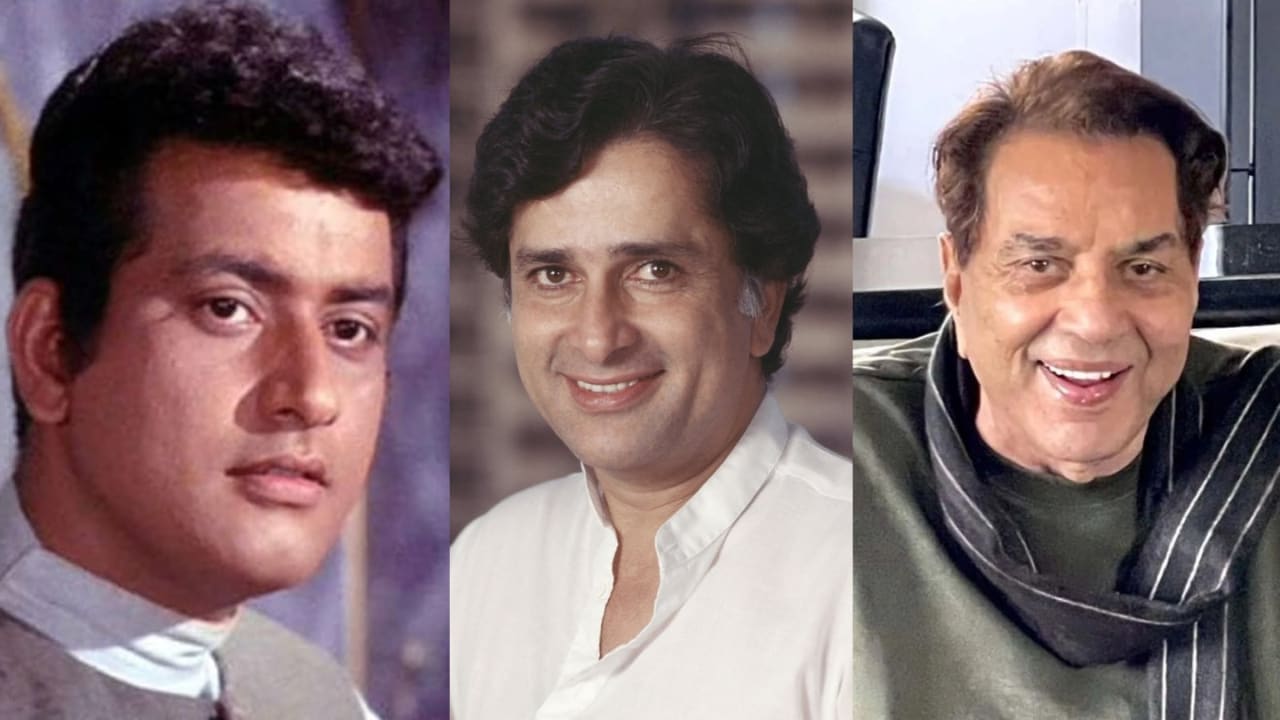
There is always a moment during the Academy Awards that transcends box office numbers, golden statuettes, and red carpet glamour. It is the moment the lights dim, the music softens, and the names and faces of those the world of cinema has lost appear on the screen – one by one, reverent and final. The In Memoriam segment is not about winners or nominations. It is about legacy, loss, and the quiet acknowledgment that cinema is, above all else, a deeply human art form. At the 98th Academy Awards held in Los Angeles on March 15, 2026, that segment became the subject of a deeply felt, globally resonant conversation – one that touched the hearts of millions of Indians who had grown up watching their screen heroes, only to find those heroes seemingly erased from a tribute that claimed to honor all of cinema.
When the broadcast In Memoriam segment concluded and four of India’s most celebrated screen icons – Dharmendra, Manoj Kumar, B Saroja Devi, and Kota Srinivasa Rao – were conspicuously absent from the televised tribute, social media erupted with grief, anger, and a sense of deep injustice. The hashtags trended. The outrage was palpable. And then, in the hours that followed, something quietly significant happened: the Academy of Motion Picture Arts and Sciences updated its official website to include these four titans of Indian cinema in its extended In Memoriam list, alongside more than 300 names from across the global film industry.
The inclusion, though celebrated, also raised a question that lingered long after the ceremony ended: why did some of the most iconic figures in the history of world cinema have to fight – even posthumously – for a place in Hollywood’s acknowledgment of their existence?
A Year of Profound Loss for Indian Cinema
The year 2025 was devastating for the Indian film industry. Within a span of months, the country lost legends who had collectively shaped not just Bollywood or regional cinema, but the very cultural imagination of an entire subcontinent. Dharmendra. Manoj Kumar. B Saroja Devi. Kota Srinivasa Rao. These were not peripheral figures. These were cornerstones.
Dharmendra, born Dharam Singh Deol on December 8, 1935, passed away on November 24, 2025. He was 89 years old. Few actors in the history of Indian cinema have achieved what Dharmendra achieved over a career spanning more than six decades. Known as “He-Man” for his rugged physicality and “The Great Lover” for his unmatched on-screen charisma, Dharmendra starred in well over 300 films. His performance in the 1975 blockbuster Sholay, where he played the lovable and volatile Veeru alongside Amitabh Bachchan’s Jai, remains one of the most iconic in all of cinema – not just Indian cinema, but world cinema. He was a man who could make you laugh, weep, and cheer all within a single scene. His films were not just entertainment – they were events, cultural touchstones that defined generations.
Manoj Kumar, born Harikrishna Giri Goswami on July 24, 1937, passed away in 2025 as well. He was perhaps even more than a film star – he was a symbol. Known reverently as “Bharat Kumar” for his deeply patriotic films, Manoj Kumar directed and starred in a body of work that became synonymous with Indian national identity. Films like Upkar (1967), Purab Aur Paschim (1970), Roti Kapda Aur Makaan (1974), and Kranti (1981) were not just box office successes. They were cinematic expressions of what it meant to be Indian – hopeful, proud, wounded, and resilient all at once. Manoj Kumar was a filmmaker with a conscience, an artist who used the medium of popular cinema to ask hard questions about inequality, patriotism, and social responsibility.
B Saroja Devi, the legendary actress from South India, passed away at her residence in Malleswaram, Bengaluru, in July 2025 at the age of 87. Known by the honorific title Abhinaya Saraswati – the Goddess of Expression – Saroja Devi was a force unlike any other in Indian cinema. She appeared in over 200 films across Tamil, Kannada, Telugu, and Hindi, making her one of the most versatile and widely recognized actresses of her era. She holds the distinction of being considered the first female superstar of Kannada cinema, a title that speaks to both the magnitude of her talent and the depth of her impact on the regional film landscape. Her expressive eyes, graceful screen presence, and remarkable emotional range earned her a place in the hearts of audiences across linguistic and cultural boundaries. She was a star who truly belonged to all of India.
Kota Srinivasa Rao, the beloved veteran Telugu actor and former politician, passed away on July 13, 2025, at the age of 83. Over a career that spanned decades, Kota Srinivasa Rao became one of the most recognizable character actors in Telugu cinema, known for his extraordinary ability to inhabit a role completely – whether it was a conniving villain, a bumbling comic relief, or a dignified elder. He brought authenticity and depth to every character he played, and his presence in a film was always a mark of quality. His passing left a void in Telugu cinema that will be felt for a long time to come.
The Oscars’ In Memoriam: What It Means and Why It Matters
To understand why the absence of these four names from the televised segment caused such widespread pain, it is important to understand what the Oscars’ In Memoriam segment represents. It is not merely a formality. It is the film industry’s most watched, most emotionally charged acknowledgment that the people who built cinema – the actors, directors, producers, writers, composers, and craftspeople – are remembered and honored by the institution that claims to represent the art form at its highest level.
The segment has existed in various forms since the early days of the Academy Awards, but it has grown over the decades into one of the most anticipated and emotionally weighty moments of the entire ceremony. For fans around the world, seeing their favorite film personality acknowledged in the In Memoriam segment is not just validation – it is a form of closure. It is the world saying: this person mattered. Their work mattered. We remember them.
This is why the apparent exclusion of Dharmendra, Manoj Kumar, B Saroja Devi, and Kota Srinivasa Rao from the televised broadcast – even as hundreds of others were acknowledged – felt so deeply personal to Indian audiences. It felt like erasure. It felt like the Academy, the most powerful institution in global cinema, was saying that the contributions of these icons to the art of film simply did not count on the world stage.
The reaction on social media was swift and fierce. Indian fans took to X (formerly Twitter), Instagram, Facebook, and every digital platform available to express their anguish. “Our icons get no recognition,” wrote one user, a sentiment that encapsulated the general mood. Others pointed out the irony of the omission – that Indian cinema is one of the largest film industries in the world, that Indian audiences are among the most passionate and engaged film-going populations on the planet, and that the contributions of Indian cinema to the global art form are undeniable. Yet, when it came to saying goodbye to some of its greatest practitioners, the world’s most famous film ceremony had apparently looked the other way.
The Extended List: A Quiet Acknowledgment
The Academy’s In Memoriam segment during the broadcast is, by necessity, a curated selection. With hundreds of film industry professionals passing away each year, it is simply not possible to include everyone in a televised tribute of finite length. The extended list published on the Academy’s official website is meant to be the comprehensive record – a digital space where all those honored can be found.
In the hours following the ceremony, as the outcry from Indian fans reached a crescendo, it emerged that Dharmendra, Manoj Kumar, B Saroja Devi, and Kota Srinivasa Rao had indeed been included in this extended online list. Their photographs appeared on the Academy’s official website alongside industry veterans from around the world. Also included in the list were Indian actress Jayasree Kabir and noted documentary filmmaker S. Krishnaswamy, adding further depth to the acknowledgment of Indian cinema’s losses.
The relief was genuine, but it was laced with ambiguity. The online list, however comprehensive, does not carry the same weight as the televised broadcast. It does not reach the same audience. It does not carry the same emotional resonance as seeing a beloved face appear on the screen during a globally watched ceremony. For millions of fans who had tuned in specifically hoping to see their heroes acknowledged, the online inclusion – however welcome – felt like a consolation rather than a celebration.
Still, the fact that the Academy did include these names in its official record is significant. It is an acknowledgment, however quiet, that the legacy of Dharmendra, Manoj Kumar, B Saroja Devi, and Kota Srinivasa Rao belongs not just to Indian cinema but to world cinema. It places them in the same company as the greatest practitioners of the art form the world over, which is exactly where they belong.
The 98th Academy Awards: A Night of Grief and Grandeur
The 98th Academy Awards was itself shaped in significant ways by grief. The producers of the show, including executive producer Raj Kapoor and producer Katy Mullan, had spoken openly in the lead-up to the ceremony about the unusual emotional weight the In Memoriam segment would carry this year. “We’ve had an incredibly tough year of losses,” Mullan told Variety ahead of the show. “So many cinema titans have passed away, and there are so many people who care so deeply for a lot of the people we’ll be tributing and honoring.”
The decision was made to extend the In Memoriam segment specifically to accommodate the extraordinary number of significant losses the film world had experienced. Kapoor elaborated on the meticulous care that goes into shaping the tribute. “It’s everything from graphic design to titles to placement, because it all matters,” he said. “Who follows who, where those beats happen – it’s very nuanced. The team that puts together the film is almost working all the way up to the show because there are so many changes and revisions.”
The emotional tone of the broadcast segment was set by a series of deeply moving tributes. Filmmaker Rob Reiner and his wife Michele Reiner, who both passed away in December, were given a particularly touching sendoff by their close friend Billy Crystal, who introduced a moving selection of Reiner’s most iconic work. The late screen legend Robert Redford was eulogized by Barbra Streisand, who also performed an emotional rendition of The Way We Were – the song from the 1973 film she co-starred in with Redford. Rachel McAdams delivered a tear-filled tribute to Diane Keaton and her fellow Canadian Catherine O’Hara, celebrating their extraordinary contributions to cinema. The segment also honored Robert Duvall, Diane Ladd, Claudia Cardinale, and dozens of others who had left the industry poorer by their passing.
It was a ceremony that wore its grief openly and without apology, a ceremony that understood the depth of what had been lost and tried, within the constraints of time and broadcast, to honor that loss with the seriousness it deserved.
Dharmendra: Six Decades of Unstoppable Screen Presence
To reduce Dharmendra to a single film or a single role would be to fundamentally misunderstand his significance. He was not defined by one performance – he was defined by an entire era. When he burst onto the Bollywood scene in the 1960s, Indian cinema was at a crossroads, searching for a new kind of hero – someone who combined rugged masculinity with genuine warmth, who could carry an action sequence and a romantic moment with equal conviction. Dharmendra was that hero, and then some.
His chemistry with Hema Malini – who would later become his wife – became the stuff of Bollywood legend. Films like Sholay, Seeta Aur Geeta, Tum Haseen Main Jawan, and Dream Girl captured the imagination of audiences across India and the world. His comic timing, often underrated because of his larger reputation as an action star, was extraordinary. His ability to make the audience feel safe, to project a kind of invincible goodness on screen, gave generations of Indian moviegoers a figure to root for with their whole hearts.
Beyond the films, Dharmendra was beloved for his humanity off screen – his generosity, his accessibility, his refusal to let fame alienate him from the ordinary people who loved him. He remained, to the end, the boy from Sahnewal who had fallen in love with cinema and never stopped giving back to it. His death in November 2025 closed a chapter not just in Bollywood history, but in Indian cultural history.
Manoj Kumar: The Artist Who Loved His Country
Manoj Kumar’s cinema was political in the deepest sense – not partisan or ideological in a narrow way, but political in the sense of being deeply engaged with the life of the nation, with its struggles, contradictions, and aspirations. He made films that asked what India owed to those who worked its fields, built its cities, and fought its wars. He made films that celebrated patriotism not as jingoism but as a humble, daily commitment to the idea of India.
His 1967 film Upkar, in which he played a farmer who sacrifices everything for his brother and his country, is considered one of the finest examples of socially conscious popular cinema in Indian film history. The song Mere Desh Ki Dharti from the film became a cultural anthem, played at Independence Day celebrations, school functions, and patriotic gatherings for decades after the film’s release. When Manoj Kumar was given the sobriquet Bharat Kumar – India’s Kumar – it was not a mere honorific. It was a recognition that his films and his person had become inseparable from the national imagination.
He was also a filmmaker of remarkable technical sophistication, one who understood how to use the tools of popular cinema – songs, melodrama, spectacle – in the service of ideas that mattered. His death in 2025 was mourned not just by film lovers but by anyone who had ever felt a lump in their throat watching one of his patriotic films and felt, for a moment, that they understood what it meant to belong to this complicated, beautiful country.
B Saroja Devi: The Goddess of Expression
In the galaxy of South Indian cinema, B Saroja Devi was a star of extraordinary magnitude. Born on July 15, 1938, in Mysore, she made her film debut as a teenager and quickly established herself as a performer of rare depth and charisma. Her ability to convey emotion – joy, sorrow, longing, fury – with nothing more than her eyes and the tilt of her head earned her the title Abhinaya Saraswati, and it was a title she more than justified over a career spanning several decades.
What made Saroja Devi particularly remarkable was her ability to transcend linguistic and regional boundaries at a time when such crossover was far more difficult than it is today. She was a superstar in Kannada, a superstar in Tamil, celebrated in Telugu, and respected in Hindi. She appeared alongside the greatest male stars of her era – MGR, Sivaji Ganesan, Rajkumar – and held her own against all of them, which was no small feat in an industry that was, like most industries of its time, deeply dominated by male stardom.
Her death at the age of 87 in July 2025 prompted an outpouring of grief across South India that reflected just how deeply she had embedded herself in the cultural fabric of the region. She was mourned as a mother figure, as a symbol of a golden age, as someone whose performances had accompanied people through the most formative moments of their lives. The Oscar’s acknowledgment of her legacy, however belatedly arrived, is a recognition that her art belongs to the world.
Kota Srinivasa Rao: The Master of the Supporting Role
In Indian cinema, the character actor often goes unsung. The lead stars receive the garlands, the box office credit, the fan clubs and the film jubilees. The character actor is the one who makes the lead’s performance possible, who fills the frame with texture and believability, who provides the comic relief that makes the drama breathable or the menace that makes the stakes real. Kota Srinivasa Rao was, in this sense, one of the most invaluable figures in Telugu cinema for over four decades.
Born on August 5, 1941, in Andhra Pradesh, Kota Srinivasa Rao appeared in an astounding number of films across Telugu, Tamil, Kannada, Malayalam, and Hindi cinema. He was equally at home playing the corrupt politician, the bumbling comic sidekick, the wise village elder, and the menacing antagonist. His range was extraordinary, and his work ethic was legendary – he was known for his professionalism, his preparation, and his ability to elevate every scene he appeared in.
His death on July 13, 2025, at the age of 83, was mourned across the Telugu-speaking world with a depth of feeling that spoke to how much he had meant to audiences over the years. He was not just a character actor – he was a beloved figure, a familiar face that generations of viewers had grown up with, someone whose presence on screen had felt like the presence of a trusted family member.
The Larger Question: Does Hollywood See Indian Cinema?
The controversy over the In Memoriam exclusion opened up a conversation that has been simmering for years – one about the relationship between Hollywood and Indian cinema, about how the global film industry sees, or fails to see, the contributions of non-Western cinemas to the art form.
India produces more films annually than any other country in the world. Indian cinema is watched by more people, in more languages, across more geographies than almost any other national cinema. The diaspora carries its films across continents. The music of Indian cinema has influenced global pop culture. The stars of Bollywood and regional cinema are recognized on streets from London to Lagos, from New York to Nairobi.
And yet, the relationship between the Academy and Indian cinema has always been one of curious distance. The Academy has, over the years, acknowledged Indian cinema in small and significant ways – Satyajit Ray’s Honorary Oscar in 1992, the wins by Slumdog Millionaire (a film made by a British director about India), the nomination and victory of RRR’s Naatu Naatu in the Best Original Song category in 2023. But the more granular, day-to-day acknowledgment of Indian cinema’s contributions – the kind that shows up in category nominations, in broadcast tributes, in the texture of how the Academy talks about world cinema – has been inconsistent at best.
The In Memoriam incident is, in many ways, a symptom of this inconsistency. The Academy’s online list is inclusive and comprehensive, and the fact that Indian film professionals were included in it is a genuine acknowledgment. But the gap between the online list and the broadcast segment raises uncomfortable questions about whose deaths are deemed important enough to be shown on television, whose legacies are considered worthy of broadcast-level acknowledgment.
These are not easy questions, and they do not have simple answers. Decisions about the broadcast In Memoriam segment involve considerations of time, narrative flow, the familiarity of names to a primarily English-speaking, American-centric broadcast audience, and the logistics of a live television event. But complexity is not the same as justification, and the fact remains that four of the most significant figures in the history of world cinema passed away in 2025, and millions of their fans did not see their faces on the screen during the ceremony that claims to honor the best of what cinema can be.
The Online Tribute: Better Than Nothing, But Not Enough?
When the Academy’s website was updated in the hours following the ceremony to include Dharmendra, Manoj Kumar, B Saroja Devi, Kota Srinivasa Rao, Jayasree Kabir, and S. Krishnaswamy, the response in India was mixed. There was gratitude – genuine, heartfelt gratitude that the Academy had made the effort to acknowledge these figures even if it had not done so during the broadcast. There was relief that the record, at least, would reflect their contributions.
But there was also a sense that the online inclusion, while meaningful, could not fully compensate for the absence from the broadcast. The broadcast is the ceremony. The broadcast is the moment that is watched live by millions, that is shared and discussed and remembered. The website is the archive. Important, yes. But not the same.
Indian film critics, journalists, and industry insiders weighed in with a range of perspectives. Some defended the Academy’s approach, noting the logistical challenges of the broadcast segment and pointing to the comprehensive nature of the online list as evidence of genuine inclusivity. Others were less forgiving, arguing that the exclusion of such major figures from the broadcast – even if their passing was perhaps less known to the American broadcast audience – reflected a persistent blind spot in Hollywood’s relationship with world cinema.
What emerged from the conversation, however, was something valuable: a renewed awareness, both within India and in the global film conversation, of just how extraordinary these figures were. In a strange way, the controversy drew more attention to the legacies of Dharmendra, Manoj Kumar, B Saroja Devi, and Kota Srinivasa Rao than a simple, uncommented inclusion in the broadcast segment might have done. It forced a reckoning, a moment of reflection on what Indian cinema has contributed to the world and how much that contribution deserves to be seen and celebrated.
A Legacy That Needs No Permission
Ultimately, the legacies of Dharmendra, Manoj Kumar, B Saroja Devi, and Kota Srinivasa Rao do not depend on the Academy’s acknowledgment for their validity or their durability. These are figures whose work has already passed the only test that truly matters: the test of time and the test of human hearts.
Sholay is still watched and rewatched by new generations of Indian film lovers who find in it something timeless – the friendship, the humor, the drama, the extraordinary landscape of Gujarat that became the mythical terrain of Ramgarh. Mere Desh Ki Dharti is still sung at Independence Day celebrations by children who may not know the name Manoj Kumar but feel, instinctively, the emotion the song carries. B Saroja Devi’s films are still available, still watched, still a source of joy and wonder for audiences across South India. Kota Srinivasa Rao’s performances are still there on screen, still making audiences laugh and shiver in equal measure.
The Oscars can acknowledge this legacy, or not. It is better when they do – it matters, it resonates, it sends a message about the value the world’s most prominent film institution places on diverse contributions to cinema. But the legacy itself is independent of that acknowledgment. It lives in the films, in the memories of the people who watched them, in the culture that was shaped and enriched by them.
What the 98th Academy Awards ultimately gave us, in its complicated, imperfect, controversy-laden In Memoriam story, was a moment of clarity: Indian cinema is not a footnote in the history of world cinema. It is one of the main texts. And the people who built it – the actors who gave their lives to it, the directors who shaped it, the character artists who enriched it – deserve to be remembered, celebrated, and honored with the fullness of attention their contribution demands.
The conversation has been started. Now it is up to the institutions that claim to represent world cinema – the Academy included – to ensure it does not need to be started again.
Rest in eternal light, Dharmendra. Rest in eternal light, Manoj Kumar. Rest in eternal light, B Saroja Devi. Rest in eternal light, Kota Srinivasa Rao. Indian cinema will carry you forward.














Tap into unlimited earning potential—become our affiliate partner!
Start sharing, start earning—become our affiliate today!