
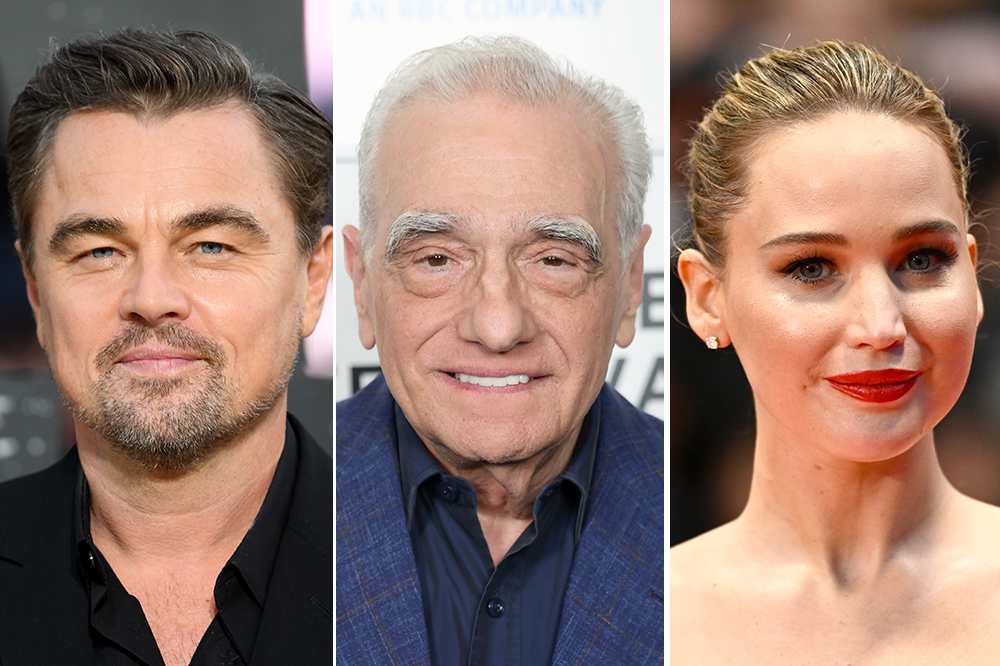
There are certain years in cinema that feel like earthquakes – years where the tectonic plates of culture shift beneath your feet and the movies playing in theatres simply cannot be ignored. 1994 gave us Pulp Fiction, The Shawshank Redemption, and Forrest Gump. 1999 offered Fight Club, The Matrix, American Beauty, and Eyes Wide Shut. 2007 quietly detonated with No Country for Old Men, There Will Be Blood, and Zodiac. And then there was 2019, which handed us Once Upon a Time in Hollywood, The Irishman, Parasite, and Joker – a year where prestige cinema reclaimed the conversation from every streaming algorithm and superhero committee.
2026 feels like that kind of year. It is stacking up to be a convergence of auteur ambition, franchise reinvention, and long-awaited returns so dense and so deliberate that film historians are already sharpening their pencils. Scorsese is back on set. Tarantino’s DNA runs through a massively budgeted Netflix spectacle. Denis Villeneuve is closing out the most acclaimed sci-fi trilogy of the modern era. The festival circuit is primed with works from Spielberg, Iñárritu, James Gray, and Terrence Malick. And blockbuster cinema is attempting something it rarely dares – genuine emotional weight inside commercial machinery.
This is not just a good year for movies. This is potentially a generational one.
Scorsese Returns: What Happens at Night
It has been nearly three years since Martin Scorsese completed his mammoth, three-and-a-half-hour masterpiece Killers of the Flower Moon – a film that received ten Oscar nominations and cemented his reputation as not merely a great director but the great director of his generation. In the time since, fans have watched the maestro produce, plan, and deliberate over what would come next, with multiple projects bubbling to the surface before fading again. Some projects were too expensive. Others were too close to his heart. A passion project about Jesus Christ lingered in development fog for years. And then, in September 2025, the announcement finally came.
What Happens at Night is the title. And if the cast list alone doesn’t give you chills, you may need to check your pulse.
Based on Peter Cameron’s deeply unsettling gothic novel of the same name, the film follows a couple who travel to a remote, snow-blanketed European hotel to visit their dying child. But the hotel is a place where reality bends, where other guests blur the lines between the living and the dead, and where grief becomes something more sinister than sorrow. It is a ghost story – but a ghost story filtered through the psychological and spiritual obsessions that have defined Scorsese’s career since Mean Streets. Think less Paranormal Activity and more Henry James. Think The Shining written by someone who had just read Dostoevsky.
Patrick Marber, the razor-sharp British playwright behind Closer and the Oscar-nominated screenplay for Notes on a Scandal, has adapted Cameron’s novel. The collaboration of Scorsese and Marber is already making critics nervous in the best possible way – two artists who excel at excavating the quiet violence of human relationships, now working on a story that wraps those themes inside the architecture of horror and grief.
The cast is nothing short of extraordinary. Leonardo DiCaprio returns to work with Scorsese for the first time since The Wolf of Wall Street in 2013 – a gap of over a decade that has only intensified the anticipation. DiCaprio, who won his long-overdue Oscar for The Revenant in 2016 and has since been extraordinarily selective with his projects, brings a quality to Scorsese’s films that few other director-actor partnerships can match. There is a particular kind of dangerous intelligence in DiCaprio’s performances for Scorsese – a burning need to be seen, admired, and destroyed simultaneously – and watching him take on a man dissolving in grief inside a supernatural hotel is the kind of artistic proposition that only comes along once a decade.
Opposite him is Jennifer Lawrence, who brings her own Oscar weight (Best Actress for Silver Linings Playbook) and something increasingly rare in contemporary cinema: raw, unperformed humanity. Lawrence has had a complicated relationship with Hollywood’s expectations, but when she is given material that matches her instincts, she is among the most compelling screen presences of her generation. The pairing of DiCaprio and Lawrence – who have never shared a screen before – is the kind of casting coup that publicists fantasize about and audiences will line up for.
The ensemble deepens even further. Patricia Clarkson, one of American cinema’s most criminally underused actors, joins the cast alongside the impeccable Jared Harris – whose work in Chernobyl and The Terror demonstrated a masterclass in conveying slow-burning dread – and Mads Mikkelsen, who brings a cold, magnetic European strangeness to any project he inhabits. Together, this ensemble promises a film of layered performances and suffocating atmosphere.
Production began in February 2026 in Prague – a city whose cobblestoned grimness and gothic architecture feel almost impossibly suited to the material. Apple Original Films and Studiocanal are co-financing the project, which means it will arrive with the kind of premium platform backing that guarantees wide accessibility without sacrificing creative ambition. Given Scorsese’s recent track record, Oscar season 2027 is already clearing its schedule.
What Happens at Night is not just Scorsese’s return to narrative filmmaking. It is potentially his plunge into entirely new genre territory – the supernatural – filtered through the philosophical and moral concerns that have occupied him since he first picked up a camera. It may be the most anticipated film of the decade. And it has only just begun shooting.
Tarantino’s DNA: The Adventures of Cliff Booth
Quentin Tarantino has long declared his intention to retire after directing ten films, a declaration that has cast a particular gravity over everything even tangentially connected to his creative universe. After the scrapped The Movie Critic project left fans in limbo, the conversation shifted – and shifted dramatically – to a film that Tarantino conceived, scripted, and championed, but ultimately handed off to another director in order to preserve his personal ten-film count.
The Adventures of Cliff Booth is that film. And it is, by any measure, an event.
Brad Pitt reprises the role of Cliff Booth – the enigmatic, philosophically cool stuntman and personal fixer to Rick Dalton (Leonardo DiCaprio) in Once Upon a Time in Hollywood. Pitt’s performance in that 2019 film won him the Academy Award for Best Supporting Actor, a recognition that felt less like industry validation and more like a collective acknowledgment that what he had done onscreen was something genuinely special. Cliff Booth is one of cinema’s great recent creations: a man of few words, vast competence, and deeply ambiguous morality, who moves through the world with the grace of someone who has stopped trying to understand it and simply decided to inhabit it fully.
The new film is a prequel, set in the years before the events of Once Upon a Time in Hollywood, and it imagines Cliff’s earlier life – the adventures, misadventures, and moral compromises that shaped the man we met on the screen in 2019. Tarantino wrote the screenplay himself, and his fingerprints are everywhere: the sharp, witty dialogue; the pulp-inflected plotting; the deep affection for a particular strain of American masculinity that is simultaneously celebrated and interrogated.
But here is what makes The Adventures of Cliff Booth genuinely fascinating as a cultural object: it is directed by David Fincher.
Fincher – the meticulous architect of Fight Club, Se7en, Zodiac, The Social Network, and Gone Girl – brings a precision and psychological darkness to his filmmaking that is simultaneously very different from Tarantino’s controlled chaos and strangely complementary to it. Where Tarantino works in mythologies and movie love, Fincher works in systems and obsessions. The combination of Tarantino’s script and Fincher’s direction promises something that might be the most purely cinematic entertainment of 2026: playful and sinister, nostalgic and ice-cold.
The budget is reported to be approximately $200 million – an extraordinary sum for what is, at its heart, a character-driven crime film. Netflix is backing the project after years of development challenges, and a theatrical release window is being targeted for summer 2026. The scale of the ambition suggests that both the streaming giant and the filmmakers view this as an event, not merely a content release.
Tarantino himself, meanwhile, continues to orbit the question of his final directorial project. He has spoken publicly about wanting his ten-year-old son to be old enough to understand what his father does before he makes his last film – a sentiment that is touching, personal, and has pushed the timeline for his own final directorial effort potentially into 2027 or beyond. He is also reportedly working on a stage play, which he has hinted could become his true farewell project. Whether The Adventures of Cliff Booth serves as a kind of stand-in cinematic legacy – Tarantino as authorial ghostwriter – remains one of the great unresolved questions of contemporary film culture. What is not in question is that Cliff Booth, riding again, is one of 2026’s most irresistible propositions.
Prestige Sequels Reimagined
2026 is, by the numbers, a year of sequels. But calling the most interesting entries in this category mere sequels misrepresents what they are attempting. The most anticipated among them are acts of closure, reinvention, and artistic escalation – sequels that their creators clearly intend as final statements.
Dune: Part Three
Denis Villeneuve’s Dune trilogy concludes on December 18, 2026, with the adaptation of Frank Herbert’s Dune Messiah – arguably the most challenging, morally complex, and deliberately disillusioning book in Herbert’s canon. Where Dune told the story of Paul Atreides rising to messianic power among the Fremen of Arrakis, Dune Messiah is the story of what that power costs – not only the man who holds it but the billions who die in the holy war fought in his name.
Timothée Chalamet returns as Paul Atreides, now years into his reign as Emperor of the Known Universe and increasingly trapped by the consequences of his own prophecy. Zendaya returns as Chani, whose refusal to accept the mythology that has consumed the man she loved gives the film its emotional spine. Florence Pugh, who delivered a spectacular breakout in Part Two as Princess Irulan, returns to navigate the treacherous political dimensions of an empire built on faith and violence.
Villeneuve’s two previous Dune films were among the defining cinematic achievements of the early 2020s – majestic, immersive, and uncompromising in their commitment to Herbert’s philosophical ambitions. Part Three is expected to be darker, smaller in some ways and larger in others, and profoundly interested in the costs of mythmaking. Filming wrapped in November 2025, which means the production is proceeding smoothly toward its December release.
The third Dune film will likely arrive as the centerpiece of the 2026 awards season – a serious, ambitious, visually breathtaking work from one of cinema’s most disciplined and thoughtful directors. It may also be the year’s most emotionally devastating film, depending on how faithfully Villeneuve pursues Herbert’s deliberate deconstruction of the hero archetype. Those who have read the novel know what awaits Paul Atreides. Those who have not are in for an extraordinary surprise.
Avengers: Doomsday
On the opposite end of the tonal spectrum – but no less consequential as a cultural event – sits Avengers: Doomsday, scheduled for release on May 1, 2026. Marvel’s long-gestating mega-crossover represents not just another chapter in the MCU’s Multiverse Saga but a genuine watershed moment for the franchise’s relationship with its own mythology.
The casting is staggering in its ambition. Robert Downey Jr. returns – not as Tony Stark, who died in Avengers: Endgame, but as Victor von Doom, one of Marvel Comics’ most iconic and intellectually formidable villains. Alongside him, Pedro Pascal joins as Reed Richards/Mister Fantastic, Vanessa Kirby as Sue Storm, and an ensemble that includes Chris Hemsworth, Tom Hiddleston, Florence Pugh, Anthony Mackie, Paul Rudd, Patrick Stewart, Ian McKellen, Kelsey Grammer, Alan Cumming, and Channing Tatum – a cast that essentially constitutes a who’s who of talent spanning three decades of superhero cinema.
What makes this more than just a box office inevitability is the creative ambition behind it. The Russo Brothers return to direct, having previously helmed Infinity War and Endgame – two of the highest-grossing films in cinema history. Their instinct for managing enormous ensembles while maintaining emotional coherence is unmatched in blockbuster filmmaking. And Downey’s return – as a villain rather than a hero – offers one of cinema’s most profound second acts: the beloved Tony Stark transformed into the face of a new, darker threat.
Whether Avengers: Doomsday will be a genuinely great film or merely a spectacular one remains to be seen. But it will be unmissable. And in 2026, unmissable counts for a great deal.
The Festival Circuit Awakens
While commercial cinema builds toward its summer and winter peaks, the festival circuit – that network of Cannes, Venice, Telluride, and Toronto that serves as cinema’s intellectual heartbeat – is shaping up to deliver one of its most star-studded and ambitious lineups in years.
The Cannes Film Festival’s 79th edition runs from May 12 to 23, 2026, with the official lineup to be announced on April 9. But the whisper network has been working overtime, and the names circling the Palais des Festivals read like a fantasy lineup assembled by the most demanding cinephile you know.
Spielberg’s Disclosure Day
Steven Spielberg, who has rarely made a film that wasn’t either beloved or at least ferociously discussed, arrives at Cannes with Disclosure Day – a UFO film starring Emily Blunt and Josh O’Connor. Spielberg, of course, is no stranger to extraterrestrial cinema: Close Encounters of the Third Kind and E.T. remain two of the defining works in the genre. But Disclosure Day reportedly takes a different approach – less wonder, more institutional dread, more interested in what governments and systems do when confronted with the genuinely inexplicable.
Emily Blunt is one of contemporary cinema’s most versatile and reliably compelling performers, and her pairing with Spielberg – for whom she has not previously worked – is one of the year’s most intriguing creative unions. Josh O’Connor, who delivered an extraordinary performance in Challengers and has been on one of the most impressive winning streaks of any young actor working today, adds further credibility.
Iñárritu’s Digger
Alejandro González Iñárritu, the Mexican director behind Birdman, The Revenant, and Babel, returns with Digger – a film that reportedly stars Tom Cruise and explores themes of obsession, excavation, and buried history. Iñárritu is one of cinema’s great maximalists, a filmmaker who works at the intersection of spectacle and spiritual crisis, and his partnership with Cruise – an actor whose late-career turn toward genuinely dangerous physical performance art has become its own cultural phenomenon – promises to be incendiary.
James Gray’s Paper Tiger
James Gray, who has been one of American cinema’s most consistently underrated directors for two decades, arrives with Paper Tiger – a New York-set crime drama starring Adam Driver, Miles Teller, and Scarlett Johansson. The film follows two brothers whose pursuit of the American Dream pulls them into conflict with the Russian mafia. Gray has previously debuted five films at Cannes, and his producers have described Paper Tiger as his finest work to date. Given that his filmography includes We Own the Night, The Immigrant, Ad Astra, and Armageddon Time, that is not a claim made lightly.
Adam Driver, who has been steadily building one of the most impressive and diverse filmographies of any actor working today – BlacKkKlansman, Marriage Story, House of Gucci, Ferrari, The Last Duel – brings his particular quality of barely contained intensity to a Gray film, which is exactly the kind of environment where that intensity can be most productively exploited.
Joel Coen’s Jack of Spades and Other Auteur Returns
Joel Coen, working without brother Ethan as he did on The Tragedy of Macbeth, is circling the festival circuit with Jack of Spades – details remain closely guarded, but the Coen sensibility applied to whatever material he has chosen is reason alone for anticipation.
Terrence Malick, that most elusive and ethereal of American filmmakers, has a film – reportedly a 3.5-hour cut titled The Way of the Wind – that is once again circling consideration. Malick’s relationship with the festival circuit has always been complicated and glorious: he won the Palme d’Or at Cannes for The Tree of Life in 2011 and has since made films of increasing formal radicalism. The Way of the Wind, if it makes its way to Cannes or Venice, will be the most formally demanding and spiritually ambitious film of the year.
Danish director Nicolas Winding Refn – whose Drive, Only God Forgives, and Neon Demon established him as one of cinema’s most visually arresting provocateurs – reportedly brings Her Private Hell to the festival circuit, featuring a cast that includes Sophie Thatcher and Melton. And French screenwriter Arthur Harari, who won the Oscar for his Anatomy of a Fall co-screenplay, steps into the director’s chair more fully with Unknown, starring Léa Seydoux.
Reinvented Franchises and Long-Awaited Returns
Beyond the obvious prestige tier, 2026 features several franchise returns that carry genuine emotional and artistic weight.
The Devil Wears Prada 2 arrives nearly two decades after the original, reuniting Meryl Streep and Anne Hathaway in a world that has fundamentally transformed – both the fashion industry and the power dynamics between the women who inhabit it. Whether the sequel can capture the sharp, witty cruelty of the original while saying something new about feminism, ambition, and reinvention in the age of social media will be one of the year’s most fascinating questions.
28 Years Later: The Bone Temple opened January 2026, bringing Danny Boyle back to the viral-infected world he created with 28 Days Later in 2002 – a world that essentially invented a template for modern zombie cinema. Set nearly three decades after the original outbreak, the film explores what a society that has learned to live alongside intermittent viral horror actually looks like – a premise that, post-pandemic, carries resonances that no one could have anticipated when the original was conceived.
Practical Magic 2 reunites Sandra Bullock and Nicole Kidman as the Owens sisters, exploring a new generation of witches grappling with the eternal price of magic – a film that, for all its franchise-sequel scaffolding, is primarily being sold on the appeal of watching two of Hollywood’s most enduring stars reignite a chemistry that delighted audiences in 1998.
Michael Mann’s Heat 2, meanwhile, promises to be one of the most technically accomplished crime films in recent memory – a direct sequel to Mann’s 1995 masterpiece, now starring Leonardo DiCaprio (who moves straight onto the project after completing What Happens at Night with Scorsese). Mann’s Heat is widely regarded as among the finest crime films ever made, and his return to that world – with DiCaprio stepping into a role that expands the film’s universe – will be scrutinized with extraordinary intensity by cinephiles who hold the original as a touchstone.
The Bigger Picture: What 2026 Means for Cinema
Step back from the individual films and consider what 2026 represents structurally for the film industry.
After years in which the conversation was dominated by the streaming wars, by pandemic-era theatrical closures, by the writers’ and actors’ strikes of 2023, and by increasingly panicked studio consolidation, 2026 feels like a recalibration. The films generating the most genuine excitement are not franchise entries assembled by committee – they are singular visions from directors with unambiguous artistic identities. Scorsese adapting a gothic novel about grief and the supernatural. Villeneuve closing out a sci-fi trilogy with philosophical courage. Spielberg returning to the extraterrestrial themes that first made him famous but approaching them with the gravity of a director who has spent fifty years thinking about power and knowledge. Iñárritu and Tom Cruise in conversation about obsession. Fincher and Tarantino in creative dialogue across a prequel that neither of them needed to make.
There is also something notable about the festival landscape. Cannes 2025 was defined by the afterlife of Anora – Sean Baker’s Palme d’Or winner went on to win five Academy Awards and reignited the argument for theatrical, artist-driven cinema in an age of content. The 2026 festival lineup, from what is currently known, is even more stacked with auteurs whose ambitions extend well beyond the streaming queue. This suggests that the institutional apparatus of prestige cinema – the festivals, the awards bodies, the critical conversation – is actively working to reassert the value of filmmaking as art rather than product.
It is also worth noting the remarkable concentration of talent around a small number of platforms. Apple Original Films continues to be the most interesting financier in Hollywood – a company with deep pockets and, apparently, genuine artistic tolerance, funding Scorsese’s ghost story with the same seriousness it brings to every project it backs. Netflix, meanwhile, is spending $200 million on The Adventures of Cliff Booth, a decision that would have seemed incomprehensible ten years ago but now represents the streaming giant’s most credible bid for prestige cinema credibility.
The audience, too, has shifted. The phenomenon of Dune: Part Two in 2024 – a three-hour, philosophically demanding science fiction film that became a genuine box office sensation – demonstrated that contemporary audiences are capable of meeting ambitious cinema on its own terms when given the opportunity. The 2026 slate feels, in many ways, like the industry’s response to that demonstration: a bet that audiences are hungry not just for comfort and spectacle, but for films that challenge, disturb, and endure.
Looking Ahead: The Oscar Race Begins Now
It is March 2026, which means the Oscar season is still nine months away. But the shape of the race is already discernible.
What Happens at Night – depending on its release date, which has not yet been confirmed – will almost certainly be positioned as a major awards contender. Three Oscar winners at the top of the cast, a legendary director, literary source material, and a supernatural gothic atmosphere are exactly the ingredients that the Academy has historically rewarded. The question is whether Scorsese, in his late seventies, will make a film that looks forward or backward – and whether that distinction will matter to voters who have spent forty years being awed by him.
Dune: Part Three has the technical awards locked. Greig Fraser, who won the Oscar for cinematography for Dune: Part One, and Hans Zimmer, whose score for that film was among the most distinctive and immersive of the decade, are both expected to return. The film will almost certainly receive nominations for visual effects, sound, production design, and costume. Whether it can break through into the picture and director categories – which the previous two Dune films approached but did not fully penetrate – will depend on the strength of Villeneuve’s culminating vision.
The Adventures of Cliff Booth is the wildcard. Fincher’s films have historically been Oscar-adjacent – The Social Network won three, Gone Girl was strangely overlooked, Mank received multiple nominations. A Tarantino-scripted film directed by Fincher, starring Brad Pitt, and backed by $200 million in production resources is exactly the kind of film that could arrive at the Venice Film Festival in September, collect extraordinary reviews, and arrive on Netflix in time to be the thing everyone is talking about in December.
And then there is the festival circuit – Cannes, Venice, Telluride, Toronto – which may produce the year’s actual best picture winner from a corner of the slate that no one is currently discussing. It would not be the first time. It would not even be unusual. Some of the finest films ever made arrived as complete surprises in the middle of a calendar already crowded with anticipation. 2026 has plenty of room for that kind of revelation.
Conclusion: Cinema’s Great Reckoning
Cinema in 2026 is not in crisis. It is in conversation – a loud, ambitious, sometimes contradictory conversation between its commercial and artistic instincts, between its blockbuster machinery and its auteur traditions, between nostalgia and reinvention.
Scorsese going gothic. Tarantino’s world expanding without Tarantino at the helm, through the cold precision of David Fincher’s lens. Villeneuve closing the curtain on the greatest science fiction trilogy of the 21st century so far. Spielberg returning to the stars. Iñárritu and Gray reminding us that American cinema at its best is still capable of seriousness, beauty, and moral complexity.
The films of 2026 will not all be great. Some will disappoint. Some will overcorrect. Some of the most anticipated projects will arrive as the year’s most interesting failures, and some overlooked title from a Cannes sidebar will turn out to be the best film of the year. That is the nature of cinema, and it is what makes it endlessly worth caring about.
What is certain is that 2026 is not a year for indifference. It demands attention. It demands the dark of a theatre, the commitment of two or three hours, and the willingness to be moved, disturbed, thrilled, and occasionally transformed. That is what the best cinema has always asked of us, and the films of 2026 are making that ask more insistently than any slate in recent memory.
Pay attention. The screen is alive again.













Sign up and turn your connections into cash—join our affiliate program!
Boost your income effortlessly—join our affiliate network now!
Promote, refer, earn—join our affiliate program now!
Share your link and rake in rewards—join our affiliate team!
Unlock exclusive rewards with every referral—enroll now!
Grow your income stream—apply to our affiliate program today!
Drive sales and watch your affiliate earnings soar!
Turn your network into income—apply to our affiliate program!
Earn up to 40% commission per sale—join our affiliate program now!