The Digital Revolution of Opinion Formation
Internet memes have transformed from silly cat pictures and inside jokes into one of the most potent forces reshaping how people think about politics, society, and culture. These bite sized pieces of digital content now influence elections, spark social movements, and fundamentally alter the landscape of public discourse. What began as harmless entertainment has morphed into a sophisticated tool for spreading ideas, mobilizing communities, and challenging traditional power structures.
The rise of memes as cultural and political agents reflects a broader shift in how information travels through society. Traditional media once served as gatekeepers, filtering what messages reached the public. Now anyone with a smartphone can create and distribute content that reaches millions within hours. This democratization of information has given memes an unprecedented ability to shape narratives, often faster and more effectively than conventional news outlets or political advertising.
Understanding the Anatomy of Political Memes
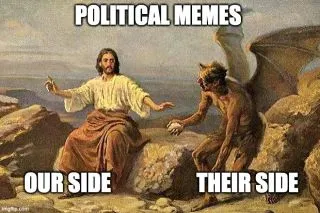
Political memes operate on multiple levels simultaneously. They combine visual elements, text, cultural references, and humor to create messages that resonate emotionally while conveying specific ideological positions. Research shows that memes predominantly circulate within political echo chambers, fostering increased engagement within ideologically homogenous groups while limiting exposure to opposing viewpoints. The emotional resonance of memes and their viral potential contribute significantly to their effectiveness in influencing political opinions and mobilizing support for political movements.
Unlike traditional political communication, memes thrive on brevity and impact. A single image with overlaid text can communicate complex political arguments, mock opposing viewpoints, or rally supporters around a cause. This compression of meaning into easily digestible formats makes memes particularly effective at penetrating information overload. People scrolling through social media feeds are far more likely to pause at a clever meme than read a lengthy political essay.
The psychological mechanisms behind meme effectiveness reveal why they work so powerfully. Studies indicate that memes with political content generate high levels of likes, shares, and comments within their respective political communities, further consolidating their reach. Political meme exposure is positively associated with online political expression and anger toward opposing candidates. This emotional dimension transforms memes from passive content into active catalysts for political engagement and polarization.
Memes as Tools of Cultural Commentary
Beyond politics, memes serve as mirrors reflecting cultural anxieties, aspirations, and transformations. They capture moments in time, distilling complex social phenomena into shareable formats that become part of collective consciousness. Memes have documented everything from pandemic experiences to social justice movements, creating an informal archive of how people actually felt during major historical moments.
Generation Z has particularly embraced memes as their primary mode of cultural expression. These digital natives use memes to construct meaning, build relationships, and express resistance to traditional forms of communication. Memes function as hybrid linguistic artifacts combining visual semiotics, humor, and intertextuality to construct group identity and express nuanced emotional states. For younger generations, fluency in meme culture signals cultural competence and membership in digital communities.
The cultural power of memes extends beyond entertainment into serious social commentary. Through humor and absurdity, memes address pressing issues like climate change, gender equality, racial justice, and mental health. By embedding serious concerns in humorous formats, memes make difficult topics approachable and allow people to voice dissent or solidarity without the risks associated with more formal political discourse. This capacity to smuggle serious messages inside jokes gives memes unique access to audiences who might otherwise tune out political content.
The Mechanics of Viral Spread
What makes a meme go viral involves complex interactions between content characteristics and audience psychology. Research on emotional contagion shows that people are more likely to share content that elicits high arousal emotions like excitement, amusement, anger, or anxiety. Memes that trigger these emotional responses spread faster than those evoking low arousal states like sadness or contentment.
The viral nature of memes also depends on their shareability within social networks. Memes work as social currency, providing opportunities for individuals to signal their values, humor, and group membership. Sharing a meme often implies membership in a specific digital subculture, while failing to understand a meme can mark someone as an outsider. This social dimension transforms meme sharing from simple content distribution into identity performance.
Platforms like Facebook, Twitter, and TikTok amplify meme spread through algorithmic recommendation systems. These algorithms prioritize content that generates engagement, creating feedback loops where successful memes reach exponentially larger audiences. However, this same mechanism contributes to echo chamber effects, where users primarily see memes reinforcing their existing beliefs. The result is a fragmented information landscape where different groups inhabit separate meme ecosystems with little overlap.
Echo Chambers and Confirmation Bias
Social media platforms are structured to capitalize on confirmation bias, the human tendency to seek information that confirms existing beliefs. Memes thrive in this environment because they typically reinforce rather than challenge the worldviews of those who share them. When people encounter memes aligned with their perspectives, they experience psychological satisfaction and are motivated to spread these memes further.
Echo chambers created by algorithmic curation mean that users predominantly see memes from one ideological perspective. Left leaning accounts flood with memes celebrating progressive causes and mocking conservative positions, while right wing accounts overflow with content supporting traditional values and attacking liberal policies. This segregation intensifies over time as algorithms learn user preferences and deliver increasingly partisan content.
The problem with meme driven echo chambers is that misinformation thrives in environments where critical thinking is diminished. When users only see posts they agree with, they become less likely to question false or misleading content. Memes can spread conspiracy theories, distorted facts, and propaganda with remarkable efficiency because their humorous format disarms skepticism. People share funny memes without fact checking them, allowing falsehoods to propagate under the guise of entertainment.
Memes in Election Campaigns
Political campaigns have recognized the power of memes and now actively incorporate them into communication strategies. During recent election cycles, major candidates have hired meme managers and partnered with content creators to shape online narratives. The 2024 presidential race saw both major campaigns embracing meme culture, creating official content and encouraging supporter generated memes.
Biden’s campaign adopted the Dark Brandon persona, reappropriating a right wing conspiracy meme that depicted him as a menacing force. By embracing and inverting this meme, Democrats transformed what was meant as an insult into a symbol of strength and accomplishment. The campaign even sold Dark Brandon merchandise, demonstrating how memes can translate into tangible political branding.
Trump’s campaign has long excelled at meme warfare, with supporters creating countless variations portraying him as powerful, heroic, or divinely chosen. These memes glorify Trump in over the top ways, depicting him leading armies, blocking out the sun like an eclipse, or vanquishing enemies. While absurd on their surface, these memes effectively communicate devotion to Trump and normalize his controversial statements and actions through humor.
Social Movements and Meme Activism
Memes have become essential tools for organizing and sustaining social movements. During protests and uprisings around the world, memes help coordinate action, spread information, and build solidarity among participants. Movements like Black Lives Matter, climate strikes, and farmer demonstrations have all leveraged meme culture to amplify their messages beyond traditional activist circles.
The 2020 Black Lives Matter demonstrations illustrated how memes educate people about systemic racism, police brutality, and ways to support the cause. Activists created memes explaining complex concepts like institutional racism or qualified immunity in accessible formats. These educational memes reached people who might never read academic articles or policy papers, dramatically expanding the movement’s intellectual reach.
Climate activism has similarly benefited from meme culture. Young activists created and shared memes about climate denial, corporate greenwashing, and government inaction. Satirical memes targeting corporations and politicians pressure them to address environmental concerns by exposing contradictions between their public statements and actual behaviors. The viral nature of these memes generates publicity that traditional advocacy campaigns struggle to achieve.
In regions with heavy censorship, memes serve as coded resistance. Dissent is disguised by humor, making criticism more powerful but safer for those living under authoritarian regimes. Activists use obscure references and layered meanings that resonate with insiders while flying under the radar of censors. This capacity for plausible deniability makes memes valuable tools for political expression in repressive environments.
The Dark Side of Memetic Warfare
While memes can promote positive social change, they also facilitate harmful activities including disinformation campaigns, extremist recruitment, and harassment. Memetic warfare refers to the strategic use of memes to spread propaganda, radicalize individuals, and push extremist agendas. Groups ranging from white nationalists to foreign influence operations have weaponized memes to manipulate public opinion.
Online platforms host threads where users share explicit instructions for using AI image generators to create racist, far right memes. These communities treat meme creation as ideological warfare, developing sophisticated strategies to spread extremist content while avoiding platform moderation. The humorous format of memes provides cover for hateful messages, allowing them to circulate more widely than explicit hate speech.
Deepfakes and AI generated memes represent an escalating threat to information integrity. As artificial intelligence tools become more accessible, bad actors can create convincing fake images, videos, and memes at scale. These synthetic media products blur lines between reality and fabrication, making it increasingly difficult for people to distinguish authentic content from manufactured propaganda. The combination of disinformation networks, AI generated memes, and deepfakes creates a volatile environment where manipulation of public opinion becomes dangerously easy.
Psychological Impact on Opinion Formation
Memes influence how people process information and form opinions in ways that differ fundamentally from traditional media consumption. The brevity and humor of memes bypass critical thinking processes, allowing messages to lodge in memory without triggering analytical scrutiny. This makes memes particularly effective at shaping gut level reactions and emotional responses that drive political behavior.
Research shows that exposure to political memes increases online political expression and participation, even when controlling for exposure to traditional political news. However, meme exposure also correlates with increased anger toward opposing candidates, suggesting that memes contribute to affective polarization where people dislike members of opposing political tribes. This emotional dimension makes memes powerful tools for mobilization but also for deepening societal divisions.
The impact of memes on political knowledge is more ambiguous. While memes can raise awareness about issues and candidates, they typically lack substantive policy information. Studies find that meme creators and sharers do not necessarily have higher political knowledge than other users. The emphasis on humor and emotional resonance often comes at the expense of factual depth, leading to situations where people feel strongly about issues they don’t fully understand.
Generational Differences in Meme Consumption
Different age groups relate to memes in distinct ways that reflect broader generational divides in media consumption and political engagement. Generation Z has grown up with memes as a native language, using them for everything from casual conversation to serious political discussion. For these young people, memes are not supplementary to communication but central to how they express ideas and emotions.
Millennials helped pioneer internet meme culture and remain active participants, though their relationship with memes often carries more nostalgia and self awareness. They remember when memes were simpler and less politicized, giving them perspective on how meme culture has evolved. Millennials frequently use memes to comment on aging, career struggles, and disillusionment with institutions.
Older generations often struggle to understand meme culture, viewing it as frivolous or confusing. This generational divide creates communication barriers in political discourse. When young activists use memes to advocate for causes, older decision makers may dismiss these efforts as unserious. Conversely, when older politicians attempt to use memes, they often come across as inauthentic or out of touch, leading to mockery rather than connection.
Memes and Identity Construction
Memes play a crucial role in how people construct and perform their identities online. Understanding and sharing specific memes communicates insider knowledge, marking individuals as authentic members of digital subcultures. The ability to deploy the right meme at the right moment signals cultural fluency and strengthens social bonds within online communities.
Identity work through memes operates on multiple levels. People share memes that reflect their values, interests, and group affiliations. Political memes signal ideological alignment, while cultural memes indicate participation in specific fandoms, subcultures, or demographic groups. Through selective sharing, individuals curate public personas that communicate who they are and where they belong.
The ironic and absurd tone characteristic of many contemporary memes reflects generational attitudes toward authenticity and sincerity. Younger generations use layers of irony to navigate a world where everything is commercialized and politicized. Memes allow people to express genuine emotions and beliefs while maintaining protective distance through humor. This ironic stance becomes a form of cultural armor against disappointment and manipulation.
The Role of Platforms in Meme Ecosystems
Social media platforms shape meme culture through their design choices, algorithms, and moderation policies. Platform affordances determine what types of memes can exist and how they spread. Twitter’s character limits favor text based memes and pithy observations. Instagram and TikTok prioritize visual content, leading to image macros and short videos. Each platform cultivates distinct meme aesthetics and communities.
Algorithmic amplification determines which memes go viral and which languish in obscurity. Platforms optimize for engagement, meaning memes that provoke strong emotional reactions receive preferential treatment in content distribution. This creates incentives for increasingly extreme and polarizing content, as moderate or nuanced memes struggle to compete for attention.
Content moderation policies affect what ideas can circulate in meme form. Platforms attempt to balance free expression with preventing harm, but these efforts often prove inconsistent or inadequate. Extremist groups constantly adapt their memetic strategies to evade detection, using coded language and innocuous images to spread hateful ideologies. Meanwhile, legitimate political speech sometimes gets caught in overly broad moderation efforts, creating accusations of censorship.
Commercial Appropriation of Meme Culture
Brands and advertisers have recognized the cultural power of memes and increasingly attempt to harness them for commercial purposes. Corporate social media accounts try to sound relatable by participating in meme trends, though these efforts often backfire when they feel forced or out of touch. The tension between authentic grassroots meme culture and commercial appropriation creates ongoing negotiations about legitimacy and selling out.
Some brands successfully integrate memes into their marketing by embracing self awareness and humor. Fast food chains engage in playful Twitter feuds using meme formats. Streaming services create memes about their own content to generate buzz. When done skillfully, these efforts can enhance brand perception among younger consumers who appreciate companies that understand their cultural language.
However, commercial meme usage also raises concerns about co-optation and commodification. When corporations adopt meme formats developed in online communities, they extract cultural value without contributing to the communities that created it. This dynamic reflects broader anxieties about how capitalism absorbs and neutralizes countercultural expression, turning genuine sentiment into marketing tools.
The Future of Memes in Shaping Opinion
As meme culture continues evolving, its influence on political and cultural opinion formation will likely intensify. Artificial intelligence tools make meme creation easier and more sophisticated, lowering barriers to entry while raising concerns about authenticity and manipulation. The next generation of memes may be indistinguishable from professionally produced content, blurring lines between grassroots expression and strategic propaganda.
Platform regulation and media literacy efforts will shape how meme culture develops. Governments and civil society organizations are beginning to recognize memes as vectors for disinformation and are exploring interventions. However, regulating memes without infringing on free expression presents significant challenges. Memes exist in a gray area between protected speech and harmful content.
The staying power of memes as a cultural form remains uncertain. Internet trends are notoriously ephemeral, and what dominates today may seem dated tomorrow. Yet memes tap into fundamental aspects of human communication including humor, social bonding, and symbolic expression. These underlying functions suggest that while specific meme formats will come and go, the basic phenomenon of sharing meaningful images and ideas through social networks will persist.
Building Media Literacy for Meme Culture
Navigating meme culture responsibly requires developing new forms of media literacy. Traditional fact checking approaches often fail with memes because their meaning emerges from context, tone, and cultural references rather than explicit claims. People need skills to decode layered meanings, recognize manipulative techniques, and evaluate source credibility in environments where everyone can be a content creator.
Educational institutions are beginning to address meme literacy, teaching students to analyze how memes construct arguments, appeal to emotions, and spread through networks. These efforts help young people become more critical consumers and creators of meme content. Understanding the mechanics of virality and persuasion empowers individuals to resist manipulation while participating thoughtfully in digital culture.
Critical engagement with memes also requires recognizing their limitations as sources of information. While memes can introduce people to important issues, they should prompt further investigation rather than serving as endpoints. Developing habits of seeking out authoritative sources, considering multiple perspectives, and questioning emotionally charged content helps counteract the echo chamber effects that memes can reinforce.
Memes as Historical Documents
Future historians will likely examine memes as primary sources revealing how ordinary people experienced and interpreted major events. Unlike official records or news coverage, memes capture informal reactions, jokes, anxieties, and hopes that circulate in real time. They provide insight into the emotional texture of historical moments that traditional sources often miss.
The preservation of meme culture presents archival challenges. Many memes exist on platforms that could disappear, taking entire cultural archives with them. Internet archivists work to preserve significant memes and the contexts that gave them meaning, recognizing their value as cultural artifacts. These efforts ensure that future generations can understand how people in our era communicated and made sense of their world.
Studying memes also reveals patterns in how information and ideas spread through populations. Researchers analyze meme evolution to understand cultural transmission, collective creativity, and the dynamics of social networks. These insights have applications beyond internet culture, informing fields from epidemiology to marketing to conflict resolution.
The Double Edged Nature of Meme Power
Memes represent a fundamentally democratic form of communication where anyone can participate in shaping public discourse. This accessibility empowers marginalized voices and enables grassroots organizing in ways previously impossible. Social movements harness memes to challenge entrenched power structures and demand accountability from institutions.
Yet this same accessibility enables manipulation and abuse. Bad actors exploit meme culture to spread lies, harass individuals, and radicalize vulnerable people. The informal, humorous nature of memes makes them effective vehicles for normalizing extremist ideologies and conspiracy theories. What begins as an edgy joke can evolve into sincere belief, a progression documented in numerous cases of online radicalization.
The challenge moving forward involves preserving the creative and democratic potential of memes while mitigating their capacity for harm. This requires collective action from platforms, users, educators, and policymakers. Finding this balance will determine whether memes ultimately function as tools for enlightenment and empowerment or instruments of manipulation and division.
Conclusion Without Being A Conclusion
Memes have fundamentally altered the landscape of opinion formation in the 21st century. They compress complex ideas into shareable formats, bypass traditional gatekeepers, and tap into emotional responses that drive political behavior. From election campaigns to social movements, memes shape how millions of people understand the world and their place in it.
The power of memes lies in their ability to feel simultaneously trivial and profound. They make people laugh while planting ideas that influence real world actions. As digital communication continues evolving, memes will remain central to how cultures develop, how movements mobilize, and how democracy functions in an age of information overload. Understanding memes means understanding a crucial dimension of contemporary life.