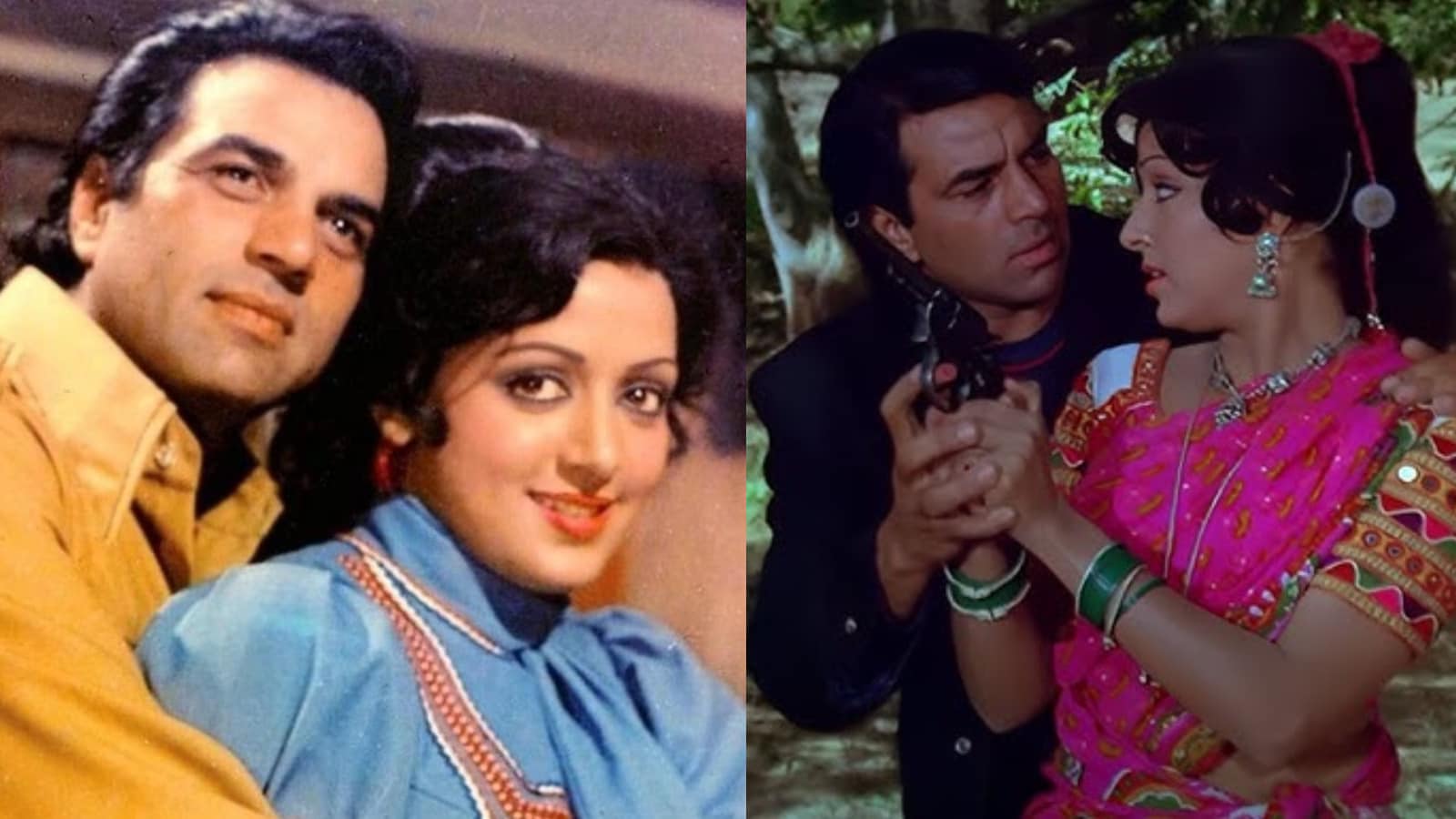
57 years. That’s how long they were together.
Now, for the first time since Dharmendra’s death on November 24, 2025, Hema Malini has spoken. And her words carry the weight of a love story that spanned more than half a century, defied societal norms, and created one of Bollywood’s most complicated yet enduring romances.
Six weeks of silence. Six weeks of grief so profound that even Dream Girl herself, known for her strength and grace, struggled to find words.
But when she finally sat down for an exclusive interview with Indian Express, what emerged was raw, honest, and heartbreaking. A woman mourning the man she chose despite the scandal. A stepmother defending relationships that tabloids insist don’t exist. A politician trying to fulfill her duties while her heart is shattered.
“I can’t imagine my life without him. I miss him every minute.”
Those aren’t just words. They’re the truth of a woman who defied convention to be with Dharmendra, who faced decades of criticism for being his second wife, who built a life alongside a man who had another family, another wife, another set of children.
And now, she’s navigating grief while the world watches, speculates, and creates stories about rifts that she insists don’t exist.
This is everything Hema Malini said in her first interview after losing the love of her life. Every revelation. Every dismissal of gossip. Every glimpse into what happens when Bollywood’s most complicated love story ends.
The Phone Call That Will Never Come Again
Every relationship has its rituals. The small habits that define togetherness even when physically apart.
For Hema and Dharmendra, it was the phone calls. Constant check ins. “Where are you? When are you coming? Are you coming back?”
Hema travels constantly. As Member of Parliament for Mathura, her schedule demands frequent trips. Dance performances. Political obligations. Public appearances. The life of someone who’s simultaneously Bollywood royalty and elected representative doesn’t allow much sitting still.
But Dharmendra always knew where she was. Always called. Always made sure that when she returned to Mumbai, he’d be there too, driving back from his beloved Lonavala farm to spend time with her and their daughters Esha and Ahana.
Those calls defined their rhythm for 57 years. They were the thread connecting two extraordinarily busy people who built a life together despite everything working against them.
Now, that phone will never ring with his voice again.
“When will I meet him again?” Hema asked during the interview. The question wasn’t rhetorical. It was the desperate wondering of someone whose entire adult life revolved around one person, and that person is suddenly, impossibly gone.
The ache in those words is palpable. This isn’t celebrity grief performed for cameras. This is real loss, raw and unfiltered.
Share this with anyone who understands what 57 years together means.
The Last Days Nobody Saw Coming
Dharmendra had been admitted to Breach Candy Hospital in Mumbai multiple times over the previous months. Each time, he’d come home healthy and smiling.
October 31, 2025, he was admitted again, complaining of breathlessness. Age related illness, the medical reports would later say. He was 89, just days away from his 90th birthday on December 8.
But he’d beaten hospital stays before. Returned home. Resumed his life. The family expected the same pattern.
November 12, Dharmendra was discharged and returned home. Hema felt relieved. “Till that time, I am sure he was alright,” she said in the interview. “I felt he would be around for one or two more years, definitely.”
Twelve days later, on November 24, 2025, Dharmendra died at his Mumbai residence.
The suddenness shocked everyone. He was home. He seemed stable. Then he was gone.
“During the treatment, everything started becoming… I mean, we can’t blame anybody,” Hema said, her words trailing off as she processed the incomprehensibility of it. “I don’t know, he was fine.”
That’s the cruelty of age related decline. One day, they’re there. Talking. Breathing. Being. The next day, they’re not. And no amount of preparation makes that transition less devastating.
Hema’s description reveals someone still trying to understand what happened. Still looking for explanation. Still unable to fully grasp that Dharmendra won’t be coming home again with that smile she’d grown accustomed to seeing after hospital discharges.
The funeral was held at Pawan Hans crematorium in Vile Parle, Mumbai. Family members attended. Film industry colleagues came in droves. Bollywood said goodbye to its He Man, the action star who defined masculinity for generations.
But for Hema, it wasn’t goodbye to Bollywood icon. It was goodbye to the man who called every day asking when she’d be home.
Tag someone who’s experienced sudden loss.
The Two Prayer Meets That Started All The Gossip
Here’s where it gets complicated. And where the tabloids had a field day.
After Dharmendra’s death, two separate prayer meets were held. Not one joint ceremony. Two distinct events.
The first, titled “Celebration of Life,” was hosted by Dharmendra’s first wife Prakash Kaur and their sons Sunny Deol and Bobby Deol at Taj Lands End, a luxury hotel in Mumbai.
The second was organized by Hema Malini and her daughters Esha and Ahana at Hema’s bungalow.
The media went wild. Two prayer meets? Two families? Clear evidence of rift! Decades of tension finally exposed! The families can’t even mourn together!
The headlines wrote themselves. The speculation became fact through repetition. Social media amplified every rumor.
But Hema shut it down completely in her interview.
“It has always been very nice and cordial. Even today it is very nice. I don’t know why people think something is wrong with us. It is because people want gossip.”
Her frustration was evident. Why should she have to explain private family arrangements to the public? Why is every choice analyzed for signs of drama?
“Why should I answer them? Is it necessary for me to give an explanation? Why should I? It’s my life. My personal life, our personal life. We are absolutely happy and very close to each other.”
The answer is simple but uncomfortable: because Hema chose to be the second wife. Because she married a man who was already married. Because that choice, made in the early 1980s, meant she would spend the rest of her life justifying, explaining, defending.
Indian society in the 1980s wasn’t kind to second wives. It still isn’t, really. The blame always falls on the woman who arrived later, not the man who made commitments to two women.
Hema bore that judgment for decades. And even in death, even in grief, she’s still expected to perform family unity for public consumption.
The separate prayer meets likely had practical explanations. Logistics. Different social circles. Different traditions within the families. But explaining that would require revealing private family dynamics that are nobody’s business.
So Hema didn’t. She simply stated the relationship is fine and told everyone else to mind their business.
“So sad that people use other’s grief to write a few articles. That is why I don’t answer such speculation.”
That sentence carries decades of exhaustion with invasive media coverage, gossip mongering, and the public’s insatiable appetite for Bollywood drama.
Don’t miss how celebrities navigate grief under public scrutiny.
The Sunny Connection Nobody Believes
One specific relationship faced the most scrutiny: Hema and Sunny Deol.
Sunny is Dharmendra’s eldest son from his first marriage to Prakash Kaur. He’s a massive Bollywood star in his own right, known for action films and his iconic “dhai kilo ka haath” dialogue.
The narrative the media pushed was obvious: stepmother and stepson, forever at odds, civil only for Dharmendra’s sake, and now that he’s gone, the tension can finally surface.
Hema addressed this head on.
She revealed that Sunny is planning a museum dedicated to Dharmendra. And crucially, “He will tell me whatever he does, he tells me.”
That detail matters. Sunny isn’t making major decisions about his father’s legacy without consulting Hema. They’re communicating. Coordinating. Operating as family members do when they respect each other.
“We will consult and do it,” Hema said about the museum plans. The “we” is significant. This isn’t two factions fighting for control of Dharmendra’s legacy. It’s a family working together to honor someone they all loved.
The relationship between Hema and Dharmendra’s sons from his first marriage has always been more nuanced than tabloids suggest. They didn’t grow up together. They had separate lives. But they shared a father who loved all his children.
Dharmendra managed something remarkable: maintaining relationships with both families simultaneously. By all accounts, he was present for his sons Sunny and Bobby. He was also present for his daughters Esha and Ahana. He somehow made both families feel valued.
That couldn’t have happened if the families were at war. It required cooperation, boundaries, and mutual respect that the public rarely sees because it’s not dramatic enough to make headlines.
Now, with Dharmendra gone, those relationships continue. Maybe they’re not close in the way biological siblings are. Maybe they don’t spend holidays together. But they’re cordial, respectful, and united in honoring their father.
Share this with anyone who has complicated family dynamics.
The Film She Can’t Watch Yet
Ekkis was Dharmendra’s last film. It released in January 2026, weeks after his death.
Hema hasn’t watched it.
“I came to Mathura when it was released. I have to do my work here,” she explained, referencing her Parliamentary duties. “Also, I can’t see it now, it will be too overwhelming. That’s what my daughters are also saying. Maybe I will watch it later when the wounds start healing.”
This detail reveals everything about where Hema is emotionally. The idea of watching Dharmendra on screen, alive and performing, feels impossible right now. It’s too fresh. Too raw. The wound is still bleeding.
Her daughters Esha and Ahana agree. They’re not ready either. Seeing their father immortalized on film while processing his death in real life creates cognitive dissonance too painful to navigate yet.
Maybe later, Hema said. When healing begins. When enough time passes that memory becomes comfort rather than torture.
This is what grief looks like. Not the public mourning. Not the statements released through spokespersons. But the small impossibilities. The things you can’t do yet because they hurt too much. The film you can’t watch. The photos you can’t look at. The spaces you can’t enter because they’re too full of absence.
Ekkis will wait. The film isn’t going anywhere. Eventually, Hema will watch it. She’ll see Dharmendra’s last performance. She’ll hear his voice. And maybe by then, it will feel like gift rather than grief.
Tag someone who understands delayed grief processing.
The Man Who Had Everything
“He had a wonderful life,” Hema said. “Whatever he desired, he had it.”
And she’s right. Dharmendra’s life was extraordinary by any measure.
Born Dharam Singh Deol on December 8, 1935, in Nasrali, Punjab, he entered Bollywood in 1960 after winning Filmfare’s new talent award. His debut film was Dil Bhi Tera Hum Bhi Tere.
What followed was a six decade career spanning over 300 films. He became the He Man of Bollywood, known for action roles and rugged charisma that made him one of the industry’s biggest stars.
The iconic films are endless. Sholay, where he played Veeru alongside Amitabh Bachchan’s Jai, remains one of Indian cinema’s most beloved movies. Fans still quote the dialogue. The songs are timeless. Dharmendra’s chemistry with co star Hema Malini in that film was electric.
Other classics include Phool Aur Patthar, Seeta Aur Geeta (another Hema co starring vehicle), Yaadon Ki Baaraat, Charas, Dharam Veer, Pratiggya, and dozens more that defined Hindi cinema across generations.
He worked with every major director. Romanced every leading lady. Did action, comedy, drama, romance. His versatility kept him relevant across decades as Bollywood evolved.
Even in his later years, he continued working. Rocky Aur Rani Kii Prem Kahaani in 2023 showcased him alongside Shabana Azmi, Jaya Bachchan, and younger stars Ranveer Singh and Alia Bhatt. He proved he could still command screen presence in his late 80s.
But beyond the career, he had love. Two women who loved him. Six children. Grandchildren. A farm in Lonavala that brought him peace. The respect of an entire industry.
“Such a sweet person he was,” Hema said. “And I feel proud that so many people love him and that person who was loved by everyone so much.”
That pride comes through clearly. Hema didn’t just lose her husband. She lost someone the world loved. Someone whose legacy extends far beyond their private relationship into cultural impact affecting millions.
Don’t sleep on appreciating legends while they’re still here.
The Strength Everyone Sees But She Doesn’t Feel
“I am strong, that’s what everybody says,” Hema admitted. “I am strong, but sometimes you… I have to go on, I have to.”
That ellipsis contains everything. The unfinished thought. The trail off into emotion too big for words.
Hema Malini has always been strong. It’s part of her brand. Dream Girl who became dance icon who became successful producer who became Member of Parliament. She did it all. She excelled at everything.
But strength becomes burden when people expect it constantly. When there’s no permission to fall apart because you’re supposed to be the strong one.
“I was very deeply in sorrow, still that is there. But trying to get out of it, because it is too much for me to take.”
Six weeks after Dharmendra’s death, Hema was still deep in sorrow. Still struggling. Still finding the weight almost unbearable.
But she has to go on. Work doesn’t stop because of grief. Mathura still needs its MP. Constituents still have problems requiring her attention. Political obligations continue.
So Hema compartmentalizes. She does her work. She fulfills her duties. And when she’s alone, she processes loss that feels insurmountable.
This is the reality of public grief. You don’t get to fall apart completely because the world is watching. You smile for cameras. You attend functions. You perform normalcy while internally screaming.
And everyone calls you strong. They mean it as compliment. But sometimes it feels like prison. Because strength means you can handle it. Strength means you don’t need help. Strength means you keep going no matter what.
Even when what you want is to stop. To sit in the grief. To not be strong for once.
Hema is trying to get out of the sorrow. Trying to heal. Trying to imagine life without the person who defined more than half her existence.
It’s not easy. It’s not fast. And being strong doesn’t make it hurt less.
Share with anyone performing strength while breaking inside.
The Lonavala Farm That Became Their Sanctuary
Dharmendra loved his farm in Lonavala. The land. The animals. The distance from Mumbai’s chaos.
He’d spend time there, tending to things that had nothing to do with Bollywood. It was his escape. His peace.
But he never stayed if Hema was in Mumbai. “I am also coming back from Lonavala,” he’d say. Then he’d return to the city to be with her and their daughters.
That sacrifice speaks volumes. Dharmendra cherished his farm. But he cherished Hema more. So when she was home, he was home.
Those small choices define relationships. Grand gestures are easy. It’s the daily decisions, the small prioritizations, the consistent choosing of partner over personal preference that build decades together.
Hema remembers those returns. She remembers the phone calls coordinating schedules. She remembers him asking when she’d be back so he could come back too.
Now the farm remains. But the man who loved it is gone. And the phone won’t ring with him asking when to come home because she’s there.
The places we associate with people become haunted by absence after they’re gone. The Lonavala farm will always be Dharmendra’s place. Will Hema ever visit it again? Can she bear to see the space he loved without him in it?
These are questions grief poses without answers. Sometimes places become sacred. Sometimes they become too painful to approach.
Time will tell which the Lonavala farm becomes for Hema.
Tag someone who has a special place tied to someone they lost.
The Love Story That Scandalized Bollywood
To understand Hema’s current grief, you need to understand the journey that preceded it.
Hema Malini and Dharmendra’s love story began on film sets in the 1970s. They had incredible chemistry. Audiences noticed. So did they.
But there was a massive problem: Dharmendra was already married.
He’d married Prakash Kaur in 1954 before entering films. They had four children together: sons Sunny and Bobby, and daughters Vijeeta and Ajeeta. The marriage was traditional, arranged, solid.
Then Dharmendra fell in love with Hema Malini.
What happened next is disputed depending on who tells it. Some accounts say Dharmendra tried divorcing Prakash but she refused. Others say he never seriously pursued divorce. Indian law at the time made Hindu divorce difficult.
What’s certain is Dharmendra found a workaround: he converted to Islam, which allowed him to marry Hema without divorcing Prakash. They married in 1980.
The scandal was enormous. Hema Malini, Bollywood’s Dream Girl, became the other woman. Never mind that Dharmendra made the choice to pursue the relationship. Never mind that he was the married party. Public judgment fell heavily on Hema.
She was called home wrecker. Husband stealer. Every cruel name imaginable.
But she married him anyway. And they built a life together that lasted 45 years.
They had two daughters, Esha and Ahana, both of whom briefly acted before Esha settled into sporadic film work and Ahana chose life outside the industry.
The relationship with Dharmendra’s first family remained complicated. Dharmendra maintained connections with all his children. He financially supported both households. He split time between both families.
It was unconventional. It defied social norms. It probably hurt everyone involved in different ways.
But it worked. Somehow, across 45 years of marriage and 57 years together (they were together before marrying), Hema and Dharmendra made it work.
Not perfectly. Not without pain. But they stayed together. They loved each other. And now that he’s gone, Hema’s grief testifies to the depth of what they built.
Don’t miss how love doesn’t always fit conventional boxes.
The Museum That Will Preserve His Legacy
Sunny Deol is planning a museum dedicated to his father. The details haven’t been announced yet, but Hema confirmed plans are underway.
Museums preserve legacies. They transform personal history into public memory. For someone like Dharmendra whose career spanned six decades and touched millions of lives, a museum feels appropriate.
What will it contain? Costumes from iconic films? Awards and honors? Personal items? Photos chronicling his journey from Punjab village to Bollywood royalty?
The museum will likely trace Dharmendra’s entire life. His early struggles. His breakthrough. His evolution as actor. His action hero phase. His later character roles. His family.
And that’s where it gets interesting. Will the museum acknowledge both families? Will Prakash Kaur and Hema Malini both appear in the narrative? Will all six children be presented as one family unit despite growing up in separate households?
These questions matter because museums make official history. Whatever the museum presents becomes the authorized version of Dharmendra’s life.
Hema said she and Sunny will consult on the museum. That collaboration suggests both families will have input. Hopefully, it means the museum will tell complete truth, not sanitized version that erases complicated reality.
Dharmendra’s legacy deserves full honesty. He was extraordinary actor and complicated man who loved two women and six children across two families. That complexity makes him human. Museums that only show perfect lives do disservice to truth.
The museum, whenever it opens, will become pilgrimage site for Dharmendra’s fans. A place to remember the He Man who defined Bollywood for generations.
Share with any Dharmendra fan eagerly awaiting this museum.
The Grief That Has No Timeline
“When will I meet him again?” Hema asked.
The question contains her belief system. Hema is spiritual. She believes in souls, reincarnation, reunion beyond death.
For her, Dharmendra’s death isn’t permanent ending. It’s temporary separation. She will meet him again, somewhere, somehow.
That belief probably provides comfort. Death isn’t goodbye. It’s see you later.
But it doesn’t erase the immediate pain. Spiritual beliefs don’t eliminate grief’s crushing weight. They just provide framework for making sense of unbearable loss.
Hema is processing in her own way. She’s working because work provides structure. She’s declining to watch Ekkis because it’s too overwhelming. She’s defending family relationships because the gossip adds stress to already unbearable situation.
She’s doing what bereaved people do: surviving minute by minute, finding footholds where they can, accepting that some days are just about getting through.
There’s no timeline for this. People will expect her to “move on” eventually. They’ll wonder why she’s still sad months from now. They’ll think 57 years together should somehow make the loss easier because she had him for so long.
But it doesn’t work that way. Length of relationship doesn’t cushion grief. If anything, it deepens it. 57 years means 57 years of habits, memories, shared experiences, inside jokes, routines, and rituals all suddenly ending.
Rebuilding life after losing your person of 57 years is like learning to walk again. Everything is different. Nothing fits right. The world looks the same but feels alien.
Hema will walk this path in her own time. She’ll heal at her own pace. And hopefully, the public will give her grace to grieve privately despite her public life.
Tag someone who needs to hear that grief has no expiration date.
What Happens Now
Hema Malini continues serving as Mathura MP. That work goes on.
Esha and Ahana support their mother through loss. Family closes ranks.
Sunny completes his father’s museum. Legacy gets preserved.
Prakash Kaur mourns privately. First wife, longest relationship, her own profound loss.
Bobby processes losing his father. Another son grieving in his own way.
Two families connected by one man navigate post Dharmendra reality. It won’t be easy. But Hema insists it’s cordial. Respectful. Fine.
Ekkis remains unwatched for now. Eventually, when wounds heal enough, Hema will see Dharmendra’s final performance.
The Lonavala farm stays empty of the man who loved it.
The phone doesn’t ring with his voice anymore.
And Hema moves through days carrying grief so heavy that even her legendary strength bends under its weight.
“I can’t imagine my life without him. I miss him every minute.”
That’s the truth of love that lasted 57 years. When it ends, what remains is unimaginable absence and every single minute missing the person who defined more than half your life.
Hema Malini’s first interview after Dharmendra’s death gave us glimpse into that grief. Raw. Honest. Heartbreaking.
She’ll survive because she has to. She’s strong, everyone says. But strength doesn’t prevent pain. It just means you keep breathing through it.
The Dream Girl is healing. Slowly. In her own way. Carrying memories of 57 years that nothing can take away even as the present feels impossible to navigate.
What Dharmendra and Hema had wasn’t perfect. It was complicated, scandalous, unconventional. But it was also real. Deep. Lasting.
And now it’s transformed into memory, grief, and whatever comes next for a woman learning to exist without the person she chose despite everything.
Drop your thoughts on lasting love below. Share this with anyone who believes in choosing your person no matter what. Follow for more stories about Bollywood’s most complicated, enduring relationships.
57 years together. A lifetime. And now, the rest of life figuring out how to go on when the person who made you want to come home is gone.
That’s the reality Hema Malini faces. And she’s facing it with grace, strength, and honesty about just how much it hurts.