
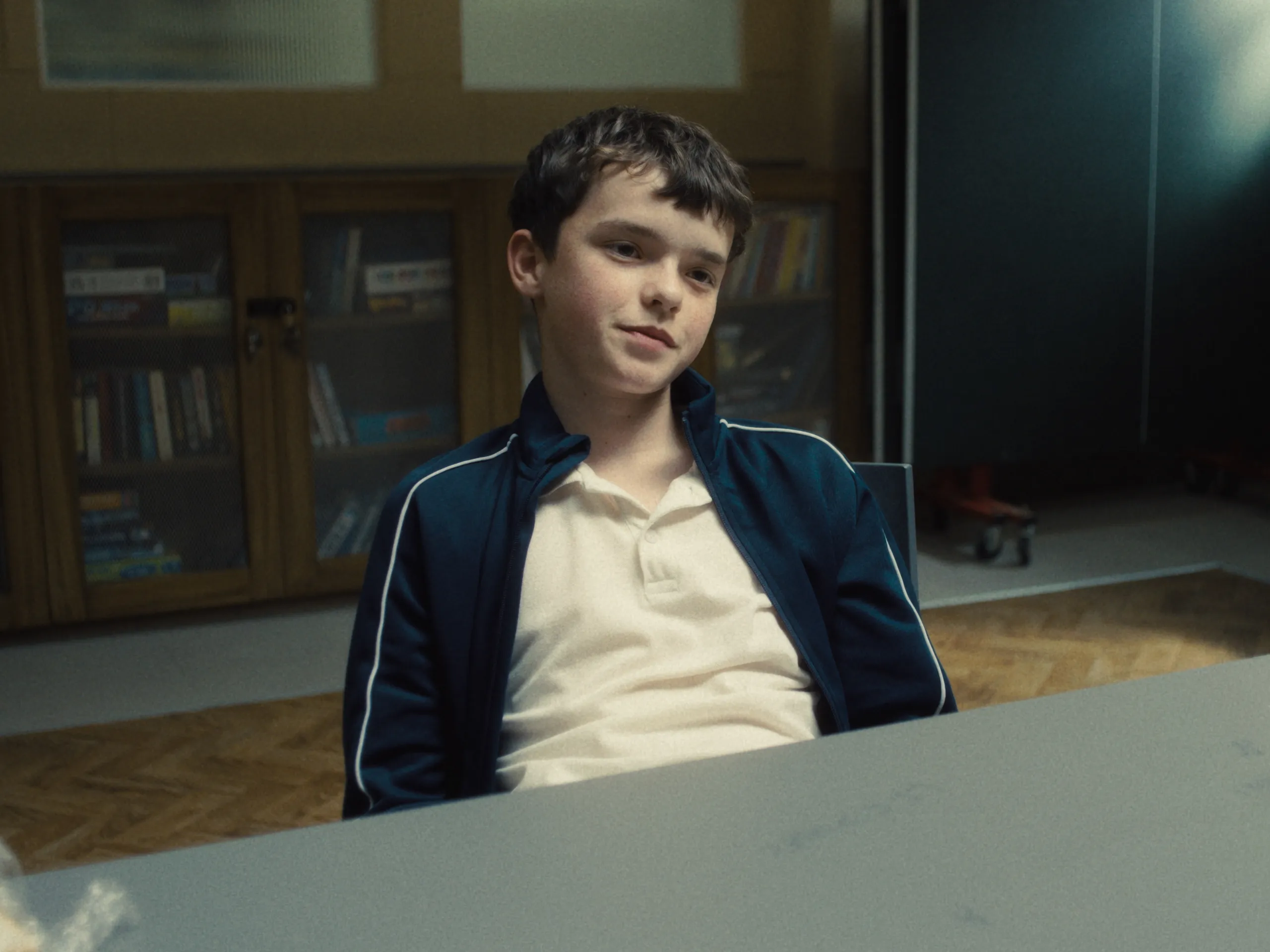
555 million hours. Let that number sink in.
That’s how long people spent watching Adolescence, the four episode Netflix series that became the streaming platform’s third most watched show ever. More than Dahmer. More than dozens of shows with massive marketing budgets and A list stars.
A British limited series about a 13 year old boy who murders his classmate. Four episodes. Each filmed in one continuous shot with no cuts. No familiar faces except Stephen Graham. A story so dark, so uncomfortable, so brutally honest about teen radicalization and incel culture that it should have been niche viewing for true crime obsessives.
Instead, it became a global phenomenon.
It swept the Emmy Awards with 8 wins. It dominated the Golden Globes with 4 trophies. It sparked conversations about masculinity, online radicalization, parental failure, and institutional blind spots that continue months after its March 2025 premiere.
But here’s what nobody’s talking about: why did a show this difficult to watch become this successful? What does it say about where we are as a culture that millions chose to spend four hours watching a fictional teen murderer’s story unfold in real time?
This is the complete story of how Adolescence became the most important television event of 2025. Every shocking statistic. Every creative choice. Every uncomfortable truth the show forced viewers to confront.
The Numbers That Nobody Expected
When Adolescence dropped on Netflix March 13, 2025, industry observers predicted modest success. British crime drama. Challenging subject matter. Unknown young lead. Four episodes meant limited binge potential compared to eight or ten episode seasons.
The first week shattered every prediction.
24.3 million views in the first four days. That’s not just good. That’s unprecedented for a limited series with zero franchise recognition or major star power beyond Graham.
Week two exploded even bigger: 42 million additional views. The total after 11 days hit 66.3 million views, setting a new Netflix record for limited series viewership in that timeframe. No other show even came close.
By the time the numbers settled months later, Adolescence had accumulated 142.6 million views worldwide and 555 million total hours watched. It became Netflix’s third most watched show ever, surpassing Dahmer: Monster, which had massive built in interest due to Jeffrey Dahmer’s notorious real life crimes.
Think about that. A fictional story about an unknown British teen murderer outperformed a true crime series about one of history’s most infamous serial killers.
The UK numbers tell an even more remarkable story. 6.5 million British viewers watched episode one in its first week according to ratings agency Barb. Adolescence became the first streaming show to top British television ratings, beating traditional broadcast programming.
These aren’t niche numbers. This is mainstream, water cooler, everybody’s talking about it television. For a show this dark and difficult, that success feels almost impossible.
Share this with anyone who thinks dark television doesn’t sell.
The One Shot Gimmick That Became The Point
Each Adolescence episode runs approximately 60 minutes. Each episode is one continuous shot with no hidden cuts, no editing tricks stitching takes together, no cheating.
Director Philip Barantini and cinematographer Matthew Lewis shot each episode as a genuine single take. If an actor flubbed a line 45 minutes in, they started over. If a camera movement failed, they reset from the beginning.
This isn’t new territory for Barantini. He previously directed Boiling Point, a restaurant thriller filmed the same way. But scaling that technique to four hour long episodes for Netflix required unprecedented precision and collaboration.
Matthew Lewis explained the technical challenges in interviews. The camera needed to move fluidly through multiple locations, following characters in real time without breaks. They used specialized stabilization equipment and choreographed every movement down to the second.
Lighting presented massive problems. Traditional film lighting requires repositioning for different shots and angles. One continuous take means lights must illuminate every location the camera will pass through without being visible in frame. Lewis and his team pre rigged entire buildings with hidden lighting that could be controlled remotely as the camera moved.
The actors faced extraordinary pressure. Stage actors are accustomed to performing entire scenes without cuts, but film actors typically work in small pieces edited together. Adolescence demanded sustained performance for an hour at a time. One mistake ruins the entire take.
Owen Cooper, playing Jamie at age 13 during filming, delivered hour long performances take after take. The pressure on a child actor to maintain that level of intensity without breaking is almost cruel. That he pulled it off is remarkable.
The one shot technique serves the story brilliantly. It traps viewers in real time alongside the characters. There’s no escape, no chance to breathe, no cutting away to provide relief. The format forces viewers to experience the investigation’s grinding tension minute by minute.
It also eliminates manipulation. Traditional editing can make viewers feel whatever directors want through music cues, reaction shots, and pacing. One continuous take offers nowhere to hide. The performances and the words must carry everything.
Critics initially wondered if the one shot approach was gimmick over substance. Would it distract from the story? Would it feel like showing off?
Instead, it became the show’s most powerful tool. By episode three’s hour long therapy session, the technique makes viewers feel like they’re in the room watching a child’s psyche unravel in real time. No cuts. No escape. Just brutal, uncomfortable truth.
Tag someone who appreciates innovative filmmaking.
The Teen Murderer Who Isn’t A Monster
Jamie Miller doesn’t look evil. He looks like a normal 13 year old boy. Slight build. Uncertain expression. The kind of kid you’d pass on the street without a second glance.
That ordinariness is the point.
Adolescence refuses to portray Jamie as inhuman monster. The show provides no comfort of distance between viewers and this child who stabbed a girl to death. Jamie could be anyone’s son, anyone’s classmate, anyone’s neighbor.
Episode one opens with his arrest. Police wake the family at dawn. Jamie’s parents, Eddie and Helen, have no idea what’s happening. The confusion and disbelief on Stephen Graham’s face as he realizes his son is being taken for murder questioning is devastating.
The show doesn’t question Jamie’s guilt. Evidence is presented quickly. Police have video of Jamie stabbing Katie. There’s no mystery about who did it. The only questions are why and how did nobody notice the warning signs.
Owen Cooper’s performance as Jamie is unnervingly flat. He doesn’t cry or rage or show typical emotional responses. He’s shut down, disconnected, operating from a psychological space viewers struggle to access.
That emotional blankness makes him more frightening than any theatrical villainy could. This is a child so twisted by internalized beliefs about masculinity, worth, and women that he committed murder and feels almost nothing about it.
The therapy session in episode three reveals the horrifying psychology underneath. Psychologist Briony Ariston, played brilliantly by Erin Doherty, tries assessing if Jamie understands what he’s accused of and is fit for trial.
What emerges is a boy who absorbed toxic ideas from multiple sources: online incel forums, school peer pressure, gaps in parental oversight, algorithmic radicalization through social media. Jamie believed girls owed him attention. When Katie rejected him, his warped worldview couldn’t process that rejection as anything but injustice requiring violent correction.
The show never excuses this. It doesn’t ask for sympathy. But it insists viewers understand that Jamie didn’t become a murderer in a vacuum. Multiple systems failed, multiple influences shaped him, multiple adults missed opportunities to intervene.
That complexity is what makes Adolescence more than exploitation television. It’s asking hard questions about how societies create young men capable of viewing violence against women as justified response to perceived slights.
Don’t miss how this show redefines villain television.
The Father Who Couldn’t Have Known
Stephen Graham created Adolescence with specific intention: show that parents aren’t always to blame.
Graham’s character Eddie Miller is a working class father who leaves for work at 6 AM and returns at 8 PM. He’s tired, stretched thin, doing his best to provide for his family. He loves his kids. He’s not abusive or neglectful in obvious ways.
And his son still became a murderer.
Graham wanted to explore how that could happen without defaulting to “bad parenting” explanations. Eddie represents millions of fathers: working hard, showing up when they can, trying to instill decent values within the limited time available.
It wasn’t enough. But could it ever have been enough against algorithmic radicalization, peer pressure, and online communities specifically designed to pull vulnerable boys into toxic belief systems?
Graham’s performance is career best work. He plays a man watching his world collapse in real time, unable to comprehend how the child he raised could do something so monstrous. The grief, confusion, and desperate need to find explanation is palpable in every scene.
The show lets Eddie be flawed without being the villain. He worked too much. He probably emphasized traditional masculinity more than ideal. He missed signals. But he also loved his kids, supported his partner, and tried teaching right from wrong.
The tragedy is that trying hard isn’t always enough. Jamie had a sister who turned out fine despite the same upbringing. The show refuses easy answers about why one child radicalizes while another doesn’t.
This complexity frustrated some viewers who wanted clearer blame assignment. If it’s not the parents’ fault, whose fault is it? Adolescence argues that’s the wrong question. Fault is distributed across institutions, online platforms, peer cultures, and societal structures that together create environments where troubled boys can disappear into radicalization.
Eddie’s storyline also examines how fathers specifically struggle with emotional availability. He loves Jamie but doesn’t know how to talk to him about feelings, insecurities, or the toxic content he’s consuming online. That emotional distance isn’t malicious. It’s cultural, generational, the result of how Eddie himself was raised.
Breaking those cycles requires conscious effort that Eddie didn’t know to make. By the time he realizes the depth of Jamie’s problems, it’s too late.
Graham won the Emmy for Outstanding Lead Actor in a Limited Series for this performance. He won the Golden Globe. Critics universally praised his ability to embody a good man facing impossible circumstances without sentimentalizing or excusing.
It’s the kind of performance that redefines what television acting can achieve.
Share this with any parent struggling to understand their kids.
The Victim Who Becomes An Afterthought
Katie is dead before the show begins. She exists in Adolescence primarily through how other characters discuss her.
That choice feels deliberate and problematic simultaneously. Katie’s death drives everything, but Katie herself remains largely absent except as symbol.
The show makes effort to acknowledge this problem through Jade, Katie’s best friend. Jade is devastated, angry, and completely unsupported by the adults around her. She’s a young Black girl who lost her only real friend to senseless violence. The school offers minimal counseling. Her home life is chaotic. Everyone focuses on Jamie while Jade’s grief gets ignored.
Fatima Bojang’s performance as Jade cuts through the show’s focus on perpetrator psychology. She represents the actual victims of male violence: young women and girls whose lives are ended or irreparably damaged while society obsesses over understanding the men who harmed them.
The show doesn’t resolve Jade’s storyline neatly. She’s another kid who will fall through institutional cracks. Her rage is justified but gets no outlet. Katie is gone and Jade is left with trauma nobody will adequately address.
This aspect of Adolescence generated criticism. Some argued the show exploits violence against women to explore masculinity without centering female victims’ experiences. Others countered that the show’s explicit acknowledgment of this dynamic through Jade’s character demonstrates awareness of the problem even if it doesn’t fully solve it.
The debate reflects larger questions about how media depicts gendered violence. Can a show examine why boys kill girls without valorizing or excusing that violence? Can it center perpetrator psychology without losing sight of victims’ humanity?
Adolescence doesn’t perfectly navigate these tensions. But it tries harder than most crime dramas that treat murdered women as plot devices rather than people.
Tag someone who cares about representation in true crime media.
The Internet That Radicalized Him
Adolescence dives deep into algorithmic radicalization in ways few shows attempt.
Detective Inspector Luke Bascombe, played by Ashley Walters, represents institutional ignorance about online threats facing young people. He’s a competent detective but completely out of touch with digital native life.
His son Adam has to explain that Instagram isn’t just photos. It’s communication through emojis, coded language, and recommendation algorithms that can pull vulnerable users into increasingly extreme content.
The show depicts how Jamie started in relatively mainstream spaces. Gaming forums. Social media. Places millions of boys visit daily without becoming murderers. But the algorithms noticed what he engaged with: content about masculinity, rejection, girls.
So the algorithms showed him more. Videos about how feminism ruined dating. Posts about women only wanting rich guys. Memes framing male loneliness as female cruelty. Each click pulled him deeper into communities explicitly organized around misogyny.
These incel (involuntary celibate) communities provided Jamie with explanatory framework for his insecurities. He wasn’t just awkward or shy. He was a victim of female standards, feminist culture, biological unfairness. His problems weren’t his responsibility. They were women’s fault.
This worldview, absorbed over months or years through thousands of small digital interactions, fundamentally shaped how Jamie interpreted his life. When Katie rejected him, his incel influenced mindset couldn’t process that as normal teenage experience. It became existential attack requiring violent retaliation.
The show never shows specific forums or platforms by name, avoiding giving them publicity. But anyone familiar with manosphere culture will recognize the ideology: biological determinism, resentment of women’s autonomy, glorification of violence against “Stacys” and “Beckys.”
What makes the depiction effective is showing how gradual radicalization is. Jamie didn’t wake up one day deciding to become a murderer. He absorbed toxic beliefs incrementally through content recommended by algorithms designed to maximize engagement, not protect vulnerable young minds.
Adolescence argues this is systemic problem requiring systemic solutions. Blaming Jamie’s parents ignores how online radicalization can happen even with attentive parenting. Blaming Jamie himself ignores how children’s brains aren’t equipped to resist sophisticated manipulation.
The show asks viewers to confront uncomfortable reality: the internet infrastructure we all use is radicalizing boys into violence against women, and we’re collectively doing almost nothing to stop it.
Don’t sleep on this analysis of digital radicalization.
The Therapy Session That Changed Everything
Episode three is the best hour of television released in 2025. Full stop.
The entire episode takes place in one therapy session between Jamie and psychologist Briony Ariston. One room. Two people. Sixty minutes of psychological excavation filmed in continuous shot.
Erin Doherty plays Briony with careful professionalism that gradually cracks as Jamie’s worldview becomes clear. She’s assessing if he understands what he did and can assist in his defense. What she discovers is far more disturbing than simple lack of understanding.
Jamie understands he killed Katie. He knows it was wrong legally. But emotionally, psychologically, he can’t access genuine remorse because his incel influenced beliefs make Katie’s rejection more significant to him than her death.
Watching Briony realize the depth of Jamie’s radicalization is horrifying. This isn’t mental illness in medical sense. It’s ideological capture. Jamie has been conditioned to view women as objects whose value lies in male validation. When Katie refused that role, her humanity became secondary to his grievance.
The therapy session reveals specific content Jamie consumed. Videos telling him men are oppressed. Forums celebrating violence against women who reject men. Memes positioning murder as justifiable response to female cruelty.
Briony tries various therapeutic approaches to break through Jamie’s conditioning. She appeals to empathy. She reframes his perspective. She directly challenges his beliefs. Nothing works because Jamie’s radicalization is too complete.
The episode ends with Briony shaken, Jamie assessed as fit for trial, and viewers devastated. There’s no breakthrough. No moment where Jamie sees the light and transforms. Just a child so corrupted by toxic ideology that he’s functionally beyond reach.
Doherty and Cooper’s performances are masterclass level. The entire hour depends on two actors sustaining intense psychological conflict without breaks. One weak moment would shatter the illusion. Neither falters.
This episode alone justifies Adolescence’s success. It’s television operating at the absolute peak of what the medium can achieve: uncomfortable, necessary, impossible to look away from.
Share this with anyone who teaches, counsels, or works with young people.
The Awards That Validated The Risk
The Emmy Awards in September 2025 became Adolescence’s coronation.
13 nominations. 8 wins. Best Limited Series. Stephen Graham for Best Actor. Owen Cooper for Best Supporting Actor, making him at age 15 the youngest person ever to win in that category. Erin Doherty for Best Supporting Actress.
The sweep validated the show’s creative risks. One shot filming could have been dismissed as gimmick. Instead, it won for direction and cinematography. The uncomfortable subject matter could have been considered too niche. Instead, voters recognized it as culturally vital storytelling.
Cooper’s win particularly resonated. At 15, he’d delivered performance requiring emotional depth and stamina that most adult actors couldn’t match. His acceptance speech was brief and humble, but the mere fact of his presence on that stage at that age carrying that material was extraordinary.
The Golden Globes four months later in January 2026 provided another sweep. Best Limited Series again. Graham, Cooper, and Doherty all won their categories again. The repetition confirmed the Emmys weren’t fluke or voters making statement. Adolescence genuinely earned recognition as exceptional television.
These awards matter beyond industry back patting. They signal to networks and streamers that challenging content finds audiences. They encourage more risk taking in prestige television. They validate artists who choose difficult material over safe commercial choices.
The awards also sparked broader cultural conversations. Acceptance speeches referenced the need to address online radicalization, toxic masculinity, and institutional failures that create kids like Jamie. The platform amplified the show’s message beyond entertainment into activism.
Some criticism emerged about awards celebrating such dark material. Did trophies for depicting teen murder and radicalization send the wrong message? Adolescence creators countered that ignoring these issues doesn’t make them disappear. Art that forces confrontation with uncomfortable truths serves vital social function.
The debate itself demonstrates the show’s cultural impact. It’s not just television people watched and forgot. It’s television that changed conversations.
Tag someone who cares about awards actually meaning something.
The Question Nobody Can Answer
Adolescence refuses to provide the one thing audiences typically want from crime television: a definitive explanation for why it happened.
The show presents multiple contributing factors. Online radicalization. Parental oversight gaps. School system failures. Peer culture. Algorithms. Toxic masculinity. Katie’s rejection.
But it never says “this is why Jamie killed Katie.” Because there is no single why. Human behavior is too complex, especially adolescent behavior shaped by developing brains navigating unprecedented digital landscapes.
This ambiguity frustrated viewers accustomed to procedurals that wrap everything up neatly. They wanted to know: was it the parents? The internet? Mental illness? Something identifiable and fixable?
Adolescence argues that demanding simple answers is itself part of the problem. When tragedies happen, everyone rushes to assign blame to avoid examining systemic failures. If it’s the parents’ fault, we don’t have to consider school system inadequacies. If it’s mental illness, we don’t have to address online radicalization. If it’s just one bad kid, we don’t have to change anything.
The show insists all these factors matter. Jamie became capable of murder because multiple systems failed simultaneously and his developing brain couldn’t resist radicalization designed to exploit exactly his vulnerabilities.
That’s terrifying because it means there’s no single solution. Fixing parenting doesn’t solve algorithmic radicalization. Regulating social media doesn’t address peer culture. Better school counseling doesn’t eliminate toxic masculinity.
Adolescence demands viewers sit with that discomfort. There are Jamies everywhere. Kids absorbing toxic beliefs right now. And we don’t have clear answers for how to stop it before they hurt someone.
The show also highlights how retrospective analysis always finds warning signs. Of course Jamie seemed troubled in hindsight. But in real time, he looked like thousands of other awkward teenage boys. Distinguishing future murderers from regular teenage difficulty is nearly impossible until it’s too late.
This creates paralysis. If any boy could potentially radicalize, how do parents and institutions respond? Surveillance of all boys feels dystopian. But ignoring warning signs enables tragedies.
Adolescence doesn’t solve this dilemma. It makes viewers feel the weight of it.
Comment below with your theory about what could have prevented this.
Why 555 Million Hours Matters
Those 555 million viewing hours represent more than commercial success. They demonstrate hunger for television that takes audiences seriously.
Adolescence is hard to watch. It’s uncomfortable, disturbing, and offers no catharsis. Yet millions chose it over countless easier entertainment options.
What does that say about where culture is?
It suggests people know these issues matter. Parents worry about their sons’ online consumption. Women fear male violence justified by misogynistic ideology. Educators see radicalization happening. Everyone senses something is wrong.
Adolescence gave that collective anxiety form. It made abstract fears concrete through Jamie’s story. Watching it became way of processing real concerns through fictional framework.
The global viewership is particularly significant. This isn’t just British or American concern. Incel culture, algorithmic radicalization, and male violence against women are worldwide problems. Adolescence resonated across cultures because it depicts threats transcending borders.
The success also validates hard science fiction and challenging prestige television. Netflix could fill their platform with lowest common denominator content. Sometimes they do. But Adolescence proves audiences reward quality even when it’s difficult.
This matters for what gets made next. Showrunners can point to Adolescence when pitching challenging material. Networks can justify risk taking. The industry learns that treating audiences as intelligent pays off.
The 555 million hours also represent countless conversations. People watched with partners, friends, family. They discussed afterward. They brought it up at work. That cultural impact multiplies beyond raw viewing numbers.
Adolescence became event television in an era when that concept seemed dead. It created shared cultural experience. For four weeks, everyone was talking about the same show. That’s increasingly rare.
Share this with anyone who says television is getting worse.
The Uncomfortable Mirror It Held Up
The hardest part of Adolescence is recognizing ourselves in its failures.
Parents who watch see moments they’ve missed with their own kids. Educators recognize institutional gaps. Social media users acknowledge their passive consumption of platforms radicalizing boys.
The show doesn’t let anyone off the hook. Everyone contributed to creating environment where Jamie could become a murderer.
That collective guilt is precisely what makes the show valuable. Individual blame is too easy. Adolescence demands systemic reckoning.
It asks: what are you doing to understand what young men in your life consume online? How are schools identifying and intervening with struggling boys before radicalization completes? What pressure are we putting on platforms to stop algorithmically radicalizing children?
These aren’t rhetorical questions. They’re urgent calls to action disguised as television.
The show’s timing matters too. Released in March 2025 as incel violence continues rising globally, Adolescence arrived exactly when culture needed it. It gave language and framework for discussing phenomena many sensed but couldn’t articulate.
The discomfort it creates is the point. Entertainment that makes us comfortable changes nothing. Entertainment that forces confrontation with ugly truths creates possibility for change.
Whether Adolescence actually catalyzes meaningful change remains uncertain. But it started conversations that weren’t happening at this scale before. That alone justifies its existence and success.
Your Next Move
If you haven’t watched Adolescence, you should. It’s essential viewing for anyone raising boys, teaching young people, working in social media, or simply existing in culture where male radicalization threatens women’s safety.
It’s not fun. It’s not easy. But it’s necessary.
If you’ve watched, talk about it. Don’t let it be passive entertainment you consumed and forgot. The show demands action, conversation, engagement.
Parents: watch your kids’ online activity. Not as surveillance but as protection. Know what algorithms are feeding them. Talk about toxic masculinity. Create space for emotional vulnerability.
Educators: implement programs addressing online radicalization. Train teachers to recognize warning signs. Create systems where troubled boys can get help before harming others.
Platform workers: pressure companies to change algorithms that radicalize children. Demand accountability for content recommendations. Support regulation protecting young users.
Everyone: examine your own beliefs about masculinity, gender, violence. Challenge misogynistic content when you see it. Support women and girls speaking about male violence. Vote for politicians addressing these issues seriously.
Adolescence gives us a warning. 555 million hours of people watching that warning. Now what?
Will we change systems creating boys like Jamie? Will we regulate platforms radicalizing children? Will we build culture valuing emotional intelligence over toxic masculinity?
Or will we watch the next Jamie’s story unfold in real life, once again asking how nobody saw the signs?
The show can’t answer those questions. Only we can, through action or inaction, changes made or opportunities missed.
What’s your move? What will you do differently knowing what Adolescence revealed?
Drop your commitment below. Share this with everyone in your life. Follow the conversations about how we stop creating Jamies.
Stephen Graham created this show asking uncomfortable questions about society’s collective failures. He forced millions to witness one possible outcome of those failures.
The 555 million hours are finished. The work to prevent real Jamies starts now. Don’t let it be just a show you watched. Let it be the catalyst that finally spurred action.
Katie deserved better. So do the countless girls at risk from radicalized boys right now. The question is whether we’ll actually do better, or just watch television about failing them.














Everything is very open with a precise description of the issues.
It was truly informative. Your site is very helpful. Many thanks for sharing!