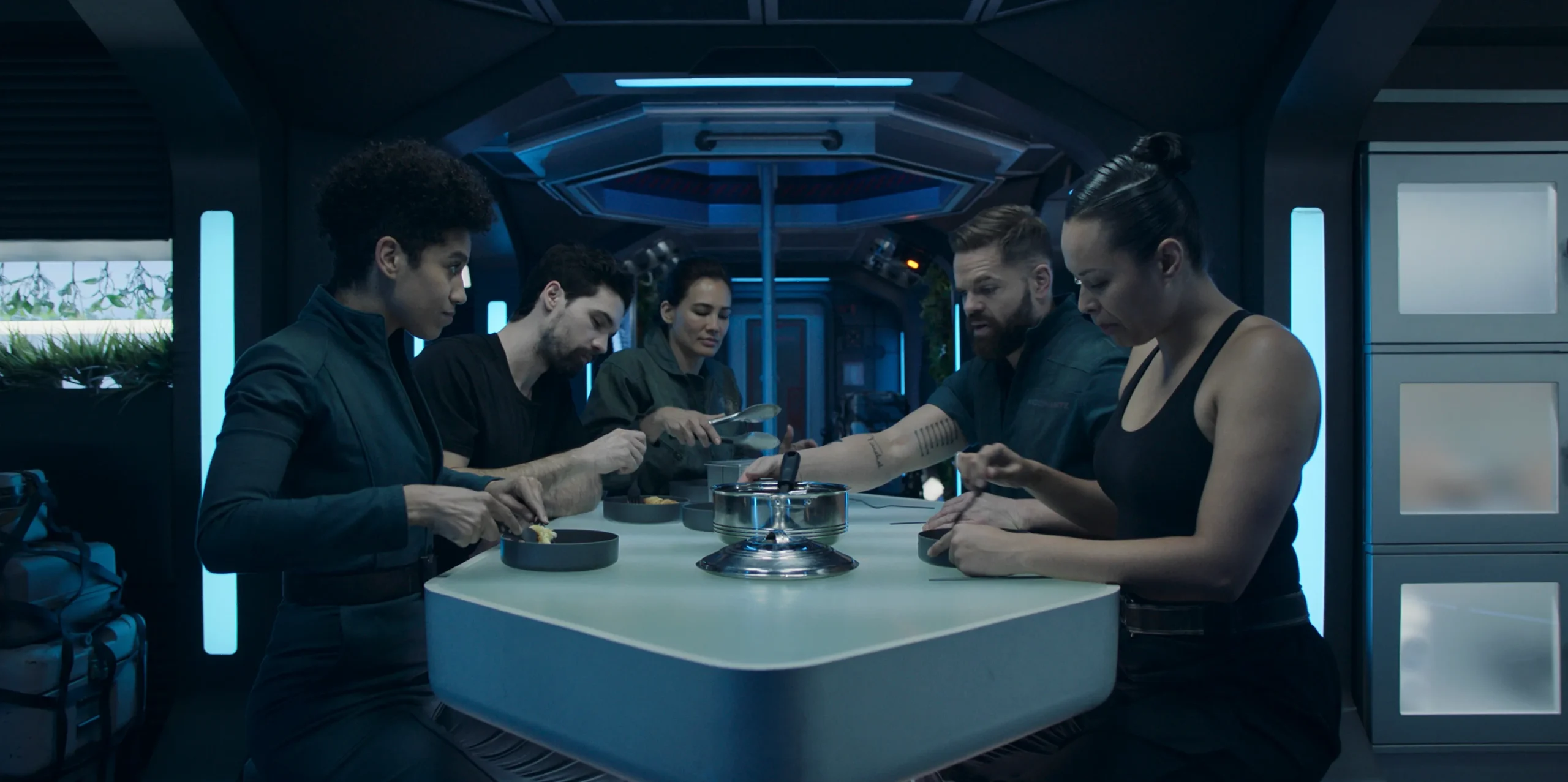
Sixty-two episodes. Six seasons. One ship called the Rocinante that became home to millions of viewers worldwide.
The Expanse didn’t just redefine space opera for television. It proved that hard science fiction could be mainstream, that political intrigue works in zero gravity, and that audiences are smart enough to handle complex worldbuilding without constant hand holding.
From its 2015 debut on Syfy through its rescue by Amazon Prime and its bittersweet 2022 conclusion, The Expanse delivered some of the most sophisticated storytelling television has ever seen. Asteroid collisions. Interplanetary war. Alien technology that defies physics. Characters so real you forgot they were fictional.
But not every episode hit equally hard. Some were good. Some were great. And some were absolutely transcendent pieces of television that belong in the sci-fi hall of fame alongside the best Star Trek, Battlestar Galactica, and Babylon 5 ever produced.
This is the definitive ranking of The Expanse’s greatest episodes. The moments that made hearts race. The twists that broke the internet. The scenes that proved this show operated on a different level than anything else on television.
Ready to revisit the belt? Time to suit up.
Why The Expanse Changed Everything
Before diving into specific episodes, understanding why The Expanse matters is crucial.
Most space operas choose either hard science or dramatic storytelling. The Expanse refused that choice. It delivered both. Physics worked correctly. Ships needed thrust to move and brake. Sound didn’t travel in vacuum. Gravity came from spin or acceleration.
But the show never sacrificed character for accuracy. The Rocinante crew felt like real people navigating impossible situations. Their relationships evolved naturally across six seasons. Viewers cared when they succeeded and hurt when they failed.
The political worldbuilding rivaled Game of Thrones in space. Earth, Mars, and the Belt weren’t just locations. They were civilizations with conflicting interests, legitimate grievances, and no easy solutions. The show trusted audiences to follow complex conspiracies spanning multiple seasons.
And the diversity was revolutionary for sci-fi. The cast reflected actual human variety. Accents mattered. Belter Creole became a real constructed language. Cultural differences drove plot rather than existing as window dressing.
The Expanse ran for six seasons totaling 62 episodes. Syfy canceled it after season three despite critical acclaim. Fan campaigns convinced Amazon Prime to rescue it for seasons four through six. The show concluded adapting book six of a nine book series, leaving material for potential continuation.
During its run, The Expanse earned Hugo Award nominations, Saturn Award wins, and consistent critical praise. IMDb users rate it 8.5 overall with individual episodes scoring as high as 9.6. Rotten Tomatoes certified it fresh across all seasons.
But numbers don’t capture impact. The Expanse proved prestige television could embrace genre fiction. It demonstrated that science fiction works best when grounded in recognizable human struggles elevated by extraordinary circumstances.
Now, to the episodes that define the series.
Share this with anyone who hasn’t discovered The Expanse yet.
Number 10: Doors and Corners (Season 2, Episode 2)
Sometimes the best episodes are the smallest. “Doors and Corners” takes place almost entirely aboard a single abandoned ship. No grand space battles. No political intrigue. Just the Rocinante crew investigating a derelict vessel that might hold answers about the protomolecule.
What makes it exceptional is tension building through claustrophobia. The abandoned ship feels genuinely dangerous. Every corridor could hide threats. Every door opens on potential death.
The episode title comes from advice Miller gives Holden about clearing rooms: check your doors and corners. That wisdom becomes literal as the crew methodically searches the ship while something hunts them.
Amos gets a standout moment showcasing his particular brand of terrifying competence. When things go bad, he doesn’t panic. He problem solves with violence when necessary but never loses control. The character work here deepens understanding of who Amos is beneath the tough exterior.
The protomolecule hybrid they encounter is nightmare fuel. The show’s creature design peaked early, creating something genuinely alien and threatening. The action sequence as they try escaping while the hybrid hunts them delivers heart pounding thrills.
“Doors and Corners” proves The Expanse could do contained thriller episodes as well as epic space opera. Sometimes less is more.
Tag someone who loves bottle episodes done right.
Number 9: Cibola Burn (Season 4, Episode 10)
Season four took the Rocinante to Ilus, the first habitable planet beyond the Ring Gates. “Cibola Burn” concludes that storyline with massive stakes: save everyone on the planet before alien technology kills them all.
The episode balances multiple threats beautifully. The alien orbital platforms target anything that moves. The planet itself becomes unstable. Characters scattered across the surface need rescuing. And Holden must interface with Miller’s consciousness to find solutions.
Thomas Jane’s return as Miller, now a protomolecule construct, gave the season emotional weight. His scenes with Holden callback to their season one dynamic while acknowledging everything has changed. Miller is dead but also still there, trapped between human memory and alien directive.
The visual effects in this episode are stunning. Alien megastructures dwarf human technology. The scope feels genuinely cosmic. Watching Holden navigate these structures while talking to Miller ghost creates surreal, dreamlike sequences.
Murtry’s final confrontation provides satisfying villain resolution. He’s not cartoonishly evil, just ruthlessly pragmatic about corporate interests. His defeat feels earned rather than convenient.
The episode ends with melancholy rather than triumph. They saved people but at costs. Ilus becomes another complicated situation without clean resolutions. That moral complexity defines The Expanse at its best.
Don’t miss the Miller Holden goodbye scene that still hits hard.
Number 8: IFF (Season 3, Episode 2)
Season three opened with the solar system on the brink of all out war. “IFF” escalates tensions while splitting the crew across multiple storylines that all deliver.
Bobbie and Avasarala being hunted by their own government creates paranoid thriller energy. Two powerful women reduced to fugitives showcases how institutional corruption operates. Their scenes together crackle with chemistry as mutual respect grows.
Alex flying a ship while evading pursuit reminds everyone that he’s not just comic relief. He’s the best pilot in the system. Watching him navigate impossible maneuvers never gets old.
The UN political machinations demonstrate The Expanse’s commitment to showing how institutions actually function. Decisions made in conference rooms kill people in space. The show never lets viewers forget that connection.
The distress signal that kicks off the main plot creates mystery and danger. Who’s calling? Why? What will the crew find? The episode builds tension around those questions without answering them immediately.
“IFF” also features fantastic production design. Every ship interior feels lived in. The technology looks plausible. The attention to detail in costumes, props, and sets grounds the fantastical elements in tactile reality.
This episode proves season three would deliver on the promise of interplanetary war while maintaining character focus. It’s setup done masterfully.
Share with anyone who loves political thrillers in space.
Number 7: Saeculum (Season 4, Episode 9)
“Saeculum” brings Miller back for the penultimate episode of season four, and it’s magic.
The title refers to a generation, the time from birth to death. It’s fitting because Miller and Holden’s relationship spans the show’s entire run. They started as antagonists, became unlikely allies, and now exist in this weird space where one is dead but still present through alien technology.
The episode follows them into the heart of Ilus’s mysteries. They need to shut down the orbital death platforms before everyone dies. Simple objective. Impossible execution.
What makes it work is the character interplay. Holden is exhausted, beaten down by responsibility. Miller is simultaneously the detective Holden knew and something utterly alien. Their conversations balance nostalgia with cosmic horror.
The visual journey through alien structures is breathtaking. The Expanse always excelled at making alien technology feel genuinely other. These aren’t just weird buildings. They’re artifacts of intelligence that thought differently than humans.
The tension builds perfectly. Every minute counts. Every obstacle could be fatal. The stakes are planetary scale but the episode keeps focus tight on two characters navigating an incomprehensible environment.
Thomas Jane and Steven Strait have incredible chemistry. Their scenes together anchor the show’s most mystical elements in genuine emotion. You believe Holden cares about this ghost of his dead friend.
“Saeculum” is The Expanse at its most philosophical. What does consciousness mean? Can you grieve someone who technically still exists? What responsibilities do the living owe the dead?
Tag someone who misses Miller.
Number 6: It Reaches Out (Season 3, Episode 8)
Fans consistently cite “It Reaches Out” as The Expanse’s single best episode. IMDb rates it 9.2. But more importantly, it represents everything the show does well concentrated into one perfect hour.
The Ring, that massive alien structure connected to the protomolecule, has swallowed ships and slowed everything inside to prevent damage. Holden is haunted by Miller’s ghost. Naomi, Alex, and Amos watch him spiral into apparent madness.
Meanwhile, Melba Koto (real name Clarissa Mao) executes her revenge plan against Holden for destroying her father. Her storyline provides ticking clock tension as she gets closer to succeeding.
The episode balances multiple tones brilliantly. Holden’s sequences with Miller feel surreal and frightening. The crew scenes showcase their deep bonds and concern. Melba’s storyline plays as paranoid thriller.
The acting elevates already excellent writing. Steven Strait plays Holden’s breakdown with vulnerable intensity. Dominique Tipper, Cas Anvar, and Wes Chatham react to their friend losing grip on reality with perfect gradations of worry and frustration.
Shohreh Aghdashloo and David Strathairn continue their fascinating dynamic as Drummer and Ashford. They’re allies with fundamentally different philosophies about Belter independence. That tension enriches every scene.
The episode’s climax delivers genuine stakes. People die. Plans fail catastrophically. The protomolecule’s alien nature becomes terrifyingly clear. This isn’t technology humans can control or understand.
“It Reaches Out” demonstrates The Expanse’s confidence. It trusts audiences to follow complex plotting across multiple locations and timeframes. It doesn’t explain everything immediately. It lets mystery breathe while delivering emotional and narrative payoffs.
The episode title comes from the protomolecule’s behavior, literally reaching out to understand and consume. But metaphorically, it describes the show itself: reaching out to audiences willing to engage with smart, challenging science fiction.
Don’t sleep on this episode. It’s essential viewing.
Number 5: Triple Point (Season 3, Episode 5)
“Triple Point” is Game of Thrones in space. Political machinations reach their boiling point. Unexpected deaths shock the audience. The solar system teeters on the edge of annihilation.
The title refers to the temperature and pressure where a substance exists as solid, liquid, and gas simultaneously. It’s the perfect metaphor for the episode’s tensions: everything is unstable, shifting between states, ready to explode.
Admiral Souther’s storyline provides the episode’s emotional core. He’s a good man in an impossible position. When he relieves Admiral Nguyen of command to prevent war, it feels like a victory. Then Nguyen executes him.
That death hits hard because it’s senseless and avoidable. Souther did the right thing. He still died. The Expanse never promises that morality guarantees survival.
The political conspiracy involving Errinwright unravels beautifully. Watching powerful people make catastrophic decisions for what they believe are good reasons showcases the show’s nuanced writing. Nobody is cartoonishly evil. Everyone has justifications.
Avasarala’s scenes demonstrate why Shohreh Aghdashloo deserved Emmy consideration. She plays a woman fighting institutional betrayal while trying to prevent war. The character’s profanity laced fury masks genuine fear about humanity’s survival.
The episode’s pacing is relentless. Subplots that seemed separate crash together. Characters converge toward conflict. Every scene advances multiple storylines simultaneously.
“Triple Point” ends with war inevitable. That sense of tragedy, of watching people make terrible choices that will kill millions, creates dread few shows achieve.
This episode proves The Expanse understood that political storytelling works best when personal stakes drive institutional conflicts. We care about preventing war because we care about the characters who will die in it.
Share with anyone who loves political drama.
Number 4: Immolation (Season 3, Episode 6)
Following “Triple Point” is nearly impossible. “Immolation” manages it.
The episode delivers the space battle between Earth and Mars that previous episodes built toward. Ships engage across vast distances. Missiles track targets through vacuum. The stakes are literally humanity’s survival.
But The Expanse never lets spectacle overshadow character. The battle matters because people we care about fight and die in it. Every explosion represents someone’s story ending.
The tactical complexity of space combat gets full display. Ships maneuver in three dimensions. Engagement ranges span thousands of kilometers. Electronic warfare matters as much as weapons. The show respects intelligent viewers enough to show realistic space combat rather than dumbing it down.
Bobbie Draper’s storyline provides ground level perspective on the battle’s consequences. She’s trying to stop the war her government is prosecuting. Her scenes showcase one person’s agency against institutional momentum.
The visual effects are movie quality. Watching capital ships trade fire while smaller craft dodge debris creates genuine spectacle. The Expanse always punched above its television budget.
“Immolation” also delivers plot developments that change everything. The protomolecule’s role in Earth Mars tensions becomes clear. Characters make decisions with lasting consequences. Nothing feels like filler.
The episode title refers to death by burning, appropriate for a space battle but also metaphorical. Characters burn their bridges, their loyalties, their old identities. What emerges from that immolation drives the rest of the season.
This is blockbuster television that never sacrifices intelligence for action. Both elements work in harmony, each enhancing the other.
Tag someone who loves massive space battles.
Number 3: Abaddon’s Gate (Season 3, Episode 13)
Season three finale. Syfy’s last episode before cancellation. The perfect ending that almost became the series finale.
“Abaddon’s Gate” adapts the climax of the third Expanse novel, bringing the Ring storyline to explosive conclusion. Holden must prevent Ashford from destroying the Ring, which would kill everyone inside and possibly trigger larger catastrophe.
The race against time creates breathless tension. Every second counts. Characters scattered across multiple ships try coordinating despite communication lag and sabotage. The sequence of Holden desperately trying to reach the controls showcases action choreography at its finest.
David Strathairn’s performance as Ashford provides the season’s most complex antagonist. He’s not evil. He genuinely believes destroying the Ring saves humanity. His perspective has merit. That moral ambiguity elevates the conflict beyond simple good versus evil.
The visual climax of ships flying through the Ring to freedom is stunning. The Expanse’s visual effects team created one of television’s most memorable images: hundreds of ships from competing factions working together for survival.
Drummer and Ashford’s final scene together provides emotional devastation. Their relationship evolved from mutual suspicion to deep respect. Watching them on opposite sides of this conflict hurts.
The episode resolves major plots while setting up future mysteries. The Ring Gates open, giving humanity access to thousands of new worlds. But alien intelligence behind the gates remains inscrutable and potentially hostile. Season three ends on hope tinged with uncertainty.
When Syfy canceled The Expanse, “Abaddon’s Gate” stood as bittersweet conclusion. It wrapped major storylines while leaving tantalizing threads. That Amazon rescued the show for three more seasons feels like justice.
The episode’s title comes from biblical apocalypse imagery. Abaddon’s gate leads to destruction. But The Expanse subverts that. This gate leads to possibility, if humanity can stop destroying itself long enough to explore it.
Don’t miss this season finale that almost ended everything perfectly.
Number 2: Home (Season 2, Episode 5)
“Home” might be The Expanse’s most perfectly crafted episode.
It concludes Miller and Julie’s storyline that began in the pilot. Miller, the broken detective who became obsessed with saving a woman he never met, finally finds her. Or what the protomolecule made from her.
The asteroid Eros, infected with protomolecule and piloted by Julie’s consciousness, is on collision course with Earth. Millions will die. Miller decides to ride it into the sun instead, talking Julie into changing course.
The emotional weight of this resolution hits like a freight train. Miller found his purpose: saving Julie and Earth simultaneously. He gets his redemption through sacrifice. The character arc that defined season one completes perfectly.
Thomas Jane and Florence Faivre’s performances in the final scenes are heartbreaking. They’re playing consciousness mediated through alien technology but it feels deeply human. Miller’s final “I found you” to Julie is devastating.
Meanwhile, the Rocinante crew works desperately to help from space. Their storyline provides action and technical problem solving while Miller’s provides emotional catharsis. The dual tracks complement perfectly.
Fred Johnson’s decision to fire the missiles at Eros showcases the show’s willingness to let characters make terrible choices for understandable reasons. He’s trying to save Earth even if it means killing Miller. That moral complexity refuses easy answers.
The visual sequence of Eros changing course, glowing with protomolecule energy as it redirects toward the sun, is gorgeous and haunting. The alien beauty masks the tragedy of Miller’s death.
“Home” adapts the climax of the first Expanse novel while only being season two’s fifth episode. The show’s decision to move faster than one book per season meant mid season episodes could deliver season finale level payoffs.
The episode’s title works on multiple levels. Miller finds his home with Julie. Humanity’s home (Earth) is saved. The Rocinante crew, scattered and separate, work toward returning home together. That layered meaning exemplifies The Expanse’s sophisticated writing.
This is science fiction television at its absolute best. Character driven. Emotionally devastating. Visually stunning. Thematically rich. “Home” earns its 9.5 IMDb rating completely.
Share this with anyone who needs to understand why The Expanse matters.
Number 1: Gaugamela (Season 5, Episode 4)
The highest rated Expanse episode on IMDb. The one fans cite most often. The hour of television that justified five seasons of buildup.
“Gaugamela” is named after Alexander the Great’s most decisive battle. Marco Inaros plays Alexander in this metaphor, commanding his forces from the Pella and striking Earth with devastating precision.
What makes the episode transcendent is how it balances spectacle with intimacy. The asteroid strikes on Earth kill millions. Cities vaporize. The destruction is incomprehensible in scale. But the show never loses sight of individual people in that catastrophe.
Avasarala’s storyline provides ground level perspective. She’s in her apartment when impacts begin. Her scenes showcase terror, confusion, and desperate survival instinct. Shohreh Aghdashloo plays these moments with raw vulnerability that makes Avasarala feel completely human.
Meanwhile, Marco orchestrates the attack from orbit with chilling confidence. He’s not cackling villain. He believes he’s liberating the Belt through violence against oppressors. His perspective makes him terrifying because it has internal logic.
The visual effects of asteroids hitting Earth are horrifying. These aren’t Michael Bay explosions played for spectacle. They’re traumatic events with lasting consequences. The show’s commitment to realistic physics makes the destruction feel plausible and therefore more frightening.
Naomi’s parallel storyline on the Pella provides another layer. She’s trapped aboard Marco’s flagship, watching him murder her homeworld. Dominique Tipper’s performance conveys layers of horror, guilt, and suppressed fury.
The episode’s structure is masterful. It cuts between multiple locations and perspectives, building tension as impacts begin. The moment Earth starts getting hit, everything else fades to secondary concern. The scope becomes global, then planetary, then civilization threatening.
“Gaugamela” also demonstrates The Expanse’s courage in letting villains win. Marco succeeds. Earth is devastated. Billions face starvation as agriculture collapses. The show doesn’t pull punches or provide easy solutions.
The episode ends without resolution. No victory speech. No heroic turnaround. Just the beginning of catastrophe that will define the remaining series. That refusal to provide comfort makes it more impactful.
Critics and fans universally praise “Gaugamela” as The Expanse’s peak. It represents everything the show built toward: hard science fiction spectacle grounded in character drama, political complexity that refuses simple answers, and willingness to let events have consequences.
The title choice is brilliant. Alexander’s victory at Gaugamela secured his empire. Marco’s victory here reshapes the solar system’s power balance. Both are turning points in history, moments when old orders collapse and new ones emerge from violence.
This is what prestige television looks like when it embraces genre fiction completely. “Gaugamela” stands alongside the greatest hours of television ever produced in any genre.
Tag everyone you know and tell them to watch The Expanse.
The Series Finale That Left Us Wanting More
“Babylon’s Ashes” concluded The Expanse after six seasons, adapting book six of nine. The finale delivers satisfying resolution while deliberately leaving threads for potential continuation.
The final battle between the combined fleet and Marco’s Free Navy is spectacular. Ships engage across vast space. Tactics matter. Characters make smart decisions and still face impossible odds. Watching Drummer’s fleet get decimated by Marco’s surprise attack hurts because we care about these people.
Marco’s death is perfectly ironic. His hubris about controlling the Ring Gates kills him. Naomi, the woman he abused and tried to break, strikes the killing blow by activating entities that destroy his ship. That poetic justice satisfies without feeling contrived.
Filip’s ambiguous fate provides interesting emotional complexity. Did he die with his father? Did he escape? The show doesn’t say explicitly. That uncertainty mirrors real life better than neat conclusions.
The political aftermath shows Earth, Mars, and Belt trying to forge new relationships. Drummer’s fierce defense of Belter interests against repeating past mistakes echoes through her confrontation with Avasarala. These are institutions and people trying to build better futures while carrying trauma from the past.
The Laconia subplot involving Cara and the alien dogs remains unresolved. Admiral Duarte’s plans continue off screen. The protomolecule’s ultimate purpose stays mysterious. These dangling threads frustrated some fans but also maintained The Expanse’s commitment to showing a universe bigger than any single story.
The finale’s strength is its character focus. The Rocinante crew gets proper farewells. Holden and Naomi’s relationship reaches a place of peace. Amos finds family. Alex’s absence (due to real world circumstances with the actor) is handled respectfully. Bobbie gets the military career she deserves.
“Babylon’s Ashes” proved you can end a series while acknowledging more story exists. The remaining three books could be adapted as films or limited series if circumstances align. For now, this finale provides closure on the arcs viewers followed for six seasons while honoring the larger universe.
Why These Episodes Matter Beyond The Show
The Expanse’s best episodes demonstrate what television can achieve when shows commit to intelligence and ambition.
They prove genre fiction deserves prestige treatment. Science fiction isn’t lesser entertainment. It’s a lens for examining human nature through extraordinary circumstances.
They show that audiences will embrace complex storytelling. The Expanse never dumbed down for perceived mass appeal. It trusted viewers to follow political intrigue, scientific accuracy, and character development simultaneously.
They validate long form serialized narrative. These episodes work because previous episodes laid groundwork. “Gaugamela” hits hard because we’ve spent seasons with these characters and civilizations. Payoffs require setup.
They preserve hope for smart science fiction. The Expanse’s success opened doors for shows like Foundation and For All Mankind to get greenlit. It demonstrated that realistic science fiction finds audiences.
Most importantly, they created community. Fans dissecting episodes, debating politics, analyzing foreshadowing. The Expanse built passionate fandom through quality storytelling that rewarded attention and discussion.
Share your favorite Expanse episode in the comments.
Your Next Move
If you haven’t watched The Expanse, start now. All six seasons stream on Amazon Prime. The show improves with each season as budget increases and ambition grows.
If you watched and loved it, rewatch these episodes. They reveal new details on second viewing. The show’s dense plotting rewards attention.
If you finished the show, read the books. The novels by James S.A. Corey (pen name for Daniel Abraham and Ty Franck) continue the story through three more volumes. The show adaptation ends at book six. Books seven through nine explore Laconia, time jumps, and ultimate confrontation with the forces behind the protomolecule.
Support campaigns for continuation. The creative team has expressed interest in completing the adaptation. If enough people demonstrate interest through social media, petitions, and streaming numbers, studios might greenlight films or limited series to finish the story.
Most importantly, share The Expanse with others. The show deserves wider recognition. It represents peak prestige science fiction that deserves place alongside genre’s finest achievements.
Which episode defines The Expanse for you? What moment made you fall in love with the show? Where does it rank among your favorite sci-fi series?
Drop your ranking below. Share this with your watch party. Follow for more deep dives into television’s greatest shows.
The Expanse gave us sixty two episodes of brilliant science fiction. These ten represent the absolute best, the episodes that will be studied and rewatched and celebrated for years.
The Rocinante’s journey may have ended. But the legacy of what The Expanse achieved for television science fiction continues.
Remember the Cant. Remember the Donnager. Remember every ship and character and moment that made this show unforgettable.
The work continues. And so does the conversation about one of television’s finest achievements.
Doors and corners, kids. That’s where they get you.