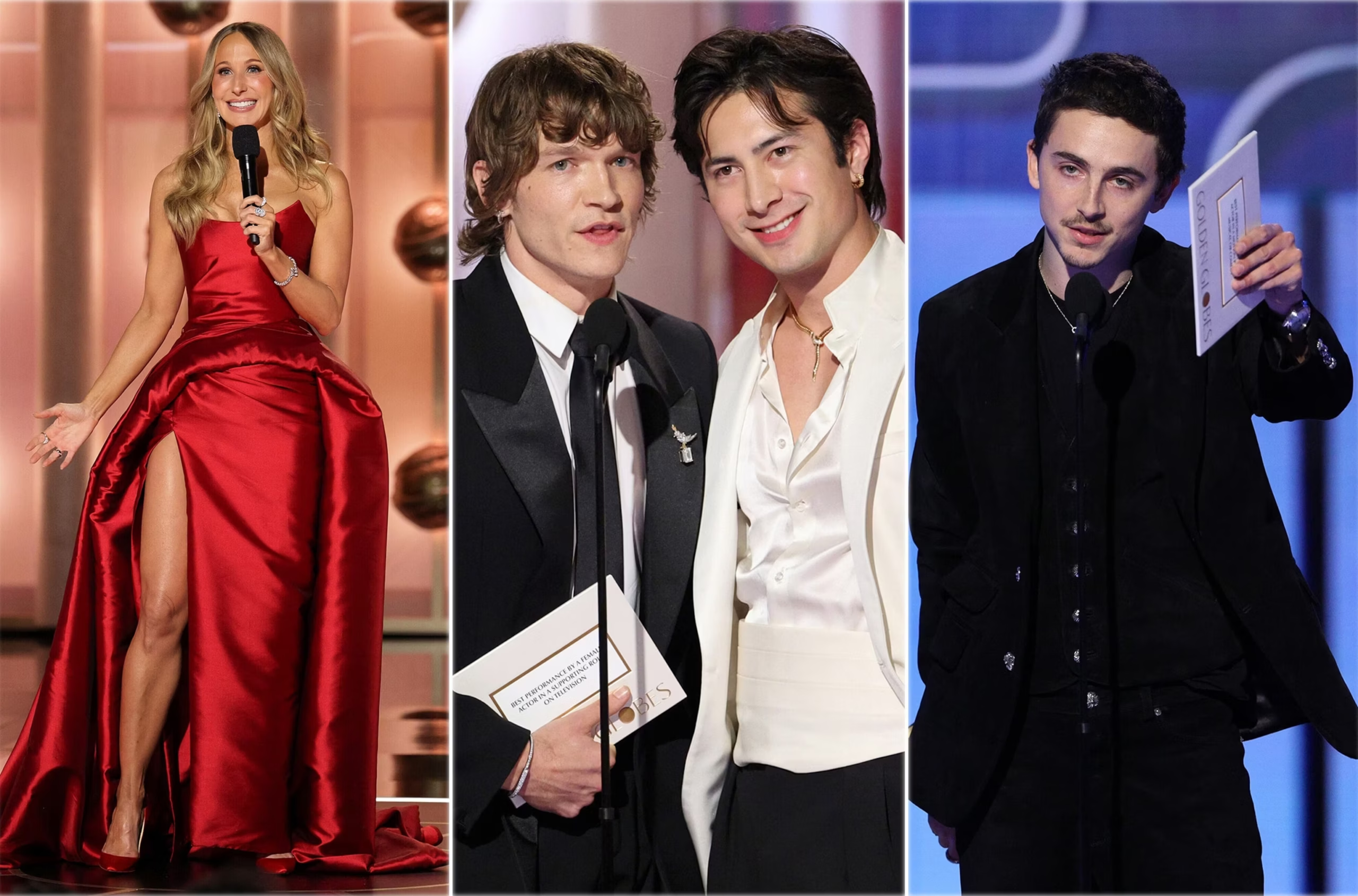
Three hours. Ten million viewers. One host who roasted everyone and walked away unscathed.
The 83rd Golden Globes unfolded Sunday night at the Beverly Hilton with a mission: prove award shows aren’t dead. Prove people still care about celebrities handing each other trophies. Prove that in an era of streaming chaos and superhero fatigue, Hollywood glamour still matters.
Did it work? Mostly.
Nikki Glaser returned as host for a second consecutive year, making history again while delivering a monologue that had Leonardo DiCaprio laughing at himself and CBS executives probably wincing. The winners ranged from expected (One Battle After Another sweeping comedy categories) to shocking (Hamnet beating the drama frontrunners). The speeches hit notes from political activism to tearjerking gratitude.
But behind the winners and speeches, the ceremony itself became the story. Production choices veered from brilliant to baffling. Musical cues ranged from perfect to perplexing. The show tried balancing reverence with irreverence, insider Hollywood bubble with outside world chaos, tradition with innovation.
Sometimes it succeeded spectacularly. Sometimes it face planted. Always, it kept moving.
This is the complete breakdown of what worked, what flopped, and what made the 2026 Golden Globes the most talked about award show in years.
Nikki Glaser Proved She’s The Only Host Who Actually Works
Awards show hosting is a poisoned chalice. Go too hard on jokes, alienate the room. Play it too safe, bore the audience. Try to please everyone, please nobody.
Nikki Glaser doesn’t care about that calculus. She roasts. Hard. Then follows with “I love you” before anyone can get offended.
It worked last year when she became the first solo female Golden Globes host. It worked even better this year.
Her opening monologue started nuclear. “There are so many A listers here. And by A listers, I mean people on a list that’s been heavily redacted.”
The Epstein files reference landed with gasps and laughs. Glaser had set the tone immediately: nothing is off limits, but we’re all in on the joke.
She pivoted to CBS itself, the network broadcasting the show. “The Golden Globe for best editing goes to the Justice Department. And the award for most editing goes to CBS News, America’s newest place to see BS news.”
Roasting your own network during the opening monologue is a power move. It signals independence, fearlessness, and awareness that the room is full of people who know how the sausage gets made.
Then she went after celebrities individually. Leonardo DiCaprio got the predictable age gap relationship jokes. But Glaser delivered them with such charm that even Leo laughed. She turned to Julia Roberts with “I probably shouldn’t be this close to you” playing on the protective reverence people have for America’s sweetheart.
The balance was perfect. Sharp enough to cut but sweet enough to heal. She made fun of The Rock (“rock beats paper, paper beats scissors, scissors beats rock, so he’s basically unbeatable”), podcasters getting nominated, and the general absurdity of award shows themselves.
But after every jab came validation. “You’re the best.” “I love you.” The technique, borrowed from roast comedy legends like Don Rickles, transforms potential cruelty into affection.
Later appearances through the night didn’t hit as hard. A filmed sketch introducing the new podcast category felt flat despite Marc Maron’s appearance. A musical number in Marty Supreme sportswear promoting KPop Demon Hunters landed with a thud, though Glaser’s meta comment “This is going to go so viral” showed she knew it.
But the opening monologue alone justified bringing her back. In an era when most hosts play it safe, Glaser takes swings. That willingness to risk keeps award shows feeling alive rather than calcified.
Viewership numbers validate the choice. The ceremony drew 10.1 million viewers according to VideoAmp, up 7 percent from last year. Live streams on CBS app and Paramount Plus rose 9 percent. These numbers buck the trend of award show ratings declining year over year.
Glaser deserves significant credit for that bump. She’s the rare host people actually want to watch rather than endure.
Share this with anyone who thinks award shows are dying.
The Production Choices That Confused Everyone
Award shows live or die on pacing and production. The 2026 Golden Globes made fascinating choices, some brilliant and some baffling.
The good: stripping away filler. No production numbers beyond Glaser’s one musical bit. No in memoriam segment (controversial but time saving). Just awards, banter, speeches. For a show distributing trophies in 27 categories across film and television, that streamlining helped.
The bad: musical cues that made no sense. When stars from Heated Rivalry, the HBO series about closeted gay hockey players, walked out to present an award, they entered to Chappell Roan’s “Pink Pony Club,” a queer anthem. Perfect choice that acknowledged the show’s LGBTQ themes and the actors’ journey from unknowns to rising stars.
But other music choices felt random. Winners walked to the stage accompanied by pop songs with no connection to their work or the moment. The selections felt like someone’s Spotify playlist on shuffle rather than curated ceremony soundtrack.
The controversial: displaying betting odds for certain categories on screen. Some viewers found this fun meta commentary on award show predictability. Others found it tacky and undermining to the proceedings. It definitely made the Golden Globes feel less like sacred Hollywood institution and more like sporting event you could gamble on.
The strange: presenter banter that consistently fell flat. The scripted exchanges between presenters rarely landed. You could feel the room thinking how much funnier these celebrities probably were waiting backstage or back at their tables. The forced quality made genuine moments stand out even more.
The smart: camera work that captured reactions constantly. When Jessie Buckley won Best Actress in a Drama for Hamnet, cameras caught Julia Roberts (who presented the award and was also nominated) giving Buckley a long, genuine embrace. That moment of generosity and grace said more than any speech.
When Noah Wyle went on stage to collect The Pitt’s Best Drama Series trophy, cameras caught his quick embrace with George Clooney, an ER reunion that delighted fans of the medical drama that launched both their careers decades ago.
These small human moments justify award shows’ existence more than the actual awards. Capturing them requires skilled camera operators and directors who understand story.
The exhausting: three hour runtime. Glaser joked at the end, wearing a Spinal Tap hat, “This one went to 11,” referencing both the film and the fact that the show ran well past its scheduled time.
Three hours is standard for major award shows. But in an era of shortened attention spans and infinite entertainment options, asking viewers to commit three hours to any single program is a big ask. The Golden Globes mostly justified that ask, but just barely.
Tag someone who stopped watching halfway through.
The Political Moments That Defined The Night
Award shows and politics have always mixed, but the 2026 Golden Globes found unusual balance between activism and celebration.
The most visible protest: ICE OUT and BE GOOD pins worn by Mark Ruffalo, Wanda Sykes, Jean Smart, and others. The pins honored Renee Nicole Good, a mother killed by an ICE agent days earlier. Cameras caught the pins clearly. Hosts mentioned them in passing. But no speeches devoted significant time to the issue.
This reflected a deliberate choice. The ceremony acknowledged the outside world’s turmoil without becoming consumed by it. As Jean Smart said accepting her Hacks trophy while wearing the BE GOOD pin, “I said my rant on the red carpet. I think everybody in their hearts knows what the right thing is to do, so let’s do the right thing.”
That approach satisfied neither pure activists (who wanted more direct confrontation) nor pure escapists (who wanted zero politics). But it reflected how most people actually navigate difficult times: awareness without paralysis, concern without consumed.
Glaser’s opening touched on current events before moving on. Speeches referenced love, cooperation, and hope in generalized terms. The ceremony didn’t pretend we live in perfect times, but it also didn’t turn into three hour political rally.
That balance is hard to achieve. Award shows that go too political alienate portions of their audience. Shows that ignore reality entirely feel tone deaf. The 2026 Golden Globes threaded that needle better than most recent ceremonies.
The exception: betting odds displayed on screen felt political in unintended way. Showing which films and performances were favored by gambling markets turned art into commodity, creativity into transaction. Some found it honest acknowledgment that awards are subjective and often predictable. Others found it depressing reminder that everything, even artistic recognition, gets reduced to money.
Don’t miss how Hollywood is navigating politics in 2026.
The Speeches That Made Everyone Cry
Award show speeches rarely matter long term. Most are forgotten by morning. But a few from the 2026 Golden Globes will echo.
Teyana Taylor’s acceptance for Best Supporting Actress (One Battle After Another) overwhelmed her. The singer and dancer turned actress stood at the podium visibly emotional, struggling to find words. Her speech wasn’t polished. It was raw. She thanked Paul Thomas Anderson for seeing potential she didn’t know she had. She acknowledged the journey from being underestimated to holding a Golden Globe.
The speech mattered because Taylor’s win represented a genuine surprise. She wasn’t the predicted winner. Her dramatic acting range had been questioned before this role. Standing there, crying, holding her trophy, she embodied what award shows claim to celebrate: talent recognized, dreams realized.
Ejae’s speech accepting Best Song for “Golden” from KPop Demon Hunters delivered another tearjerker. The singer and songwriter explained she spent years training to be a K-pop idol but got rejected. Now she’s won a Golden Globe. She quoted her own song: “It’s never too late to shine like you’re born to be.”
The speech resonated because it acknowledged failure as part of success. Most award show speeches sanitize the journey, making stardom seem inevitable. Ejae’s honesty about rejection made her triumph more meaningful.
Stephen Graham’s speech for Adolescence addressed real world violence that inspired the series. He thanked families affected by similar tragedies and expressed hope the show contributes to important conversations. The speech grounded entertainment industry celebration in awareness that art can serve purposes beyond entertainment.
Paul Thomas Anderson’s directing speech for One Battle After Another (reported but not fully televised) reportedly referenced artists’ responsibility to engage with their moment rather than retreating into escapism. That’s classic Anderson: using platform to push back against art as pure diversion.
Not every speech hit. Some were standard thank yous. Some ran long. Some felt performative. But enough genuine moments emerged to remind viewers why speeches matter: they humanize the people we see on screen, revealing something real beneath celebrity personas.
Share your favorite speech in the comments.
The Julia Roberts Moment That Stole The Show
Julia Roberts didn’t win Best Actress in a Drama for After the Hunt. But she felt like a winner anyway.
When Roberts came on stage to present Best Motion Picture Comedy, the room erupted in standing ovation. America’s sweetheart receiving that response showed enduring power of genuine movie stars. Roberts has been famous for 35 years. The love hasn’t faded.
Roberts used her moment perfectly. Instead of accepting applause and moving on, she redirected attention to fellow nominee Eva Victor, encouraging audiences to check out Victor’s directorial debut Sorry, Baby. That generosity, using her spotlight to amplify a lesser known artist, exemplified what award shows should be: established stars celebrating new talent.
Earlier, when presenting Best Actress in a Drama (won by Jessie Buckley for Hamnet), Roberts shared a long embrace with Buckley before the winner took the stage. The hug lasted longer than typical presenter winner interaction. It felt genuine rather than performative.
These small acts matter more than Roberts winning or losing. They demonstrate grace, perspective, and understanding that awards are arbitrary but community is real. Roberts has won enough trophies (including an Oscar) that another statue doesn’t define her. But showing kindness to peers? That legacy lasts.
The standing ovation also reminded everyone that movie stardom still exists even in the streaming age. Roberts is movie star in the classic sense: someone whose presence alone elevates any project, whose name sells tickets, whose career spans decades of hits. The industry doesn’t create many Roberts level stars anymore. When one stands on stage, people stand up.
Tag the biggest Julia Roberts fan you know.
The ER Reunion Nobody Expected
Award shows thrive on spontaneous moments that feel genuine rather than produced. The 2026 Golden Globes delivered one when Noah Wyle walked to the stage.
Wyle’s medical drama The Pitt won Best Television Series Drama. As he moved through tables toward the podium, he passed George Clooney. The two shared a quick embrace, a brief ER reunion visible to everyone watching.
ER launched both careers in the 1990s. Clooney played Doug Ross. Wyle played John Carter. The show ran 15 seasons and made both actors household names. They’ve stayed friendly over the decades but rarely appear together publicly.
That three second hug delivered more emotional payoff than most scripted award show moments. It reminded viewers of television history, of careers built over time, of friendships formed on sets decades ago.
The Golden Globes excel at these organic interactions because the ceremony seats everyone in one ballroom rather than separating categories into different sections. Winners walk past competitors, collaborators, friends, and rivals. Those close quarters create unscripted television gold.
The ER moment also highlighted generational continuity. Clooney is Hollywood royalty now. Wyle continues working steadily in prestige television. Both started on the same show. Both built lasting careers. That trajectory from ensemble drama to respected elder statesmen represents a path fewer actors can follow as television fragments into streaming services and limited series.
Don’t sleep on these spontaneous moments.
The Ratings That Proved Award Shows Aren’t Dead Yet
Award show ratings have declined for years. Viewership that once topped 40 million now barely cracks 10 million. Cultural fragmentation, cord cutting, and infinite entertainment options all contribute to shrinking audiences.
The 2026 Golden Globes bucked that trend.
The ceremony drew 10.1 million viewers according to VideoAmp, the ratings provider CBS uses during its contract dispute with Nielsen. That’s up 7 percent from the 2025 ceremony, which drew 9.4 million.
Live streams on CBS app and Paramount Plus rose 9 percent year over year. Combined broadcast and streaming viewership suggests the Golden Globes are stabilizing after years of decline.
Context matters. The 2024 Golden Globes on NBC averaged only 6.25 million viewers. CBS’s first broadcast in 2025 jumped to 9.4 million, a 51 percent increase. The 2026 ceremony maintained and slightly grew that audience.
This matters enormously for award show viability. If ratings continue dropping, networks stop paying for broadcast rights. Without network money, ceremonies can’t afford production costs. The whole ecosystem collapses.
The Golden Globes’ growth suggests a floor exists. Around 10 million viewers still care enough to watch live. That’s enough to sustain the event even if it never reaches past peaks.
Several factors drove the ratings bump. Nikki Glaser’s return as host created buzz. Strong film and television lineups generated genuine interest in winners. CBS’s promotion emphasized glamour and stakes. The ceremony delivered enough entertaining moments to justify the time investment.
Award shows that treat audiences like obligation (you should watch because we’re important) struggle. Award shows that treat audiences like entertainment choice (here’s why watching is fun) succeed. The 2026 Golden Globes leaned into fun, and viewers responded.
The real test comes with the Oscars in March. If that ceremony also sees ratings growth, it signals genuine revival. If Oscars ratings drop, the Golden Globes bump might be anomaly.
For now, reports of award shows’ death remain exaggerated.
Share this with anyone who says nobody watches award shows anymore.
The Spinal Tap Tribute That Closed The Show
Nikki Glaser ended the ceremony wearing a Spinal Tap baseball cap, a tribute to director Rob Reiner who passed away recently. She quipped, “This one went to 11,” referencing the film’s famous scene about amplifiers going one louder.
The tribute worked on multiple levels. Literally, the show did go to 11, running past its three hour scheduled block. Metaphorically, Glaser turned the volume up on everything: jokes, energy, irreverence.
She followed with, “I hope we found the fine line between clever and stupid.” Another Spinal Tap reference, but also perfect summation of award show challenge. Too clever becomes pretentious. Too stupid becomes unwatchable. Finding that balance determines success or failure.
The 2026 Golden Globes mostly found that line, occasionally crossing into both territories but generally staying in the sweet spot where entertainment and prestige coexist.
The Reiner tribute also reminded everyone that Golden Globes exist within larger Hollywood history. Reiner directed classics like When Harry Met Sally, A Few Good Men, The Princess Bride, and Stand By Me. His father Carl Reiner created The Dick Van Dyke Show. The Reiner family shaped comedy for generations.
Glaser honoring him in the ceremony’s final seconds connected current Hollywood to its past. It acknowledged that today’s stars stand on foundations built by previous generations. That continuity matters, especially as industry undergoes massive transformation through streaming, AI, and changing audience habits.
The Spinal Tap hat will probably become iconic Golden Globes image, right alongside memorable dresses and shocking wins. It encapsulated the night’s tone perfectly: irreverent but loving, mocking but respectful, aware of absurdity but committed to the bit.
Tag someone who loves Spinal Tap.
What Worked And What Flopped
Every award show has highs and lows. The 2026 Golden Globes delivered both in abundance.
What worked:
Nikki Glaser’s hosting. She’s found a formula that generates laughs without alienating the room. Bring her back again.
Stripping away filler. No production numbers (beyond one). No in memoriam. Just awards and banter. The streamlining kept things moving.
Capturing organic moments. The Julia Roberts Jessie Buckley hug. The Noah Wyle George Clooney ER reunion. These unscripted interactions justify the ceremony’s existence.
Strong winners. One Battle After Another, Adolescence, Hamnet. The top prizes went to quality work that deserved recognition.
Emotional speeches. Teyana Taylor, Ejae, Stephen Graham. Genuine emotion cuts through award show gloss.
Political awareness without political takeover. Acknowledging the world outside the Beverly Hilton without turning ceremony into rally.
What flopped:
Musical choices. Some cues landed perfectly (Pink Pony Club for Heated Rivalry stars). Others felt random and disconnected.
Betting odds displayed on screen. Tacky and unnecessary. Reduced art to gambling commodity.
Presenter banter. Scripted exchanges consistently fell flat. Let presenters ad lib or skip the banter entirely.
Glaser’s later appearances. The opening monologue crushed. Subsequent bits didn’t match that energy.
Three hour runtime. Standard for major award shows but exhausting for modern audiences.
Uneven pacing. Some categories rushed, others dragged. Better timing would improve flow.
The Australian rerun ratings disaster. When Australia’s Channel Ten rebroadcast the ceremony, it got crushed in ratings by a 2008 Indiana Jones movie. That disconnect shows international audiences care less about American award shows than networks hope.
Overall, the 2026 Golden Globes succeeded more than it failed. Not every element worked, but enough did to create entertaining television that justified viewer investment.
Comment below with your own best and worst list.
The Categories That Actually Mattered
The Golden Globes distribute 27 trophies across film and television. Most won’t be remembered by next week. But a few shape Oscar races and industry conversations.
Best Motion Picture Drama: Hamnet’s upset win over presumed frontrunner Sinners shocked everyone. The win positions Jessie Buckley as Best Actress Oscar favorite and puts Chloé Zhao back in Best Director conversation.
Best Motion Picture Musical or Comedy: One Battle After Another’s win confirmed it as major Oscar contender despite comedy classification. Paul Thomas Anderson’s sweep (Director, Screenplay, plus this) builds unstoppable momentum.
Best Actress Drama: Jessie Buckley for Hamnet. Career defining win that launches Oscar campaign.
Best Actor Drama: Wagner Moura for The Secret Agent. Dark horse who could upset predicted Oscar frontrunners.
Best Supporting Actress: Teyana Taylor for One Battle After Another. Genuine surprise that proves voters reward risk taking performances.
Best Drama Series: The Pitt over Severance. Conventional choice over riskier option, suggesting voters playing it safe.
Best Limited Series: Adolescence’s sweep (series, three acting awards) confirms it as Emmy juggernaut.
Best Comedy Series: The Studio over Abbott Elementary and Hacks. Industry insider show winning makes sense for Hollywood Foreign Press voters.
These categories drive conversation because they signal trends. When voters reward certain films or performances, they create narrative momentum. Other awards voters notice. Critics adjust their coverage. The snowball effect begins.
Less important categories: Best Song, Best Score, technical television awards. These honor quality work but rarely generate buzz beyond immediate winners.
The Golden Globes matter most as Oscar predictor and conversation starter. Films and performances winning here become part of awards season storyline through March.
Don’t miss how these wins reshape the Oscar race.
Why The Ceremony Still Matters
In an era when anyone can watch anything anytime, do appointment television events still matter? Do award shows serve any purpose beyond industry self congratulation?
The 2026 Golden Globes made the case that yes, they do.
Award shows create shared cultural moments in increasingly fragmented landscape. Ten million people watched the same thing at the same time. They laughed at the same jokes, gasped at the same upsets, cried at the same speeches. That collective experience feels rare now.
The ceremony also surfaces work people might have missed. How many viewers added Adolescence to their watchlist after seeing it sweep television categories? How many will check out KPop Demon Hunters after Ejae’s emotional song win? Award shows function as curated recommendation engines from industry insiders.
The fashion remains attraction. Red carpet coverage gives designers platforms, creates trends, and provides aspirational content. People who don’t care about awards still tune in to see what celebrities wear.
The human moments justify everything else. Julia Roberts redirecting her standing ovation to a younger nominee. Teyana Taylor crying as she accepts her first major award. The ER reunion hug. These glimpses of genuine emotion and connection remind us that celebrities are people navigating the same hopes and fears as everyone else.
Award shows also preserve traditions in rapidly changing industry. The Golden Globes ceremony looks similar to ceremonies from decades past: fancy ballroom, speeches, applause. That continuity grounds an industry undergoing seismic transformation through streaming, AI, and shifting audience habits.
Finally, award shows matter because artists care. Winning a Golden Globe or Oscar affects careers, opens opportunities, validates years of effort. Dismissing awards as meaningless ignores their real impact on individuals who dedicated their lives to craft.
The ceremony could be better. Shorter runtime. Better musical choices. Less filler. But even imperfect, the 2026 Golden Globes demonstrated that award shows still serve purposes beyond nostalgia.
Share with anyone who thinks award shows are pointless.
What Comes Next
The Golden Globes launch award season but don’t conclude it. Between now and the March 9 Oscars, numerous ceremonies will distribute trophies and shift narratives.
Critics Choice Awards happen next, often amplifying Golden Globe winners or providing alternative viewpoints. SAG Awards follow, crucial because actors form the Academy’s largest voting bloc. Then BAFTAs, important for international perspective. Finally Oscars, the culmination everyone actually cares about.
Golden Globe wins create momentum but don’t guarantee Oscar victories. The ceremonies have different voting bodies with different preferences. The Globes split comedy and drama while Oscars don’t, complicating predictions.
But patterns emerge. Films and performances winning Globes often land Oscar nominations. The publicity boost matters. The validation matters. The narrative of “Globe winner heading to Oscar glory” becomes self fulfilling as voters follow the herd.
Based on 2026 Golden Globe results, expect:
One Battle After Another competing for Best Picture Oscar despite comedy classification. Paul Thomas Anderson likely Oscar Best Director frontrunner. Hamnet and Jessie Buckley as strong contenders. Wagner Moura as potential Best Actor dark horse. Adolescence dominating Emmy nominations.
But surprises happen. Films ignored at Globes sometimes win Oscars. Performances dismissed suddenly catch fire. The race remains fluid through March.
The 2026 Golden Globes set the table. Now comes the feast. Or the food fight. Either way, entertainment is guaranteed.
Your Awards Season Journey Starts Here
If you watched the Golden Globes, you’re invested. If you skipped it, you missed the launch of three month cultural conversation.
Here’s what to do next:
Watch the nominated films and shows you missed. Adolescence, One Battle After Another, Hamnet. See what voters rewarded. Decide if you agree.
Follow award season coverage. Critics and industry watchers will dissect every speech, analyze every win, predict every category from now through March.
Host Oscar watch parties. Gather friends. Make ballots. Compete on predictions. Award season is more fun as social event.
Engage on social media. Discuss, debate, defend your favorites. Half the fun is arguing about whose performance deserved recognition.
Support artists you love. Stream their work. Buy tickets. Spread word. Awards matter to careers, but audience support matters more.
Stay critical. Question why certain films win while others lose. Consider what biases shape voting. Award shows reflect industry values, not universal quality measures.
Most importantly, enjoy the spectacle. Award shows are silly and self important and glamorous and fun. Embrace the contradiction.
The 2026 Golden Globes delivered entertainment, controversy, and conversation starters that will last months. Whether you loved it or hated it, it gave you something to talk about. In an age of infinite content and shrinking shared experiences, that counts for something.
So which moment defined your night? What win shocked you most? Who got robbed? What speech moved you?
Drop your hottest take below. Share this with your group chat. Follow for awards season coverage through the Oscars.
The Golden Globes opened the season. The conversation is just beginning. And this year, unlike so many recent years, the conversation feels worth having.
The Beverly Hilton ballroom hosted history Sunday night. Not perfect history. Not flawless television. But genuine, entertaining, occasionally transcendent award show that proved the format still works when executed with care, humor, and respect for audiences.
Nikki Glaser closed wearing that Spinal Tap hat. The show went to 11. And somehow, against declining viewership trends and cultural fragmentation, the 2026 Golden Globes reminded everyone why these ceremonies still matter.
Now on to the Oscars. The real battle begins.