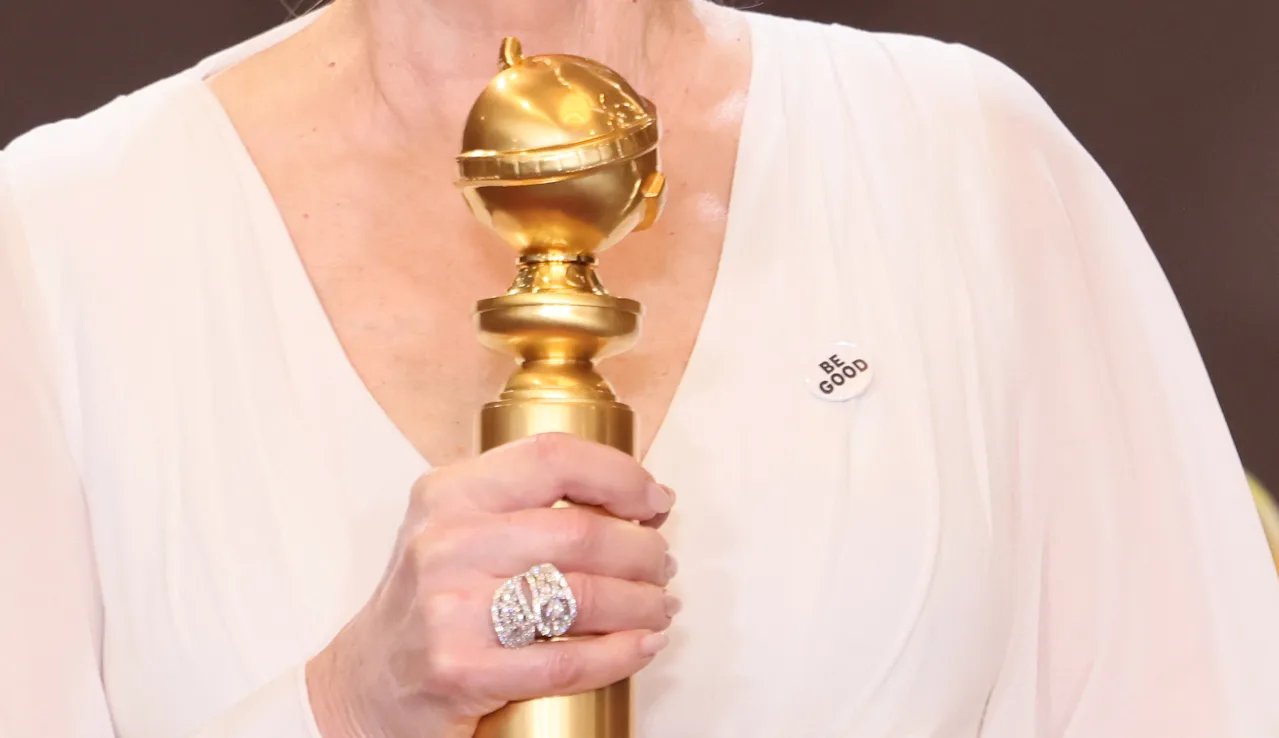
Forget the red gowns. Forget the golden trophies. Forget the celebrity speeches.
A one inch pin just became the loudest statement of the night.
While the world watched Hollywood’s elite parade down the Beverly Hilton red carpet in $50,000 designer gowns and million dollar jewelry, a handful of celebrities wore something worth infinitely more: solidarity.
Mark Ruffalo. Wanda Sykes. Jean Smart. Natasha Lyonne. Tessa Thompson. Bella Ramsey. Ariana Grande.
Each wore a simple black and white pin. Two words that cut through the glamour like a knife. “ICE OUT.” “BE GOOD.”
No publicist approved it. No studio coordinated it. No official Golden Globes statement endorsed it.
This was grassroots activism crashing Hollywood’s most exclusive party. And it worked.
The pins honored Renee Nicole Good, a 37 year old mother and poet shot dead by an ICE agent in Minneapolis just four days before the ceremony. Her death, captured on multiple videos that contradicted official government statements, sparked nationwide fury and a movement that reached the Golden Globes in record time.
This is the story of how two organizers, one late night text, and a whisper campaign turned fashion into protest.
How A Text Message Became A Movement In 72 Hours
Nelini Stamp’s phone buzzed late at night on January 7, 2026.
The text was from Jess Morales Rocketto. Short. Urgent. “Did you see what happened in Minneapolis?”
Both women are veteran organizers. Stamp works with Working Families Power, fighting for economic and racial justice. Rocketto leads Maremoto, a Latino advocacy organization amplifying immigrant voices. They’d collaborated before, turning cultural moments into political action.
But this felt different. More urgent. More personal.
Renee Nicole Good had been shot hours earlier. Videos were spreading across social media. The disconnect between footage and government statements was stark. And the Golden Globes were happening in four days.
Four days to design pins. Four days to build a distribution network. Four days to reach celebrities insulated by publicists, security teams, and carefully managed schedules.
Most PR campaigns need months of planning. This one had 96 hours.
“We need every part of civil society to speak up,” Stamp said later, explaining the rushed timeline. “We need our artists. We need our entertainers. We need the folks who reflect society.”
They started texting contacts. Not agents. Not publicists. Just people who cared. People connected to Hollywood but not controlled by its machinery.
The design came together fast. Black and white for clarity and impact. “ICE OUT” for the direct demand. “BE GOOD” honoring Renee’s surname while calling for basic human decency.
No logos. No branding. No organizational names. Just the message.
Then came the hard part: getting pins onto bodies walking the Beverly Hilton red carpet.
Share this with anyone who thinks change takes forever.
The Whisper Campaign That Outplayed Hollywood PR
Hollywood runs on official channels. Press releases. Publicists. Coordinated campaigns. Everything sanctioned, approved, controlled.
The ICE pin campaign ignored all of it.
Instead, allies brought pins to pre Golden Globes parties. Industry events where celebrities, activists, and artists mix outside official structures. These gatherings happen across Los Angeles in the days before major awards shows.
The distribution method was brilliantly low tech. Someone would approach a celebrity, show them the pin, explain Renee’s story, and ask: “Would you wear this?”
If they said yes, the pin went into their purse or pocket. No contracts. No publicity agreements. No photos required. Just trust that the person would follow through when cameras rolled.
“They put it in their purse and they’re like, ‘Hey would you wear this?’ It’s so grassroots,” Rocketto explained.
This approach avoided the gatekeepers who might have blocked a more official campaign. Publicists worried about brand safety probably would have advised clients against controversial political statements. Studios concerned about conservative audience backlash might have discouraged participation.
But when a friend hands you a pin at a party and tells you about a mother killed while dropping her kid at school? That’s harder to refuse.
The whisper network spread. Mark Ruffalo got a pin. So did Wanda Sykes. Then Natasha Lyonne. Then others.
By the time Golden Globes day arrived, dozens of pins were distributed. Nobody knew exactly who would wear them publicly. That uncertainty added power. When Ruffalo appeared on the red carpet wearing “ICE OUT,” it wasn’t part of a coordinated photo op. It was a genuine choice.
That authenticity resonated. This wasn’t performative activism manufactured by PR teams. This was real people making real choices to honor a real victim.
Tag someone who needs to understand how grassroots organizing actually works.
The Red Carpet Moment That Stopped Photographers
Credits: Entertainment Weekly
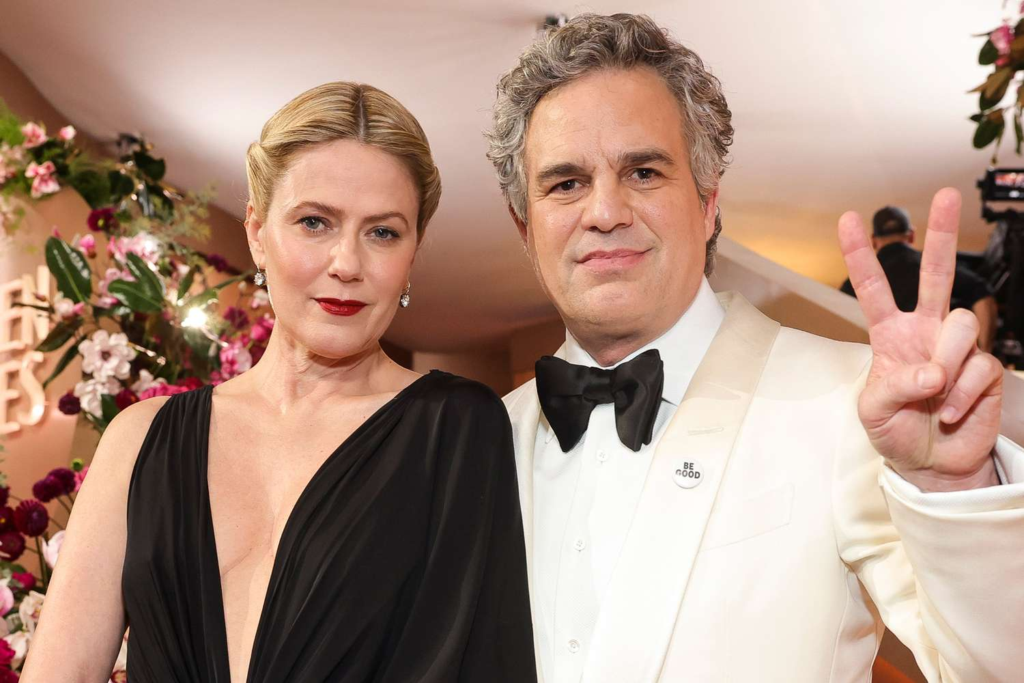
Mark Ruffalo arrived first among pin wearers.
Photographers noticed immediately. Close up shots showed the small black and white pin clearly. Questions started. “What does your pin mean?” “Who is Renee Good?”
Ruffalo explained briefly, letting the pin speak loudly. He’s worn activist messages before, from climate change to Palestinian rights to social justice. This wasn’t new territory for him. But the timing, the simplicity, the directness felt different.
Wanda Sykes came next. Her pin placement was deliberate, visible, impossible to miss. Sykes built her comedy career on speaking uncomfortable truths. The pin was perfectly on brand while also transcending brand.
Natasha Lyonne followed. Then Tessa Thompson. Then Bella Ramsey, at just 21 years old already understanding that visibility demands responsibility.
Each appearance multiplied the message. One celebrity wearing a protest pin could be dismissed as individual choice. Multiple celebrities wearing identical pins signals movement.
Inside the ballroom, Ariana Grande wore the “BE GOOD” pin. Her 380 million Instagram followers meant the pin’s reach extended far beyond people watching the ceremony live.
But the most powerful moment came when Jean Smart accepted her Golden Globe for Hacks.
Smart wore the “BE GOOD” pin prominently on her dress. As she stood at the podium holding her trophy, delivering her acceptance speech, millions of viewers saw that pin. Smart didn’t mention it. She didn’t need to. The visual spoke volumes.
The juxtaposition was stark. Hollywood celebrating its excellence while simultaneously acknowledging that four days earlier, a mother was killed by a government agent. Joy and grief sharing the same stage.
That complexity is what makes the pins so effective. They didn’t demand the ceremony stop or turn completely political. They simply insisted that even in celebration, reality matters. Renee Good’s death happened. Immigration enforcement violence is real. Justice hasn’t arrived.
The pins said all that without interrupting a single acceptance speech.
Don’t miss how powerful restraint can be.
Who Renee Nicole Good Actually Was
Credits: People
The pins honored a woman most Golden Globes viewers had never heard of.
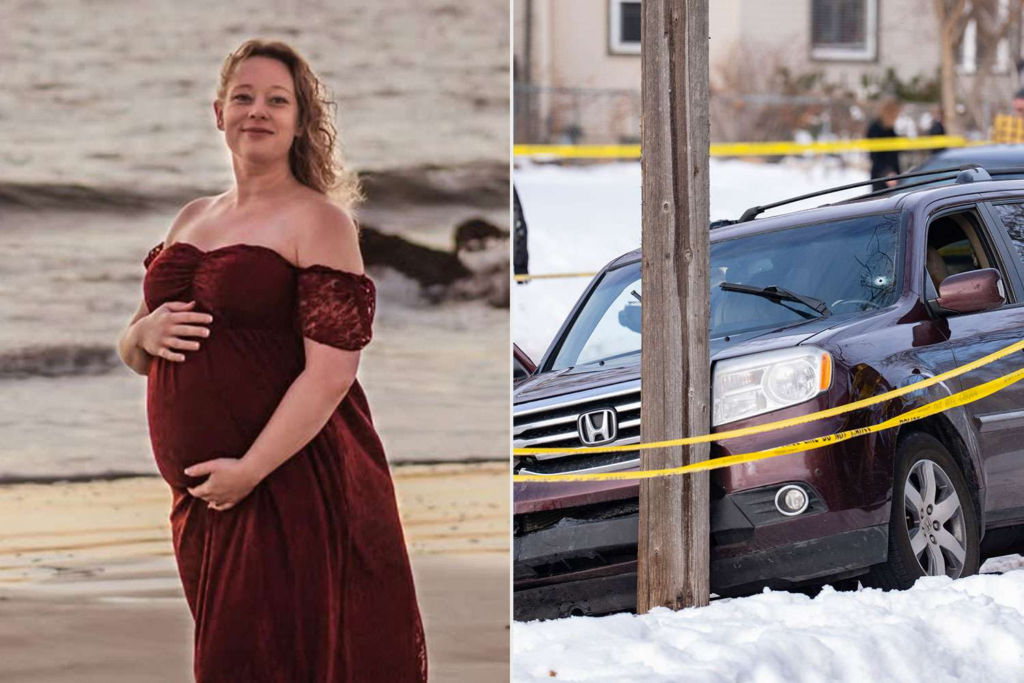
Renee Nicole Macklin Good was a poet. Her work explored identity, family, and justice. She’d recently relocated to Minneapolis with her wife Becca and their six year old son, seeking community and new beginnings.
Friends described her as fiercely protective of neighbors and strangers alike. When she saw ICE conducting operations in her neighborhood, stopping wasn’t a political calculation. It was character.
The morning of January 7 started normally. Good dropped her son at school. Returning home, she and Becca noticed ICE agents in their neighborhood. They stopped, as Good often did when witnessing potential injustice.
Multiple videos captured what happened next from different angles. Good sat in her maroon Honda Pilot wearing a light blue flannel over a red hoodie. An ICE agent, later identified as Jonathan Ross, approached with his phone recording.
The interaction started calm. “That’s alright, dude, I’m not upset,” Good said at one point.
Her wife Becca challenged the agents about confronting them. Tensions rose but remained non violent.
Then Good attempted to pull away slowly on the snowy street. Agent Ross stepped in front of her vehicle and fired three shots through the windshield. One struck Good in the face.
She slumped forward, bleeding. ICE agents refused to let a bystander who identified as a physician provide aid. First responders arrived six minutes after the shooting. Good received CPR on the street. Eight minutes after being shot, her body was placed in an ambulance.
She died at Hennepin County Medical Center. Cause of death: gunshot wound to the head.
Renee Nicole Good was 37 years old. She left behind a wife, a young son, poetry that will never be finished, and a community demanding justice.
The pins ensured her name wouldn’t be forgotten when the news cycle moved on.
Share this so her story reaches someone who needs to hear it.
The Government Response That Made Everything Worse
DHS Secretary Kristi Noem’s statement came quickly after Good’s death.
Too quickly. Before investigations concluded. Before all videos surfaced. Before facts were clear.
Noem claimed Good “attacked ICE agents and attempted to run them over and ram them with her vehicle. An officer acted quickly and defensively to protect himself and people around him.”
The videos contradicted this narrative almost immediately.
Multiple eyewitnesses described Good pulling away slowly, not ramming anyone. One resident told reporters: “An ICE agent stepped in front of her vehicle and said ‘Stop!’ and then, I mean, she was already moving, and then point blank shot her through her windshield in the face.”
Another eyewitness: “Her car backed up slowly and proceeded to pull forward pretty slowly.”
CNN’s Jake Tapper confronted Noem three days later during a live interview. “That’s not what happened. We all saw what happened.”
Noem doubled down: “It absolutely is what happened.”
President Trump echoed similar claims on social media, stating Good “ran over the ICE officer.” No video supports this claim. No eyewitness testimony confirms it. But the narrative persists in official statements.
This disconnect fueled the outrage that powered the pin campaign. When video evidence contradicts government statements so starkly, trust evaporates. When officials lie about a mother’s death, people demand accountability.
Minneapolis Mayor Jacob Frey captured public anger perfectly: “ICE needs to get the f*** out of our city.”
The Golden Globes pins channeled that fury into visible, sustained protest. They said: we saw the videos. We don’t believe the lies. We demand justice.
Tag someone who’s tired of official lies.
The Other Name The Pins Remember
Renee Good wasn’t the only victim organizers honored.
Keith Porter was shot and killed by an off duty ICE agent on New Year’s Eve in Los Angeles. His death received less media coverage than Good’s but mattered equally to campaign organizers.
Porter’s killing and Good’s death happening within a week illustrated a pattern, not isolated incidents. The pins acknowledged both names, both lives, both families grieving.
This deliberate choice expanded the campaign’s meaning. It wasn’t just about one tragic shooting. It was about systemic problems with immigration enforcement, agent training, use of force policies, and accountability mechanisms that rarely hold officers responsible.
By wearing pins that honored multiple victims, celebrities signaled awareness that this isn’t a single bad apple situation. It’s structural. It’s ongoing. It requires comprehensive reform, not just investigating one agent.
The campaign also referenced Operation Salvo, the Trump administration’s expanded immigration enforcement operation announced days after Good’s death. The timing connected her killing to broader policy shifts that advocates argue will lead to more confrontations, more violence, more deaths.
The pins said: we see the pattern. We oppose the expansion. We demand change before more families lose mothers, fathers, sons, daughters to enforcement violence.
Don’t sleep on understanding how individual tragedies connect to systemic problems.
Why This Generation Of Celebrities Can’t Stay Silent
The Golden Globes pin phenomenon reflects massive generational shifts in celebrity responsibility expectations.
Bella Ramsey wearing the pin at 21 isn’t surprising. For younger celebrities, activism isn’t optional or risky. It’s expected and career enhancing.
Millennials and Gen Z audiences punish silence. They interpret neutrality as privilege. They support artists who align with their values and cancel those who don’t.
This creates pressure but also opportunity. Celebrities who authentically engage with social movements build deeper fan connections. Those who stay silent or apolitical risk being dismissed as out of touch.
The math is simple: Mark Ruffalo’s activism enhances his brand among audiences who care about climate justice and immigrant rights. Staying silent would cost him credibility with core supporters.
For Ariana Grande, whose fanbase skews young and progressive, wearing the pin aligns with audience expectations. Not wearing it might have sparked more controversy than wearing it.
This represents a fundamental shift from previous Hollywood eras when publicists advised celebrities to avoid controversial topics to protect broad appeal. Now, broad appeal requires taking stands.
The ICE pins succeeded partly because they gave celebrities easy access to activism. Wearing a small pin requires minimal effort but carries symbolic weight. It’s accessible solidarity that doesn’t demand lengthy speeches or major career risks.
For fans watching at home, seeing favorite celebrities wear these pins validates their concerns. It says: your values matter. Your fears are legitimate. You’re not alone.
That validation has power, especially for immigrant communities watching Hollywood’s biggest platforms acknowledge their humanity and demand their safety.
Share with the youngest politically aware person you know.
The ACLU Backing That Gave It Credibility
The campaign wasn’t just grassroots organizers working alone. It had institutional muscle.
The American Civil Liberties Union officially endorsed the “ICE OUT” and “BE GOOD” pins. The ACLU’s involvement transformed the campaign from symbolic gesture to connected advocacy.
The ACLU has been at the forefront of challenging immigration enforcement policies for years. They’ve represented families separated at borders, documented human rights violations in detention facilities, and filed lawsuits against unconstitutional enforcement tactics.
Their endorsement signaled this wasn’t performative celebrity activism disconnected from real advocacy work. It was tied to ongoing legal battles, legislative efforts, and grassroots organizing in immigrant communities.
Other major organizations joined. MoveOn promoted the campaign to its millions of members. The National Domestic Workers Alliance, representing immigrant workers nationwide, backed it. Numerous local immigrant rights groups amplified the message.
This coalition approach gave the pins credibility beyond Hollywood circles. It connected red carpet fashion to courtrooms, legislative halls, and community organizing spaces.
The pins became symbols of a broader movement, not just a one night statement. They represented years of advocacy work suddenly visible on culture’s biggest stage.
Tag anyone who doubts celebrity activism can connect to real change.
The Plan To Make This Last Beyond One Night
“This is only the beginning.”
Jess Morales Rocketto made that promise clear. The Golden Globes were the launch, not the conclusion.
The campaign plans to continue through entire awards season. That means pins at Critics Choice Awards. At SAG Awards. At BAFTAs. At Oscars.
Each appearance keeps Renee Good’s name alive. Each pin reminds viewers that immigration enforcement killed a mother. Each moment pressures politicians and agencies to respond.
Awards season runs through March. Three months of potential protest moments, red carpet statements, celebrity platforms demanding justice.
The strategy is brilliant. One night of protest can be dismissed as trending topic that fades. Sustained visibility across months builds narrative momentum. It keeps issues in news cycles. It forces conversations powerful institutions prefer avoiding.
Hollywood has attention. The organizers plan maximizing it.
The campaign also pledges ensuring Keith Porter and other victims of enforcement violence aren’t forgotten. Each awards show becomes opportunity to say more names, share more stories, demand broader accountability.
This sustained approach transforms symbolic pins into tools for actual movement building. It’s not just about Golden Globes night. It’s about using every major cultural moment from January through March to keep pressure constant.
For immigrant communities watching, this consistency matters enormously. It says: you’re not forgotten between news cycles. Your safety matters beyond trending topics. We’re committed for the long term.
Don’t miss out on following this through to the Oscars.
What Regular People Can Actually Do
Watching celebrities wear pins is inspiring. But what can someone without a red carpet invitation actually do?
First, learn the full story. Understand what happened to Renee Good and Keith Porter beyond headlines. Watch the videos if you can emotionally handle them. Read investigative reporting. Knowledge enables effective action.
Second, support organizations leading this work. The ACLU needs donations and volunteers. Maremoto needs amplification. Working Families Power needs grassroots support. National Domestic Workers Alliance needs visibility. Your money, time, and social media shares matter.
Third, contact elected officials. Tell local, state, and federal representatives you care about ICE accountability and enforcement reform. City councils can limit local cooperation with federal immigration authorities. State legislators can pass protective laws. Federal representatives can demand oversight and hearings.
Fourth, show up to protests and community meetings. Immigrant rights organizations in every major city are organizing responses. They need bodies at demonstrations, voices at public meetings, witnesses documenting ICE actions.
Fifth, support immigrant owned businesses and organizations economically. When communities feel threatened, financial solidarity helps them survive and resist.
Sixth, share these stories everywhere. Post about Renee Good on social media. Talk about the pins with friends and family. Explain why it matters. Most people didn’t notice the pins or understand their meaning. Your sharing fills that knowledge gap.
Seventh, vote in every election. Local races for sheriffs, district attorneys, city councils, and state legislators directly impact how immigration enforcement operates in your community. Primaries and general elections both matter critically.
The Golden Globes pins started conversations. But conversations without action change nothing. The real work happens in communities, at voting booths, in courtrooms, at city council meetings, every single day.
Which action will you commit to this week? What part of Renee’s story demands your response?
Drop your commitment below. Share this with everyone who watched the Golden Globes. Follow the organizations leading this movement. Stay loud. Stay engaged. Stay committed.
The pins were powerful. But your actions create the change they demanded. Make Renee Nicole Good’s name mean something. Make her death force the accountability it deserves.
The red carpet moment happened. Now comes your moment. Make it count.