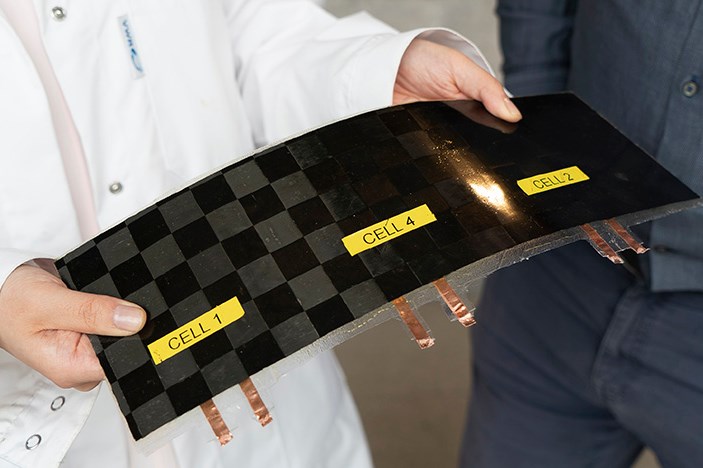
The Revolution in Energy Storage Design
The way we think about batteries is undergoing a fundamental transformation. For decades, batteries have been separate components housed in their own compartments, adding weight without contributing to the overall structure of devices or vehicles. This traditional approach creates what engineers call dead weight, where the battery casing and mounting systems serve only one purpose. The emergence of structural battery composites represents a radical departure from this convention, merging energy storage capabilities with structural integrity into a single multifunctional material.
Imagine a laptop where the casing itself stores power, or an electric vehicle where the chassis doubles as the battery system. This is not science fiction but rather the tangible promise of structural battery composites, which have recently been recognized as one of the top emerging technologies with potential to reshape industries. The fundamental concept behind these innovative materials involves using carbon fiber and advanced polymer systems to create components that simultaneously bear mechanical loads while storing and delivering electrical energy.
The implications extend far beyond simple weight reduction. Traditional battery packs in electric vehicles can account for up to 25 percent of the total vehicle weight, requiring reinforced structures just to support them. Aircraft face even more stringent constraints, where every kilogram matters in terms of fuel efficiency and range. Consumer electronics companies constantly battle the trade off between battery capacity and device thickness. Structural battery composites offer a solution to all these challenges by eliminating the distinction between energy storage and structural components.
Understanding the Core Technology
At the heart of structural battery composites lies a sophisticated architecture where carbon fibers perform dual roles. In the negative electrode, carbon fibers absorb and release lithium ions during charge and discharge cycles while maintaining their structural properties. The positive electrode typically uses carbon fibers coated with lithium iron phosphate, a stable and relatively safe battery chemistry that has proven effective in various applications.
The electrolyte system in structural batteries differs dramatically from conventional liquid electrolytes found in traditional lithium ion cells. Instead, these systems employ solid polymer electrolytes or ceramic materials that provide both ionic conductivity for battery operation and mechanical stiffness for structural support. This solid electrolyte serves as the matrix that binds the carbon fiber electrodes together, creating a laminated composite structure similar to those used in aerospace applications.
Current state of the art structural battery composites achieve an elastic modulus of approximately 70 gigapascals, making them comparable in stiffness to aluminum. Their tensile strength reaches 312 megapascals, sufficient for many load bearing applications. The energy density currently stands at around 24 watt hours per kilogram, which is roughly 20 percent of conventional lithium ion batteries. While this might seem like a disadvantage, the weight savings from structural integration often more than compensate for the lower energy density.
The manufacturing process represents a critical aspect of structural battery technology. Two primary approaches have emerged. The traditional laminated battery method adapts established composite manufacturing techniques, infusing structural battery electrolyte into assemblies of polymer separators sandwiched between electrodes. This approach benefits from existing manufacturing infrastructure and expertise. The alternative 3D fiber battery approach involves coating individual carbon fibers with active materials, potentially offering better structural properties and more uniform current distribution.
Transforming Electric Vehicles
The automotive industry stands to gain tremendously from structural battery integration. Current electric vehicles carry battery packs that occupy significant space and add substantial weight without contributing to vehicle structure. The body and chassis must be designed to accommodate and protect these separate battery modules, adding further weight and complexity. Structural batteries could fundamentally change this equation.
Research suggests that integrating structural batteries into vehicle body panels, doors, and chassis components could reduce overall vehicle weight by 40 percent compared to conventional electric vehicle designs. This weight reduction translates directly into improved efficiency and extended driving range. One study projects that structural batteries could increase electric vehicle range by up to 70 percent when accounting for both the direct energy storage increase and the reduced energy consumption from lighter weight.
The safety implications are equally important. Conventional battery packs concentrate large amounts of energy in a single location, creating challenges for crash protection. Structural batteries distribute energy storage throughout the vehicle structure, potentially improving crash safety by eliminating concentrated energy sources. The composite materials themselves offer excellent energy absorption characteristics during impacts.
However, integrating structural batteries into vehicles presents unique challenges. Automotive structures experience complex loading conditions including bending, torsion, vibration, and impact. The battery function must remain reliable under all these conditions while meeting stringent automotive safety standards. Temperature management becomes more complex when batteries are distributed throughout the structure rather than concentrated in a single pack with dedicated cooling systems.
Manufacturing scalability represents another hurdle. Automotive production volumes demand manufacturing processes that can produce consistent quality at high speeds. Current structural battery manufacturing techniques remain largely laboratory scale. Transitioning to automotive production volumes will require significant development of automated manufacturing equipment and quality control systems.
Aerospace Applications Take Flight
Aircraft represent perhaps the most compelling application for structural battery composites. Weight is the eternal enemy in aerospace, where every kilogram added requires more fuel to overcome gravity. Current electric aircraft concepts struggle with battery weight, limiting them to short ranges and small passenger capacities. Structural batteries offer a potential breakthrough.
The wings and fuselage of aircraft consist largely of composite materials, particularly carbon fiber reinforced polymers. These structures already use materials compatible with structural battery designs. Transforming wing skins or fuselage panels into energy storage devices could effectively add battery capacity without the weight penalty of conventional batteries. European research projects have demonstrated that structural battery integration could double the effective system level energy density compared to conventional batteries when accounting for eliminated structural weight.
Electric vertical takeoff and landing aircraft, or eVTOLs, face particularly acute energy density challenges. These aircraft need sufficient power for vertical flight while maintaining enough energy for horizontal cruise and adequate safety margins. Structural batteries embedded in airframe components could extend range and payload capacity, making urban air mobility more practical.
The certification challenges for aerospace applications cannot be understated. Aircraft structures must meet extremely rigorous safety standards with multiple redundancies. Demonstrating that a component can simultaneously provide reliable energy storage and meet structural certification requirements will require extensive testing and validation. Fire safety presents particular concerns, as lithium based batteries can experience thermal runaway under certain failure conditions. The distributed nature of structural batteries might actually improve safety by preventing single point failures, but proving this to certification authorities will demand comprehensive evidence.
Maintenance and inspection protocols will need complete rethinking. Current aircraft structures undergo regular inspections for cracks, corrosion, and other damage. Structural batteries will require monitoring of both structural integrity and battery health. Developing non destructive inspection techniques that can assess both aspects simultaneously represents a significant technical challenge.
Consumer Electronics Revolution
The consumer electronics industry constantly pushes toward thinner, lighter, and more capable devices. Smartphones have evolved from thick bricks to slim slabs largely through battery technology improvements and efficient component integration. Structural batteries promise to accelerate this trend dramatically.
Consider a laptop where the entire bottom case functions as the battery. The keyboard deck, the screen back, or even internal structural members could all contribute to energy storage. This would allow dramatically thinner overall designs or substantially increased battery capacity in current form factors. Mobile phones could become as thin as credit cards while maintaining all day battery life, with the phone case itself serving as the power source.
Wearable devices face even more stringent space and weight constraints. Smartwatches, fitness trackers, and augmented reality glasses all struggle to balance functionality with comfort and wearability. Structural batteries integrated into device chassis and bands could extend operating time while maintaining or reducing overall size and weight. The conformability of structural composite materials enables curved and irregular shapes that match human ergonomics.
The manufacturing economics for consumer electronics differ from vehicles or aircraft. Electronics production involves enormous volumes with very tight cost targets. Structural battery integration must not only improve product performance but also maintain or reduce manufacturing costs. The good news is that consumer electronics already use substantial amounts of composite materials and have sophisticated supply chains for advanced materials.
Product lifecycle considerations become more complex with structural batteries. Current devices allow battery replacement when capacity degrades. With structural integration, the battery cannot be easily separated from the device structure. This could lead to criticism about planned obsolescence and environmental impact. However, if the structural battery maintains adequate capacity throughout the device’s useful structural life, this concern diminishes. Recycling processes will need development to recover valuable materials from structural battery composites at end of life.
Robotics and Autonomous Systems
Robotics applications showcase structural batteries’ unique advantages. Robots, whether industrial manipulators, mobile platforms, or humanoid designs, typically carry batteries as payload, reducing their useful work capacity. Integrating energy storage into robot structural members directly increases operational time or payload capacity.
Autonomous drones demonstrate this principle clearly. Current multirotor drones dedicate significant weight to batteries, limiting flight time typically to 20 or 30 minutes. Structural batteries integrated into arms, body panels, or landing gear could effectively double or triple this endurance without increasing overall weight. This would transform applications from inspection and photography to package delivery and emergency response.
Ground based robots face similar constraints. Industrial robots performing warehouse tasks, domestic robots providing services, or field robots conducting environmental monitoring all have limited operating ranges before requiring recharge. Robotic arms built from structural battery composites could operate longer between charges or carry heavier loads. The distributed energy storage also lowers the center of gravity compared to a concentrated battery pack, improving stability.
Research has demonstrated biomorphic structural batteries for robotics where conformal energy storage wraps around the robot body much like adipose tissue in biological organisms. These demonstrations achieved 72 times greater energy capacity compared to conventional batteries in the same volume. The flexible nature of certain structural battery designs allows them to bend and deform with robot motion, enabling applications in soft robotics where rigid conventional batteries would be impractical.
Humanoid robots and prosthetic devices particularly benefit from distributed energy storage. Matching the form factor of human limbs while providing adequate power has been a persistent challenge. Structural batteries integrated into artificial limbs could provide power while maintaining natural appearance and movement. The mechanical properties of structural composites match well with the strength and stiffness requirements of prosthetics.
Manufacturing Challenges and Solutions
Scaling structural battery production from laboratory prototypes to commercial products presents substantial challenges. The manufacturing process must achieve precise control over multiple aspects simultaneously. The electrochemical performance depends on uniform coating of active materials on carbon fibers, proper electrolyte infiltration, and intimate contact between layers. The structural performance requires fiber alignment, void free matrix consolidation, and controlled cure processes.
Existing composite manufacturing infrastructure provides a foundation. Industries like aerospace and automotive already produce large carbon fiber composite structures with high quality and repeatability. Adapting these processes for structural batteries requires integrating additional steps for electrode preparation and electrolyte incorporation. Some researchers have successfully demonstrated using automated fiber placement systems, which robotically lay down carbon fiber tows, to create structural battery laminates.
Quality control becomes more complex with multifunctional materials. Manufacturers must verify both structural properties and electrochemical performance for every part. Non destructive testing methods need development to assess battery function without disassembling or destroying the part. Ultrasonic inspection, thermography, and electrical impedance spectroscopy are candidate techniques under investigation.
The interface between structural batteries and conventional components requires careful engineering. Electrical connections must carry current while maintaining structural continuity. Mounting points, fastener holes, and other features must not compromise either battery function or structural integrity. Design tools that can simultaneously optimize structural and electrochemical performance are essential but still under development.
Cost reduction will be critical for commercial success. Current structural battery prototypes use expensive materials and labor intensive processes. Carbon fiber costs have decreased substantially over the past decade, and lithium iron phosphate is among the least expensive battery active materials. However, the specialized polymer electrolytes and coating processes add cost. Achieving competitive economics will require process innovations and scale economies.
Performance Characteristics and Trade Offs
Understanding the performance characteristics of structural battery composites requires appreciating the inherent trade offs in multifunctional design. A component optimized purely for energy storage would use materials and architectures different from one optimized for structural performance. Combining both functions in a single component necessarily involves compromises.
The energy density of current structural batteries, around 24 to 30 watt hours per kilogram, falls short of the 150 to 250 watt hours per kilogram achieved by high performance lithium ion cells. This gap exists because structural requirements constrain material choices. Carbon fibers make excellent structural reinforcement but are not ideal electrode materials compared to graphite or silicon. The solid polymer electrolyte provides mechanical strength but has lower ionic conductivity than liquid electrolytes.
However, system level analysis often tells a different story. When accounting for eliminated battery enclosures, mounting structures, and protective systems, the effective system energy density can actually exceed conventional approaches. A vehicle body panel that stores 30 watt hours per kilogram while replacing a structural panel that stored zero energy represents a net gain, even if a conventional battery stores more energy per kilogram when considered in isolation.
The power density, currently around 10 watts per kilogram, limits applications requiring high discharge rates. Rapid acceleration in vehicles or high power maneuvers in aircraft may require supplementary high power batteries or capacitors. However, many applications operate at modest average power levels with occasional peaks, where a hybrid approach using structural batteries for energy storage and conventional batteries for power peaks could be optimal.
Cycle life represents another critical performance metric. Conventional lithium ion batteries typically achieve 500 to 1000 cycles before capacity degrades significantly. Structural batteries must match or exceed this while simultaneously maintaining structural integrity over potentially millions of mechanical loading cycles. The coupling between mechanical stress and electrochemical degradation is not yet fully understood, and long term testing is ongoing.
Temperature sensitivity affects both structural and battery performance. Polymer materials generally soften at elevated temperatures, reducing structural stiffness. Battery performance typically improves with moderate heating but suffers at temperature extremes. The optimal operating temperature range for structural batteries is still being established. Thermal management systems may be necessary for applications experiencing wide temperature variations.
Safety Considerations and Standards
Safety represents paramount importance for any battery technology, and structural batteries introduce unique considerations. The integration of energy storage throughout load bearing structures means that mechanical damage could potentially compromise battery safety. Conversely, battery failures could affect structural integrity. Addressing these coupled failure modes requires comprehensive safety analysis.
Lithium iron phosphate chemistry used in many structural battery designs offers inherent safety advantages. This chemistry is much more thermally stable than lithium cobalt oxide or nickel manganese cobalt chemistries. It does not release oxygen when heated, making thermal runaway much less likely. The use of solid polymer electrolytes further improves safety by eliminating flammable liquid electrolytes that can leak and ignite.
The distributed nature of structural batteries potentially improves safety by avoiding concentrated energy sources. A mechanical impact damages only the local area rather than compromising an entire battery pack. Electrical isolation between different structural battery sections can prevent cascading failures. However, this distributed architecture also means damage could occur at many locations, requiring robust monitoring systems.
Standards for structural batteries do not yet exist. Current battery safety standards focus on standalone cells and modules, while structural standards address mechanical performance. New standards must address the coupled requirements. Industry groups and regulatory bodies are beginning to develop these frameworks, but comprehensive standards remain years away.
Testing protocols must evolve to assess structural battery safety under realistic conditions. Combined mechanical and electrical abuse testing is necessary. For example, how does a structural battery respond to impact loading while at various states of charge? What happens during structural fatigue cycling with simultaneous charge discharge cycles? These questions require extensive experimental programs to answer.
Fire suppression in structural batteries presents unique challenges. Conventional battery packs can incorporate fire barriers and suppression systems relatively easily. Distributed structural batteries may require novel approaches like embedded fire suppressant materials that activate when overheating is detected. Research into self healing materials that can isolate damaged regions is ongoing.
Material Science Innovations
The development of structural battery composites has driven innovations across multiple material science domains. Creating materials that excel at both mechanical and electrochemical functions requires molecular level engineering of polymers, careful selection of carbon fiber properties, and optimization of composite architectures.
The structural electrolyte represents perhaps the most critical material innovation. This material must conduct lithium ions while providing mechanical stiffness and bonding the electrode layers. Early structural electrolytes used simple solid polymer electrolytes, but these had poor ionic conductivity. Recent advances include nanofiber reinforced electrolytes that create percolating networks for ion transport while maintaining mechanical properties. Some designs incorporate ceramic nanoparticles to enhance both stiffness and conductivity.
Carbon fiber selection involves balancing multiple properties. High strength carbon fibers provide excellent structural performance but may not optimize electrochemical behavior. The surface properties, electrical conductivity, and ability to intercalate lithium all matter for battery function. Some researchers are developing carbon fibers specifically optimized for structural battery applications, with tailored surface treatments and microstructures.
The coating of lithium iron phosphate onto carbon fibers requires precise control. The coating must be thin enough to allow lithium diffusion but thick enough to provide adequate capacity. Uniformity is critical to avoid local current concentrations. Various deposition techniques including electrophoretic deposition, chemical vapor deposition, and solution coating have been explored. Each offers different trade offs between coating quality, scalability, and cost.
Separator materials must prevent electrical shorts while allowing ion transport and contributing to mechanical strength. Traditional battery separators are thin porous polymers optimized for electrochemical performance with minimal mechanical considerations. Structural battery separators must be more robust. Woven or nonwoven fiber mats can provide mechanical reinforcement while maintaining porosity for ion transport.
The interfaces between materials critically affect both performance domains. The electrode electrolyte interface governs charge transfer kinetics and mechanical load transfer. Poor interfacial bonding leads to high resistance and weak structures. Surface treatments and coupling agents improve adhesion. Understanding and controlling these interfaces at the nanoscale remains an active research area.
Economic Analysis and Market Potential
The economic viability of structural battery composites depends on multiple factors including material costs, manufacturing expenses, performance benefits, and market scale. While current prototypes are expensive, projected costs at production volumes appear competitive for many applications.
Material costs are dominated by carbon fiber and lithium iron phosphate. Carbon fiber prices have dropped significantly, from over $30 per kilogram a decade ago to around $10 to 15 per kilogram for industrial grades today. Further price reductions are expected as production capacity expands. Lithium iron phosphate is among the least expensive battery cathode materials, costing substantially less than nickel cobalt alternatives. The polymer electrolyte materials are more expensive but represent a smaller fraction of total weight.
Manufacturing costs remain uncertain given the lack of high volume production experience. However, structural battery manufacturing largely builds on existing composite fabrication and battery manufacturing processes. Companies with expertise in both domains are well positioned to achieve efficient production. Automated manufacturing equipment developed for conventional composites can likely be adapted for structural batteries with relatively modest modifications.
The value proposition varies by application. In aerospace, where weight savings are extremely valuable, structural batteries could justify significant cost premiums. Aircraft operators would pay more for structural batteries if the weight reduction enables greater range or payload. In consumer electronics, cost sensitivity is higher, but even modest improvements in thinness or battery life can differentiate products in competitive markets.
Market size projections vary widely depending on assumptions about performance achievements and adoption rates. The electric vehicle battery market alone exceeds $40 billion annually and is growing rapidly. If structural batteries capture even a small fraction of this market, the opportunity is substantial. Adding aerospace, consumer electronics, and robotics applications expands the potential further.
Investment in structural battery technology has accelerated recently. Venture capital, government research funding, and corporate development programs are all increasing. Several startups have emerged specifically targeting structural battery commercialization. Established battery manufacturers and composite materials companies are also developing internal programs. This funding influx suggests confidence in the technology’s commercial potential.
Environmental and Sustainability Implications
The environmental impact of structural battery composites involves complex considerations spanning raw material extraction, manufacturing energy, use phase efficiency, and end of life recycling. In many aspects, structural batteries offer sustainability advantages over conventional approaches, though challenges remain.
The reduced weight in vehicles and aircraft directly translates to lower energy consumption during operation. For electric vehicles, lighter weight means less battery capacity is needed to achieve a given range, creating a virtuous cycle of further weight reduction. In aviation, weight reduction dramatically improves fuel or energy efficiency. Over the lifetime of a vehicle or aircraft, these operational energy savings can far exceed the energy invested in manufacturing.
Material efficiency improves when components serve multiple functions. Manufacturing separate battery enclosures and structural components requires more raw materials and processing steps than creating integrated structural batteries. This efficiency extends to transportation and installation, where shipping lighter integrated components reduces logistics emissions.
The carbon fiber recycling challenge affects structural batteries as it does other carbon fiber composites. Carbon fiber is energy intensive to produce, making recycling economically and environmentally attractive. However, recycling thermoset composite materials, which most structural batteries use, is technically challenging. Mechanical recycling can recover fibers for lower grade applications. Chemical recycling processes that break down the polymer matrix while preserving fiber properties show promise but require further development.
Lithium iron phosphate recycling is less established than recycling for other lithium ion chemistries because the material contains no cobalt or nickel, which have high recovery value. However, lithium and iron are both recyclable, and as lithium prices increase, recycling economics improve. Developing recycling processes specifically for structural battery composites that can recover both fibers and battery materials efficiently is an important research direction.
The longer effective lifetime of structural batteries could reduce overall environmental impact. If structural batteries maintain adequate performance throughout a vehicle’s or device’s structural lifetime, fewer battery replacements are needed. This contrasts with conventional batteries that often require replacement before the product’s structural life ends. Reducing the frequency of battery replacement saves both materials and manufacturing energy.
Future Directions and Ongoing Research
Research into structural battery composites is accelerating worldwide, with investigations spanning fundamental material science to system integration strategies. Several key directions show particular promise for advancing the technology toward widespread commercialization.
Improving energy density remains a primary goal. Current structural batteries achieve roughly 20 to 30 watt hours per kilogram, but researchers are pursuing pathways to 50, 100, or even higher. Using silicon enhanced carbon fibers for the negative electrode could substantially increase capacity. Developing thicker cathode coatings without compromising rate capability would boost energy storage. Novel electrolyte formulations with higher ionic conductivity enable faster charging and discharging.
Hybrid approaches that combine structural batteries with conventional high performance batteries offer near term practical solutions. The structural batteries provide baseline energy storage throughout the structure, while concentrated conventional batteries supply peak power and additional energy capacity. Optimizing the ratio and control strategies for such hybrid systems is an active research topic.
Advanced manufacturing techniques could enable more complex structural battery architectures. Three dimensional printing of structural batteries might allow intricate geometries optimized for specific applications. Continuous fiber three dimensional printing specifically shows promise for creating complex shapes with controlled fiber orientations. Automated fiber placement with in process quality monitoring could improve consistency and reduce manufacturing costs.
Self sensing capabilities represent an exciting direction. Structural batteries could incorporate sensors that monitor both structural health and battery state simultaneously. Changes in electrical impedance can indicate mechanical damage, while mechanical strain measurements can inform battery management. This integrated monitoring could improve safety and enable predictive maintenance.
Solid state electrolyte research for structural batteries parallels broader solid state battery development but with the additional requirement of mechanical performance. Ceramic electrolytes offer excellent ionic conductivity but are brittle. Polymer ceramic composites attempt to combine advantages of both material classes. Some researchers are exploring glass electrolytes that can be processed into structural forms.
Multiscale modeling tools that can predict structural battery performance from material properties through component behavior to system level performance would accelerate development. Such models must capture the coupling between mechanical stress, temperature, and electrochemical processes. Validation of these models against experimental data is ongoing, but they are becoming increasingly useful for design optimization.
Integration Strategies for Different Applications
Successfully incorporating structural batteries into products requires thoughtful integration strategies tailored to specific application requirements. The optimal approach varies depending on whether the goal is weight reduction, volume efficiency, safety improvement, or cost reduction.
In electric vehicles, a gradual integration strategy appears most practical. Initial implementations might focus on non critical body panels like doors, hoods, or roof sections where structural requirements are moderate. This allows manufacturers to gain experience with the technology while limiting risk. As confidence builds, integration into more critical structural elements like floor pans or pillars becomes feasible. The battery management system must coordinate between distributed structural batteries and any conventional batteries, optimizing charging, discharging, and thermal management across the entire system.
Consumer electronics face different integration challenges. The primary goals are typically thickness reduction and extended battery life. Starting with tablet computers or laptop lids, where relatively large flat surfaces suit structural battery form factors, makes sense. Smartphones require more complex integration given their compact three dimensional architectures. The structural battery might form the back case, providing significant capacity in a component that currently serves only protective functions.
For aerospace applications, certification requirements dictate a cautious approach. Initial demonstrations might involve non critical secondary structures to prove the technology and establish certification pathways. Satellite structures, where launch weight is extremely expensive, offer attractive early applications. Small electric aircraft could follow, with larger commercial aircraft incorporating structural batteries only after extensive validation.
Drones and small robots can be more aggressive with integration given lower safety certification requirements. Replacing conventional rigid structures with structural batteries throughout the airframe or robot body maximizes benefit. The entire frame could potentially be structural battery, with only motors, sensors, and control systems as separate components. This approach achieves the most dramatic weight and volume improvements.
The electrical architecture must accommodate distributed energy storage. Centralized battery management works poorly when batteries are spread throughout a structure. Distributed management systems that coordinate local battery controllers show promise. Wireless communication between battery sections eliminates heavy wiring while providing flexibility in structural design.
Conclusion
Structural battery composites represent a fundamental rethinking of how we integrate energy storage into the physical objects around us. Rather than treating batteries as separate components to be accommodated, this technology transforms structural elements themselves into energy storage devices. The implications span from electric vehicles with dramatically extended range to aircraft that can fly farther on electric power, from vanishingly thin consumer electronics to robots with unprecedented endurance.
The technology has progressed from theoretical concepts to laboratory demonstrations and is now approaching commercial viability. Current prototypes achieve mechanical properties comparable to conventional structural materials while storing meaningful amounts of energy. Ongoing research is steadily improving both structural and electrochemical performance while addressing manufacturing scalability and cost.
Challenges remain before structural batteries become commonplace. Energy density must improve further for many applications. Manufacturing processes need refinement and scaling. Safety standards require development. Recycling and end of life strategies need establishment. Yet progress on all these fronts is evident, with research groups and companies worldwide advancing the technology.
The next few years will likely see initial commercial products incorporating structural batteries in niche applications where the value proposition is strongest. As manufacturing matures and performance improves, adoption will expand into mainstream products. Within a decade, structural batteries may be as common in vehicles and devices as conventional batteries are today. The promise of massless energy storage, where the structure itself powers our technology, is transitioning from vision to reality.