
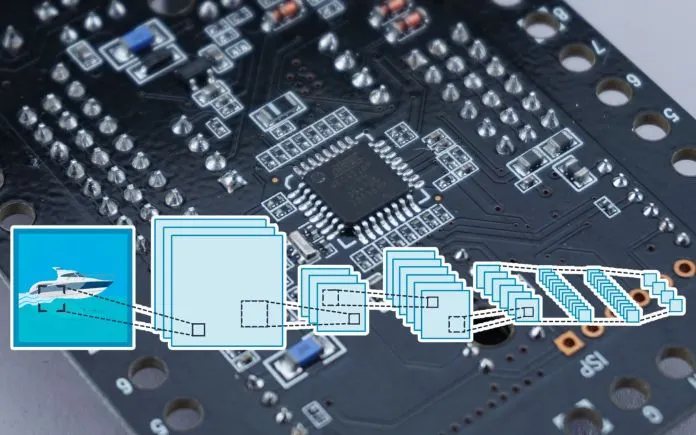
Understanding TinyML and Its Revolutionary Impact
The world of computing is undergoing a transformation that most people never see happening. While massive data centers and cloud computing platforms capture headlines, something equally profound is unfolding in the tiniest corners of our digital ecosystem. Machine learning algorithms, once confined to powerful servers with abundant memory and processing capabilities, are now running on devices smaller than a postage stamp. This is the essence of TinyML, a technological breakthrough that brings artificial intelligence to microcontrollers and embedded systems operating at the extreme edge of networks.
TinyML represents the intersection of two powerful technological currents. The first is the relentless miniaturization of computing hardware, which has compressed extraordinary capabilities into increasingly compact form factors. The second is the optimization of machine learning algorithms, making them lean enough to function within severe resource constraints. Together, these developments have opened possibilities that seemed impossible just a few years back. Devices that cost only dollars can now perform intelligent tasks previously requiring thousands of dollars worth of equipment and constant connectivity to remote servers.
The implications extend far beyond technical achievement. When intelligence moves to the edge, it fundamentally changes how systems respond to their environment. Latency drops from seconds to milliseconds. Privacy improves because sensitive data never leaves the device. Energy consumption plummets because communication with distant servers becomes unnecessary. Reliability increases since devices continue functioning even when network connections fail. These advantages are not incremental improvements but qualitative shifts in capability that enable entirely new categories of applications.
The Technical Foundation of Edge Intelligence
At its core, TinyML involves deploying machine learning models on microcontrollers with severely limited resources. We are talking about devices with less than one megabyte of flash storage and perhaps 256 kilobytes of RAM. Clock speeds hover around a few hundred megahertz. Power consumption must remain under 100 milliwatts, sometimes dropping to a single milliwatt for the most constrained applications. These specifications would have seemed laughably inadequate for machine learning just a decade ago, yet today they represent the battleground where some of the most exciting innovations are occurring.
The hardware landscape for TinyML has evolved considerably. ARM Cortex M series processors dominate the space, with variants like the Cortex M4 and M7 offering the computational horsepower needed for inference tasks. Some newer chips include specialized neural processing units designed specifically to accelerate machine learning operations. These hardware accelerators can perform matrix multiplications and other common neural network operations with dramatically improved efficiency compared to general purpose processors.
Memory constraints pose perhaps the most significant challenge. A typical smartphone might have gigabytes of RAM, while TinyML devices work with kilobytes. This limitation affects both model size and the complexity of computations that can be performed. Flash storage determines how large a model can be accommodated, typically restricting networks to less than a million parameters. RAM affects inference speed and the ability to process data in real time. Every byte matters when total memory measures in the thousands rather than millions.
Model Optimization Techniques Making the Impossible Possible
Getting machine learning models to run on such constrained hardware requires aggressive optimization. The techniques involved go far beyond simply training a smaller model. They involve fundamentally rethinking how neural networks represent and process information. Quantization stands as one of the most powerful approaches, converting 32 bit floating point numbers to 8 bit or even lower precision integers. This reduction slashes memory requirements and speeds up computation, often with minimal impact on accuracy.
Pruning removes unnecessary connections and neurons from trained networks. Research has shown that many neural networks contain significant redundancy, with substantial portions contributing little to final predictions. By identifying and eliminating these redundant elements, pruning can reduce model size by 70 percent or more while maintaining acceptable performance. The process typically involves training a network to full size, then systematically removing the least important weights, followed by fine tuning to recover any lost accuracy.
Knowledge distillation offers another pathway to compression. This technique trains a smaller student model to mimic the behavior of a larger teacher model. Rather than learning directly from training data, the student learns from the teacher’s predictions, which contain richer information than simple correct/incorrect labels. This approach often produces compact models that outperform networks of similar size trained conventionally. The teacher model can be enormous and run on powerful hardware, while the student remains small enough for deployment on microcontrollers.
Architecture search has emerged as a critical tool for finding network designs optimized for resource constraints. Rather than adapting architectures designed for powerful hardware, researchers now design networks specifically for embedded deployment. MobileNet and EfficientNet represent early examples, using techniques like depthwise separable convolutions to dramatically reduce computation while preserving accuracy. Newer approaches employ neural architecture search to automatically discover optimal designs for specific hardware targets and tasks.
Software Frameworks Enabling Widespread Adoption
The software ecosystem surrounding TinyML has matured rapidly, making the technology accessible to developers without deep expertise in both machine learning and embedded systems. TensorFlow Lite for Microcontrollers emerged as an early leader, providing a streamlined version of Google’s popular framework optimized for resource constrained devices. It supports common neural network operations while minimizing memory footprint and processing requirements. The framework includes conversion tools that take models trained in standard TensorFlow and optimize them for embedded deployment.
Edge Impulse has democratized TinyML development through an integrated platform handling the entire pipeline from data collection to deployment. Developers can gather sensor data, label it through an intuitive interface, train models using built in algorithms or custom networks, and deploy directly to supported hardware. The platform abstracts away much of the complexity, automatically optimizing models for target devices. This accessibility has accelerated adoption across industries, allowing domain experts to build intelligent embedded systems without becoming machine learning specialists.
Other frameworks have carved out niches based on specific strengths. PyTorch Mobile appeals to developers comfortable with Python who want flexibility and customization. uTensor provides an ultra lightweight option for the most resource constrained scenarios. STM32Cube.AI integrates tightly with STMicroelectronics development tools, offering optimized performance on their popular microcontroller families. NXP’s eIQ and Microsoft’s Embedded Learning Library provide additional options, each with particular advantages for certain use cases or hardware platforms.
The trend toward no code and low code platforms continues accelerating. These tools recognize that many potential TinyML applications exist in domains where technical expertise lies in areas other than machine learning or embedded programming. A factory engineer understands predictive maintenance requirements but may lack coding skills. A medical device designer knows clinical needs but not neural network architectures. Platforms that bridge these gaps through visual interfaces and automated optimization unlock applications that would otherwise remain unrealized.
Real World Applications Transforming Industries
Healthcare has embraced TinyML for continuous patient monitoring using wearable devices. Traditional medical monitoring requires patients to remain connected to bulky equipment or periodically transmit data to remote servers. TinyML enables intelligent processing directly on small, battery powered wearables that can operate for months without charging. These devices detect anomalies in heart rhythms, recognize the onset of seizures, or identify dangerous changes in vital signs, alerting patients and healthcare providers only when intervention might be needed.
Predictive maintenance in industrial settings represents another high impact application. Machines in factories, power plants, and other industrial facilities generate vibrations, sounds, and other signals that contain information about their health. By placing intelligent sensors on critical equipment, companies can detect subtle changes indicating impending failures. The sensors run machine learning models that learned normal operation patterns and flag deviations. This approach prevents costly unplanned downtime and allows maintenance to be scheduled efficiently rather than performed on fixed intervals regardless of actual need.
Agriculture is being revolutionized through distributed sensing enabled by TinyML. Farmers can deploy thousands of intelligent sensors across fields to monitor soil moisture, temperature, pest activity, and crop health. Each sensor processes data locally, transmitting only relevant insights rather than continuous raw data. This dramatically reduces communication costs and enables operation in areas with limited connectivity. The intelligence at each node allows for precise, localized decision making about irrigation, fertilization, and pest control, optimizing resource use while improving yields.
Smart home devices increasingly incorporate TinyML for responsive, private operation. Voice assistants can recognize wake words and simple commands entirely on device, sending data to the cloud only for complex queries. This approach improves response time and addresses privacy concerns since conversations remain local unless explicitly sent for processing. Motion sensors become intelligent enough to distinguish between pets, household members, and potential intruders. Thermostats learn occupancy patterns and adjust heating and cooling automatically, all while consuming minimal power and preserving user privacy.
Environmental monitoring benefits enormously from TinyML’s combination of low cost, low power operation, and autonomous intelligence. Researchers deploy networks of sensors to track wildlife populations, monitor air and water quality, detect forest fires, and study climate patterns. The devices can operate for years on small batteries or energy harvesting, processing sensor data continuously and transmitting only significant events or periodic summaries. This enables environmental science at scales previously impossible due to cost and logistical constraints.
Overcoming Technical Challenges and Limitations
Despite remarkable progress, TinyML faces ongoing challenges that constrain applications and complicate deployment. Memory limitations remain the most fundamental constraint. While optimization techniques can dramatically reduce model size, there exist inherent limits to how much a network can be compressed without losing essential capabilities. Complex tasks requiring nuanced understanding or handling high dimensional inputs may simply not fit within available resources. Developers must carefully match task complexity to hardware capabilities.
Model accuracy often suffers when aggressive optimization is applied. Quantization, pruning, and other compression techniques introduce approximations that can degrade performance. Finding the right balance between model size and accuracy requires careful experimentation and domain specific knowledge. What constitutes acceptable accuracy varies tremendously across applications. A voice recognition system might tolerate occasional errors, while a medical diagnostic device requires much higher reliability. This variability makes it difficult to provide universal guidelines for optimization strategies.
Debugging and troubleshooting present unique difficulties in embedded environments. Unlike cloud or desktop applications where developers can easily inspect execution, log detailed information, and remotely update software, embedded devices offer limited visibility. When a model performs poorly after deployment, understanding why becomes challenging. Is the model itself flawed, or are unexpected input patterns causing issues? Limited tools for profiling and debugging on microcontrollers complicate these investigations.
Power management adds another layer of complexity. While TinyML enables much lower power consumption than cloud dependent alternatives, battery life still matters for many applications. Developers must carefully manage duty cycles, determining when devices should be active versus sleeping. Some applications require continuous monitoring, demanding ultra low power operation even during active inference. Others can afford to sample periodically, allowing more aggressive power saving. Balancing responsiveness, accuracy, and energy consumption requires careful system design.
Training versus inference represents an important distinction often misunderstood. Current TinyML primarily focuses on inference, running models trained on more powerful hardware. Training neural networks on microcontrollers remains extremely challenging due to computational and memory requirements. However, research is progressing toward enabling on device learning. This capability would allow deployed devices to adapt to local conditions and personalize to individual users without sending data to the cloud. Early systems demonstrate feasibility, but practical on device training remains an active research frontier.
The Hardware Evolution Supporting Edge AI
Microcontroller manufacturers have responded to TinyML demands with specialized silicon optimized for machine learning workloads. ARM introduced Ethos processors specifically designed for neural network inference on embedded devices. These chips include dedicated hardware for common operations like convolutions and matrix multiplications, executing them far more efficiently than general purpose processors. The result is faster inference with lower power consumption, expanding the range of models that can run on constrained devices.
Memory technology advances also contribute significantly. New non volatile memory types allow models to be stored efficiently while consuming minimal power. Some architectures position memory closer to processing elements, reducing the energy and time required for data movement. Since memory access often consumes more power than actual computation in neural network inference, these architectural improvements yield substantial benefits. Innovations like compute in memory take this further by performing operations within memory arrays themselves, eliminating data transfer entirely for some operations.
Sensor integration represents another important trend. Rather than treating sensors and processors as separate components connected by buses that consume power and introduce latency, newer designs integrate sensing and processing on single chips. Sensor fusion, combining data from multiple sources like accelerometers, gyroscopes, and magnetometers, becomes more efficient when processing happens adjacently to sensing. This integration enables more sophisticated applications while reducing overall system complexity and power consumption.
Specialized accelerators tailored for specific modalities are emerging. Vision processing benefits from hardware optimized for convolutional neural networks commonly used in image analysis. Audio applications leverage accelerators designed for recurrent or temporal convolution networks better suited to sequential data. This specialization allows devices to handle computationally intensive tasks like real time video analysis or continuous audio monitoring within tight power budgets.
Development Workflows and Best Practices
Successfully deploying TinyML applications requires understanding the entire pipeline from problem definition through production deployment. The process begins with clearly defining the task and understanding constraints. What accuracy is required? How much latency can be tolerated? What power budget exists? These questions guide all subsequent decisions about model architecture, optimization strategies, and hardware selection. Failing to carefully consider constraints early often leads to projects that cannot be successfully deployed.
Data collection and preparation take on heightened importance in embedded contexts. Models must be trained on data representative of actual operating conditions. This sounds obvious but frequently proves challenging. Laboratory conditions differ from field deployment. Sensor noise, environmental variations, and edge cases that rarely appear in training data can cause deployed models to fail. Collecting diverse, realistic training data and validating on truly representative test sets helps avoid these pitfalls.
Model selection involves balancing capability against resource constraints. Complex architectures like large transformers or deep residual networks may be inappropriate regardless of how well they perform on powerful hardware. Instead, developers often start with lightweight architectures designed for efficiency. MobileNet, SqueezeNet, and similar networks provide reasonable starting points. Custom architectures designed through neural architecture search optimized for specific hardware and tasks often yield the best results but require more expertise and computational resources to develop.
Validation on actual target hardware represents a critical step often overlooked in development. A model that performs well in simulation may behave differently on physical devices due to numerical precision differences, compiler optimizations, or unexpected interactions between software and hardware. Testing on actual target microcontrollers as early as possible helps identify issues before significant development effort has been invested. This practice also provides realistic measurements of latency, power consumption, and memory usage essential for system design.
Privacy and Security Advantages of Edge Processing
One of TinyML’s most compelling advantages lies in preserving privacy by processing sensitive data locally. When personal information like voice recordings, images of private spaces, or health metrics never leave a device, the attack surface for data breaches shrinks dramatically. Users need not trust remote servers or worry about data being intercepted during transmission. For applications handling medical information, financial data, or other sensitive content, this local processing provides significant security benefits.
Regulatory compliance becomes simpler when personal data remains on user devices. GDPR, HIPAA, and other privacy regulations impose strict requirements on data collection, storage, and processing. These regulations often require explicit consent, detailed documentation of data handling practices, and mechanisms for users to access and delete their information. By processing locally and never collecting raw personal data, TinyML applications can sidestep many compliance complexities, reducing legal risk and development burden.
However, embedded AI introduces its own security challenges. Models themselves may contain valuable intellectual property requiring protection. Adversarial attacks can potentially cause models to misclassify inputs in dangerous ways. Physical access to devices might allow extraction of models or manipulation of software. Securing embedded systems requires consideration of both cyber threats and physical security, areas where traditional machine learning practitioners may lack expertise.
Model encryption and authentication help protect intellectual property. Encrypted models can be deployed to devices and decrypted only during execution, making extraction more difficult. Authentication mechanisms verify that only authorized code runs on devices, preventing replacement of legitimate models with malicious ones. These security measures add complexity and computational overhead, requiring careful balancing against resource constraints.
The Future Landscape of Tiny Machine Learning
Market forecasts predict explosive growth in TinyML adoption over the coming years. The technology addresses fundamental needs across virtually every industry, from consumer electronics to industrial automation, healthcare to agriculture. As hardware becomes more capable, software tools more accessible, and success stories more numerous, adoption will accelerate. Some analysts project the market growing at over 30 percent annually, reaching billions of dollars within a few years.
Continued advances in model compression and efficient network architectures will expand the frontier of what is possible on microcontrollers. Researchers continue discovering new ways to represent and process information more efficiently. Techniques like binary neural networks, which use only single bit weights, demonstrate that drastically simplified representations can still perform useful tasks. Hybrid approaches combining classical algorithms with small neural networks leverage the strengths of each, achieving good performance with minimal resources.
On device learning represents perhaps the most exciting frontier. Current systems mostly run fixed models trained on remote servers. Future devices will adapt continuously to their environment and users. A voice recognition system could learn its owner’s accent and speech patterns. A gesture recognition interface could personalize to how each user naturally moves. Predictive maintenance sensors could refine their models based on the specific equipment they monitor. This adaptability would dramatically improve performance while maintaining privacy since learning happens locally.
Standardization efforts aim to reduce fragmentation across the TinyML ecosystem. Multiple frameworks, hardware platforms, and optimization tools complicate development and slow adoption. Industry groups are working to establish common interfaces, model formats, and benchmarks. These standards would allow models trained on one platform to be easily deployed across different hardware. Developers could focus on applications rather than wrestling with compatibility issues between tools and devices.
Neuromorphic computing offers a radically different approach to efficient machine learning. Rather than simulating neural networks on conventional processors, neuromorphic chips implement computation using circuits that more closely mimic biological neurons. These systems can achieve remarkable energy efficiency, potentially enabling complex AI on even smaller devices than current TinyML targets. While still largely in research labs, neuromorphic hardware may eventually transform edge intelligence.
Sustainability and Environmental Benefits
Energy efficiency translates directly into environmental benefits. Data centers consumed an estimated 200 terawatt hours globally in recent years, a figure growing rapidly. While impressive efficiency improvements have been achieved, the scale of cloud computing means energy consumption remains substantial. Moving computation to the edge dramatically reduces this burden. A microcontroller performing inference might consume milliwatts while the equivalent cloud computation requires watts, a thousand fold difference when accounting for networking equipment, cooling systems, and datacenter infrastructure.
Extended battery life reduces electronic waste. Devices that must be charged daily or have batteries replaced frequently create ongoing environmental costs. TinyML enables devices to run for months or years on small batteries, sometimes supplemented by energy harvesting from solar panels or vibration. This longevity means fewer batteries manufactured, transported, and eventually disposed of. For applications deploying thousands or millions of devices, these savings become substantial.
Reduced data transmission lowers the carbon footprint of networks. Wireless communication consumes significant power relative to local computation. By processing locally and transmitting only results rather than continuous raw data, TinyML reduces network traffic and the energy required to support it. In applications like environmental monitoring with thousands of sensors, this reduction can be dramatic. Rather than each sensor continuously streaming data, they transmit only occasional updates or alerts.
Integration Challenges and System Considerations
Successfully deploying TinyML requires thinking beyond the model itself to consider the entire system. How will devices be powered? What sensors are needed? How will they communicate with other systems when necessary? How will firmware updates be managed? These system level questions often prove more challenging than the machine learning aspects. A brilliant model delivers no value if the system around it proves impractical.
Communication protocols must be chosen carefully. Many TinyML applications require some connectivity, even if most processing happens locally. Bluetooth Low Energy provides short range communication with minimal power consumption. LoRaWAN and other LPWAN technologies enable long range links for remote deployments. WiFi offers high bandwidth but higher power consumption. Selecting appropriate communication technology requires understanding application needs and constraints.
Power sources vary widely based on deployment scenarios. Some devices plug into mains power, eliminating energy constraints but limiting installation locations. Battery operation provides flexibility but requires managing limited energy budgets. Energy harvesting from solar, thermal gradients, or vibration can extend or eliminate battery life but introduces uncertainty about available power. System designers must match power solutions to application requirements and deployment conditions.
Firmware updates present challenges for deployed embedded systems. Unlike cloud services updated continuously, embedded devices often remain deployed for years. How will security patches be applied? What if models need updating as requirements change or better algorithms become available? Over the air update mechanisms add complexity and potential security vulnerabilities but enable managing deployed fleets. Some systems intentionally omit update capabilities to reduce attack surface, accepting that deployed functionality remains fixed.
Education and Skill Development in TinyML
The growing importance of TinyML has created demand for education and training. Universities are adding courses covering embedded machine learning. Online platforms offer tutorials and certificate programs. Hardware manufacturers provide development kits and documentation to help engineers get started. This educational ecosystem helps develop the workforce needed to design, deploy, and maintain intelligent embedded systems.
Interdisciplinary skills are essential for success in TinyML. Practitioners need understanding of machine learning algorithms and training procedures, embedded systems programming and hardware architecture, sensor technology and signal processing, and often domain expertise in application areas. Few individuals possess all these skills initially. Successful teams typically combine expertise from multiple disciplines, or individuals invest time building skills beyond their original specialization.
Hands on experience proves invaluable for developing intuition about what works in resource constrained environments. Reading about optimization techniques provides conceptual understanding, but actually deploying models to microcontrollers and measuring performance builds practical knowledge. Development kits from Arduino, Adafruit, SparkFun, and others provide accessible entry points. Many cost less than a restaurant meal, making experimentation affordable.
Community resources accelerate learning and problem solving. Forums, discussion groups, and online communities connect practitioners facing similar challenges. Open source projects provide working examples that can be studied and adapted. This collaborative ecosystem helps newcomers overcome hurdles and experienced practitioners stay current with rapid developments in the field.
The revolution happening in tiny microcontrollers may not be as visible as dramatic advances in large language models or image generation, but its impact on daily life could prove even more profound. Intelligence embedded in countless small devices, operating autonomously and efficiently, responding instantly to local conditions while preserving privacy represents a fundamentally different paradigm from centralized cloud intelligence. As technology continues advancing and adoption accelerates, the edge of the network becomes increasingly smart, bringing artificial intelligence into intimate contact with the physical world in ways both subtle and transformative.














Hmm is anyone else experiencing problems with the pictures on this
blog loading? I’m trying to find out if its a problem on my end or if
it’s the blog. Any feedback would be greatly
appreciated.