British television in 2025 has undergone a significant philosophical shift. As streaming platforms proliferate and audiences fragment across countless viewing options, broadcasters have discovered that audiences increasingly crave authenticity above entertainment spectacle. The year’s most celebrated programmes overwhelmingly prioritize investigation, truth-seeking, and unflinching examination of institutional failure over conventional escapism. This represents fundamental recalibration: British television has recognized that contemporary audiences possess sophisticated media literacy, demanding programming that respects their intelligence while examining the systems affecting their lives.
The prevailing themes across 2025’s best television programs reflect genuine cultural preoccupations: institutional racism and police failures, tabloid corruption, housing disasters, war crimes testimony, gender-based violence, and systemic marginalization. Yet alongside these heavy investigations exist surprisingly entertaining offerings—from camp crime thrillers to psychological puzzles to rock music comedies—suggesting that audiences simultaneously crave both serious social commentary and genuine fun.
The recommendations emerging from BFI curators reveal consistent patterns: non-fiction programs dominated discussions, with documentary series addressing real-world tragedies proving particularly vital. This reflects broader cultural moment where citizens seek trustworthy information sources amid misinformation proliferation, where documentary investigation functions as counter-narrative to official stonewalling, and where television’s reach permits amplifying previously marginalized voices.
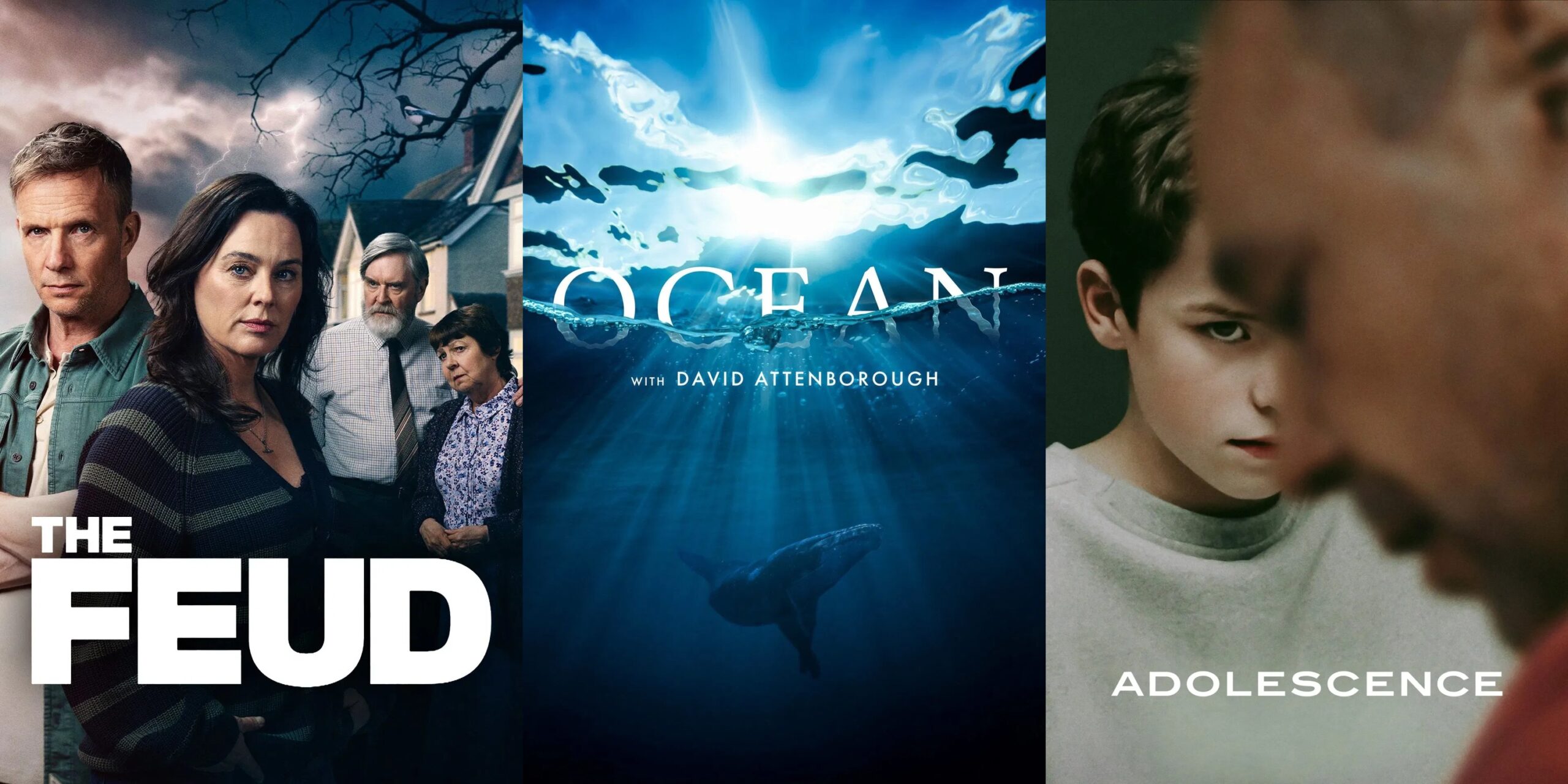
Adolescence (Netflix)
Jack Thorne and Stephen Graham’s Adolescence emerged as groundbreaking psychological crime drama examining contemporary crisis around toxic masculinity and online misogyny. The narrative centers on Miller family whose lives transform catastrophically when 13-year-old Jamie (Owen Cooper) is arrested for murdering female classmate.
The series’ most distinctive formal achievement warrants particular emphasis: each episode employs continuous single-take cinematography—an extraordinary technical feat that functions as aesthetic statement regarding viewer immersion. By eliminating editing cuts, the production forces viewers to remain within uncomfortable psychological space without respite or narrative interruption, creating visceral connection to mounting dread and ethical complications.
Owen Cooper’s performance achieved historic significance: at remarkably young age, he became the youngest person ever to win an Emmy Award, recognition reflecting the profound emotional depth he brought to morally complicated protagonist. The performance captures adolescent confusion, capacity for violence, psychological fragility, and emerging consciousness of consequences.
Stephen Graham’s portrayal of Jamie’s father Eddie Miller constitutes perhaps the series’ emotional anchor: depicting parent grappling with fundamental question regarding whether he truly knows his son, whether parental love can survive recognition of offspring’s capacity for violence, whether family bonds persist through moral catastrophe. Ashley Walters provides counterpoint as Detective Inspector Luke Bascombe, pursuing investigation while confronting his own professional doubts and institutional pressures.
Christine Tremarco’s performance as devastated mother creates space for articulating parental anguish rarely depicted in contemporary television: not merely grief for victim but also complicated grief for son, simultaneous love and revulsion, maternal instinct persisting despite recognizing potential monstrosity. The series validates that crime’s consequences extend far beyond victims to encompass perpetrators’ families, that institutional judgment falls upon entire households.
Bibaa & Nicole: Murder in the Park (Sky)
This year’s most significant documentary achievement examines murders of sisters Bibaa Henry and Nicole Smallman, whose bodies were discovered in London park following police failures and institutional racism. Created by Alex Thomas and Lindsay Konieczny, the documentary powerfully demonstrates television’s capacity to examine institutional violence through intimate human testimony.
The circumstances themselves horrify: sisters last seen celebrating birthday, police repeatedly failing to take family concerns seriously following reports of missing persons, bodies discovered by boyfriend 36 hours later, police officers subsequently discovered to have posed with corpses and shared photographs with colleagues—behavior crystallizing systemic contempt for Black victims’ humanity.
Yet the documentary’s most affecting moments emerge from interviews with family members, particularly mother Mina Smallman, whose reflections transcend bitterness despite overwhelming justification for anger. When discussing detectives investigating her daughters’ murders, Smallman reflects with painful generosity: “Nothing about that team made me think they didn’t have our backs.” This humanizing perspective—refusing to flatten investigators into simple villains despite systemic failures—constitutes profound moral intelligence.
The documentary includes harrowing 999 phone calls family members made attempting to motivate police response, audio documentation of institutional indifference that accelerated tragedy. By including victims’ family’s actual voices pleading for response, the program creates accountability documentation that official systems frequently obscure.
Grenfell: Uncovered (Netflix)
Olaide Sadiq’s Grenfell: Uncovered examines June 2017 Grenfell Tower fire killing 72 people, coinciding with ongoing public inquiry into systemic failures preceding disaster. The documentary distinguishes itself through meticulous investigation into decisions and conditions enabling catastrophe rather than merely documenting tragedy itself.
The investigation reveals web of institutional failings: regulatory oversights permitting use of flammable cladding material, cost-cutting measures prioritizing profit over safety, public authorities abdicating responsibility for building maintenance, international corporate actors (American company Arconic manufactured cladding) distributing dangerous materials globally without adequate accountability mechanisms.
Documentary achieves emotional weight through first-hand accounts from firefighters witnessing conditions during evacuation attempts, journalists investigating negligence preceding fire, bereaved family members grappling with senseless loss. The program validates that major tragedies stem not from individual incompetence but from systemic choices prioritizing financial gain over human safety.
The documentary’s global distribution through Netflix amplifies reach beyond national boundaries, signaling that Grenfell Tower disaster represents not merely British tragedy but international failure of housing regulation and corporate accountability. The film functions simultaneously as memorial and call to action demanding transparency and systemic change.
Breaking Ranks: Inside Israel’s War (ITV)
Benjamin Zand’s Breaking Ranks: Inside Israel’s War employs testimony-driven journalism examining claims by IDF soldiers regarding unprovoked war crimes they witnessed with impunity. The documentary approaches controversial subject matter through systematic compilation of soldier testimony, permitting viewers encountering firsthand accounts without editorial commentary filtering interpretation.
The program bookends macroscopic imagery of Gaza City—intact in 2023, now comprehensively destroyed—around microscopic documentation of individual soldier testimonies. This compositional choice permits viewers simultaneously recognizing scale of destruction while maintaining focus on psychological weight borne by perpetrators. One soldier’s reflection—”I keep thinking we can make things right. But you can’t bring them back”—captures moral anguish accompanying violent actions.
The documentary’s availability on YouTube alongside ITV’s proprietary platforms reflects commitment to maximum reach regarding serious war crimes allegations, suggesting that television’s public service mandate includes making crucial investigations widely accessible rather than restricting distribution to premium subscribers.
The Hack (ITV)
Jack Thorne’s The Hack constitutes perhaps most ambitious television project of 2025, weaving together phone-hacking scandal investigation with unsolved murder of private investigator Daniel Morgan. The seven-episode series examines institutional corruption across multiple domains: tabloid journalism, police investigation, organized crime.
Thorne’s narrative strategy proves sophisticated: varying tone and pace across episodes through combination of dense dialogue scenes, rapidly edited montages, playful cameos, and animation—aesthetic choices maintaining viewer engagement across complex investigations requiring sustained attention. David Tennant’s portrayal of journalist Nick Davies captures investigation’s driving force: character frequently breaking fourth wall providing clarification during moments of potential confusion, acknowledging that complex institutional corruption resists conventional narrative clarity.
Robert Carlyle’s performance as Detective Chief Superintendent Dave Cook emphasizes painful honesty: depicting police official wrestling with corrupt system, attempting functioning with integrity within fundamentally compromised institution. The series equates tabloid journalism practices with gangsterism and police corruption, suggesting that different institutional domains harbor similar moral pathologies when profit or power supersedes ethical obligation.
The Girlfriend (Amazon Prime Video)
Gabbie Asher and Naomi Sheldon’s The Girlfriend constitutes gripping psychological thriller examining relationship between wealthy gallery owner Laura (Robin Wright) and her son’s new girlfriend Cherry (Olivia Cooke), estate agent whose intentions Laura questions.
The series’ structural strategy proves remarkably effective: shifting between Laura and Cherry’s perspectives, occasionally revisiting identical scenes from opposing viewpoints to highlight unreliable narration. This compositional choice forces viewers abandoning fixed interpretations: just as conclusions firm regarding one character’s trustworthiness, scene revision from alternative perspective destabilizes certainty.
The dynamic between protagonist women emerges as source of entertainment and psychological engagement: viewers cannot determine which character represents genuine threat versus protective parent overstepping boundaries. The program validates that psychological manipulation exists across spectrum of sophistication, that seemingly gentle individuals harbor calculated deception, that maternal protection can manifest as unhealthy obsession. The series’ brilliant plot twists reward sustained viewer engagement while punishing premature judgment.
Get Millie Black (Channel 4)
Marlon James’ screenwriting debut (prior career as Booker Prize-winning novelist) produces Get Millie Black, crime noir demonstrating virtuosic command of Greek tragedy conventions masked within contemporary detective narrative. Tamara Lawrance plays Millie, former Metropolitan Police detective returning to Kingston and joining Jamaican police force to pursue criminal investigations alongside personal redemption seeking.
James constructs crime narrative examining crimes scaling from local street gangs to police corruption to international human trafficking, investigations preoccupying traumatized protagonist pursuing redemption through moral work. The series distinguishes itself through running parallel narrative examining Millie’s sister Hibiscus (breakthrough performance by Chyna McQueen), who finds refuge from transphobic abuse within Kingston’s homeless Gully Queens community.
Dialogue between sisters emerges as series’ greatest strength: loaded exchanges capturing shared suffering transcending divergent life experiences. When Detective Joe Dempsie arrives as Scotland Yard detective, narrative threatens devolving into generic chalk-and-cheese crime drama formula, yet shocking midway twists upend expectations. The series’ emotional force derives from complex character portrayal rather than conventional crime investigation mechanics.
The Feud (5)
Aschlin Ditta’s The Feud presents absurdly enjoyable crime thriller centered on lawyer Emma (Jill Halfpenny) pursuing house extension, confronting street full of curtain twitchers blocking development. The series accumulates complications: failing marriage to unemployed John (Rupert Penry-Jones), complaint from disgruntled police officer, father’s (Larry Lamb) involvement obtaining planning permission through questionable means, neighbors’ suspicious missing son potentially buried beneath disputed tree.
The program distinguishes itself through sheer campiness: blackmail, affairs, kidnapping, and murder proliferate, yet mystery regarding who cancelled planning permission emerges as most compelling question. The series embraces absurdity of boundary disputes and neighborhood conflict escalating to murder, creating entertainment value through recognizing how trivial conflicts contain seeds of serious crime when community cooperation breaks down. The program validates that most explosive conflicts originate from mundane grievances rather than criminal conspiracy.
Riot Women (BBC)
Sally Wainwright’s Riot Women features menopausal women forming rock band to enter talent show, demonstrating Wainwright’s signature blend of trauma, comedy, and social commentary regarding structural misogyny. The series centers on Beth (Joanna Scanlan) and Kitty (Rosalie Craig), portraying friendship emerging through deepest despair with luminous performance quality.
The program examines parent-child relationships emphasizing young people’s indifference toward mothers, depicting heartbreak accompanying dementia care. Alongside comedy elements exist profound emotional authenticity: women “bleeding, crying, laughing and singing their way through life” captures program’s tonal ambition. The series validates that women’s experiences—particularly menopausal women frequently rendered invisible—merit serious dramatic attention while remaining genuinely entertaining.
Ocean with David Attenborough (Disney+)
In year reaching first global climate tipping point where warm-water coral reefs face mass die-off, David Attenborough’s Ocean with David Attenborough presents perhaps most urgent program television can produce. The documentary released theatrically before World Oceans Day, bringing Attenborough’s signature aesthetic beauty to underwater environments alongside documentation of destructive bottom-trawling consequences.
Attenborough’s observation resonates profoundly: “We have seen more of other planets than we have of the ocean,” highlighting ocean’s remaining mystery despite technological advancement. The documentary contrasts spectacular underwater paradises with ruins following destructive fishing practices, forcing viewers witnessing environmental loss rather than experiencing uncomplicated beauty. Contemporary natural history programming increasingly functions as bearing witness to destruction, requiring viewers maintaining engagement despite distressing content.
Shifty (BBC)
Adam Curtis’ five-part documentary Shifty employs characteristic devices: obscure archive footage, ironic pop music deployment, portentous sense regarding social dysfunction. Distinguishing this effort from previous work, Curtis employs minimal narration, permitting footage largely speaking for itself.
The series argues that economic forces unleashed during 1980s irreversibly shaped British culture, theme connecting to Curtis’ most significant work including The Mayfair Set and The Century of the Self. While critics note occasional narrative disjunction and reductive captioning, footage mesmerizes through uncommon archival selections creating heart-rending sequences capturing economic and social transformation. The program validates that archive excavation functions as methodology permitting contemporary criticism of historical transformation.
Conclusion: 2025’s Television Priorities and Emerging Patterns
British television in 2025 demonstrates decisive shift toward authenticity, investigation, and unflinching examination of institutional failure. The year’s most celebrated programming prioritizes truth-seeking over entertainment spectacle, audience intelligence over narrative simplification, complex moral ambiguity over comfortable resolution.
The prevalence of documentary programming reflects cultural moment demanding accountability from institutions frequently obscuring malfeasance. Television’s capacity to amplify marginalized voices—bereaved family members, whistleblowing soldiers, traumatized detectives—ensures that official narratives face documented counter-testimony.
Simultaneously, British television hasn’t abandoned entertainment value or emotional complexity. Programs mixing crime investigation with camp humor, documentaries employing innovative formal strategies, dramas examining psychological thriller conventions—these successes demonstrate that serious engagement with difficult subject matter need not preclude viewer enjoyment.
The year ahead will determine whether this commitment to investigation and authenticity sustains amid pressure toward cost reduction and audience fragmentation, or whether streaming platforms revert toward cheaper entertainment prioritizing algorithms over editorial vision. For 2025, however, British television demonstrated remarkable commitment to fulfilling public service broadcasting mandate: holding institutions accountable, amplifying silenced voices, and trusting audiences’ capacity for sophisticated engagement with complex reality.