If 2025 proved anything about cinema it was that the international film scene refused to be predictable. The year mixed large scale, crowd-pleasing epics with sharp art house provocations, political reckonings, and small films that landed like private strikes. Below I take fifteen standout films from this vibrant year and explain why each mattered: the formal choices directors made, the performances that lingered, and the ways these movies pushed the conversation about film forward across geographies.
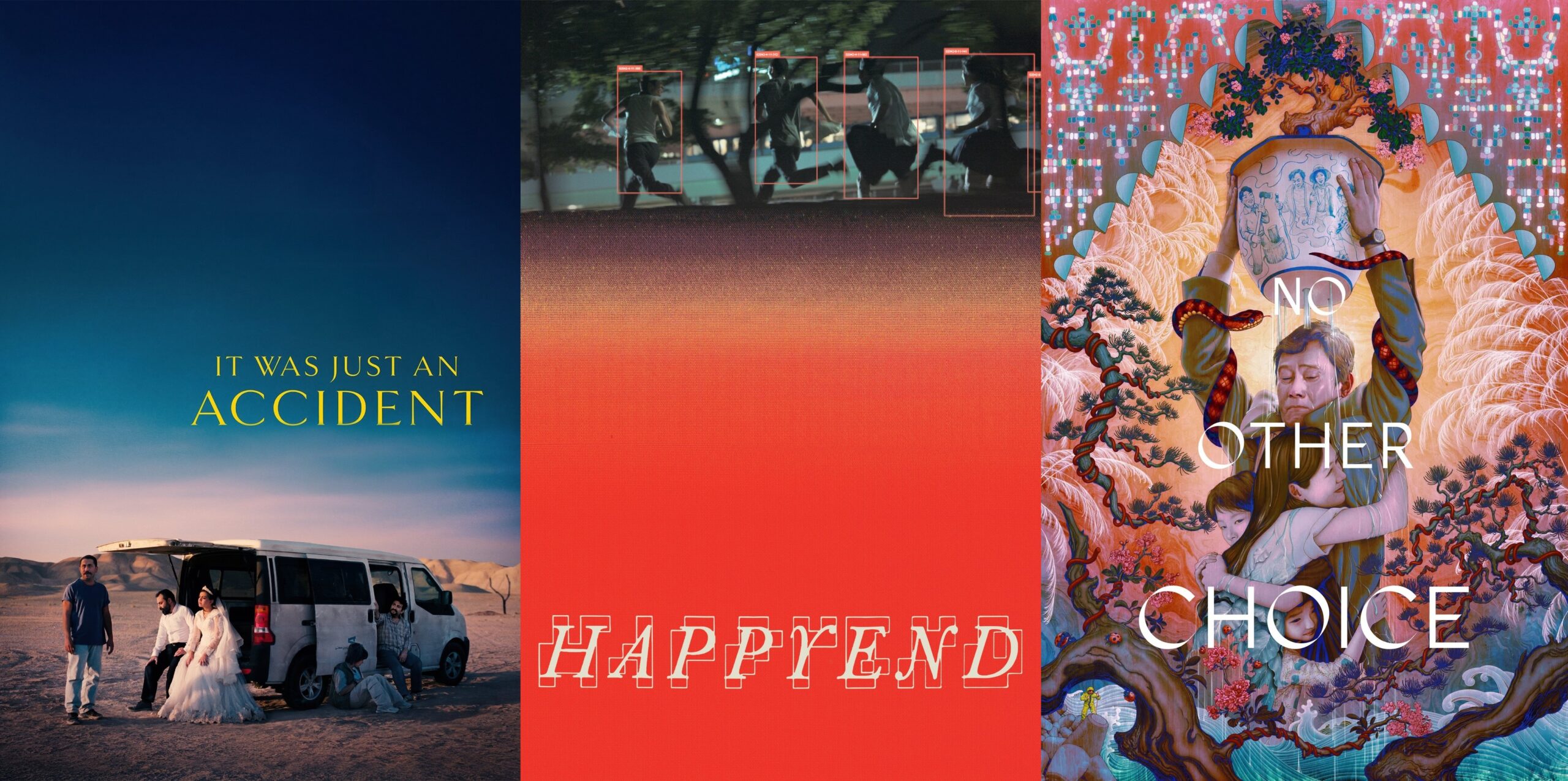
1. It Was Just an Accident (Jafar Panahi)
Jafar Panahi returned in full insurgent mode with a film that felt both daring and grave. Working against censorship and constraint, Panahi delivered a compressed moral thriller about former political prisoners who think they have identified an old tormentor. The film is a study in weary humor and ragged ethics. Panahi refuses tidy moral conclusions. Instead he stages an argument inside a cramped, mobile mise en scène: a van becomes a courtroom, a confessional, and an absurdist theatre of revenge. The result is a Palme d’Or winner that is at once furious and oddly comic, and which proves Panahi’s gift for turning the simplest premise into a combustive meditation on justice.
Why watch it: it is a film that insists on ethical ambiguity and shows how cinema can be an act of resistance.
2. Caught by the Tides (Jia Zhangke)
Jia Zhangke’s collage of footage, memory, and staged moments functions like a cinematic tide chart for modern China. Using unused material alongside newly filmed sequences, Jia constructs an elegy for change, with Zhao Tao giving a quietly devastating performance as a woman tracing the footprints of a vanished lover across factories and lossy cities. This is cinema about time as erosion, about intimate loss mapped onto national transformation.
Why watch it: the film treats time itself as a subject and rewards viewers who listen to cinema’s patient accumulation.
3. One Battle After Another (Paul Thomas Anderson)
Paul Thomas Anderson retooled political epicry into raucous human comedy and radical sentiment. Anchored by a lively Leonardo DiCaprio, the film blends guerrilla satire with big canvases, tracking ex-revolutionaries and their heirs through absurd public gestures and private failures. It is an ambitious crowd-pleaser that still feels like an argument, asking how ideologies age and how people carry old fights into new landscapes.
Why watch it: it proves that a filmmaker can do scale and thoughtfulness at once.
4. Sentimental Value (Joachim Trier)
Joachim Trier’s film about artistic inheritance, regret, and family obligation landed as one of the year’s most emotionally precise works. With towering performances at its core, the film unpacks how creativity and intimacy damage one another and how memory shapes family dynamics. Trier uses formal restraint to make feeling accumulate until it feels almost unbearable.
Why watch it: the movie is a study of small betrayals and the way art asks to be paid in human cost.
5. Sinners (Ryan Coogler)
Ryan Coogler fused horror, folklore, and historical weight into a Southern Gothic epic that doubled as a cultural sensation. Using music, myth, and an actorically immersive lead performance, the film folded Jim Crow era trauma into vampiric metaphor. Coogler’s synthesis of genre and history made this both a box office hit and a film that demanded conversation about race and narrative form.
Why watch it: it shows how genre can carry historical argument without losing emotional intensity.
6. Happyend (Neo Sora)
A near-future adolescent fable from Japan, Happyend mixes surveillance paranoia with the small stubborn joys of teenage rebellion. Its tonal agility, moving from sly comedy to painful lyricism, made it one of the year’s most original debuts. The film is sensitively attuned to friendship as political resistance and to the ways young people create meaning when institutions fail them.
Why watch it: it is brilliant proof that intimate, youthful stories can also be urgent political texts.
7. Sîrat (Oliver Laxe)
Oliver Laxe’s hallucinatory odyssey blends desert landscapes with trance music and a father-son search that becomes mythic. The film’s sonic architecture and hypnotic editing turned it into a festival favorite, with the score acting as an engine that propels images into ritual. Sîrat is a sensory experience meant to be felt more than explained.
Why watch it: if you want cinema that operates primarily as an embodied experience, this film delivers.
8. On Becoming a Guinea Fowl (Rungano Nyoni)
Rungano Nyoni returned with a disquieting fable about silence, ritual, and the cost of protecting reputations. Set against funeral rites that reveal a community’s complicity, the film uses surreal sequences and a propulsive central performance to excavate trauma passed down through generations. It is both tender and merciless in its critique of how societies shelter abuse.
Why watch it: it is a courageous film about voices that were never meant to speak.
9. No Other Choice (Park Chan-wook)
Park Chan-wook translated Westlake’s dark satire into an unflinching study of desperation under capitalism. Lee Byung-hun’s slowly unraveling protagonist turns a blackly comic premise into a study of moral collapse. Park’s meticulous framing and pitch-perfect tonal control make the film a work of bitterly funny critique.
Why watch it: it is stylish, sharp, and uncomfortably funny about the illusions of choice under economic pressure.
10. Bugonia (Yorgos Lanthimos)
Yorgos Lanthimos sharpened his satirical edge in Bugonia, a film about conspiracy, faith, and the self-delusion that accompanies fanaticism. The director’s cold, absurdist framing is in full effect, with performances that make panic look reasonable and reason look panicked. The film is darkly comic and morally incisive.
Why watch it: for Lanthimos’s precise formal cruelty and the way satire can expose the theater of belief.
11. Chainsaw Man: Reze Arc (MAPPA)
The Reze Arc adapts a wildly transgressive manga into a kinetic, emotionally risky anime film. It balances lyrical violence with surprising tenderness and keeps the original’s reckless energy intact. The result is a visceral animation that works as both an action spectacle and a tragic romance.
Why watch it: as an example of how anime can be formally bold and narratively affecting in theatrical form.
12. April (Dea Kulumbegashvili)
April is a slow-burning indictment of professional and cultural hostility. Its formal rigor and unflinching focus on bodily autonomy make it one of the year’s most politically resonant films. By staging a single woman’s legal and personal struggles in austere frames, the film forces viewers to endure rather than be comforted.
Why watch it: it is a profoundly uncomfortable and necessary film about control, the law, and the body.
13. Sorry, Baby (Eva Victor)
Eva Victor’s compassionate and blackly comic film about trauma and recovery emerged from the festival circuit as a small masterpiece. Balancing gallows humor with true tenderness, the film avoids easy healing narratives while still believing in human resilience.
Why watch it: because it shows how humor and grief can coexist without cheap reconciliation.
14. Left-Handed Girl (Shih-Ching Tsou)
This tender family drama set in Taipei mixes neon visuals with careful domestic realism. It tracks intergenerational anxieties through the story of a mother and her daughters opening a night market stall, and treats local superstition as a doorway into conversations about identity and survival. The film’s warmth and observational acuity made it a quiet festival favorite.
Why watch it: for its humane depiction of survival in the margins and its sensory portrait of a city at night.
15. Train Dreams (Clint Bentley)
Clint Bentley’s adaptation of Denis Johnson’s novella turned the ordinary life of a logger into a high-register meditation on memory and labor. Joel Edgerton’s performance anchors the film’s elegiac tone, turning small domestic scenes into mythic moments. The movie trusts silence and landscape to do the heavy lifting.
Why watch it: for its patient, contemplative approach to history and the dignity of small lives.
Trends that tied these films together
Reading across these films, several patterns emerge. First, directors used form to intensify politics: whether through collage, soundscapes, or staged ritual, filmmakers turned formal risk into moral argument. Second, genre returned as a vehicle for urgent commentary: horror, sci-fi, and genre hybrids provided safe cover for tackling race, capitalism, and trauma. Third, performance surfaced as the engine of empathy; many of these films relied on one or two unforgettable actors to carry sprawling ideas. Finally, festival ecosystems still mattered. Cannes, Venice, Berlin and Sundance continued to shape the conversation, elevating films that blended craft with risk.
Why these films matter now
In an era of streaming saturation and blockbuster sameness, these fifteen films remind us that cinema still has the power to surprise, discomfort, and move. They do not all comfort. Few offer simple moral closure. Instead they nudge and prod, inviting audiences to wrestle with complexity: the cost of vengeance, the erosion of memory, the fragility of love, and the social conditions that produce our worst choices. That willingness to complicate and to risk formal novelty is, more than anything else, the thread that made 2025 feel alive.
How to approach them
If you are planning a viewing list, begin with the films that demand endurance, like Jia Zhangke’s and Panahi’s works, which reward patient attention. Slide into the more formally experimental pieces such as Sîrat and Bugonia when you are ready to be unsettled by sound and image. Keep the genre entries like Chainsaw Man and Sinners for evenings when you want spectacle with moral bite. And do not miss the smaller films, Sorry, Baby and Left-Handed Girl, which will linger long after the show ends.