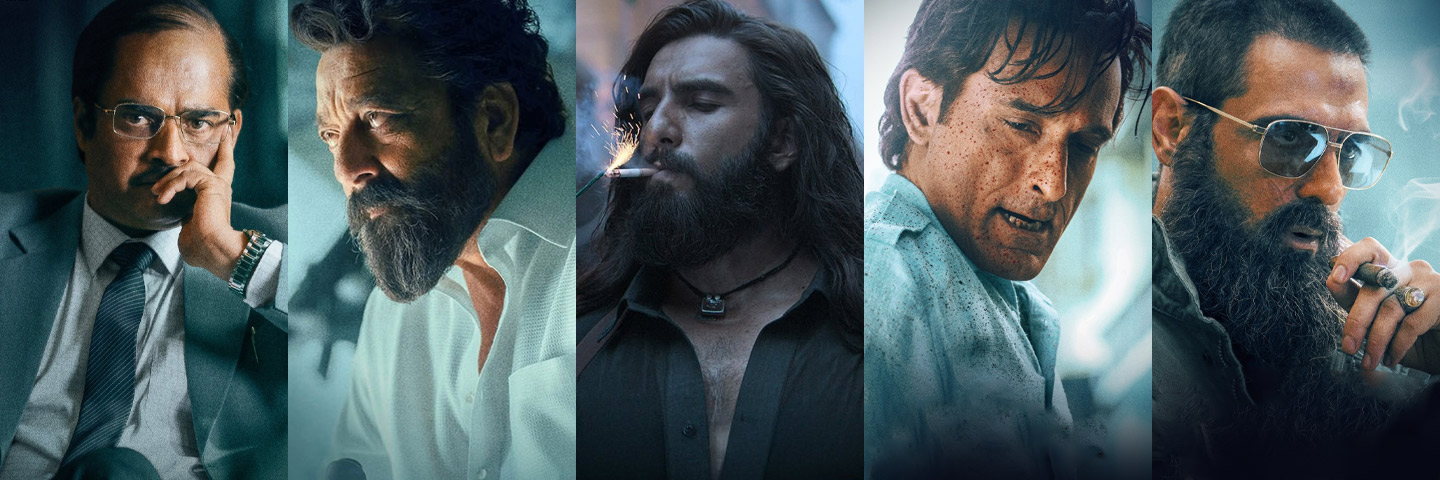
Buckle up because Bollywood just witnessed history being made in real time. Ranveer Singh’s Dhurandhar has officially dethroned every single Indian film released in 2025 to become the undisputed box office king of the year. On day 18, December 22, 2025, this Aditya Dhar directed spy thriller crossed the magical ₹872 crore mark worldwide, obliterating the lifetime collections of Kantara Chapter 1, Stree 2, and Chhaava in one fell swoop. But here’s the kicker: the film is showing absolutely no signs of slowing down. Despite facing competition from James Cameron’s Avatar: Fire and Ash, which grabbed theaters globally, Dhurandhar maintained its iron grip on audiences with a stellar third weekend that added ₹95 crore domestically. Even its first sub-20-crore Monday (₹16 crore net) is considered exceptional by industry standards. From the moment it exploded into theaters on December 5, 2025, this espionage thriller about an Indian operative infiltrating Karachi’s criminal underworld has rewritten every expectation, shattered every projection, and proven that when you combine a megastar like Ranveer with a visionary director fresh off Uri’s success, magic happens. With ₹571.75 crore net domestically, over $20.5 million internationally, and critics calling Akshaye Khanna’s performance scene-stealing perfection, Dhurandhar isn’t just a hit. It’s a cultural phenomenon that’s about to crash into the ₹1000 crore club and cement itself as one of Indian cinema’s all-time greatest blockbusters. Ready to dive into every insane detail of how Ranveer Singh just achieved the impossible? Let’s go!
The Numbers That Broke The Internet: Day 18 Breakdown
Let’s talk cold, hard facts because the numbers tell a story more explosive than any action sequence. After 18 days in theaters, Dhurandhar has accumulated a domestic net collection of ₹571.75 crore, which translates to ₹686 crore gross. That’s already mind-blowing. But add the overseas territories where the film earned over $20.5 million, approximately ₹186 crore, and you’re looking at a worldwide total of ₹872 crore.
To put that in perspective, Dhurandhar surpassed Kantara Chapter 1’s lifetime collection of ₹852 crore on Monday, December 22. It had already beaten Chhaava’s ₹807 crore haul on Sunday and Stree 2’s ₹857 crore before that. This means in less than three weeks, Ranveer Singh’s spy thriller conquered every major Indian release of 2025 and established itself as the year’s commercial champion.
The third weekend performance deserves special attention. From Friday to Sunday, Dhurandhar collected ₹95 crore net in India alone. That’s blockbuster opening weekend numbers for most films, and this was the film’s third weekend! The consistency is unprecedented. Even as Avatar 3 arrived to capture screens worldwide, Dhurandhar held its ground with occupancy rates that make trade analysts shake their heads in disbelief.
Monday’s ₹16 crore collection marked the film’s first major drop, with numbers declining almost 60 percent from Sunday’s take. But before anyone panics, understand that ₹16 crore on a Monday in the third week is extraordinarily healthy. Most films would kill for that number on their opening Friday. The fact that Dhurandhar is still pulling those figures 18 days in speaks to sustained audience interest and positive word of mouth.
The breakdown by territories reveals fascinating patterns. Domestic collections dominate, which makes sense for a Hindi-language film with specific cultural resonance. But the overseas performance, particularly in markets like North America, UK, Middle East, and Australia, demonstrates that Dhurandhar’s appeal transcends geographic boundaries. The spy thriller genre travels well internationally, and Ranveer Singh’s star power attracts diaspora audiences eager for big-budget Bollywood entertainment.
Trade analysts project that if Dhurandhar maintains even 70 percent of its current daily collections, it will cross the ₹900 crore mark by Christmas and potentially hit ₹1000 crore worldwide by New Year’s. That would make it only the 14th Indian film to achieve that milestone and Ranveer Singh’s first film to enter the exclusive club.
Share this with your friend who said Ranveer’s career peaked with Padmaavat!
How Dhurandhar Destroyed The Competition
The 2025 Indian film landscape was crowded with massive releases. Stree 2, the horror-comedy sequel starring Shraddha Kapoor, kicked off the year strong with ₹857 crore worldwide. Kantara Chapter 1, Rishab Shetty’s prequel to the 2022 blockbuster, earned ₹852 crore and seemed destined to be the year’s biggest hit. Chhaava, Vicky Kaushal’s historical epic about Maratha warrior Sambhaji, collected ₹807 crore and looked unbeatable.
Then Dhurandhar arrived like a storm and demolished every record.
What makes this even more impressive is the genre. Horror-comedies like Stree 2 have built-in repeat viewing appeal. Historical epics like Chhaava benefit from patriotic fervor and family audiences. Prequels like Kantara Chapter 1 ride on established IP and fan devotion. Spy thrillers, on the other hand, are traditionally harder sells in India. They require tight plotting, sustained tension, and sophisticated storytelling that doesn’t always translate to mass audiences.
Dhurandhar succeeded by combining the spy thriller framework with masala entertainment elements that Bollywood audiences crave. The film delivers intense action sequences, emotional beats, patriotic themes, and star power in perfectly calibrated doses. It’s not a dry John le Carré adaptation. It’s a Bollywood spectacle that happens to be about espionage.
The comparison with Stree 2 is particularly fascinating. Both films crossed ₹850 crore, but Stree 2 benefited from being a sequel to a beloved hit with established characters and comedic formula. Dhurandhar built its success from scratch with original characters and a story inspired by true events but not adapted from known source material. That’s significantly harder to pull off.
Kantara Chapter 1, meanwhile, had Rishab Shetty’s growing pan-India appeal and the Kantara brand following the original’s surprise 2022 success. The prequel delivered on expectations and found audiences across linguistic barriers. But Dhurandhar matched that pan-India appeal despite being a Hindi film, proving Ranveer Singh’s stardom has reached new heights.
The fact that Dhurandhar overtook all three films while facing Avatar 3’s global release makes the achievement even more remarkable. James Cameron’s sequels are event films that dominate screens and audience attention. For an Indian film to maintain momentum against that level of competition demonstrates unprecedented box office legs and audience devotion.
The Avatar 3 Factor: David vs Goliath
Speaking of Avatar: Fire and Ash, let’s address the elephant in the room. James Cameron’s third installment in his science fiction epic arrived in theaters during Dhurandhar’s third week, threatening to steal screens, audience attention, and box office collections. Hollywood tentpoles, especially Avatar sequels, typically crush local competition through sheer scale and global demand.
But Dhurandhar refused to be crushed. The film’s third weekend, which overlapped with Avatar 3’s debut, still generated ₹95 crore domestically. Yes, it lost some premium screens to the Hollywood blockbuster. Yes, multiplexes shifted show timings to accommodate both films. But audiences who wanted to see Ranveer Singh’s spy thriller kept showing up.
This speaks to something fundamental about Indian cinema’s evolution. There was a time when Hollywood releases would completely dominate and local films would struggle for scraps. Those days are over. The domestic market has matured to the point where Indian blockbusters can coexist with and even outperform Hollywood imports in their home territory.
Internationally, the dynamics differ. Avatar 3 commanded the lion’s share of screens in most overseas markets, limiting Dhurandhar’s expansion potential. But in key diaspora markets like North America and UK, the film maintained respectable screen counts because exhibitors recognized the demand from Indian audiences.
The real test will come in week four. If Dhurandhar can maintain ₹10-15 crore daily collections despite Avatar 3’s continued presence, it will prove beyond doubt that the film has transcended typical box office patterns and entered rarefied air occupied by only the biggest blockbusters.
Trade analysts are watching this battle closely because it sets precedents for future releases. If Dhurandhar demonstrates that Indian films can sustain momentum against Hollywood competition, it changes strategic calculations for release dates, marketing spends, and international distribution.
Don’t miss out on witnessing Bollywood hold its own against Hollywood’s biggest franchise!
Ranveer Singh’s Career Defining Moment
Let’s get real for a second. Ranveer Singh has been a major star for over a decade. He’s delivered critically acclaimed performances in films like Bajirao Mastani, Padmaavat, Gully Boy, and 83. But none of those films, as successful as they were, crossed ₹600 crore worldwide. His biggest hit before Dhurandhar was Padmaavat at approximately ₹585 crore.
Dhurandhar has already blown past that figure and is racing toward doubling it. This isn’t just a career milestone. It’s a complete transformation of Ranveer’s commercial viability and star power. He’s gone from bankable leading man to bona fide box office juggernaut capable of opening films to ₹30+ crore and sustaining them to ₹1000 crore.
The performance itself has earned widespread praise. Critics and audiences alike are calling it one of Ranveer’s most restrained yet intense portrayals. As Hamza, the Indian operative who spends years undercover in Karachi, Ranveer eschews his typical exuberant energy for something darker and more controlled. The character requires patience, cunning, and the ability to wear different masks depending on who he’s manipulating. Ranveer nails every aspect.
His physical transformation for the role is noteworthy. Ranveer adopted a leaner, more dangerous look, complete with facial hair and body language that suggests constant vigilance. The way he moves through scenes, always aware of his surroundings, always calculating his next move, demonstrates the thought he put into crafting this character.
But perhaps most importantly, Ranveer made Hamza relatable despite his extraordinary circumstances. Audiences feel his isolation, his moral compromises, his longing for home. That emotional accessibility in a role that could have been cold and distant is what separates movie stars from great actors, and Ranveer proved he’s both.
The commercial success validates Ranveer’s instincts in choosing this project. After the disappointment of Cirkus and other recent films that underperformed, there was industry chatter about whether Ranveer had lost his box office touch. Dhurandhar answered those doubts emphatically. He’s not only back but operating at a level he’s never reached before.
For Ranveer personally, this success matters beyond just numbers. At 40, he’s entering the phase of his career where sustaining stardom requires careful choices and continued audience connection. Dhurandhar proves he can still command massive openings, maintain holds, and deliver performances that justify audiences’ investment in his films.
The ₹1000 crore milestone, when it inevitably arrives, will be the crowning achievement of his 15-year career. It’s the validation every actor dreams of: commercial success at scale combined with critical respect and audience adoration.
Akshaye Khanna’s Scene-Stealing Masterclass
Here’s something everyone needs to understand: Dhurandhar might be Ranveer Singh’s film, but Akshaye Khanna threatens to walk away with it. His portrayal of Rehman ‘Dakait’ Baloch, the feared Lyari gangster who wants to transition into legitimate political leadership, has been universally hailed as phenomenal.
Critics describe Akshaye as the only cast member who almost steals Ranveer’s thunder. That’s high praise considering the film also features R Madhavan, Sanjay Dutt, and Arjun Rampal. But Akshaye brings something special to every scene he inhabits. His Rehman Dakait is calm yet terrifying, respected yet feared, intelligent yet brutal. It’s a performance filled with contradictions that somehow cohere into a completely believable human being.
The real-life inspiration for the character, Rehman Baloch, was a notorious Lyari gang leader whose story forms part of the film’s historical backdrop. Akshaye researched extensively, understanding not just the criminal aspects but the political dimensions and ethnic complexities of Lyari’s gang culture. That preparation shows in every gesture, every line delivery, every moment of silent menace.
What makes Akshaye’s work especially impressive is his restraint. He never overplays the villainy or chews scenery. Instead, he underplays almost everything, letting silence and stillness do the heavy lifting. When he does explode into violence or emotion, it’s devastating precisely because it’s been earned through careful buildup.
The chemistry between Akshaye and Ranveer elevates their scenes together. They’re playing opponents engaged in a long game of manipulation and counter-manipulation. Both actors understand that real power comes from control, not theatrics. Their verbal sparring feels dangerous because you can sense the violence lurking beneath civilized surfaces.
For Akshaye personally, Dhurandhar represents a career resurgence. He’s always been a fine actor, but high-profile roles have been scarce in recent years. This film reminds everyone why he’s considered one of Bollywood’s most talented performers and hopefully leads to more substantial parts in major productions.
The supporting cast deserves recognition too. Sanjay Dutt brings gravitas and authority. R Madhavan adds intelligence and complexity. Arjun Rampal provides quiet intimidation. Together with Ranveer and Akshaye, they create an ensemble where every performance matters and contributes to the film’s overall impact.
Share this with anyone who doubted Akshaye Khanna’s acting prowess!
Aditya Dhar: From Uri To Blockbuster King
Aditya Dhar’s journey from first-time director to two-film blockbuster specialist is remarkable. His debut, Uri: The Surgical Strike, released in 2019 and became the fourth highest-grossing Indian film of that year, earning Dhar the National Film Award for Best Direction. That success brought expectations and pressure that could have crushed a less confident filmmaker.
Instead, Dhar spent six years crafting his sophomore effort. He conceived Dhurandhar as a single film but eventually decided a two-part release better served the story’s scope. The patience paid off. Dhurandhar isn’t just a bigger film than Uri. It’s a more accomplished one, demonstrating Dhar’s growth as a filmmaker.
Where Uri focused on a specific military operation with clear heroes and villains, Dhurandhar operates in murkier moral territory. The undercover nature of the protagonist’s mission means deception, manipulation, and compromise. The film doesn’t shy away from showing the psychological toll of living a lie for years or the moral ambiguities of espionage.
Dhar’s direction shows confidence in the material and trust in his actors. He gives scenes room to breathe, allows silence to build tension, and doesn’t overexplain everything. Modern audiences appreciate being trusted to follow complex plots without hand-holding, and Dhar respects their intelligence.
The action sequences, while spectacular, serve character and story rather than existing as standalone set pieces. Every chase, fight, or confrontation advances the narrative or reveals something about the people involved. That integration of action and storytelling is much harder to achieve than just staging impressive stunts.
Stylistically, Dhurandhar features gorgeous cinematography that captures both the beauty and danger of its Karachi setting. The production design feels authentic, immersing viewers in a world that feels lived-in rather than constructed for cameras. The pacing, crucial for thrillers, maintains tension across its 170-minute runtime without dragging.
Perhaps most importantly, Dhar understood what kind of film Dhurandhar needed to be. It couldn’t be a dry procedural. It needed emotional hooks, larger-than-life characters, and patriotic themes that would resonate with Indian audiences. But it also couldn’t sacrifice intelligence and complexity. Finding that balance, where entertainment and substance coexist, is Dhar’s greatest achievement here.
With Dhurandhar now the highest-grossing Indian film of 2025 and Part 2 scheduled for March 19, 2026, Aditya Dhar has established himself as a director who can deliver both critical acclaim and commercial success at the highest levels. Studios will be lining up to work with him, and audiences will eagerly anticipate whatever he does next.
The Story Behind The Thriller: Real Events, Real Stakes
Dhurandhar isn’t just entertaining fiction. The film is inspired by true events, specifically a long-running Indian intelligence operation targeting cross-border terror networks. The story incorporates references to several major incidents in Indian history: the 1999 Indian Airlines plane hijacking, the 2001 Parliament attack, the 2008 Mumbai terror attacks, and covert missions conducted by India’s Research and Analysis Wing (R&AW), including Operation Lyari.
This grounding in reality gives the film weight and resonance beyond typical action thrillers. Audiences recognize the events being depicted, remember the fear and anger those attacks generated, and feel connected to a story about operatives working to prevent future tragedies. The emotional stakes aren’t manufactured. They’re drawn from collective trauma and national memory.
The film depicts how Pakistan’s gangs, politicians, and intelligence agency ISI operate as a nexus, combining their power to unleash terror against India. It also touches on the friction between resident Pakistanis and Balochs living in Pakistan, adding layers of ethnic and political complexity that most Bollywood films ignore.
The undercover operation at the film’s center required extraordinary patience and courage from the real operatives who spent years embedded in hostile territory. These agents lived double lives, constantly at risk of discovery and execution, unable to contact their families for extended periods. The psychological toll was immense, and many never received public recognition for their sacrifices.
Dhurandhar brings those stories to light, giving audiences glimpses into a shadow war most never knew existed. The film’s dedication to authenticity, while dramatized for entertainment, honors the real operatives who risk everything to protect their country.
This connection to real events also generated controversy, particularly in Pakistan where the film’s depiction of Karachi’s criminal underworld and political corruption angered some commentators. The BBC reported that Dhurandhar provoked sharp debate over its political messaging in both India and Pakistan. That controversy, far from hurting the film, likely increased its profile and drove curious audiences to theaters.
Don’t miss out on understanding the real history behind this blockbuster!
The Two-Part Strategy: Building A Franchise
Aditya Dhar’s decision to split Dhurandhar into two parts was shrewd for multiple reasons. First, it allowed him to tell a more expansive story without cramming everything into a single three-hour film that might test audience patience. Second, it created a built-in franchise with Part 2 already scheduled for March 19, 2026, just three months away.
The franchise model has proven incredibly lucrative in Indian cinema. Films like Baahubali, KGF, Pushpa, and others have demonstrated that audiences will invest in multi-part narratives if the first installment delivers satisfaction while promising more to come. Dhurandhar executes this perfectly, providing a complete story arc in Part 1 while setting up threads that will pay off in Part 2.
For Jio Studios and B62 Studios, the producers behind Dhurandhar, this two-part structure maximizes return on investment. The reported budget of ₹225 crore is substantial, but splitting production across two films allows for cost efficiencies while doubling revenue potential. If Part 1 has already earned ₹872 crore against ₹225 crore investment, the profit margin is extraordinary. Part 2 will build on that success with even lower marketing costs since awareness is already established.
For Ranveer Singh, the franchise model means sustained visibility and continued association with a successful property. If Part 2 performs anywhere close to Part 1’s level, his commercial viability will be unassailable going into his 40s.
The three-month gap between releases is aggressive but smart. It’s long enough that Part 1 can complete its theatrical run without cannibalizing Part 2’s opening. But it’s short enough that audience memory remains fresh and anticipation stays high. The danger of longer gaps, as Baahubali demonstrated, is that other films can capture mindshare and dampen excitement.
Marketing for Part 2 can leverage Part 1’s success, showing box office numbers and audience testimonials to create FOMO for anyone who missed the first film. The narrative of being part of a cultural phenomenon is powerful motivation for fence-sitters.
From a creative standpoint, the two-part structure allows Dhar to play the long game with character development and plot threads. Mysteries introduced in Part 1 can pay off satisfyingly in Part 2. Characters can evolve across both films rather than experiencing compressed arcs. The world-building can deepen as audiences spend more time in this universe.
The Road To ₹1000 Crore: Milestones And Projections
Let’s talk about what comes next because the journey to ₹1000 crore worldwide is now a question of when, not if. Based on current trajectory and historical patterns, trade analysts project several key milestones.
First milestone: ₹900 crore worldwide. This should happen by December 25, Christmas Day, assuming daily collections remain above ₹12-15 crore. The Christmas holiday will provide a boost as audiences have time off and seek entertainment options.
Second milestone: ₹950 crore worldwide. This target looks achievable by December 29-30, entering the New Year weekend with massive momentum.
Third milestone: ₹1000 crore worldwide. If everything goes according to plan, Dhurandhar crosses this historic mark on New Year’s Day or shortly after. The symbolism of entering 2026 as a member of the ₹1000 crore club would be perfect timing.
These projections assume several things. First, Avatar 3 doesn’t completely dominate theaters to the point where Dhurandhar loses all its screens. Second, no other major Indian releases arrive to split the audience (there are no significant Hindi films releasing until mid-January). Third, word of mouth remains positive and repeat viewings continue driving collections.
The international markets will be crucial for the final push. Dhurandhar needs to add another $5-7 million overseas to reach ₹1000 crore worldwide. That’s entirely doable given the film’s strong performance in diaspora markets.
Crossing ₹1000 crore would make Dhurandhar the 14th Indian film to achieve that milestone. Previous members of this club include Baahubali 2, RRR, KGF Chapter 2, Pushpa 2, Dangal, and others. It’s elite company, and Dhurandhar earning its place validates the film’s quality and audience appeal.
For context, Ranveer Singh’s previous biggest hit, Padmaavat, earned ₹585 crore worldwide. Dhurandhar has already surpassed that by nearly 50 percent and is about to almost double it. That leap in commercial performance at this stage of his career is virtually unprecedented.
The psychological barrier of ₹1000 crore matters. It’s a round number that generates media coverage, social media buzz, and pride among fans. Crossing it transforms a film from big hit into cultural event. Every milestone achieved generates new headlines that bring more audiences to theaters.
Share this with your friend who needs to see Dhurandhar before it hits ₹1000 crore so they can say they were part of history!
The Industry Impact: What This Success Means
Dhurandhar’s blockbuster run has implications far beyond just this one film. It’s changing how the industry thinks about spy thrillers, star vehicles, budgets, and release strategies.
First, spy thrillers are back on the menu. For years, conventional wisdom held that Indian audiences preferred straightforward action or romance to complex espionage plots. Dhurandhar proves that’s nonsense. Audiences will embrace any genre if the execution is strong and the story compelling. Expect multiple spy thrillers to go into development now that studios see the commercial potential.
Second, Ranveer Singh’s fee and profit participation will skyrocket. Stars negotiate based on their last hit’s performance. When that hit earned ₹1000 crore, the star can command premium rates. Ranveer was already expensive. Post-Dhurandhar, he’ll be in the absolute top tier alongside Shahrukh Khan, Salman Khan, and Aamir Khan for commercial viability.
Third, Aditya Dhar becomes an A-list director whom every studio wants. His next project, whatever it is, will receive massive budgets and complete creative freedom. Directors who deliver commercial success at this scale write their own tickets.
Fourth, the two-part franchise model gains more credibility. Every studio with IP that could support multi-film narratives will consider this approach. The risk is lower than betting everything on a single film, and the reward potential is enormous.
Fifth, international distribution strategies will evolve. Dhurandhar’s overseas success despite Avatar 3 competition demonstrates that diaspora audiences are underserved and represent massive untapped revenue. Studios will invest more in international marketing and ensure their big releases get adequate screen counts in key overseas markets.
Sixth, mid-budget filmmaking feels the squeeze. When ₹225 crore spectacles can earn ₹1000 crore, why make ₹50 crore films that might earn ₹150 crore? The economics increasingly favor going big or going micro. Mid-budget filmmaking, already endangered, faces even more pressure.
Seventh, content matters. Dhurandhar succeeded partly due to star power and spectacle, but also because it told a compelling story based on true events that resonated emotionally with audiences. Films that rely solely on star power without substance will struggle even more going forward.
The broader cultural impact shouldn’t be underestimated either. Films that enter the cultural conversation become more than entertainment. They become shared experiences that people discuss, debate, and reference. Dhurandhar has reached that level, generating conversations about patriotism, intelligence operations, cross-border politics, and the nature of heroism.
Critical Reception: What The Reviews Say
While box office success is undeniable, critical reception provides important context about why audiences responded so strongly. Reviews for Dhurandhar have been largely positive with some reservations about length and pacing.
Critics praised the performances across the board. Ranveer Singh earned recognition for delivering one of his most mature performances, shedding his typical exuberance for something more controlled and dangerous. His Hamza feels like a real person making difficult choices rather than a superhero going through action beats.
Akshaye Khanna received near-universal acclaim for stealing scenes and creating one of 2025’s most memorable antagonists. Critics noted his restraint and how effectively he conveyed menace through stillness and silence rather than theatrics.
The supporting cast, including R Madhavan, Sanjay Dutt, and Arjun Rampal, got praise for adding depth and dimension to roles that could have been one-dimensional in lesser hands.
Aditya Dhar’s direction received positive notices for ambition, scale, and ability to balance spectacle with character development. Some critics felt the 170-minute runtime could have been trimmed, but most acknowledged that the pacing kept them engaged despite the length.
The action sequences earned particular praise for their visceral intensity and how they served the story rather than existing as standalone set pieces. The climactic confrontations hit harder because audiences had invested in the characters and understood the stakes.
Technical aspects like cinematography, production design, and background score received positive mentions for creating an immersive world that felt authentic despite being dramatized for entertainment.
The criticisms centered mainly on length, occasional pacing issues in the second act, and concerns about the political messaging. Some felt the film’s depiction of Pakistan was too simplistic or propagandistic. Others worried the patriotic themes could be polarizing. But even critics who raised these concerns acknowledged the film’s entertainment value and craft.
Audience reviews have been overwhelmingly positive. Social media is flooded with testimonials about edge-of-your-seat tension, emotional investment in Hamza’s journey, and appreciation for seeing Indian operatives portrayed as competent professionals rather than bumbling stereotypes.
The combination of critical respect and audience enthusiasm is what drives long-term box office success. Films that critics pan but audiences love can do well initially but fade fast. Films that critics love but audiences find boring underperform. Dhurandhar threads the needle, earning enough critical credibility to be taken seriously while delivering enough entertainment to satisfy mass audiences.
The International Performance: Winning Hearts Worldwide
While domestic collections dominate Dhurandhar’s total, the international performance deserves detailed examination. Earning over $20.5 million overseas is significant for a Hindi-language film, especially one facing Avatar 3 competition.
Key markets include North America, where the Indian diaspora turns out reliably for big Bollywood releases. Dhurandhar opened on 800+ screens across US and Canada, generating strong per-screen averages that demonstrated actual demand rather than just wide distribution.
The UK, another crucial market, saw robust collections despite Avatar 3 dominating most multiplexes. British-Indian audiences showed up for Ranveer Singh and the spy thriller premise, making Dhurandhar one of the top-grossing Indian films of the year in that territory.
Middle East markets, particularly UAE and Saudi Arabia, contributed significantly. These markets have large expatriate Indian populations and increasingly sophisticated exhibition infrastructure. Gulf collections alone likely account for $4-5 million of the overseas total.
Australia, with substantial Indian immigrant communities, delivered solid numbers. The film played well in Melbourne, Sydney, and other major cities where Bollywood releases have become regular theatrical events.
What’s particularly impressive is how Dhurandhar maintained collections across multiple weeks internationally despite Avatar 3’s arrival. Typically, Hollywood tentpoles crush competition globally. But diaspora audiences who want to see Indian content will make time for both, and Dhurandhar’s quality ensured positive word of mouth drove continued attendance.
The overseas success also demonstrates Ranveer Singh’s growing international profile. He’s becoming recognizable beyond just Indian audiences, helped by social media presence, fashion statements, and taking on high-profile projects like Dhurandhar that receive international media attention.
For Part 2, the international groundwork is already laid. Distributors know the film performs in their markets, exhibitors saw the numbers Part 1 generated, and audiences demonstrated their enthusiasm. That makes securing screens and marketing support much easier for the sequel.
Don’t miss seeing this global phenomenon that’s uniting audiences worldwide!
The Comparison Game: How Dhurandhar Stacks Against Legends
Now that Dhurandhar has entered the ₹800+ crore club and is racing toward ₹1000 crore, comparisons with legendary Indian blockbusters are inevitable. How does it stack up against the all-time greats?
Baahubali 2 remains the gold standard with ₹1810 crore worldwide. That film’s success was unprecedented and hasn’t been matched. But Dhurandhar’s trajectory suggests it could eventually climb into the top 10-15 highest-grossing Indian films of all time.
RRR earned approximately ₹1387 crore worldwide and won an Oscar for Best Original Song. Its international breakthrough was historic. While Dhurandhar won’t match those specific numbers, it’s operating in the same commercial stratosphere.
KGF Chapter 2 collected around ₹1250 crore worldwide, becoming one of Kannada cinema’s biggest successes. Dhurandhar’s Hindi-language dominance shows that language isn’t a barrier to massive commercial success when the content delivers.
Dangal remains India’s highest-grossing film in China with massive collections that boosted its worldwide total to ₹2070 crore. Dhurandhar won’t replicate that China success (the market is largely closed to Indian films now), but its domestic and diaspora performance is comparable to Dangal’s non-China numbers.
Pushpa 2, released just weeks before Dhurandhar, set new records with over ₹1700 crore worldwide. The two films represent different regional industries (Pushpa is Telugu, Dhurandhar is Hindi) but share the quality of being proper event films that transcended normal box office patterns.
What makes Dhurandhar’s success especially notable is that it’s essentially a single-star vehicle. Films like RRR, Baahubali, and KGF benefited from ensemble casts and massive production budgets. Dhurandhar cost ₹225 crore, which is substantial but nowhere near the ₹400-500 crore budgets of some recent blockbusters.
The return on investment comparison is staggering. If Dhurandhar crosses ₹1000 crore against ₹225 crore budget, that’s a 4.4x multiplier. Few films achieve that level of return at this budget scale. It demonstrates efficient filmmaking that maximizes every rupee while delivering spectacle audiences expect.
What’s Next: Part 2, Legacy, And The Future
The immediate future is clear: Part 2 releases March 19, 2026, just three months away. The film wrapped production before Part 1’s release, meaning it’s in post-production now and will be ready for its date. The proximity is exciting because momentum from Part 1 will carry directly into Part 2’s opening.
Expectations for Part 2 are sky-high. If it matches or exceeds Part 1’s performance, the combined total could approach ₹2000 crore for the franchise. That would be extraordinary and place Dhurandhar among the most successful Indian film franchises ever created.
The story possibilities for Part 2 are intriguing. Part 1 ended with Hamza’s mission continuing, threads still dangling, and enemies aware of his existence. Part 2 will presumably deliver the climactic confrontation and resolution audiences are anticipating. The challenge for Aditya Dhar is satisfying expectations while also surprising audiences with unexpected developments.
For Ranveer Singh, the next few years look incredibly promising. If Part 2 succeeds, he’ll have back-to-back mega-blockbusters that cement his position at the absolute top of Bollywood’s commercial hierarchy. Whatever projects he chooses next will receive massive attention and resources.
The longer-term legacy of Dhurandhar will be determined by how well the film ages and whether it influences future filmmaking. The best films don’t just succeed commercially; they inspire others and change what’s possible. If Dhurandhar opens doors for more sophisticated spy thrillers, more films based on true intelligence operations, and more faith in audiences’ ability to follow complex narratives, its influence will extend far beyond its own box office numbers.
There’s also potential for the franchise to expand beyond two films. If Part 2 succeeds and audience appetite remains strong, Aditya Dhar could develop Part 3, spin-offs focusing on other characters, or even a streaming series that explores the universe in greater depth. The IP has value that extends well beyond theatrical releases.
From a cultural standpoint, Dhurandhar joins films like Uri, Raazi, and others that portray Indian intelligence and military operations with respect and sophistication. These films create collective pride and help audiences understand the sacrifices made by people working in shadows to protect the nation.
So there you have it. Everything about how Dhurandhar became 2025’s highest-grossing Indian film, destroyed every record in its path, and established Ranveer Singh as an unstoppable commercial force. From the ₹872 crore it has already earned to the ₹1000 crore milestone it’s racing toward, from Akshaye Khanna stealing every scene to Aditya Dhar proving Uri wasn’t a fluke, from beating Kantara Chapter 1 and Stree 2 to holding its own against Avatar 3, this film has rewritten the rulebook on what Indian cinema can achieve commercially. The third weekend’s ₹95 crore proved audiences aren’t done with Hamza’s story. The international collections showed the world is paying attention. The critical acclaim demonstrated that commercial success doesn’t require sacrificing quality. And Part 2 arriving in March means we get to do this all over again in just three months. What’s your prediction for Dhurandhar’s final worldwide total? Do you think Part 2 will match Part 1’s success or exceed it? Who delivered your favorite performance? Drop your thoughts in the comments and let’s celebrate this incredible achievement together! Tag your friend who hasn’t seen it yet and shame them into buying tickets immediately. Follow for more box office coverage, industry analysis, and everything Bollywood that makes cinema the greatest form of entertainment on Earth. Because if 2025 taught us anything, it’s that when Indian filmmakers believe in their vision, trust their audiences, and deliver quality entertainment, there’s no limit to what’s possible. Dhurandhar isn’t just a hit. It’s history. And you’re witnessing it in real time. Don’t miss being part of the conversation that will define Indian cinema in 2025!