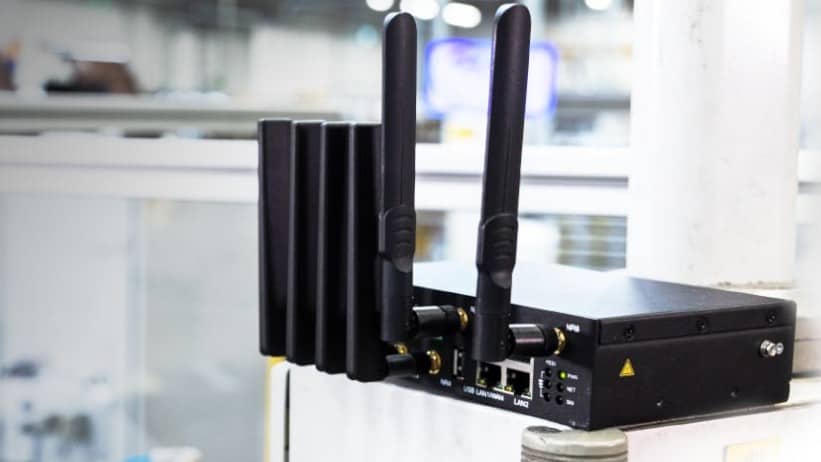
Your Smart Home Is About to Get a Serious Upgrade
Picture this. You walk into your house and before you even reach for the light switch, the lights are already on. Your coffee maker starts brewing exactly how you like it. The thermostat adjusts to your preferred temperature. And your favorite playlist begins playing softly in the background.
Sounds like science fiction right? Well, not anymore.
The magic behind this seamless smart home experience isn’t just about having cool gadgets. It’s about the invisible network that connects them all. And that network is getting a massive upgrade thanks to 5G expansion routers designed specifically for ultra-low latency IoT.
These aren’t your average routers collecting dust in the corner of your living room. These are powerhouses that are changing the game for everything from your smart doorbell to entire factories running on automation.
Let me break down why this matters and why you should care about it right now.
What Makes These Routers So Special
Traditional routers are like that friend who always shows up late to the party. Sure, they get the job done eventually, but timing is everything when you’re dealing with smart devices that need to communicate in real time.
5G expansion routers built for IoT are different. They’re designed to handle massive amounts of data from multiple devices while keeping latency so low that responses happen almost instantly. We’re talking about delays measured in milliseconds, not seconds.
Think about it this way. When you ask your smart speaker to turn off the lights, you don’t want to wait five seconds in the dark. You want it to happen now. That’s where ultra-low latency becomes crucial.
These routers use advanced technology like edge computing and network slicing to prioritize critical data. They’re smart enough to know that your security camera footage needs immediate attention while your smart refrigerator’s grocery list can wait a few extra milliseconds.
The Numbers That Will Blow Your Mind
Here’s something wild. A 4G network typically has a latency of around 50 milliseconds. That might not sound like much, but in the world of IoT, it’s an eternity.
5G expansion routers can reduce that latency to just 1 millisecond. That’s 50 times faster. To put it in perspective, it takes about 300 milliseconds for you to blink your eye. These routers can transmit data 300 times in that same timeframe.
But speed isn’t everything. These routers can also handle up to one million devices per square kilometer. Compare that to 4G’s capacity of around 100,000 devices, and you start to see why this is such a big deal.
Your neighborhood could have every house filled with smart devices, all running smoothly without congestion or slowdowns. Pretty impressive stuff.
Why Your Smart Fridge Actually Needs This Technology
You might be thinking, does my refrigerator really need internet speed that’s faster than my blink? Fair question.
The answer is yes, but not for the reasons you might think.
It’s not about making your fridge send you grocery notifications faster. It’s about creating an ecosystem where all your devices work together seamlessly without lag or interruption.
Imagine you’re running late for work. Your smart alarm knows you overslept and immediately communicates with your coffee maker to start brewing. Your smart mirror displays your calendar while you brush your teeth. Your garage door opens automatically as you approach. All of this happens in perfect sync because the router coordinating these devices has ultra-low latency.
One delayed signal and the whole choreography falls apart. You end up leaving without coffee, forgetting an important meeting, or waiting awkwardly at your garage door.
Share this with someone who’s always complaining about their smart home glitches.
The Healthcare Game Changer Nobody’s Talking About
Here’s where things get really interesting and honestly kind of emotional.
Remote surgery is becoming a reality thanks to 5G expansion routers. Surgeons can now operate on patients thousands of miles away using robotic arms controlled over a 5G network. But this only works if there’s virtually zero latency.
A delay of even a few milliseconds during surgery could be catastrophic. The surgeon moves their hand, but the robotic arm responds a fraction of a second late. That’s unacceptable when you’re dealing with human lives.
Ultra-low latency routers make this technology safe and reliable. They’re literally saving lives by ensuring that critical medical data travels instantaneously.
Wearable health monitors are another big application. Patients with heart conditions can wear devices that constantly monitor their vitals and alert doctors immediately if something goes wrong. Not in five seconds. Not in one second. Immediately.
The difference between a timely alert and a delayed one could mean the difference between life and death. That’s not hype. That’s reality.
Smart Cities Are Getting Smarter
Traffic lights that adjust in real time based on traffic flow. Street lights that dim when nobody’s around to save energy. Waste bins that signal when they’re full and need emptying.
This is what smart cities look like, and 5G expansion routers are making it all possible.
Cities like Seoul, Singapore, and Dubai are already implementing these technologies. Traffic congestion has decreased by up to 30% in areas using smart traffic management systems powered by ultra-low latency networks.
Think about how much time you spend sitting in traffic every week. Now imagine cutting that time by a third. That’s hours back in your life every month.
Pollution monitoring is another application that’s making a real difference. Sensors placed throughout cities can detect air quality issues in real time and adjust traffic patterns to reduce emissions in problem areas. The router’s low latency means these adjustments happen instantly, not after the damage is already done.
Don’t miss out on learning how your city might be implementing this technology soon.
The Industrial Revolution 4.0 Is Here
Factories are being transformed by IoT devices connected through 5G expansion routers. We’re talking about machines that communicate with each other to optimize production, predict maintenance needs, and prevent costly breakdowns.
A manufacturing plant might have thousands of sensors monitoring everything from temperature to vibration to pressure. All of this data needs to be processed in real time to catch problems before they escalate.
Traditional networks can’t handle this volume of data with the speed required. But 5G routers designed for industrial IoT can manage it easily.
Companies using this technology have reported productivity increases of 25% and maintenance cost reductions of up to 40%. Those aren’t small numbers when you’re running a multi million dollar operation.
The really cool part? These systems can make autonomous decisions. If a machine detects unusual vibrations indicating wear, it can automatically order replacement parts and schedule maintenance without human intervention.
Gaming and Entertainment Getting Next Level
Gamers know that lag is the enemy. One moment of delay can mean the difference between victory and defeat in competitive gaming.
Cloud gaming services like Xbox Cloud Gaming and NVIDIA GeForce Now rely heavily on low latency connections. You’re essentially playing a game that’s running on a server somewhere else, and every button press needs to travel to that server and back to your screen instantly.
5G expansion routers make cloud gaming feel just as responsive as playing locally on your console. No input lag. No stuttering. Just smooth gameplay even when you’re streaming a graphically intensive title.
Virtual reality takes this even further. VR needs incredibly low latency to prevent motion sickness. When you turn your head in VR, the image needs to update immediately or your brain gets confused and you feel nauseous.
The 1 millisecond latency that 5G routers can achieve makes VR experiences comfortable and immersive. This technology is opening doors for VR concerts, virtual tourism, and remote collaboration that feels like you’re actually in the same room as your colleagues.
Share this with your gaming buddy who’s always complaining about lag.
Autonomous Vehicles Can’t Function Without This
Self driving cars are basically computers on wheels filled with sensors and cameras. These vehicles need to process massive amounts of data every second to navigate safely.
A autonomous car might need to communicate with traffic lights, other vehicles, pedestrians’ smartphones, and roadside sensors all at once. Any delay in this communication could result in accidents.
Ultra-low latency 5G routers enable vehicle to everything communication that happens in real time. The car can know that a pedestrian is about to step into the crosswalk before the human driver would even notice.
Current estimates suggest that autonomous vehicles need latency below 5 milliseconds to operate safely. 5G expansion routers exceed this requirement comfortably, making truly autonomous transportation a realistic near future possibility.
Companies like Tesla, Waymo, and Cruise are already testing vehicles that rely on this technology. We’re not talking decades away. This is happening right now.
The Security Side You Need to Know About
With great connectivity comes great responsibility. More connected devices mean more potential entry points for hackers.
Here’s the thing though. Modern 5G expansion routers designed for IoT come with advanced security features that actually make your network safer than older setups.
Network slicing is one of these features. Essentially, the router creates separate virtual networks for different types of devices. Your security cameras run on one slice, your entertainment devices on another, and your smart home controls on a third.
If a hacker somehow compromises your smart TV, they can’t access your security system because those devices aren’t on the same network slice. It’s like having multiple routers but without the cost or complexity.
Edge computing also improves security by processing sensitive data locally instead of sending everything to the cloud. Your facial recognition doorbell can identify you without that data ever leaving your home network.
Encryption has also gotten significantly better. Modern 5G routers use military grade encryption that would take millions of years to crack with current computing power.
What This Means for Small Businesses
You don’t need to be a massive corporation to benefit from this technology. Small businesses are actually some of the biggest winners in the 5G expansion router revolution.
A small retail store can use IoT sensors to track inventory in real time, monitor customer foot traffic patterns, and adjust lighting and temperature automatically to create the perfect shopping environment.
A local restaurant can use smart kitchen appliances that communicate with each other to optimize cooking times and reduce food waste. Orders from delivery apps can be automatically sent to the kitchen display, and the system can predict busy times to adjust staffing.
The cost of implementing these systems has dropped dramatically. What used to require tens of thousands of dollars in infrastructure can now be done with a few hundred dollars worth of sensors and a quality 5G router.
Small businesses using IoT technology have reported average revenue increases of 15% and cost reductions of 20%. Those margins can make or break a small operation.
Don’t miss out on this opportunity if you run a small business. Your competitors are already looking into it.
The Environmental Impact That Actually Matters
Climate change is real, and technology needs to be part of the solution. 5G expansion routers are contributing in ways you might not expect.
Smart agriculture is one application that’s making a real difference. Farmers can use IoT sensors to monitor soil moisture, nutrient levels, and crop health in real time. This allows for precision irrigation and fertilization that reduces water usage by up to 50% and chemical runoff by similar amounts.
A farm in California using this technology reduced water consumption by 30 million gallons in a single year. That’s enough water for 900 people for an entire year saved by one farm.
Smart energy grids are another huge application. Utility companies can use IoT devices to monitor power consumption in real time and route electricity more efficiently. This reduces waste and makes renewable energy sources like solar and wind more practical by balancing their variable output.
Cities implementing smart grid technology have reduced energy waste by 15 to 20%. On a global scale, that could prevent billions of tons of carbon emissions.
The Setup Is Easier Than You Think
You might be imagining complicated installations requiring a tech expert to come to your house. The reality is much simpler.
Modern 5G expansion routers designed for consumer use are actually pretty straightforward to set up. Most come with apps that guide you through the process step by step. You plug it in, download the app, follow the instructions, and you’re connected in about 15 minutes.
The routers automatically detect IoT devices in your home and optimize settings for each one. You don’t need to understand network slicing or edge computing to benefit from these features. They just work in the background.
Prices have also become more reasonable. While early 5G routers cost upwards of $800, you can now find quality options for $200 to $400. That’s competitive with high end traditional routers and you’re getting significantly better performance.
Business grade routers are obviously more expensive, ranging from $1,000 to $5,000 depending on capacity and features. But for most applications, the mid range consumer options work perfectly fine.
Real World Success Stories
A hospital in Singapore implemented 5G routers for their IoT medical devices and saw patient monitoring accuracy improve by 35%. They also reduced response times to critical alerts by 60%.
A manufacturing plant in Germany using industrial IoT connected through 5G expansion routers increased production output by 28% while simultaneously reducing defects by 42%. The system paid for itself in less than six months.
A smart apartment building in Tokyo equipped with 5G IoT infrastructure reduced energy costs by 40% and improved resident satisfaction scores by 55%. People loved the convenience and the lower utility bills.
These aren’t hypothetical scenarios. These are real results from real implementations happening right now around the world.
The Challenges Still Being Worked Out
Not everything is perfect yet. Coverage is still a work in progress. While major cities have excellent 5G infrastructure, rural areas are lagging behind.
The good news is that expansion is happening rapidly. Telecom companies are investing billions into building out 5G networks because they know it’s the future.
Device compatibility is another consideration. Not all IoT devices are designed to take full advantage of 5G capabilities. Older smart home devices might not see much benefit from upgrading your router.
However, as manufacturers release new products, 5G compatibility is becoming standard. Within a couple years, the majority of new IoT devices will be built with 5G in mind.
Cost is also still a barrier for some users. While prices are coming down, premium 5G routers are still more expensive than basic models. For users with just a few smart devices, the investment might not be worth it yet.
But as IoT adoption continues to grow and people add more connected devices to their homes and businesses, the value proposition gets better.
What to Look for When Shopping
If you’re ready to upgrade to a 5G expansion router, here are the key features to consider.
First, make sure it actually supports ultra-low latency. Some routers are marketed as 5G ready but don’t have the optimizations needed for IoT applications. Look for specifications mentioning latency under 10 milliseconds ideally under 5.
Device capacity is crucial. Check how many simultaneous connections the router can handle. If you have 30 smart devices in your home, a router rated for 50 devices gives you room to grow. One rated for 25 devices will struggle.
Network slicing capability is a must have for security. This feature isn’t always prominently advertised, so you might need to dig into the technical specifications or contact the manufacturer.
Edge computing support is another feature worth having. This allows the router to process certain data locally instead of sending everything to the cloud, improving both speed and privacy.
Brand reputation matters too. Stick with established manufacturers who have a track record of firmware updates and customer support. A router is only as good as its software, and regular updates are essential for security and performance.
Share this guide with anyone shopping for a new router.
The Future Is Already Here
5G expansion routers for ultra-low latency IoT aren’t some distant future technology. They’re available right now and being implemented across industries and homes worldwide.
The impact extends far beyond faster internet speeds. We’re talking about technology that’s saving lives in hospitals, reducing traffic congestion in cities, making manufacturing more efficient, and helping fight climate change through smart resource management.
For individual users, the benefits might seem less dramatic but are no less real. A smart home that actually works smoothly without lag or connectivity issues. Entertainment experiences that are more immersive and responsive. Security systems that keep you safer.
The price of entry is dropping while the technology gets better. Early adopters paid premium prices for first generation equipment that pales in comparison to what’s available today at a fraction of the cost.
Industries from healthcare to agriculture to transportation are being transformed. Small businesses have access to tools that were previously only available to major corporations.
Why You Should Care Right Now
Technology moves fast. What seems cutting edge today becomes standard tomorrow.
Remember when smartphones were a luxury? Now they’re essential. The same transition is happening with IoT devices, and having the right infrastructure to support them is becoming increasingly important.
Your next car will likely have autonomous features that rely on vehicle to infrastructure communication. Your next job might involve working with IoT systems. Your city is probably already implementing smart infrastructure projects.
Understanding this technology now puts you ahead of the curve instead of playing catch up later.
For businesses, early adoption can provide a significant competitive advantage. Customers notice when your operations run smoother, when you can offer better service, when you’re more environmentally responsible.
For homeowners, creating a truly smart home that works the way it’s supposed to makes daily life genuinely more convenient and enjoyable.
The Bottom Line
5G expansion routers designed for ultra-low latency IoT represent a fundamental shift in how devices connect and communicate.
The technology delivers on its promises. Lower latency. Higher capacity. Better security. Real world applications that make a difference.
Prices are reasonable and continuing to drop. Setup is straightforward. The benefits are substantial and growing as more IoT devices become available.
Whether you’re running a business, managing a home, or just interested in technology, this is something worth paying attention to.
The connected future everyone has been talking about isn’t coming someday. It’s here now, powered by routers that can handle the demands of a world where everything is smart and everything is connected.
Ready to upgrade your connectivity game? Drop a comment below about which smart home device you’re most excited to connect, and don’t forget to share this article with anyone who’s tired of their laggy IoT setup. The future of connectivity is waiting, and trust me, you don’t want to be left behind with yesterday’s technology.