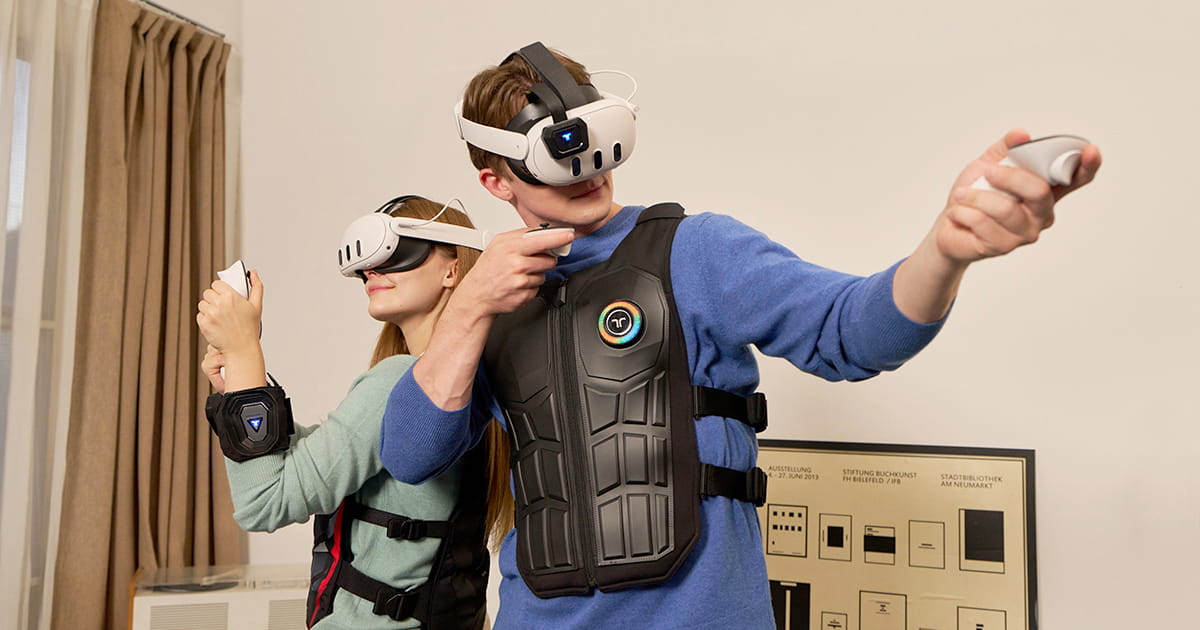
The Future Arrived and It Feels Incredible
You’re standing in a virtual concert hall watching your favorite artist perform. The bass drops and you don’t just hear it. You FEEL it pulse through your chest. A virtual butterfly lands on your arm and you sense the gentle flutter of its wings. Someone gives you a high five in the metaverse and your palm tingles with the impact.
Sounds like science fiction right? Wrong. This is happening RIGHT NOW.
Haptic feedback suits are changing everything we thought we knew about virtual reality. These aren’t your basic gaming controllers that vibrate when you crash a car. We’re talking full body suits that let you experience touch, pressure, temperature and even texture in digital worlds. The metaverse just got a whole lot more real.
And trust us when we say this. Once you try it there’s no going back to regular VR.
What Exactly Are Haptic Feedback Suits
Let’s break this down super simple. Haptic technology is basically the science of touch. Your phone vibrates when you get a text. That’s haptic feedback. But metaverse haptic suits take this concept and crank it up to eleven.
These suits are packed with tiny motors, sensors and actuators that create physical sensations across your entire body. Some use vibration. Others use electrical pulses or air pressure. The fanciest ones combine multiple technologies to simulate everything from a gentle breeze to getting punched by a virtual boxer.
The goal is simple. Make virtual experiences feel as real as possible.
Think of it like this. Regular VR is like watching a movie about food. Haptic VR is like actually tasting that food. The difference is HUGE.
Why Everyone Is Obsessed With Haptic Suits Right Now
The metaverse exploded over the past few years. More people are spending serious time in virtual worlds for work, play and socializing. But something was missing. The experience felt incomplete. You could see and hear everything but you couldn’t feel anything.
That gap created massive demand for haptic technology.
Gaming companies were the first to jump on board. Imagine playing a zombie survival game where you actually feel the impact when something hits you. Or a racing simulator where you sense every bump on the track and the wind rushing past. Games become ten times more intense when your body is part of the action.
But it goes WAY beyond gaming. Virtual fitness classes where you feel resistance during workouts. Medical training programs where doctors practice surgery with realistic tactile feedback. Long distance relationships where couples can feel each other’s touch across the world.
The applications are endless and honestly kind of mind blowing.
The Tech That Makes It All Possible
Here’s where things get technical but stick with us because this stuff is actually fascinating.
Most haptic suits use something called electroactive polymers. These are materials that change shape when electricity runs through them. Scientists figured out how to make tiny versions of these that can be sewn into fabric. When activated they create pressure and vibration against your skin.
Some suits use pneumatic systems instead. Basically they have small air bladders throughout the fabric that inflate and deflate to simulate touch. A virtual hug might trigger the bladders around your torso to gently squeeze. A punch might cause a sharp quick inflation.
Then there are thermal elements. Advanced suits can actually change temperature in different zones. Walk into a virtual snowstorm and feel your arms get cold. Stand near a virtual campfire and sense warmth on your face.
The really cutting edge stuff uses ultrasonic waves to create sensation without even touching you. Sound waves focused on specific spots can make you feel pressure in mid air. It sounds impossible but the technology exists today.
Real Brands Making Real Haptic Suits You Can Buy
This isn’t vaporware or concept art. Multiple companies are selling haptic suits right now in 2025. Let’s look at what’s actually available.
bHaptics makes some of the most popular consumer grade haptic vests and suits. Their TactSuit series covers your torso and arms with 40 individual feedback points. It works with tons of VR games and apps right out of the box. Price point sits around 500 dollars which is steep but not completely insane for early adopters.
Teslasuit went all out with a full body option that includes haptic feedback, motion capture and climate control. This beast costs several thousand dollars and targets professional training applications. Flight schools and military programs use these for realistic simulations. You probably won’t buy one for casual gaming but the technology is incredible.
OWO created a vest that uses electrical muscle stimulation. Instead of vibration it sends tiny electrical pulses to your muscles to simulate sensations. Some people find this more realistic than traditional haptic motors. Others think it feels weird. The vest works with specific games and fitness apps.
HaptX makes gloves that are legitimately the most advanced consumer haptics available. These things have hundreds of micro actuators that push against your fingertips to simulate texture and resistance. Pick up a virtual rock and it feels solid in your palm. Pet a virtual cat and sense its fur. The realism is unreal but they cost over a thousand dollars for just the gloves.
Don’t miss out. The early adopter advantage is real here. These technologies are only getting better and cheaper.
How Much Does This Tech Actually Cost
Let’s talk money because that’s what everyone wants to know.
Entry level haptic vests start around 300 to 500 dollars. These give you basic torso feedback for gaming and entertainment. Not cheap but comparable to a high end gaming monitor or VR headset.
Mid range full suits run 1000 to 3000 dollars. You get more coverage, better motors and wider software compatibility. These target serious gamers and VR enthusiasts who want the complete experience.
Professional grade systems cost 5000 dollars and up. Some go WAY higher into five figure territory. These are for businesses, training facilities and research labs. Unless you’re building a VR arcade or running a company probably skip this tier.
The good news is prices keep dropping. Five years ago basic haptic vests cost what full suits cost now. Give it another few years and we’ll probably see decent options under 200 dollars. Technology always gets cheaper and more accessible over time.
What It Actually Feels Like To Wear One
Time for some real talk. These suits are cool but they’re not perfect yet.
First wearing one takes getting used to. You’re basically putting on a tight fitting garment covered in electronics. It’s bulkier than regular clothes. Some people feel a bit restricted especially with full body suits. You definitely notice you’re wearing something.
The sensations themselves vary wildly depending on the technology. Vibration based feedback feels exactly like what it is. Buzzing motors against your skin. It works well for impacts, explosions and rhythmic effects. But it doesn’t truly feel like touch. More like your phone buzzing in multiple spots.
Air pressure systems create more realistic sensations in some ways. A hug actually feels like gentle squeezing. Wind and water effects translate pretty well. But the response time can lag slightly. There’s a tiny delay between action on screen and feeling on your body.
Electrical stimulation is controversial. When it works it creates sensations that vibration can’t match. Muscle contractions and tingling effects feel unique. But some users find it uncomfortable or even painful if settings aren’t calibrated correctly. It takes trial and error to get right.
The most impressive moments come from combination effects. Music concerts where bass notes pulse through your chest. Action scenes where you feel impacts mixed with environmental effects. Meditation apps where gentle touches help you relax. These experiences showcase the technology’s real potential.
Share this with a friend who’s always talking about VR. They need to see this.
Gaming Gets A Massive Upgrade
Gaming is where haptic suits really shine right now. Developers are creating experiences specifically designed around tactile feedback.
Horror games become legitimately terrifying when you feel things crawling on you or scratching at your back. Your brain knows it’s not real but your body reacts anyway. The immersion factor skyrockets.
Fighting games let you feel every punch and kick. Block an attack and sense the impact on your arms. Land a combo and feel the satisfying thuds against your opponent. It adds a physical dimension that controllers alone can’t provide.
Racing sims use haptic feedback for road texture, wind resistance and crashes. You feel the difference between smooth asphalt and gravel roads. High speed turns create pressure sensations. Crashes are jarring in a way that makes you want to drive more carefully.
Rhythm games are absolutely incredible with haptic suits. The music doesn’t just play through headphones. It pulses through your entire body in sync with the beat. Dancing and music games become full body experiences that blur the line between playing and performing.
Even social VR spaces benefit. Handshakes, hugs and high fives create brief tactile moments that make interactions feel more meaningful. It’s a small thing but it makes hanging out in virtual worlds feel less lonely.
The Surprising Ways People Use Haptic Tech
Gaming gets all the headlines but people are using haptic feedback in ways nobody expected.
Fitness apps turned into serious workout tools. Virtual trainers can guide you through exercises with tactile cues. Feel a tap on your left shoulder telling you to engage that side more. Resistance simulations make bodyweight exercises feel harder. Some users claim better results than traditional workout videos because the feedback keeps them focused.
Therapy and mental health applications surprised everyone. PTSD treatment programs use controlled haptic feedback during exposure therapy. Anxiety apps create calming touch sensations during panic attacks. Meditation programs guide users with gentle tactile cues. Early results show real promise though research is still ongoing.
Long distance relationships got a weird but sweet boost. Couples in different countries use haptic devices to send touch sensations to each other. A hug button that makes your partner’s vest gently squeeze them. Hand holding simulations through haptic gloves. It sounds cheesy but people swear it helps them feel connected.
Artists and musicians create immersive experiences that engage multiple senses. Virtual art galleries where you feel texture and temperature changes as you move through spaces. Musical performances where the audience feels the music physically. New art forms are emerging around haptic technology.
Education jumped on board too. History lessons where students feel what ancient tools were like. Science classes where molecular interactions translate to tactile feedback. The learning retention rates are apparently much higher when multiple senses are engaged.
The Fashion Side Nobody Talks About
Here’s something interesting. Haptic suits are becoming fashion statements.
Early versions looked super nerdy. Black tactical vests covered in obvious electronics. Nobody wanted to be seen wearing one outside their gaming room.
But designers caught on. Now you can get haptic vests that look like streetwear. Sleek designs in multiple colors. Some brands collaborate with fashion houses to create limited edition pieces. People actually wear these to VR arcades and tech events as flex pieces.
Customization options expanded too. Swappable covers that change the look without affecting functionality. LED lighting that syncs with haptic effects. Some manufacturers let you choose fabric patterns and color schemes.
The rise of metaverse fashion shows created demand for IRL wearables that match virtual outfits. Brands release haptic accessories that mirror digital collections. Wearing the physical version while inhabiting the virtual version creates a weird loop of physical and digital fashion.
It’s still niche obviously. You won’t see haptic vests on runways at Paris Fashion Week anytime soon. But the intersection of tech and fashion is growing faster than expected.
Don’t sleep on this trend. Early adopters always look cooler than late joiners.
Problems Nobody Wants To Talk About
Real talk time again. Haptic suits face serious challenges that manufacturers try to downplay.
Battery life is terrible on most devices. Full body suits might last 2 to 4 hours before needing a charge. That’s barely enough for an extended gaming session. Wireless options die even faster. Most users end up tethered to power which defeats the freedom VR promises.
Overheating happens more than companies admit. Pack your torso with electronics and motors then add physical activity and things get sweaty fast. Some suits have cooling systems built in but they add weight and cost. Budget options just get hot and uncomfortable.
Software compatibility remains inconsistent. A suit might work great with ten games but not at all with hundreds of others. Developers have to specifically program haptic feedback into their apps. It’s getting better but we’re nowhere near universal support.
Physical discomfort affects some users. Tight fitting suits can chafe during long sessions. Pressure points develop where motors sit against bones. People with sensory sensitivities sometimes find the constant stimulation overwhelming.
Cost barriers keep most people out of the market. Even budget options cost more than entire gaming consoles. Premium suits cost as much as decent used cars. Until prices drop significantly haptic feedback will remain a luxury item.
Privacy and data concerns lurk in the background. These suits track detailed body information. Where you’re touched. How you react. All that data goes somewhere. Terms of service are long and vague about what companies do with haptic data. It’s creepy if you think about it too hard.
What’s Coming Next In Haptic Technology
The future of haptic feedback is wild and coming fast.
Full body suits will shrink into normal looking clothes. Researchers are developing haptic fabrics that feel like regular athletic wear. Electronics woven directly into fibers. No bulky modules or obvious hardware. Just put on a shirt and get full tactile feedback.
Resolution is increasing dramatically. Current suits have dozens of feedback points. Next generation devices will have hundreds or thousands. Instead of feeling vibration in a general area you’ll sense precise localized touch. Run your hand over a virtual surface and feel individual texture details.
Temperature control is getting more sophisticated. Future suits will create hot and cold sensations that move across your body. Walk through a virtual environment and feel realistic climate changes. Stand in virtual rain and sense cold droplets. The realism will be uncanny.
Brain computer interfaces might eliminate suits entirely eventually. Direct neural stimulation could create touch sensations without any physical device. This is still mostly theoretical and probably a decade or more away. But the research is happening right now.
Smell and taste integration will complete the sensory picture. Companies are working on devices that release scents in sync with VR experiences. Taste simulation through electrical tongue stimulation is in early testing. Combining all five senses will create truly complete virtual experiences.
Social haptics will become normalized. Just like video calls replaced phone calls we might see haptic handshakes become standard in virtual meetings. Digital touch will feel as normal as text messaging does now.
Industries Being Transformed By Haptic Feedback
Beyond entertainment haptic technology is changing entire industries in surprising ways.
Medical training revolutionized overnight. Surgery simulators with haptic feedback let students practice procedures with realistic resistance and texture. They feel the difference between cutting through skin versus muscle versus bone. Training quality improved dramatically while reducing need for cadavers and animal testing.
Physical therapy found new applications. Patients recovering from strokes or injuries use haptic guided exercises. The suits provide real time feedback about movement quality and muscle engagement. Recovery times reportedly shortened in early studies.
Manufacturing and industrial design benefit hugely. Engineers can test product ergonomics in VR with haptic feedback before building physical prototypes. Feel how a tool sits in your hand. Test button resistance and texture. This saves massive amounts of time and money in product development.
Real estate went weird with virtual property tours. Walk through homes remotely and feel textures of countertops and flooring. Test how doors and cabinets feel to open. Buyers make more confident decisions without visiting in person.
Military and law enforcement training uses haptic suits extensively. Combat simulations feel realistic enough to prepare soldiers for actual scenarios. De escalation training lets officers practice physical intervention techniques safely.
The adult entertainment industry jumped in early and drives innovation whether people admit it or not. Just like VHS and streaming before it haptic feedback is seeing serious development funding from that sector.
Try this before your friends do and become the person everyone asks about new tech.
Real Users Share Their Honest Experiences
We talked to actual people using haptic suits regularly. Here’s what they said without the marketing spin.
Marcus, a competitive VR gamer, uses his bHaptics vest daily. “It gives me an edge in shooters. I feel where shots come from without looking at damage indicators. The immersion is insane but I wish battery life was better. I’m always worried about it dying mid tournament.”
Sofia teaches virtual yoga classes with haptic feedback. “My students say the gentle touch cues help them hold poses correctly. It’s like having hands on adjustments remotely. But setup is annoying. Getting everyone’s suits calibrated at class start eats into practice time.”
James bought a Teslasuit for his architecture firm. “We use it to let clients experience building designs before construction. They walk through spaces and feel materials. It’s a game changer for presentations but the learning curve is steep. Takes training to use effectively.”
Priya tried haptic gaming at a VR arcade. “Holy crap the zombie game was terrifying. Feeling things grab at you is next level scary. But after 30 minutes I was sweaty and uncomfortable. Not sure I’d want to own one for home use. Too much hassle.”
The common themes are clear. The technology is impressive but practical concerns remain. Comfort, battery life and ease of use need improvement before mainstream adoption happens.
How To Choose Your First Haptic Device
Thinking about taking the plunge? Here’s a practical guide to picking the right haptic gear.
Start with your budget. Be realistic about what you can afford and what value you’ll actually get. A 300 dollar vest for occasional gaming might be smarter than a 2000 dollar suit that sits unused.
Consider your primary use case. Gaming only? Look at devices with wide game compatibility. Fitness focused? Check what workout apps support which hardware. Professional use? Invest in higher end equipment with better support.
Read actual user reviews not just marketing material. Reddit threads and YouTube demos show real world performance. Look for complaints about comfort, reliability and battery life. These matter more than fancy feature lists.
Check software compatibility carefully. Make a list of apps and games you want to use. Verify the haptic device supports them. Don’t assume universal compatibility because it doesn’t exist yet.
Think about form factor. Vests are less intrusive than full suits but provide less coverage. Gloves give amazing hand feedback but leave your body without sensation. Decide what body parts matter most for your use case.
Consider future proofing. Haptic tech is evolving fast. Devices with software updates and modular designs will stay relevant longer. Cheap locked down hardware might be obsolete in a year.
Try before you buy if possible. VR arcades and tech stores sometimes have demo units. Fifteen minutes of hands on experience teaches you more than hours of research.
Common Mistakes People Make With Haptic Suits
Learn from others failures and avoid these rookie errors.
Buying based on hype alone without research. That cool looking suit in a promo video might have terrible reviews. Do your homework before spending hundreds or thousands of dollars.
Ignoring comfort for features. A suit with 100 feedback points that hurts to wear is worthless. Comfort matters more than any spec sheet.
Forgetting about ecosystem lock in. Some manufacturers create walled gardens where their hardware only works with specific software. You might love a suit but hate that it’s incompatible with your favorite games.
Underestimating setup hassle. Haptic suits require calibration, charging, updates and maintenance. If you hate tech fiddling you’ll end up frustrated.
Not considering space requirements. These devices need room to move around safely. Your cramped apartment might not work for full body VR with haptic feedback.
Expecting perfect realism. Current technology is impressive but not magic. Sensations are approximations of touch not perfect simulations. Adjust expectations accordingly.
Neglecting health considerations. People with certain medical conditions shouldn’t use haptic devices. Heart problems, seizure disorders and sensory issues might make these dangerous. Check with doctors if you’re unsure.
Share this guide with anyone thinking about buying haptic gear. Save them from expensive mistakes.
The Social Side Of Haptic Feedback
Virtual worlds are getting more social and haptic feedback is changing how people interact digitally.
Virtual hugs hit different when you actually feel them. Friends separated by distance use haptic devices to maintain physical connection. It’s not the same as real life but it’s closer than video calls alone.
High fives, fist bumps and handshakes in VR gain meaning with tactile feedback. These small gestures create moments of connection that pure visual VR lacks. Social spaces feel less isolating.
Some people worry about boundaries and consent in haptic social spaces. Who can touch you virtually? How do you prevent unwanted haptic feedback? Platforms are developing permission systems but it’s tricky territory.
Dance clubs and music venues in the metaverse use haptic feedback to create shared experiences. Everyone feels the beat together. The collective physical sensation builds community in ways visual only events can’t match.
Support groups and therapy sessions benefit from appropriate tactile elements. Comfort gestures during difficult conversations. Grounding techniques for anxiety. Haptic feedback adds emotional dimension to virtual support.
Dating in the metaverse got way more interesting and complicated. Virtual dates where you hold hands and feel it? That’s happening now. The implications for long distance relationships and digital intimacy are huge and honestly kind of weird to think about.
Unexpected Benefits Nobody Predicted
Haptic technology created surprising positive outcomes beyond the original goals.
Accessibility improved for people with visual impairments. Haptic feedback provides spatial information and environmental cues that audio alone can’t convey. Blind users navigate virtual spaces more easily with tactile guidance.
ASMR content exploded in new directions. Creators design haptic experiences that trigger relaxation responses. Gentle tapping patterns, brushing sensations and other triggers translate to physical feeling. The ASMR community went wild for this.
Focus and productivity increased for some remote workers. Haptic notifications feel less intrusive than sounds or visual alerts. A gentle tap on the shoulder gets attention without breaking concentration. Productivity apps are experimenting with tactile task management.
Phantom limb pain relief showed promising results. Amputees using haptic feedback in VR prosthetic training reported reduced pain. The technology tricks the brain into processing sensation differently. Medical research is actively exploring this application.
Language learning improved with haptic cues. Feeling correct pronunciation as vibration patterns helps students internalize proper speech. Rhythm based language apps use full body feedback. Results suggest faster learning than traditional audio only methods.
Pet therapy apps became surprisingly effective. Virtual pets that you can feel when you pet them provide real emotional comfort. People with pet allergies or living situations that don’t allow animals found unexpected solace.
The Psychology Of Touch In Virtual Spaces
Scientists are studying how haptic feedback affects our brains and behavior in fascinating ways.
Touch is the first sense we develop and deeply wired into emotional processing. Adding tactile feedback to virtual experiences activates brain regions that purely visual VR doesn’t reach. This creates stronger emotional responses and better memory formation.
Presence, the feeling of actually being in a virtual space, increases dramatically with haptic feedback. Your brain believes the experience more fully when multiple senses agree. This has implications for therapy, training and entertainment.
Social bonding happens faster with haptic communication. A virtual pat on the back activates similar neural pathways as physical touch. Online friendships that include tactile elements may form deeper connections than purely text or voice based relationships.
Empathy can be increased through haptic experiences. Feeling what someone else describes creates understanding beyond intellectual knowledge. This has applications for social justice training and conflict resolution.
Addiction concerns exist with highly immersive haptic experiences. When virtual worlds feel very real people might prefer them to actual reality. This isn’t widespread yet but researchers are watching for problematic usage patterns.
Body image and identity shift in interesting ways. Inhabiting avatars that feel different sensations than your physical body creates dissociation effects. Some users report feeling more comfortable in virtual bodies than real ones. The psychological implications are still being studied.
Don’t miss out on understanding where technology and psychology meet. This stuff affects how we’ll live in the future.
Making Your Own Haptic Experience
DIY enthusiasts are building custom haptic devices and it’s easier than you might think.
Arduino boards and simple motors can create basic haptic feedback for under 50 dollars in parts. Online tutorials walk through wiring vibration motors to respond to game events or music. The results are crude but functional.
Modding existing gaming peripherals is popular. Adding motors to controllers, mice and keyboards creates personalized tactile feedback. The maker community shares designs and code freely.
Open source haptic projects let programmers create custom feedback patterns for any application. If a game doesn’t officially support haptics you can sometimes add it yourself. Technical skill required but very doable for experienced coders.
3D printing enables custom mounts and housings for haptic components. Design a vest specifically for your body shape. Print ergonomic controllers with embedded motors. The customization possibilities are endless.
Community haptic projects bring people together. Groups collaborate on open hardware designs that anyone can build. Some create feedback libraries that work across multiple devices. The shared knowledge accelerates innovation.
Warning though: DIY haptics come with safety risks. Electrical components near your body can cause shocks or burns if built incorrectly. Start small, research thoroughly and test carefully. Don’t risk injuring yourself to save money.
The Environmental Cost Nobody Considers
Let’s talk about the sustainability issue with haptic devices.
These products require rare earth minerals for motors and batteries. Mining these materials causes environmental damage and often involves unethical labor practices. The electronic waste problem grows with every device sold.
Power consumption adds up across millions of users. Haptic suits draw significant electricity for charging. As adoption increases the cumulative energy demand becomes substantial.
Manufacturing processes create pollution. Electronics production involves toxic chemicals and generates hazardous waste. Few manufacturers prioritize environmental responsibility in their supply chains.
Short device lifespans mean frequent replacements. Technology evolves so fast that haptic suits become obsolete quickly. Users upgrade creating mountains of electronic waste.
Recycling programs barely exist. Very few companies offer take back programs for old haptic devices. Most end up in landfills leaching harmful substances into soil and water.
The metaverse promises to reduce physical world resource use by replacing travel and physical goods. But if accessing it requires resource intensive hardware the net benefit becomes questionable.
Conscious consumers should demand better. Push manufacturers to use sustainable materials, offer repair programs and create recycling systems. Vote with your wallet for companies that prioritize environmental responsibility.
What Experts Predict For The Next Five Years
Industry insiders and researchers shared their predictions for haptic technology’s near future.
Mainstream adoption will happen but slower than tech companies hope. By 2028 maybe 10 to 15 percent of VR users will own haptic devices. Price and complexity remain barriers for mass market penetration.
Integration with AI will create adaptive haptic experiences. Systems will learn your preferences and adjust sensations automatically. The feedback will become personalized without manual calibration.
Wireless technology will finally catch up to wired performance. Better batteries and low latency protocols will make untethered haptic suits practical. This removes one of the biggest current frustrations.
Medical applications will grow faster than entertainment. Healthcare systems will adopt haptic training and therapy tools widely. Insurance might even cover haptic devices for certain conditions.
Hybrid devices will blur lines between categories. Clothing with embedded haptics, jewelry that provides feedback, everyday objects with tactile enhancement. The technology will disappear into normal life.
Standardization will improve compatibility. Industry groups will establish common protocols so devices work across platforms. This will accelerate software development and user adoption.
Unexpected use cases will emerge. Just like smartphones enabled apps nobody predicted, haptic technology will enable applications we can’t imagine yet. The most exciting developments will surprise everyone.
Real World Tips For Living With Haptic Tech
Practical advice for anyone using haptic devices regularly.
Create a charging station near your VR setup. Dead batteries kill the experience. Having a dedicated spot ensures your gear is always ready.
Clean your devices regularly. Sweat and skin oils build up fast. Most suits have removable washable layers. Use them and clean frequently to prevent gross buildup and odor.
Calibrate before every serious session. Quick calibration takes 30 seconds and ensures optimal performance. Skipping it leads to misaligned feedback that breaks immersion.
Take breaks every hour. Haptic feedback is intense. Your sensory system needs rest. Step away, drink water, let your body recover.
Adjust intensity settings for different applications. Gaming might need strong feedback. Meditation apps work better with gentle sensations. Don’t use one setting for everything.
Store devices properly when not in use. Keep them flat or hanging to prevent motor damage. Avoid folding or crushing which can break internal components.
Join online communities. User forums share troubleshooting tips, app recommendations and firmware updates. The collective knowledge saves time and enhances your experience.
Be patient with the technology. It’s still early days. Bugs happen, compatibility issues arise, things don’t always work perfectly. Frustration is normal but usually fixable.
Try this approach and your haptic gear will last longer and perform better.
Why Some People Will Never Use Haptic Suits
Not everyone will adopt this technology and that’s perfectly fine.
Some people hate tight fitting clothing. Haptic suits by nature must contact your skin. If you’re uncomfortable in compression wear these devices will drive you crazy.
Sensory sensitivities make haptic feedback overwhelming for some individuals. People on the autism spectrum or with sensory processing disorders might find the constant stimulation intolerable.
Budget constraints keep technology out of reach for many people. Even as prices drop haptic suits will remain luxury items for years. Not everyone can or should spend money on entertainment tech.
Minimalists reject adding more devices to their lives. The whole point of minimalism is owning less stuff. Haptic suits, chargers, storage and accessories contradict that philosophy.
Privacy advocates refuse technology that collects detailed body data. These concerns are legitimate. Haptic devices track information that many people prefer to keep private.
Skeptics doubt the value proposition. Spending hundreds of dollars for slightly better gaming immersion seems wasteful to people who are satisfied with traditional controllers.
Luddites reject new technology on principle. Some people prefer physical world experiences and see virtual reality as a step backward. Their perspective has merit even if you disagree.
All these positions are valid. Technology should serve human needs not the other way around. If haptic suits don’t enhance your life skip them without guilt.
The Bottom Line On Haptic Feedback
Here’s the truth without hype or marketing nonsense.
Haptic feedback suits are genuinely impressive technology. They add a dimension to virtual experiences that didn’t exist before. The sensation of touch in digital worlds creates immersion that purely visual VR cannot match.
But the technology is still early stage. Devices are expensive, sometimes uncomfortable and not universally compatible. Batteries die too fast. Setup is annoying. The experience varies wildly depending on the specific hardware and software.
For early adopters and tech enthusiasts haptic suits offer excitement and novelty worth the investment. The wow factor is real. Being among the first to experience emerging technology has inherent value.
For mainstream consumers waiting makes more sense. Let the technology mature. Let prices drop. Let compatibility improve. In two or three years haptic devices will be better and cheaper.
The future of haptic feedback is bright. Touch will become a standard part of virtual experiences. But we’re not quite there yet. The technology works but needs refinement.
Your decision to buy should depend on personal factors. Budget, interest level, tolerance for early adopter frustrations and specific use cases. There’s no universal right answer.
One thing is certain though. Virtual touch is here to stay. Whether you jump in now or wait, haptic feedback will shape how humans interact with digital worlds. The sense of touch is too fundamental to human experience to remain absent from our virtual lives.
The metaverse just got real in the most literal sense possible.
Ready to feel the future? Drop a comment below about your haptic experiences or questions. Share this with your tech obsessed friends. Follow us for more deep dives into emerging technology that’s changing how we live and play. The digital revolution isn’t coming, it’s already here and it feels amazing.