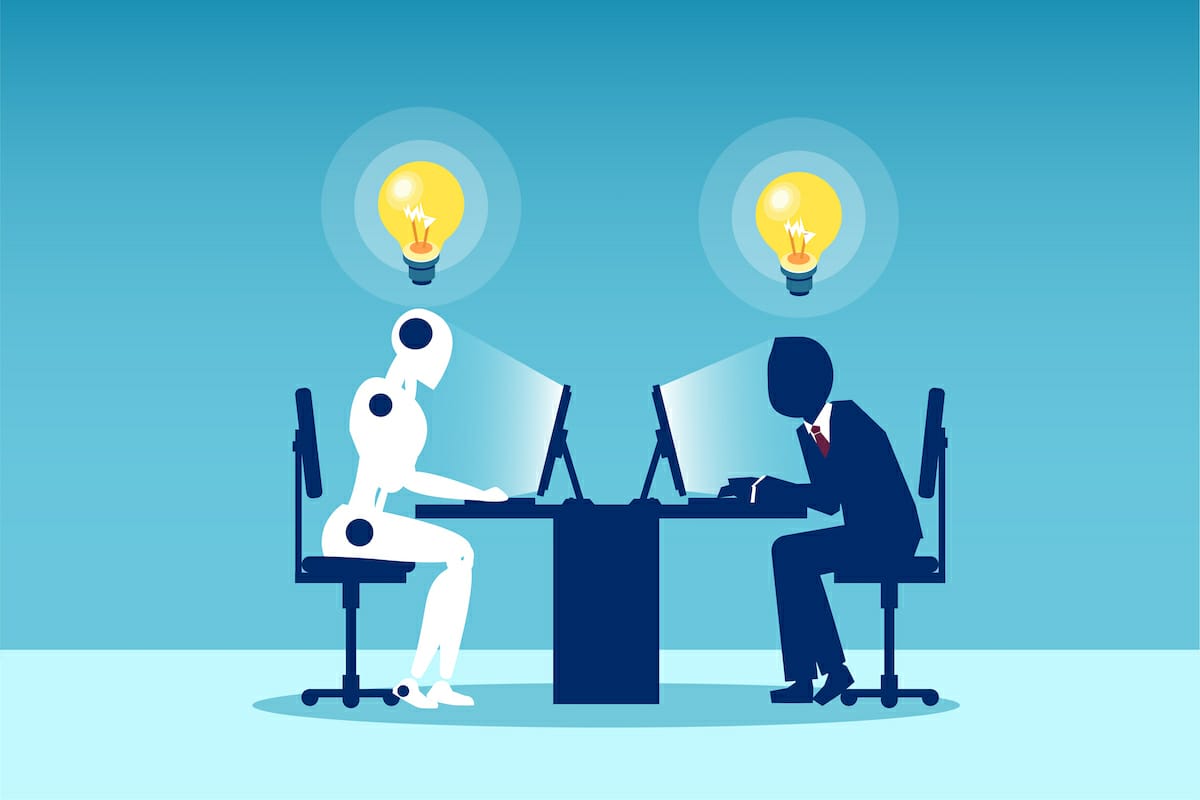
Picture this. You’re curled up with a bestselling novel, completely hooked on every twist and turn. The characters feel real. The dialogue snaps. The plot keeps you up way past midnight. Then you flip to the author bio and realize something wild. A computer wrote this.
Sounds like science fiction, right? Except it’s already happening. And it’s about to flip the entire literary world on its head.
The Robot Revolution Nobody Saw Coming
AI generated text isn’t some distant future fantasy anymore. It’s here. It’s everywhere. And whether you’re ready or not, it’s changing how we create, consume, and think about written content.
From marketing copy to poetry collections, from news articles to full length novels, artificial intelligence is learning to write like us. Sometimes even better than us. And that raises a massive question that keeps authors, publishers, and readers up at night. What happens to human creativity when machines can do it faster, cheaper, and potentially just as well?
Let’s dive into this wild new world where algorithms meet artistry.
When Machines Learned to Dream in Words
Remember when autocorrect was the fanciest writing tool we had? Those days feel ancient now. Modern AI writing tools have evolved so fast it’s almost scary. These systems don’t just fix typos or suggest better words. They generate entire paragraphs, articles, even books from simple prompts.
The technology behind this leap is called natural language processing. Think of it as teaching computers to understand context, tone, emotion, and style. Not just stringing words together randomly, but actually crafting sentences that flow naturally and make sense.
Companies like OpenAI, Google, and dozens of startups have poured billions into making this happen. And the results are genuinely impressive. AI can now write product descriptions that convert, blog posts that rank on Google, and stories that sometimes pass for human written work.
But here’s where it gets interesting. The question isn’t really can AI write anymore. The question is should it? And what does it mean for everyone who makes their living with words?
The Good Stuff: Why AI Text Isn’t All Bad News
Before we panic about robot authors stealing our jobs, let’s talk about the genuinely cool benefits this technology brings to the table.
Speed is the obvious win. What takes a human writer hours or days can happen in seconds with AI. Need fifty product descriptions by tomorrow morning? Done. Want to draft three different versions of your blog intro? Easy. This efficiency opens doors for small businesses, solo creators, and anyone who needs content but lacks time or budget.
Accessibility matters too. Not everyone has natural writing talent or formal training. AI tools democratize content creation in a powerful way. A brilliant scientist with groundbreaking research can now communicate their findings clearly without struggling through writer’s block. An entrepreneur with a game changing idea can craft compelling pitches without hiring expensive copywriters.
Translation and localization become infinitely easier. AI can adapt content across languages and cultures faster than any human team. This means stories, ideas, and information can reach global audiences in ways that were impossible before.
And honestly? Sometimes AI catches things humans miss. Consistency in tone. Proper grammar. SEO optimization. These technical elements matter, especially in business writing, and AI handles them effortlessly.
The Scary Part: What We Might Lose
Now for the uncomfortable truth. When machines start writing like humans, we risk losing something essential. Something intangible but incredibly valuable.
Authenticity takes the biggest hit. Real writing comes from lived experience, from emotional truth, from the messy human journey of figuring out what you actually think by putting words on a page. AI doesn’t have experiences. It doesn’t feel heartbreak or joy or confusion. It mimics these things based on patterns it learned from human writing, but there’s no genuine emotion behind it.
Think about your favorite author. Maybe it’s someone who writes with raw vulnerability about mental health. Or someone whose humor reflects their specific cultural background. Or someone whose unique worldview challenges how you see things. That voice, that perspective, that je ne sais quoi that makes their writing theirs-AI can’t replicate that. Not really.
There’s also the creativity question. True innovation comes from making unexpected connections, from thinking sideways, from breaking rules in interesting ways. AI operates within the boundaries of its training data. It can remix and recombine what already exists, but can it create something genuinely new? Most experts say no. At least not yet.
Share this with a writer friend who’s worried about AI. They need to hear both sides.
Books Written by Nobody (And Everybody)
Here’s where things get really weird. AI generated novels are already hitting the market. Some succeed. Many fail spectacularly. But they all raise fascinating questions about authorship and creativity.
A Japanese AI coauthored novel made it past the first round of a prestigious literary competition in 2016. That was almost a decade ago, and the technology has improved exponentially since then. Today’s AI can maintain consistent characters across chapters, develop plot arcs, and even mimic specific writing styles.
But here’s the catch. Most AI novels read like pretty decent first drafts written by someone who’s technically skilled but emotionally distant. The prose is clean. The structure is solid. But something vital is missing. That spark. That personality. That sense of a real human voice reaching across the page to connect with you.
Some publishers are experimenting with hybrid approaches. Human authors outline the story, develop characters, and craft key scenes. AI fills in the gaps, handles transitions, and generates descriptive passages. The result? Books that maintain human creativity while leveraging machine efficiency.
Others go full AI. Romance novels seem particularly vulnerable to this trend. The formula driven nature of certain romance subgenres makes them easier for AI to mimic. Churn out enough books fast enough, and you can build a backlist that generates passive income. Quality varies wildly, but quantity wins in algorithmic recommendation systems.
The Poetry Problem: Can Robots Feel Metaphor?
Poetry represents AI’s biggest challenge and most interesting frontier. Good poetry operates on multiple levels simultaneously. Sound. Rhythm. Meaning. Emotion. Imagery. Subtext. All woven together in ways that feel inevitable yet surprising.
AI can generate poems that scan correctly and use appropriate literary devices. But do they move you? Do they reveal something true about human experience? Do they make you see the world differently?
Sometimes yes. Sometimes no. The results are genuinely unpredictable.
There’s an AI that writes haiku based on photos. Another that generates love poems using your text messages. A third that creates experimental poetry by processing news articles through creative algorithms. Some of these experiments produce beautiful accidents. Unexpected combinations of words that resonate emotionally despite having no intentional meaning behind them.
But intention matters in art. The why behind the what. AI doesn’t have intention. It has statistical probability. And while probability can sometimes mimic intention convincingly, they’re fundamentally different things.
Journalism Gets Weird
News organizations already use AI for certain types of reporting. Earnings reports. Sports scores. Weather updates. Anything formulaic and data driven works well for automated generation.
But investigative journalism? Long form features? Opinion pieces? These require human judgment, ethical reasoning, and the ability to understand nuance in complex situations. AI struggles here.
There’s also the trust issue. Readers need to know who’s behind the words they’re reading. Especially when those words inform their understanding of important issues. An AI written news article might be factually accurate, but it lacks accountability. Who do you blame when it gets something wrong? The programmer? The company? The algorithm itself?
Some outlets disclose AI involvement. Others don’t. This transparency gap creates problems as AI text becomes more sophisticated and harder to detect.
Don’t miss the discussion section at the end. Share your thoughts on AI journalism.
The Copyright Chaos Nobody Expected
Who owns AI generated text? This question has lawyers, writers, and tech companies locked in heated debates with no clear answer in sight.
If you use an AI tool to write something, do you own the output? Does the company that made the tool own it? Is it public domain since no human authored it directly? Different jurisdictions are developing different answers, and the legal landscape shifts constantly.
Then there’s the training data problem. Most AI writing tools learned by analyzing millions of existing texts, many copyrighted. Did those original authors consent to having their work used to train machines that might compete with them? Usually no. Several major lawsuits are working through courts right now trying to sort this out.
The implications are massive. If AI can legally scrape and learn from copyrighted work without permission, it fundamentally changes how intellectual property functions in the digital age. If it can’t, then most current AI writing tools are built on shaky legal ground.
Literary Culture Meets Machine Learning
Publishing houses are trying to figure out where AI fits in their future. Some embrace it as a tool for efficiency. Others view it as an existential threat to their entire business model.
Literary agents worry about slush piles flooded with AI generated submissions. How do you evaluate thousands of query letters when half might be machine written? Editors concerned about maintaining quality standards when AI can produce infinite variations on market tested formulas.
Book reviewers face new challenges too. How do you critique work that has no author in the traditional sense? What does literary analysis mean when applied to algorithmic output?
Meanwhile, readers are developing new relationships with text. Some don’t care whether a human or machine wrote what they’re reading. If it entertains or informs them, that’s enough. Others feel betrayed discovering their favorite blog has been AI written all along. These differing reactions suggest the literary landscape is fragmenting into distinct camps with very different values.
The Creative Class Fights Back
Writers aren’t taking this lying down. Many are pushing back hard against AI encroachment on creative work.
Professional organizations are adding AI clauses to contracts. Some explicitly forbid using AI in commissioned work. Others require disclosure. Still others are trying to negotiate better compensation structures that account for AI assistance.
Writing communities are having intense conversations about ethics, craft, and the future of the profession. What does it mean to be a writer in an age when machines can generate text? How do we value human creativity differently than algorithmic output?
There’s also a growing movement to celebrate distinctly human elements that AI can’t replicate. Vulnerability. Authentic voice. Personal perspective. Lived experience. These qualities become more valuable precisely because machines can’t fake them convincingly.
Some writers are leaning into collaboration with AI, treating it like a sophisticated tool rather than a replacement. They use AI for brainstorming, outlining, or generating raw material that they then heavily edit and reshape. This approach acknowledges AI’s capabilities while maintaining human creative control.
Education Gets Complicated
Teachers everywhere are losing their minds over AI writing tools. Students can now generate essays in seconds. How do you assess writing ability when you can’t be sure who did the writing?
Schools are implementing AI detection tools with mixed results. The technology for detecting AI text improves constantly, but so does the technology for making AI text undetectable. It’s an arms race with no clear winner.
Some educators are changing how they teach writing altogether. More emphasis on process over product. In class writing assignments. Discussions and presentations that demonstrate understanding beyond what AI can provide.
Others are embracing AI as a learning tool. Teaching students to use it responsibly. Showing them how to prompt effectively, evaluate output critically, and integrate AI assistance into their workflow without losing their own voice.
The bigger question is what writing skills will matter in a future where AI handles basic composition. Critical thinking? Research ability? Creativity and originality? Communication strategy? The definition of literacy itself might be evolving.
Try using AI as a brainstorming partner for your next project. See what happens.
The Money Side of Machine Text
Content creation is a massive industry. Billions of dollars change hands annually for marketing copy, blog posts, social media content, technical documentation, and countless other forms of commercial writing.
AI threatens to disrupt this entire economic ecosystem. Why pay a freelance writer $500 for a blog post when AI can generate something similar for pennies? The math is brutal for working writers.
But quality matters. Cheap AI content often reads generic, lacks personality, and fails to connect with audiences. Companies that go all in on AI sometimes discover their engagement metrics plummet. Turns out readers can sense when something feels off, even if they can’t pinpoint why.
This creates a potential bifurcation in the market. Low end commodity content gets automated. High end creative work that requires genuine expertise, unique perspective, or emotional resonance stays human. The middle disappears.
Writers who can offer something AI can’t, strategic thinking, brand voice development, storytelling that converts, remain valuable. Those competing purely on speed and price face tough times ahead.
What Readers Actually Want
Here’s the thing that sometimes gets lost in these debates. Readers don’t care about the technology behind what they’re reading. They care about the experience of reading it.
Does this article make me laugh? Does this story move me? Does this blog post solve my problem? These questions matter infinitely more than whether human or machine fingers typed the words.
But there’s a trust dimension too. Most readers, when they discover something was AI generated, feel slightly cheated. Like they invested emotional energy into a relationship that turned out to be fake. This reaction suggests authenticity matters even when the output is technically good.
The future probably involves readers becoming more sophisticated about distinguishing AI from human work. And possibly more accepting of AI text in certain contexts while demanding human creativity in others.
The Experimental Edge
Some of the most interesting work happening right now exists at the intersection of human and machine creativity. Artists and writers are using AI as a collaborator, co creator, or provocateur.
One writer feeds AI prompts derived from dreams, then uses the bizarre outputs as inspiration for surrealist fiction. Another creates poetry by having AI generate lines that she then arranges and edits into final pieces. A third uses AI to generate dialogue for characters, then rewrites it to sound more natural.
These experimental approaches treat AI as a creative tool rather than a replacement for human artistry. Like a very sophisticated random word generator or a digital muse that suggests unexpected directions.
The results often have a strange quality. Slightly off. Wonderfully weird. They feel both familiar and alien, which can be powerfully effective when that’s the artistic goal.
Predicting the Unpredictable
What does the future actually look like? Honestly, nobody knows for sure. The technology is evolving too fast for confident predictions.
Likely scenario one. AI becomes standard in commercial content creation but remains rare in literary fiction and poetry. Readers continue valuing human creativity for artistic work while accepting AI efficiency for functional text.
Likely scenario two. Hybrid approaches dominate. Most published writing involves some AI assistance, but human oversight, editing, and creative direction remain essential. The definition of authorship expands to include AI collaboration.
Likely scenario three. AI quality improves so dramatically that distinguishing machine from human text becomes impossible. Authenticity gets redefined. Attribution practices change completely. Literary culture fragments into camps that value different things.
Wild card possibility. AI develops genuine creativity through some breakthrough in machine consciousness. This sounds like science fiction but isn’t impossible. If it happens, everything changes. Art, literature, culture itself all get reimagined from the ground up.
The Skills That Survive
If you’re a writer worried about AI making you obsolete, focus on developing skills machines can’t replicate easily.
Critical thinking remains deeply human. The ability to evaluate information, identify patterns, make judgments about what matters. AI can process data faster than any human, but deciding what that data means requires human wisdom.
Original research and reporting. AI works with existing information. It can’t interview sources, attend events, or investigate stories firsthand. Journalism that requires legwork stays human.
Emotional intelligence and empathy. Understanding people at a deep level. Connecting with audiences authentically. Building relationships through communication. These soft skills become more valuable as hard skills get automated.
Strategic communication. Knowing what to say, when to say it, and how to frame messages for maximum impact. This requires understanding human psychology, culture, and context in ways AI struggles with.
Your unique voice and perspective. The thing only you can offer because of your specific combination of experiences, knowledge, and personality. Lean into that. Make it your superpower.
The Ethics Get Messy
Beyond practical and economic questions, there are genuine ethical dilemmas around AI generated text.
Is it dishonest to use AI without disclosure? Context matters, but many people would say yes, especially in creative or journalistic contexts where authenticity is expected.
What responsibility do we have to creators whose work trained these systems without permission or compensation? The answer isn’t clear, but it feels wrong to profit from their labor without acknowledgment.
How do we prevent AI from amplifying biases present in training data? This is a massive concern. If AI learns to write by studying texts that reflect historical prejudices, it will reproduce those prejudices in its output.
Should there be different rules for different types of writing? Most people intuitively feel that AI generated marketing emails are fine but AI generated novels feel problematic. Why? What’s the principle that distinguishes them?
These questions don’t have easy answers. But we need to wrestle with them seriously as AI text becomes more prevalent.
Comment below with your take on the ethics of AI writing. Let’s talk about it.
Real Writers Using Real AI Right Now
Despite concerns and controversies, plenty of working writers are incorporating AI into their process today. Here’s how.
Some use AI for research and fact checking. Feed it a topic, get a summary of key information, then verify and build from there. It’s like having a very fast research assistant.
Others use it to overcome writer’s block. Generate a few paragraphs on a stuck scene, then rewrite completely in your own voice. The AI output serves as scaffolding, not final product.
Many use AI for editing and revision suggestions. Grammar checking. Readability improvements. Alternative phrasings. It’s spellcheck on steroids.
A few use it for ideation and brainstorming. Need plot twist ideas? Character name suggestions? Opening line options? AI can generate dozens of possibilities in seconds.
The key in all these uses is maintaining creative control. The human remains the author. AI is the tool. That distinction matters.
When Bad AI Happens to Good Literature
Not all AI text is created equal. Sometimes it’s hilariously bad. Understanding common failures helps identify AI generated content and highlights what machines still can’t do well.
Context confusion is classic. AI might use words correctly on a sentence level but misunderstand what the overall passage is about. Like writing a serious analysis that suddenly includes a joke because it couldn’t track tone.
Factual errors sneak in often. AI confidently states things that sound plausible but are completely wrong. It doesn’t actually know anything, it just predicts what words come next based on patterns.
Repetition and redundancy. AI sometimes gets stuck in loops, restating the same idea multiple ways because it lost track of what it already covered.
Emotional flatness. Even when AI tries to write with feeling, something feels off. The emotion doesn’t land. It reads like someone describing sadness rather than actually being sad.
Weird specificity followed by vague generalization. AI might give unnecessary detail about something unimportant then gloss over crucial points because it doesn’t understand what matters.
The Human Element That Can’t Be Coded
At the end of the day, writing is about connection. One consciousness reaching out to another through symbols on a page or screen. That fundamentally human exchange is what gives literature its power.
AI can mimic the mechanics of writing. But it can’t share lived experience. It can’t process trauma and turn it into art. It can’t have an epiphany that changes its worldview. It can’t bring a unique perspective shaped by decades of being a particular person in a particular place.
The stories that stick with us usually do so because they reveal something true about being human. They help us understand ourselves and each other better. They create empathy by letting us inhabit another person’s reality for a while.
Can AI do that? Maybe someday. But not today. And probably not tomorrow either.
The writers who thrive in an AI saturated future will be those who lean into irreplaceable human qualities. Authenticity over perfection. Vulnerability over polish. Connection over efficiency.
The Final Word: Your Move
So here we are. Standing at the edge of a massive shift in how text gets created and consumed. AI is here. It’s not going away. It’s only getting better.
You can fear it or embrace it. Resist it or adapt to it. Either way, it’s changing the game.
For readers, demand authenticity. Support writers who bring genuine perspective and voice to their work. Be willing to pay for quality that AI can’t match.
For writers, develop irreplaceable skills. Find your unique voice. Create work that only you could create because of who you are and what you’ve lived through.
For everyone else, stay curious. This technology is weird and exciting and terrifying and full of possibilities we haven’t imagined yet.
The future of AI generated text isn’t predetermined. We’re writing it right now. Every choice we make about how to use these tools, what to value, and what standards to uphold shapes where we end up.
What kind of literary culture do you want to live in? What role should AI play in it? These aren’t rhetorical questions. They’re invitations to participate in decisions that will define the next chapter of human creativity.
Drop a comment. Share your thoughts. Tell us how you’re using AI or refusing to use it. Let’s figure out this brave new world together.
Because one thing’s certain. The conversation about AI and writing is just getting started. And the most interesting part? We’re all co-authors now.
Your turn. Comment below and tell us: Would you read a novel if you knew AI wrote it? Why or why not?