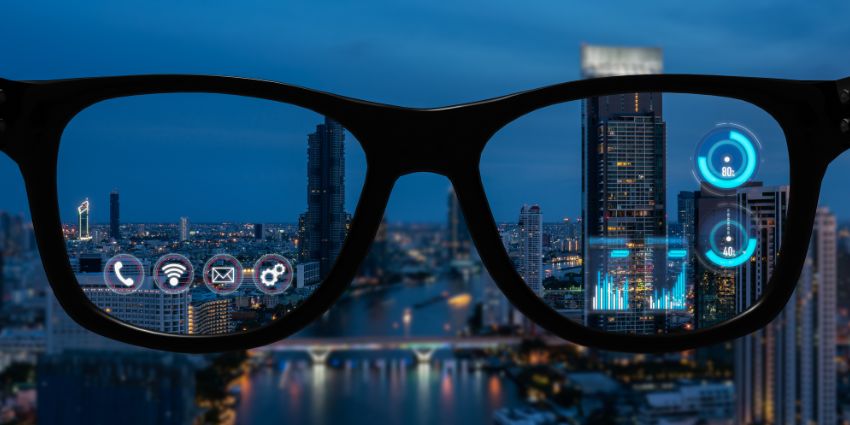
The Future Just Walked Into Your Living Room
Picture this. You wake up tomorrow and slip on a pair of sleek glasses that look totally normal. But the second they sit on your nose, your entire world transforms. Recipe instructions float above your kitchen counter while you cook breakfast. Walking directions appear right on the sidewalk as you head to work. Your favorite show plays on an invisible screen while you’re waiting for the bus. And when you meet someone new, their name and LinkedIn profile pop up like magic.
Sound like science fiction? Think again.
AR glasses are not some distant dream anymore. They’re real, they’re here, and they’re about to change absolutely everything about how we interact with the world around us. The technology that once seemed reserved for tech billionaires and early adopters is now knocking on everyone’s door. And trust me, once you experience seamless digital overlays blending with your reality, there’s no going back.
What Exactly Are AR Glasses Anyway
Let’s break it down without the tech jargon that makes your eyes glaze over.
AR stands for Augmented Reality. It’s basically technology that adds digital stuff to what you’re already seeing in real life. Unlike VR (Virtual Reality) that blocks out the real world completely and drops you into a fake one, AR enhances your actual surroundings with helpful, entertaining or mind blowing digital layers.
AR glasses are wearable devices that look like regular eyewear but pack serious tech inside those frames. They use tiny projectors, cameras, sensors and super smart processors to overlay digital information directly onto your field of vision. The result? A mixed reality experience where physical and digital worlds mesh together so smoothly you’ll wonder how you ever lived without it.
Think of it like this. Remember when smartphones first came out and people said “Why would I need the internet in my pocket?” Now you can’t imagine life without your phone. AR glasses are the next evolution of that. They free your hands, eliminate the need to constantly look down at a screen, and make information instantly accessible right where you need it.
Why Everyone’s Suddenly Obsessed With AR Glasses
The hype around AR glasses isn’t just marketing noise. There are real reasons why tech companies are pouring billions into this technology and why everyday people are getting genuinely excited.
First off, convenience is king. Your phone is great but it’s also kind of a hassle. You have to pull it out, unlock it, open an app, and then look down at a tiny screen. AR glasses eliminate all those steps. Information appears exactly when and where you need it without breaking your stride or interrupting what you’re doing.
Second, the experience is way more immersive. Watching a video on your phone versus seeing it projected life size in your living room? No contest. Playing a game where characters actually move around your real furniture? That’s next level entertainment that flat screens just can’t match.
Third, and this is huge, AR glasses make multitasking actually possible. You can follow a tutorial while working with your hands. You can video call someone while cooking dinner. You can get turn by turn directions while cycling without taking your eyes off the road. It’s like having a personal assistant who never gets in your way.
Share this article with anyone who still thinks AR is just a gimmick.
The Tech Giants Fighting for Your Face
Apple, Meta, Google, Microsoft, Samsung. Every major tech player is racing to dominate the AR glasses market. And when companies this big compete, consumers win.
Apple’s been working on their rumored AR glasses for years. Knowing Apple, when they finally launch, it’ll probably be sleek, expensive and somehow make everyone want a pair immediately. Their focus seems to be on seamless integration with the iPhone ecosystem and creating the most fashionable wearable tech ever made.
Meta (formerly Facebook) has gone all in on the metaverse vision. Their Ray Ban Stories collaboration already showed they understand style matters. Now they’re pushing toward full AR capabilities that’ll let you live in mixed reality throughout your day. Mark Zuckerberg literally bet his company’s future on this technology.
Google tried early with Google Glass and got roasted for making people look like tech dorks. But they learned from that disaster. Their latest enterprise focused AR solutions prove they haven’t given up. They’re just being smarter about the rollout this time.
Microsoft took a different route with HoloLens, targeting businesses and professionals instead of everyday consumers. Turns out surgeons, engineers and factory workers love AR glasses. Who knew? The success in those sectors is now pushing Microsoft toward consumer friendly versions.
Even smaller players like Snap (yes, Snapchat’s parent company) are getting into the game with their Spectacles. They understand that younger generations don’t see tech as separate from style. They want devices that look good and work amazing.
Shopping Will Never Be the Same
Imagine walking into a clothing store and instantly seeing reviews, prices at other stores, and styling suggestions floating next to every item. That’s not imagination. That’s where shopping is headed with AR glasses.
You pick up a jacket and boom, your glasses show you how it would look in different colors without trying them all on. They suggest matching pants and shoes from the same store. They even pull up Instagram photos of influencers wearing that exact jacket so you can see how it looks in real life situations.
Online shopping gets even crazier. Furniture shopping from your couch becomes actually useful when you can see exactly how that sofa would look in your living room at full scale. No more buying something online and discovering it’s way too big or the wrong shade of blue when it arrives.
Grocery shopping transforms too. Your glasses can highlight items on your shopping list as you walk past them. They can show nutritional information, recipe ideas, and even alert you to better deals in other aisles. Some systems can scan products and instantly compare prices across multiple stores.
Beauty and cosmetics brands are already developing AR try on features specifically for smart glasses. Testing lipstick shades without actually applying them? Testing foundation matches by just looking in a mirror while wearing your glasses? The future of trying before you buy is here.
Don’t miss out on this revolution. The early adopters are going to have all the advantages.
Gaming Is About to Get Insanely Immersive
Forget sitting on your couch staring at a TV screen. AR gaming turns your entire home into a playground.
Pokemon GO was just the beginning. That game showed millions of people how fun it could be to blend digital creatures with real world locations. But that was on a phone screen. Now imagine Pokemon actually appearing to stand on your coffee table, full size, moving around naturally as you walk around them.
First person shooter games become ridiculously intense when enemies pop out from behind your actual furniture. Racing games where the track appears on your floor and you physically move to steer? Sports games where you’re actually moving your body instead of pushing buttons? This is gaming that doubles as exercise without feeling like a workout.
Multiplayer experiences get wild too. You and your friends can all wear AR glasses and see the same digital elements in your shared physical space. Board games with animated pieces. Card games with spectacular special effects. Cooperative puzzle games where you manipulate virtual objects together in your actual living room.
The social aspect can’t be overstated. Gaming stops being this isolated activity where you’re alone in front of a screen. It becomes a shared experience in the real world that brings people together physically while adding digital magic to the mix.
Work and Productivity Are Getting a Massive Upgrade
Remote work already changed everything about how we do our jobs. AR glasses are about to change it again.
Virtual meetings become way more engaging when your colleague appears as a life size hologram sitting across from you instead of a tiny face in a grid of boxes. You can make eye contact. You can read body language. It feels almost like being in the same room even when you’re continents apart.
Architects and designers can walk clients through buildings that don’t exist yet. They can make changes in real time as everyone observes the space together. No more trying to imagine what two dimensional blueprints will look like in three dimensions.
Doctors can overlay patient scans directly onto the patient’s body during examinations. Surgeons can see vital information and imaging right in their field of view during operations without looking away. Medical training becomes incredibly effective when students can see procedures overlaid on practice dummies or even in recorded surgeries.
Factory workers and technicians get step by step visual instructions for complex repairs or assembly tasks. No more flipping through manuals or watching training videos beforehand and hoping you remember. The guidance appears exactly where you’re working in real time.
Teachers can bring lessons to life with 3D models and interactive demonstrations that appear right in the classroom. History lessons where historical figures appear to speak to students. Science classes where molecular structures float in front of desks. Math problems that students can manipulate with their hands.
Navigation That Actually Makes Sense
Getting lost is about to become a thing of the past. And I mean truly lost, not just “I took a wrong turn” lost.
AR glasses overlay navigation directions directly onto the street in front of you. Arrows appear on the actual road showing exactly where to turn. No more glancing down at your phone and accidentally walking into a pole. No more missing your turn because you were trying to figure out which street the GPS meant.
Walking in unfamiliar cities becomes stress free. Your glasses can highlight points of interest as you pass them. Restaurants get ratings floating above their doors. Historical buildings show you information about their significance. Transit stops display when the next bus or train arrives without you having to check a schedule.
Indoor navigation solves one of the most annoying modern problems. Ever tried finding a specific store in a massive mall? Or a particular gate in a huge airport? AR glasses can guide you turn by turn through these indoor spaces where GPS doesn’t work well. They can even show you the fastest route based on current crowd levels.
Hiking and outdoor adventures get safer and more informative. Trail markers appear even when physical signs are missing or damaged. Your glasses can identify plants, animals and landmarks. They can warn you about steep drop offs or dangerous areas ahead.
Try to imagine doing all this without looking down at your phone every five seconds. Game changer, right?
The Fashion World Is Paying Attention
Let’s be real. Nobody wants to wear something that looks dorky. Google Glass failed partly because people looked ridiculous wearing them. The tech was cool but the style was not.
That’s changed dramatically. Modern AR glasses look surprisingly normal. Some are barely distinguishable from regular eyewear. Designers are treating them as fashion accessories first and tech devices second.
Luxury brands are partnering with tech companies to create premium AR glasses that actually look good. We’re talking about frames that could pass for designer sunglasses until you turn on the digital features. Multiple style options. Customizable frames. Integration with prescription lenses.
The fashion industry itself is using AR glasses in fascinating ways. Runway shows where digital elements enhance physical garments. Virtual fashion pieces that only exist in AR and can be “worn” in photos and videos. Try on experiences that let you see how entire outfits look before buying anything.
Makeup and hair styling applications are getting super advanced too. Want to see how you’d look with a different hair color or style before committing? Your AR glasses can show you instantly. Testing bold makeup looks for a special event? Try dozens of options virtually in minutes.
Even tattoos are getting the AR treatment. Some systems let you preview tattoo designs on your actual skin in realistic detail. You can see exactly how that design would look in that specific location and at that size before making a permanent decision.
Privacy Concerns Nobody’s Talking About Enough
Okay, time for some real talk. As amazing as AR glasses are, we need to address the elephant in the room. Privacy.
These devices have cameras. They record what you see. They process information about your surroundings constantly. That’s kind of creepy when you think about it. And people should think about it more.
Imagine someone walks up to you wearing AR glasses. Are they recording you? Are their glasses running facial recognition and pulling up your personal information without your knowledge or consent? You have no way of knowing. That’s unsettling.
The data these devices collect is massive. Your location at all times. What you look at and for how long. Who you interact with. What you buy. Where you go. Every aspect of your daily life potentially tracked and stored. Who has access to that data? How is it being used? These are serious questions without clear answers yet.
Social situations get weird too. Is it rude to wear AR glasses during a conversation? Some might see it like checking your phone constantly. Others might not care. We don’t have established etiquette for this technology yet and that’s going to cause conflicts.
There’s also the distraction factor. We already know people can’t resist checking their phones even while driving or in dangerous situations. AR glasses that put notifications and information constantly in your face could make that problem worse. Just because you can have information everywhere doesn’t mean you should.
Regulation is way behind the technology. Laws about recording consent, data protection and privacy rights weren’t written with this tech in mind. Governments are scrambling to figure out how to handle AR glasses and the challenges they bring.
Share your thoughts on AR privacy. Are you excited or worried? Let’s get this conversation going.
The Surprising Industries Jumping Onboard
You’d expect tech, gaming and entertainment to embrace AR glasses. But some industries you might not expect are going all in too.
Real estate agents are using AR to show properties without physical visits. Prospective buyers can tour homes remotely while seeing them overlaid in their actual size and layout. They can visualize furniture placement and renovations before making an offer.
Tourism and hospitality sectors are creating augmented experiences for travelers. Museums with AR exhibits that bring artifacts to life. Historical sites where you can see reconstructions of how things looked in the past. Hotels offering AR concierge services and room customization.
Automotive companies are exploring AR windshields that work like giant AR glasses for your car. Navigation on the windshield. Hazard warnings. Vehicle diagnostics. Entertainment for passengers. The whole driving experience reimagined.
Fitness and sports training are getting revolutionized. Personal trainers appearing as holograms to guide your workout. Form correction in real time. Virtual competition against other runners or cyclists even when you’re alone. Stats and performance data visible during your exercise without checking a device.
Food and cooking industries are developing recipe applications that guide you step by step with visual overlays on your actual ingredients and cookware. Wine and spirit brands are creating AR labels that tell stories or provide serving suggestions when viewed through glasses.
Even agriculture is finding uses. Farmers using AR to monitor crop health, identify pest problems and optimize irrigation. Veterinarians visualizing animal anatomy during examinations. The applications are genuinely endless.
What’s Actually Available Right Now
So after all this hype, what can you actually buy today? Let’s talk real products not concept demos.
Meta’s Ray Ban Stories are available now and fairly affordable. They look like normal Ray Bans but include cameras for taking photos and videos plus decent audio. They don’t have true AR displays yet but they’re a step in that direction and they look legitimately stylish.
Nreal (now called XREAL) Air glasses are on the market targeting media consumption. They create a massive virtual screen in front of you perfect for watching movies or playing games. Not fully interactive AR but impressive for the price point.
Microsoft’s HoloLens 2 is available but expensive and aimed at businesses. If you can afford it and have professional uses, it’s incredibly capable. Full holographic computing with impressive hand tracking and spatial awareness.
Magic Leap 2 is another enterprise focused option that’s actually shipping. Lighter and more comfortable than the first generation with better performance. Still pricey but the technology is genuinely impressive.
Vuzix makes several AR glasses models at different price points. They’re not as sleek as some competitors but they’re functional and available for developers and early adopters who want to start experimenting.
Snap Spectacles are consumer friendly but limited in functionality. They’re more about capturing content for Snapchat than full AR experiences. Still, they show where things are headed and they don’t look terrible.
The key word here is evolution not revolution. The fully featured lightweight affordable AR glasses that do everything described in this article? They’re coming but they’re not quite here yet. What’s available now are stepping stones to that future.
The Price Tag Problem
Let’s not sugarcoat it. Right now, good AR glasses are expensive. Really expensive.
Enterprise solutions like HoloLens cost thousands of dollars. Consumer options that actually work well are still several hundred dollars minimum. That puts them out of reach for most people who might want to try the technology.
But here’s the thing. Every new tech starts expensive. The first smartphones cost a fortune. Early flat screen TVs were ridiculously priced. Then competition increases, manufacturing improves and prices drop dramatically. We’re seeing that pattern start with AR glasses already.
More companies entering the market means more options at different price points. As production scales up, costs come down. Features that required expensive custom components become achievable with cheaper mass produced parts.
Some analysts predict that within three to five years we’ll see capable AR glasses in the same price range as current premium smartphones. That’s still not cheap but it’s accessible for many consumers who currently can’t justify the cost.
There’s also the subscription model question. Some companies might sell hardware at lower prices and make money through monthly service fees. Think of it like how cell phone carriers subsidize phone costs. You pay less upfront but commit to a service plan.
For now, if you want cutting edge AR glasses, be prepared to pay. If you can wait, prices will definitely come down. The technology will also improve significantly in that time so waiting might actually be the smarter move.
Battery Life Is Still a Challenge
One thing reviews don’t emphasize enough is how quickly current AR glasses drain their batteries. This is a real limitation that needs improvement.
Most current devices last somewhere between two to four hours of active use. That’s okay for specific tasks or entertainment sessions but not nearly enough for all day wear. Imagine your glasses dying halfway through your commute or during an important work meeting.
The problem is physics. Powerful processors, cameras, sensors and displays all need energy. Cramming a big battery into lightweight fashionable frames isn’t easy. There’s a constant trade off between battery capacity and comfort.
Some devices require external battery packs connected by cables. That works but it’s not exactly the seamless experience being advertised. Having a wire running from your glasses to your pocket defeats part of the purpose.
Companies are working on solutions. More efficient processors that do more with less power. Better battery technology that stores more energy in smaller spaces. Smarter software that manages power consumption intelligently. But we’re not there yet.
For now, expect to charge your AR glasses regularly. Maybe even multiple times per day if you’re a heavy user. It’s similar to how the first smartwatches needed daily charging but newer models last much longer. The same improvement curve will happen with AR glasses.
Health and Safety Questions
Wearing screens inches from your eyeballs for hours each day raises legitimate health questions. Are AR glasses safe for prolonged use? The honest answer is we don’t fully know yet.
Eye strain is a real concern. Looking at digital displays for extended periods can cause fatigue, dryness and discomfort. AR glasses might actually be better than phone screens in some ways since they’re designed for your natural focal distance. But they might also be worse because the displays are constantly in your field of vision.
Blue light exposure is another consideration. We know excessive blue light can disrupt sleep patterns. Some AR glasses include blue light filtering but not all. And the effects of having digital light projected directly at your retinas long term haven’t been studied extensively yet.
Motion sickness affects some people when using AR. The disconnect between what your eyes see and what your inner ear feels can cause nausea and discomfort. This varies by individual but it’s a real barrier for some potential users.
There are also safety concerns about distraction. Wearing AR glasses while driving or operating machinery could be dangerous if they pull your attention away from what you’re doing. Accidents caused by AR distraction will inevitably happen and lead to regulations.
Most manufacturers include health and safety guidelines with their devices. Recommended break frequencies. Warning about who shouldn’t use them. Proper fitting instructions. Actually reading and following those guidelines is important even if it seems boring.
The Social Acceptability Factor
Here’s something nobody talks about enough. Will wearing AR glasses in public be socially acceptable or will you look like a tech weirdo?
The Google Glass debacle taught the industry that people don’t want to look like cyborgs. They want technology that enhances their lives without making them stand out as strange. That lesson shaped how newer AR glasses are designed.
Current stylish options from Ray Ban and others look normal enough that most people probably wouldn’t notice you’re wearing smart glasses. They blend in. That’s important for widespread adoption.
But there’s still the camera issue. People get uncomfortable around recording devices. Even if your glasses aren’t actively recording, others don’t know that. This creates social friction. Some establishments are already banning smart glasses for privacy reasons.
Then there’s the etiquette question. Is it rude to wear AR glasses during dinner? While someone’s talking to you? In a movie theater? We’re still figuring out the social rules. Just like it took time to establish that checking your phone during conversations is rude, we need to develop norms around AR glasses.
Generational differences matter too. Younger people who grew up with technology everywhere might not think twice about AR glasses. Older generations might see them as antisocial or disrespectful. These gaps will narrow over time but they exist now.
The bottom line is AR glasses will only go mainstream when wearing them feels normal and socially acceptable. We’re moving in that direction but we’re not quite there yet.
What do you think? Would you feel comfortable wearing AR glasses in public right now or would you wait until more people have them?
The Content Problem Nobody Mentions
Here’s a dirty little secret. Even if AR glasses become cheap, stylish and powerful, they still need compelling content. And right now, there’s not nearly enough.
Apps and experiences specifically designed for AR glasses are limited. Most companies are still in development phases. The few available applications often feel like tech demos rather than truly useful or entertaining experiences.
This is a chicken and egg problem. Developers don’t want to invest time and money creating content for devices that few people own. But people won’t buy devices that don’t have much content available. Somebody has to break this cycle.
The winners will probably be companies that can bridge their existing ecosystems into AR. Apple with their massive App Store. Meta with their social platforms. Google with their services. These companies can leverage existing user bases and developer communities to jumpstart AR content creation.
Gaming might be the killer app that drives initial adoption. People will buy AR glasses for amazing games even if other applications aren’t mature yet. Then as the user base grows, other content categories will follow.
The good news is that development tools for AR are getting better and more accessible. Creating AR experiences is becoming easier which should lead to an explosion of content once the hardware is ready. But right now it’s still early days.
What Happens When Everyone Has AR Glasses
Let’s fast forward and imagine a world where AR glasses are as common as smartphones. What does that actually look like?
Advertising becomes insane. Every surface could potentially display ads visible only through AR. Buildings covered in virtual billboards. Products on store shelves with animated promotional content. Your entire visual field becomes monetizable space. Scary? Exciting? Probably both.
Social interactions change fundamentally. Meeting someone new could automatically display their social media profiles. Conversations could include shared AR elements that only people wearing glasses can see. Dating apps might overlay compatibility scores on people you meet in real life.
The digital divide gets worse. People without AR glasses become second class citizens unable to access information and experiences that others take for granted. Important notices visible only in AR. Navigation designed only for AR users. Exclusion based on technology access becomes a serious problem.
Physical retail either dies or transforms completely. Why would you shop in a store with limited inventory when AR lets you see every possible option regardless of what’s physically present? Stores might become showrooms where you view products through AR and order for delivery.
Privacy becomes even more complicated. Everyone walking around with cameras and recording devices. Facial recognition everywhere. The ability to instantly know everything about anyone you see. It’s powerful and disturbing at the same time.
Work and education shift entirely. Physical presence matters less when AR can recreate face to face interactions remotely. Commutes disappear. Office buildings shrink. Global collaboration becomes seamless. But so does surveillance and control over workers.
The Environmental Impact Worth Considering
All this technology comes with environmental costs that deserve attention. Manufacturing AR glasses requires rare materials and energy intensive processes. The electronics industry already has a massive carbon footprint and adding billions more devices won’t help.
E waste is a growing problem. When AR glasses become obsolete or break, where do they go? Many components aren’t easily recyclable. Toxic materials in electronics can leak into soil and water if not disposed of properly. Rapid upgrade cycles make this worse as people replace devices more frequently than necessary.
The energy required to power all these devices and the servers they connect to is substantial. Data centers already consume enormous amounts of electricity. AR applications that require constant cloud connectivity and processing will increase that demand significantly.
On the flip side, AR glasses could reduce environmental impact in some ways. Less need for physical products that can be represented virtually. Fewer flights and commutes if remote collaboration becomes seamless. More efficient use of resources through better information and visualization.
Some companies are making efforts toward sustainability. Using recycled materials. Designing for easier repair and recycling. Implementing trade in programs for old devices. But these efforts are often more marketing than substance.
Consumers should demand better. Longer device lifespans through software updates and repairability. Transparent supply chains using ethically sourced materials. Carbon neutral manufacturing and shipping. The technology industry needs pressure to do better environmentally.
How Different Age Groups Will Adopt This Tech
Teenagers and young adults will probably embrace AR glasses fastest. They grew up with technology integrated into every aspect of life. Wearing smart glasses won’t seem strange or intrusive to them. It’ll just be the natural next step.
Middle aged professionals are likely to adopt AR glasses primarily for productivity. Work applications that make their jobs easier will drive adoption in this demographic. They’ll appreciate the convenience but might be more hesitant about using AR for entertainment or social purposes.
Older generations present the biggest adoption challenge. Many are already uncomfortable with smartphones and tablets. Asking them to wear technology on their faces and navigate three dimensional digital interfaces is a big leap. But accessibility features could actually make AR glasses appealing to seniors.
Imagine AR glasses that automatically enlarge text for people with vision problems. Or provide real time captioning for people with hearing loss. Navigation assistance for people with memory issues. Health monitoring and medication reminders. These applications could improve quality of life significantly for older users.
Kids represent both an opportunity and a concern. AR educational content could be incredible for learning. But screen time debates will intensify. Parents already worry about children staring at phones too much. AR glasses that put screens literally in front of their eyes all day? That’s going to be controversial.
Different cultures will also adopt AR differently. Some societies embrace new technology eagerly. Others value tradition and might resist change. Privacy expectations vary widely across cultures too affecting how AR features are received.
The Unexpected Applications Emerging
As AR glasses develop, people are finding creative uses nobody initially imagined. These unexpected applications often end up being more important than the intended ones.
Mental health applications are emerging. AR meditation experiences. Virtual therapy sessions. Anxiety reduction through calming overlays. Some therapists are experimenting with exposure therapy using AR to help patients confront fears in controlled ways.
Language learning becomes dramatically more effective. Walking through a foreign city with real time translation overlaying street signs, menus and conversations. Virtual language partners appearing as holograms for practice conversations. Vocabulary words labeled on physical objects around you.
Pet care is getting smarter. AR glasses that help you understand your pet’s health through overlays showing ideal weight, activity levels and behavioral analysis. Training guides that appear when teaching your dog new tricks. Even games designed for pets to play while you’re wearing AR glasses.
Accessibility goes beyond what anyone expected. AR glasses giving color blind people the ability to see colors accurately through digital correction. Providing navigation audio and tactile feedback for blind users. Translating sign language in real time for deaf communication.
DIY and home improvement transform completely. Following step by step repair instructions with visual overlays showing exactly where screws go and which tools to use. Seeing how furniture or paint colors would look before buying. Measuring spaces without a tape measure using AR tools.
Dating and relationships get weird. AR filters that make you look more attractive in real time during dates. Compatibility algorithms suggesting conversation topics. Lie detection features analyzing micro expressions. This stuff sounds crazy but people are genuinely developing it.
When Will AR Glasses Really Take Off
Everyone wants to know when AR glasses will hit that tipping point and become truly mainstream. The honest answer is probably three to five years but it could happen faster or slower depending on several factors.
Price needs to drop below five hundred dollars for a decent pair. That’s the threshold where mass market adoption becomes possible. Right now we’re not there yet but prices are falling steadily.
A killer app needs to emerge. Something so compelling that people can’t resist buying AR glasses just to use that one application. Gaming might be it. Social media could be it. We don’t know yet but when it appears adoption will accelerate quickly.
Social acceptance has to improve. People need to see AR glasses as normal not nerdy. Celebrities and influencers wearing them helps. Stylish designs that look good help more. This is happening but it’s gradual.
Battery life must improve dramatically. All day wear on a single charge is non negotiable for mainstream success. We’re getting closer but most devices still fall short. Breakthroughs in battery technology or efficiency will be crucial.
Content ecosystems need to mature. Thousands of great apps and experiences available from day one. Strong developer support. Easy creation tools. The platforms that nail this first will win the market.
Privacy and security concerns must be addressed. Clear policies about data collection and use. Obvious indicators when recording is active. Strong encryption. Legal frameworks that protect users. Without this trust won’t develop.
Some analysts think Apple entering the market will be the catalyst. Apple has a track record of waiting until technology matures then releasing products that define categories. The iPhone wasn’t the first smartphone but it made smartphones mainstream. Could Apple do the same for AR glasses?
The Bottom Line That Actually Matters
AR glasses represent a fundamental shift in how humans interact with technology and the world around us. This isn’t just another gadget. It’s the next major computing platform after smartphones.
The technology is real and improving rapidly. Current limitations around price, battery life, content and social acceptance will be overcome. History shows that meaningful technology innovations always face these challenges initially then break through to mass adoption.
Early adopters will have advantages. Learning to use AR interfaces before they become standard gives you a head start. Developing skills in AR creation positions you well for emerging job markets. Experiencing the technology early lets you influence its direction through feedback.
But waiting also makes sense for many people. Letting others work out the problems. Waiting for prices to fall and quality to improve. Seeing which platforms and companies emerge as winners. Both approaches are valid depending on your circumstances and interest.
What’s not debatable is that AR glasses will change things. Shopping, working, playing, learning, socializing. Every aspect of life will be different once seamless digital overlays become normal. The question isn’t whether this transformation will happen but how quickly and what it will look like.
Stay informed. Try AR experiences when you can. Think about how this technology might affect your life and work. Form your own opinions rather than just accepting hype or rejecting it reflexively.
The future is literally being built right now. AR glasses are moving from science fiction to everyday reality. Whether that excites you or concerns you, it’s happening. Might as well understand it.
Drop a comment below about which AR application excites you most. And share this with friends who need to know what’s coming. The future’s here and it’s wearing glasses.