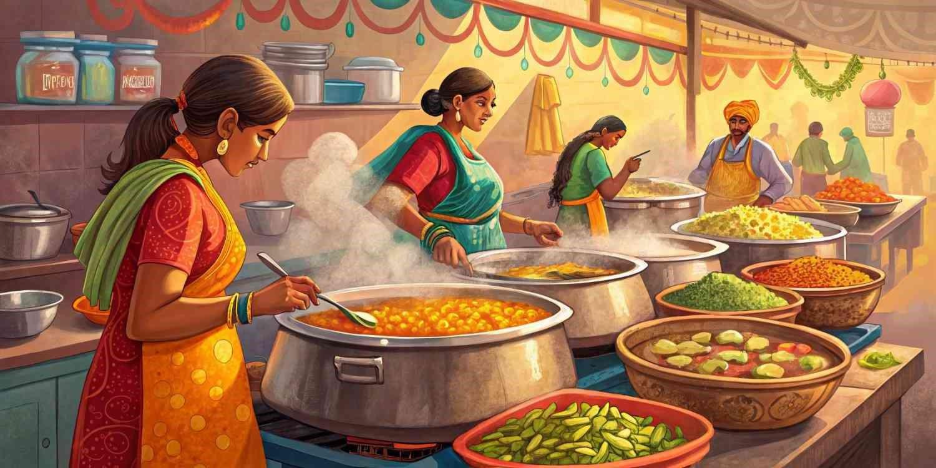
The Scent That Takes You Home
Picture this. You’re walking down a busy street in New York, London or Toronto when suddenly a smell hits you. Turmeric. Garlic. Maybe cardamom or cilantro. And just like that, you’re eight years old again, sitting in your grandmother’s kitchen halfway across the world.
That’s the magic of food memory. It doesn’t ask for permission. It just shows up and reminds you where you came from.
For millions of people living away from their homeland, food isn’t just about eating. It’s about survival. Not the physical kind, but the kind that keeps your soul tethered to who you are when everything around you screams that you should be someone else.
Diasporic writers have figured this out. They’ve turned kitchens into battlegrounds, dining tables into therapy sessions, and recipes into resistance. Their stories prove that sometimes the most political act is simply cooking your mother’s curry in a country that wants you to forget it.
Why Food Hits Different When You’re Far From Home
Food becomes louder when you’re displaced. It speaks in ways words can’t.
Think about it. When you move to a new country, everything changes. The language sounds weird. The streets look unfamiliar. Even the air smells different. But that one dish your mom used to make? That stays the same. It becomes your anchor when the world feels like it’s spinning too fast.
Research shows that taste and smell are directly linked to the part of our brain that stores memories and emotions. That’s why one bite of a childhood dish can make you cry or laugh or feel homesick in the best way possible. Scientists call it the Proust Effect, named after French writer Marcel Proust who wrote about how a simple madeleine cookie brought back his entire childhood.
For diaspora communities, this effect is amplified like crazy. Food becomes the keeper of stories that might otherwise get lost in translation.
The Kitchen as Time Machine
Diasporic writers often describe kitchens as portals. Step into one and you’re transported across oceans and decades.
Take Jhumpa Lahiri’s work. Her characters navigate American life while their kitchens smell like Bengal. The rice cooker bubbling away isn’t just making dinner. It’s keeping a connection alive to Kolkata, to grandparents, to a version of themselves that exists in two places at once.
Or look at Diana Abu Jaber’s “The Language of Baklava.” She writes about her Jordanian father who cooked to combat homesickness and cultural erasure. Every meal was an act of defiance against forgetting. The kitchen became his classroom where he taught his American born children about a homeland they’d never fully know.
These aren’t just cute food stories. They’re survival manuals for maintaining identity when the world wants you to assimilate and disappear.
When Recipes Become Rebellion
Here’s something wild. Cooking traditional food in a new country can be a radical act.
Sounds dramatic right? But think about it. When mainstream culture tells you your food smells weird, looks strange or seems too ethnic, choosing to cook it anyway is powerful. You’re saying my culture matters. My history matters. I matter.
Monique Truong’s “The Book of Salt” explores this beautifully. Her protagonist, a Vietnamese cook working in 1930s Paris, uses food to claim space in a world that sees him as invisible. Every dish he prepares is a quiet declaration of existence.
Indian American writer Chitra Divakaruni takes it further. In her stories, women use cooking as both comfort and weapon. They feed their families to preserve tradition but also to resist the pressure to become completely westernized. The kitchen becomes a negotiation space between old world and new world expectations.
Share this article with someone who’s ever felt caught between two cultures!
The Language of Spices
Words fail sometimes. But food speaks every language.
For second generation immigrants, this is huge. Maybe they never learned their parents’ mother tongue fluently. Maybe they feel guilty about it. But in the kitchen, grinding spices or rolling dough, they’re fluent. They’re connected.
Ruth Ozeki writes about this in “A Tale for the Time Being.” Her Japanese Canadian characters find understanding through food when verbal communication breaks down across generations. The granddaughter who can’t speak Japanese learns about her heritage through her grandmother’s pickled vegetables and rice balls.
It’s like food creates a third language. Not quite the old country’s tongue. Not quite the new country’s either. Something in between that belongs uniquely to the diaspora experience.
Fusion Isn’t Confusion
Let’s talk about fusion food because it gets a bad rap sometimes.
Purists say it dilutes tradition. But diasporic writers show us something different. Fusion food is honest. It reflects the reality of living between worlds.
When a Korean American makes kimchi tacos, that’s not cultural confusion. That’s cultural innovation. It’s saying I contain multitudes. I’m both and neither and that’s okay.
Novelist Chang Rae Lee explores this brilliantly. His characters create hybrid dishes that scandalize older generations but perfectly capture the immigrant experience. They’re navigating two cultures and their food shows it.
The same goes for British Pakistani writer Nadiya Hussain. Her recipes blend South Asian spices with British baking traditions. Is it traditional? Not really. Is it authentic to her experience? Absolutely.
This is where identity gets interesting. Authenticity isn’t about staying frozen in time. It’s about being true to your actual life, even when that life spans continents.
The Guilt of Forgetting
Here’s the uncomfortable part. Sometimes diaspora kids forget the recipes.
They get busy. They rely on restaurants. They lose the knowledge their grandparents carried. And then one day grandma dies and nobody knows how she made that special dish that tasted like home.
Writers capture this grief beautifully. Gish Jen writes about Chinese American families where food knowledge skips a generation. The guilt is real and heavy. It feels like betraying your ancestors every time you order takeout instead of cooking from scratch.
But here’s the thing. Even this guilt is part of the story. Even forgetting and then trying to remember is diaspora experience. The scrambling to recreate a dish from fragmented memories, calling aunties for advice, searching online for recipes that approximate what you remember. That’s also preservation in its messy, imperfect way.
Food as Bridge Between Generations
When words create distance, food builds bridges.
Immigrant parents and their assimilated kids often struggle to understand each other. Different languages, different cultural references, different expectations. But sitting down to eat together? That’s common ground.
Celeste Ng touches on this in her writing. Meals become the space where Chinese immigrant mothers and their American daughters find temporary peace. They might fight about everything else but sharing food creates moments of connection.
Vietnamese American writer Ocean Vuong describes meals with his family as acts of translation. The food explains what his mother can’t articulate about trauma, displacement and love. It carries the weight of history that’s too heavy for words alone.
The Politics of the Dinner Table
Food choices become political statements faster than you’d think.
Eating only traditional food can be seen as refusing to integrate. Eating only Western food feels like abandoning your culture. You can’t win but you have to choose anyway.
Bharati Mukherjee’s characters navigate this constantly. What they cook and eat signals their relationship to their heritage and their adopted country. Every meal is a tiny declaration of identity politics.
And then there’s the external pressure. Coworkers who wrinkle their noses at your lunch. Friends who think your traditional food is exotic and want you to perform your culture for them. The microaggressions that make something as simple as eating into a statement.
Diasporic writers don’t shy away from this. They show how food becomes a site of cultural negotiation and sometimes conflict. The dinner table isn’t always peaceful. Sometimes it’s a battlefield.
Restaurant Culture and Community
Restaurants deserve their own chapter in diaspora stories.
They’re more than places to eat. They’re community centers, cultural embassies and survival strategies all rolled into one.
Kevin Kwan’s “Crazy Rich Asians” might focus on wealth but it’s deeply attentive to how food creates Asian identity in Singapore and abroad. Characters bond over hawker center meals and fancy restaurant dinners alike. The food is the thread connecting them.
For many immigrants, opening a resturant is how they make a living in a new country. But it’s also how they share their culture and create gathering spaces for their community. The restaurant becomes a little piece of home that others can visit.
Think about every Chinatown, Little India or Koreatown in major cities. The restaurants aren’t just businesses. They’re monuments to persistence and cultural pride.
Don’t miss out on exploring your local ethnic restaurants this week!
The Recipe as Heirloom
Some families pass down jewelry. Diaspora families pass down recipes.
These aren’t just instructions for cooking. They’re inheritance. They contain grandmother’s hands, mother’s love and the taste of a homeland that might not exist anymore.
Madhur Jaffrey, the legendary food writer, talks about this constantly. Her recipes are time capsules. They preserve not just flavors but entire ways of life that are disappearing.
When Syrian writer Dima Amro shares recipes from Aleppo, she’s documenting a city that war has destroyed. Those recipes might be the only way future generations taste their heritage.
This is why recipe sharing in diaspora communities feels sacred. You’re not just learning to cook. You’re receiving trust, history and responsibility all at once.
Food Vloggers and Digital Diaspora
The internet changed everything for food and identity.
Now diaspora kids who never learned to cook from grandma can watch YouTube tutorials. Food bloggers share traditional recipes with modern twists. Instagram makes every meal a potential connection point with others who share your background.
This digital food culture is creating new forms of diaspora community. You can live in Seattle but learn to make Vietnamese pho from someone in Toronto and share your results with followers in Melbourne. Geography matters less. The shared cultural reference matters more.
Critics say this makes tradition too accessible and strips it of meaning. But tell that to the third generation Korean American who finally learned to make kimchi by watching TikTok videos and feels connected to her heritage for the first time.
Technology isn’t destroying food memory. It’s archiving and spreading it in new ways.
When Food Fails
Sometimes food can’t fix things and that’s part of the story too.
Not every meal brings families together. Not every traditional dish tastes like you remember. Sometimes you cook your mother’s recipe perfectly and still feel empty because it’s not her making it.
Diasporic writers don’t pretend food is magic. They show its limitations too.
Min Jin Lee’s characters in “Pachinko” use food to maintain Korean identity in Japan. But the food can’t protect them from discrimination. It can’t solve their problems. It’s comfort but not cure.
This honesty makes the writing more powerful. Food is important but it’s not everything. It’s one tool among many for navigating displacement and identity.
The Future of Food Memory
What happens to food memory as diaspora communities evolve?
Third and fourth generation immigrants have different relationships to heritage food than their grandparents did. Some feel pressure to preserve traditions they never experienced firsthand. Others create entirely new food cultures that reflect their mixed identities.
Writers are documenting this shift. They’re showing how food traditions adapt, mutate and sometimes die. But they’re also showing how new traditions get born.
Maybe the future of diaspora food memory isn’t about keeping everything exactly as it was. Maybe it’s about staying flexible while honoring roots. Creating space for innovation while respecting tradition.
Writing Food, Writing Self
For diaspora writers, describing food is describing themselves.
The way Edwidge Danticat writes about Haitian food isn’t separate from how she writes about identity, exile and belonging. They’re completely intertwined. The plantains and rice and beans are characters in her stories just like the people are.
This is why food writing in diasporic literature feels different from regular food writing. It’s never just about taste or technique. It’s always about something bigger. Culture. Survival. Memory. Love.
When Anita Desai describes an Indian meal, she’s not giving you a recipe. She’s giving you a map of consciousness split between two worlds.
The Universal in the Specific
Here’s what makes diasporic food writing so powerful. It’s incredibly specific to particular cultures and experiences. But somehow it’s also universal.
You don’t have to be Indian to understand the ache in Lahiri’s descriptions of homesick cooking. You don’t have to be Vietnamese to feel Vuong’s food memories. The specific details open doors to shared human experiences of longing, belonging and identity.
This is the magic trick good writers pull off. They write so particularly about their experience that it becomes everyone’s story. Food is the vehicle for that magic.
Call to Action Territory
Comment below with your most powerful food memory. What dish takes you back to childhood or connects you to your heritage? Let’s build a collective memory in the comments.
Share this article with someone who’s navigating multiple cultures or anyone who’s ever felt homesick for a taste they can’t quite recreate. Tag them right now!
Follow for more stories about culture, identity and the everyday things that shape who we are. Because understanding food means understanding people.
Try cooking one traditional recipe from your family this week. Ask an older relative for instructions. Document the process. Share it. Keep the memory alive.
Final Thoughts That Matter
Food memory in diasporic writing isn’t a niche topic. It’s a window into how millions of people navigate existence between worlds.
Every immigrant kid who’s been embarrassed by their lunch knows this story. Every person who’s tried to recreate grandma’s cooking in a foreign kitchen knows this ache. Every mixed identity individual who’s used food to connect with heritage they partly lost knows this journey.
Writers are documenting it all. They’re making sure these stories don’t get erased by assimilation pressure or time. They’re saying our food matters because we matter.
The next time you read about food in a diaspora novel or essay, pay attention. It’s never just food. It’s history, resistance, love and identity all simmered together.
And maybe that’s the most important thing to understand. For displaced communities, food is memory made edible. It’s culture you can taste. It’s home you can carry with you no matter how far you travel.
That grandmother’s recipe you’ve been meaning to learn? Don’t wait. The knowledge won’t last forever but the impact will echo through generations if you preserve it now.
Now hit that share button and spread this story. Let’s keep the conversation about food and identity alive. Your voice matters. Your food story matters. Add to it in the comments right now.