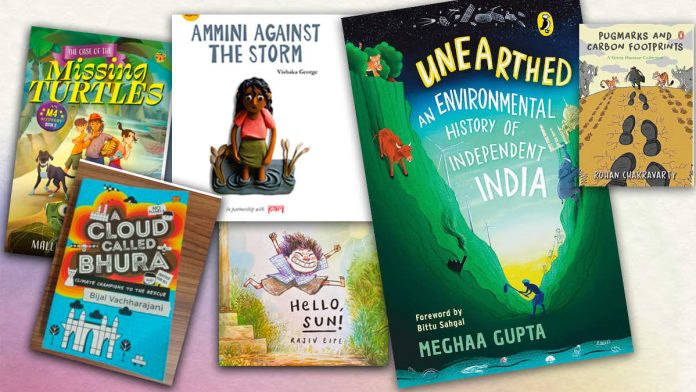
Climate fiction has emerged as a powerful tool for introducing environmental themes to young readers in ways that educate without terrifying and inspire without preaching. Unlike the dystopian scenarios often presented in adult climate literature, books aimed at children and teens balance honesty about environmental challenges with narratives centered on hope, agency, and possibility.
The genre recognizes that young people are inheriting a world facing unprecedented ecological challenges. Rather than shielding children from these realities, thoughtful climate fiction equips them with knowledge and emotional tools to understand their relationship with the natural world. Stories become vehicles for exploring complex topics like habitat loss, pollution, renewable energy, and conservation through characters and situations that resonate with developing minds.
What makes climate fiction particularly effective for younger audiences is its ability to translate abstract concepts into tangible experiences. A story about a girl working to save sea turtles makes ocean pollution real in ways that statistics cannot. When readers follow characters navigating environmental crises, they develop emotional connections that transform passive awareness into active concern. This emotional engagement proves crucial for building long term environmental consciousness.
Building Environmental Literacy Through Story
Publishers have recognized the growing demand for books that address climate and environmental issues for young readers. The market now includes picture books for early readers, middle grade adventures, and young adult novels tackling everything from deforestation to renewable energy solutions. Each age group receives content calibrated to their developmental stage and emotional readiness.
Picture books often personify nature or feature animal protagonists experiencing environmental changes. These gentle introductions help very young children understand their connection to the natural world. Stories might follow a polar bear adapting to melting ice or trees in a forest responding to changing seasons. The narratives remain simple but plant seeds of environmental awareness.
Middle grade novels expand complexity considerably. Readers between eight and twelve encounter protagonists actively solving environmental problems in their communities. These books frequently feature children organizing cleanup efforts, investigating local pollution sources, or advocating for conservation measures. The message becomes clear: young people possess power to create change rather than simply witnessing adult decisions.
Young adult climate fiction often grapples with larger systemic issues and moral complexities. Teen readers can handle discussions of environmental justice, corporate responsibility, and political action. Authors trust this audience to sit with uncomfortable questions about consumption, inequality, and the legacy previous generations leave behind.
Characters Who Inspire Action
The most successful climate fiction for young readers centers on protagonists who model environmental stewardship without becoming preachy archetypes. These characters feel authentic because they struggle, make mistakes, and discover solutions through trial and error. A protagonist might initially resist recycling or fail to see how individual actions matter before experiencing growth throughout the narrative.
Diversity in these characters matters tremendously. Environmental issues affect communities differently based on geography, economics, and historical factors. Stories featuring Indigenous protagonists drawing on traditional ecological knowledge offer different perspectives than urban tales of community gardens in food deserts. Young readers benefit from seeing environmental activism take many forms across cultures and contexts.
Animal characters continue to play significant roles in climate fiction for younger audiences. However, modern stories move beyond simple anthropomorphization. Animals in contemporary climate fiction often serve as windows into ecosystem dynamics, showing readers how environmental changes ripple through food webs and habitats. These narratives build empathy while teaching ecological principles.
Intergenerational relationships frequently anchor climate stories for youth. A grandparent sharing memories of forests that no longer exist or fishing spots depleted by pollution helps readers understand environmental change across time. These relationships also model how knowledge transfers between generations and how young people can learn from elders while also teaching them new perspectives.
Hope as a Narrative Strategy
One distinguishing feature of climate fiction for young readers is its commitment to hope. While adult climate literature sometimes wallows in apocalyptic scenarios, books for children and teens emphasize solutions and resilience. This approach isn’t about sugarcoating reality but rather about empowering young readers to envision positive futures they can help create.
Stories showcase renewable energy, habitat restoration, and sustainable living as achievable goals rather than impossible dreams. Characters succeed in making differences both small and large. A neighborhood comes together to plant trees. Students convince their school to eliminate single use plastics. A community transitions to solar power. These victories matter because they demonstrate that change happens through collective action.
The speculative elements in climate fiction allow authors to imagine better futures. Some stories project forward to worlds where humanity has addressed climate challenges, showing readers what success might look like. Flying cars run on algae fuel. Cities integrate green spaces and wildlife corridors. Communities share resources efficiently. These visions inspire by making sustainable futures feel tangible and desirable.
Even when stories acknowledge difficult realities, they avoid paralyzing readers with despair. Characters experience grief over environmental losses but channel those feelings into constructive action. Books model emotional processing around ecological anxiety, giving young readers permission to feel worried while showing them productive ways to respond.
Science Woven Into Adventure
Climate fiction for young readers excels at making science accessible and exciting. Authors incorporate factual information about ecosystems, climate systems, and conservation biology into adventure narratives. Readers absorb scientific concepts through story rather than textbook exposition.
A mystery about disappearing frogs teaches about amphibian sensitivity to pollution. An adventure following migrating butterflies reveals habitat connectivity and climate impacts on migration patterns. A survival story during extreme weather explains atmospheric science and climate variability. The science becomes relevant because characters need this knowledge to solve problems they face.
Many books include additional educational materials beyond the main narrative. Back matter might feature author notes about real environmental issues, activities readers can try, or resources for learning more. Some books include discussion questions perfect for classroom use or family conversations. These extras extend the learning without interrupting story flow.
Accuracy matters in climate fiction even when stories include speculative elements. Authors consult scientists and environmental experts to ensure they represent ecological concepts correctly. This commitment to accuracy builds trust with readers and educators while preventing the spread of misinformation about environmental topics.
Addressing Eco Anxiety
Young people today grow up hearing constant news about climate crisis, extinction, and environmental degradation. This exposure creates what psychologists call eco anxiety, a chronic fear about environmental doom. Climate fiction for youth addresses this anxiety head on by acknowledging fears while providing frameworks for coping and acting.
Stories validate emotions characters feel about environmental problems. Readers see protagonists expressing anger, sadness, or fear about ecological losses. This validation tells young readers their feelings are normal and shared. But stories don’t stop at emotions. Characters move from feeling to doing, modeling how to transform anxiety into agency.
The emphasis on community in climate fiction provides another antidote to eco anxiety. Characters rarely solve environmental problems alone. They organize, collaborate, and build coalitions. This collective approach shows readers they don’t bear responsibility for fixing everything themselves. Change happens through many people working together.
Books also help readers develop realistic expectations about environmental work. Not every story ends with complete victory. Sometimes characters achieve partial success or plant seeds for future change. This nuance prevents burnout by showing that environmental action is ongoing work rather than a single battle won or lost.
Cultural and Global Perspectives
Climate fiction for young readers increasingly reflects global perspectives on environmental issues. Stories set in various countries and cultures show how climate change affects different communities and how diverse knowledge systems approach environmental stewardship.
Books set in the Arctic follow Indigenous communities adapting to rapidly changing ice conditions. African settings explore desertification and water scarcity. Pacific Island narratives address rising sea levels threatening entire nations. Urban stories from various continents tackle air pollution and heat islands. This geographic diversity helps readers understand climate change as a global phenomenon with local manifestations.
Traditional ecological knowledge features prominently in many climate stories. Indigenous characters share practices their ancestors developed for living sustainably with their environments. These perspectives challenge the notion that environmental solutions come only from Western science and technology. Young readers learn that multiple knowledge systems offer valuable insights for addressing ecological challenges.
Environmental justice themes appear more frequently in climate fiction for youth. Stories explore how pollution disproportionately affects low income communities and communities of color. Books address the inequity of wealthy nations contributing most to climate change while poorer nations experience worst impacts. These narratives build awareness that environmental issues intersect with social justice.
Formats and Storytelling Innovation
Climate fiction for young readers appears in diverse formats beyond traditional novels. Graphic novels and comics use visual storytelling to make environmental concepts accessible and engaging. The combination of art and text helps readers grasp complex ideas like carbon cycles or ecosystem relationships through diagrams integrated into narrative flow.
Verse novels bring poetry to climate stories, using rhythm and imagery to convey emotional dimensions of environmental experiences. The compressed language of poetry can capture feelings about nature and ecological loss in ways prose sometimes cannot. Verse also makes environmental literature accessible to reluctant readers or those who find dense prose challenging.
Interactive and choose your own adventure formats let readers make decisions affecting story outcomes. These books might present environmental dilemmas where readers choose how characters respond, then experience consequences of those choices. The interactive element reinforces how individual decisions impact environmental outcomes.
Digital and multimedia climate stories incorporate video, audio, and interactive elements. Apps and ebooks might include interviews with scientists, footage of ecosystems, or games teaching environmental concepts. While traditional books remain popular, these innovations expand how young readers engage with climate content.
The Role of Educators and Parents
Climate fiction provides valuable tools for teachers addressing environmental education. Books offer entry points for discussing complex topics in age appropriate ways. A novel can launch classroom investigations into local environmental issues or inspire service projects benefiting community ecosystems.
Librarians curate collections highlighting climate fiction across reading levels and interests. Book displays and reading programs introduce young readers to environmental literature they might not discover independently. Library programming around climate books often includes author visits, science demonstrations, or conservation activities.
Parents use climate fiction to start conversations with children about environmental responsibility. Shared reading creates opportunities to discuss family values around sustainability and stewardship. Books provide language for talking about sometimes difficult topics like species extinction or climate impacts without overwhelming children.
The educational community has developed extensive resources supporting climate fiction in curricula. Teaching guides offer discussion questions, activities, and connections to science standards. Professional development helps educators use climate literature effectively to build environmental literacy while meeting learning objectives.
Looking Toward the Future
The field of climate fiction for young readers continues evolving as both environmental challenges and publishing landscape change. Authors experiment with new formats and approaches for engaging young audiences with ecological themes. The genre matures beyond simple good versus evil narratives toward more nuanced explorations of environmental complexity.
Upcoming books will likely address emerging topics like climate migration, green technology innovation, and ecosystem restoration at scale. As young readers become more environmentally aware, authors can tackle increasingly sophisticated concepts while maintaining age appropriate presentation.
The rise of own voices publishing ensures more climate stories come from authors with lived experience of environmental issues they write about. Indigenous authors write about traditional ecological knowledge. Authors from vulnerable regions tell stories of climate adaptation in their communities. This authenticity enriches the genre and provides readers with genuine perspectives.
Climate fiction for young readers represents more than entertainment. These books shape how the next generation understands their relationship with the planet. Through compelling characters, engaging plots, and hopeful visions, climate fiction equips young readers with knowledge, empathy, and agency to become environmental stewards. In a world facing ecological challenges, these stories plant seeds for a generation that might finally turn the tide.