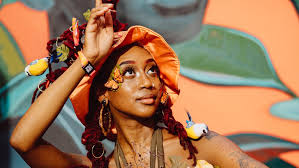
Afrofuturism stands as one of the most vibrant and transformative movements in contemporary literature. It refuses to let the future remain a space where Black voices are absent or relegated to the margins. Instead, it insists that tomorrow belongs to everyone, and that African diaspora cultures have always possessed the tools, wisdom, and creativity to shape what comes next.
The term itself emerged in the 1990s, though the ideas behind it had been percolating for decades. Mark Dery’s 1993 essay introduced “Afrofuturism” to describe how African American artists were appropriating images of technology and science fiction to address themes of alienation and aspiration. But the movement’s roots extend much further back. Writers, musicians, and visual artists had been exploring these concepts long before anyone gave them a formal name.
Origins and Foundations
Literature has always been a site of reimagining. When Octavia Butler began publishing in the 1970s, she entered a science fiction landscape that rarely featured Black protagonists and almost never centered their experiences. Her work changed that calculus entirely. Butler’s novels didn’t just add diversity to existing narratives. They fundamentally questioned what science fiction could be and who it could serve.
Her Patternist series explored themes of power, breeding, and psychic abilities across centuries. The Xenogenesis trilogy confronted readers with uncomfortable questions about survival, consent, and what it means to be human. Butler’s characters faced impossible choices in worlds that felt both alien and uncomfortably familiar. She wrote futures where being Black wasn’t incidental but central to understanding the story’s deeper currents.
Samuel R. Delany had been doing similar work even earlier. His novels from the 1960s and 70s pushed boundaries in multiple directions at once. Delany’s stories featured complex sexual politics, linguistic innovation, and social structures that defied easy categorization. He proved that speculative fiction could be intellectually rigorous, emotionally resonant, and utterly unlike anything readers had encountered before.
These pioneers created space for what would become a flourishing movement. They demonstrated that Black futures weren’t just possible but necessary.
Reclaiming Technology and Time
One of Afrofuturism’s most powerful interventions involves its relationship with technology. Western science fiction has often portrayed technology as the domain of a specific kind of genius, usually white and male. Afrofuturist writers reject this narrow vision entirely.
In their hands, technology becomes something more fluid and culturally specific. Nnedi Okorafor’s novels set in future Africa showcase technologies that grow from different epistemological roots. Her Binti trilogy follows a young Himba woman who becomes the first of her people to attend a prestigious intergalactic university. The technology in these books doesn’t erase cultural identity. It amplifies and transforms it.
Binti’s mathematics come from her people’s traditions. Her survival depends on knowledge passed down through generations, not just the futuristic learning her university provides. Okorafor writes worlds where African cultural practices and cutting edge science coexist without contradiction.
This approach challenges linear narratives of progress that position some cultures as “behind” and others as “advanced.” Afrofuturist literature suggests that different knowledge systems can produce different technological futures. The West’s path isn’t the only one possible.
Time itself becomes more complex in these stories. The Middle Passage, slavery, and colonialism created ruptures in history that can’t be simply overcome or forgotten. Afrofuturist writers often engage with these traumas directly, using speculative frameworks to explore healing, revenge, or alternative timelines.
N.K. Jemisin’s Broken Earth trilogy won three consecutive Hugo Awards, an unprecedented achievement. The series takes place in a world of constant geological upheaval, where some people can control the earth itself. But the story also grapples with systems of oppression, the theft of children, and cycles of violence that echo real historical traumas. Jemisin creates a secondary world that feels utterly alien yet speaks directly to contemporary struggles.
African Diasporic Futures
The diaspora experience shapes Afrofuturist literature in profound ways. Many writers explore what it means to be scattered across continents, carrying fragments of ancestral cultures while forging new identities in hostile environments. Their futures often involve reconnection, whether physical, spiritual, or imaginative.
Nalo Hopkinson’s work exemplifies this diasporic sensibility. Her novels draw heavily on Caribbean folklore, language, and cultural practices. “Midnight Robber” reimagines Carnival traditions in a space colony setting. The protagonist Tan Tan must navigate both advanced technology and ancient stories to find her way home.
Hopkinson’s prose incorporates Creole dialects and patois, refusing to flatten language into standardized English. This choice matters enormously. It insists that future worlds can sound like the Caribbean, that technological advancement doesn’t require cultural erasure.
The question of home haunts much Afrofuturist literature. Where do you belong when your ancestors were forcibly removed from one continent and never fully accepted in another? Some writers imagine return journeys to Africa, though rarely simple or sentimental ones. Others create entirely new worlds where diaspora populations can build societies reflecting their hybrid identities.
Tomi Adeyemi’s “Children of Blood and Bone” drew from West African mythology to create the land of Orïsha. While often categorized as fantasy rather than science fiction, the book shares Afrofuturism’s commitment to centering Black characters and cultures. Magic in Orïsha connects directly to Yoruba deities and spiritual practices. The story explores colonization and cultural suppression through a fantastical lens.
Gender and Sexuality
Afrofuturist literature has consistently pushed boundaries around gender and sexuality. Many of its most influential voices are Black women and queer writers who refuse to separate liberation movements or prioritize one form of freedom over another.
Octavia Butler’s work frequently explored reproduction, family structures, and bodily autonomy. Her characters often exist outside conventional gender roles or sexual norms. In the Xenogenesis trilogy, the alien Oankali have three sexes and cannot understand humans’ binary thinking about gender. Butler used this framework to question assumptions her readers might not even realize they held.
Rivers Solomon’s “An Unkindness of Ghosts” takes place on a generation ship traveling to a promised land. The ship’s social structure mirrors antebellum plantations, with dark skinned people enslaved and subjected to brutal violence. The protagonist Aster is gender nonconforming and neurodivergent, navigating multiple systems of oppression simultaneously.
Solomon’s novel refuses to imagine futures where racism, classism, and transphobia have been neatly solved. Instead, it asks what resistance looks like when oppression travels to the stars. The answer involves both individual survival and collective uprising.
Queer Afrofuturist writers are creating increasingly visible and varied representations. They write characters whose queerness isn’t a problem to be solved but simply part of who they are as they navigate extraordinary circumstances. These stories push back against multiple erasures at once.
Worldbuilding as Political Act
Creating entire worlds from imagination is never neutral. Every choice a writer makes about how their fictional society functions reflects assumptions about power, justice, and human nature. Afrofuturist authors approach worldbuilding as an explicitly political act.
They ask questions like: What would a society built on African philosophical principles look like? How might technology develop if it prioritized community welfare over individual profit? What economic systems could exist beyond capitalism? What happens when people who have been colonized get to define the terms of contact with others?
These aren’t abstract thought experiments. They’re interventions into real debates about what’s possible and who gets to imagine tomorrow.
Tananarive Due has written extensively about how Afrofuturist worldbuilding can serve as rehearsal for actual social change. Her African Immortals series imagines a group of Africans who gained immortality centuries ago and have been working quietly to improve Black lives ever since. The books blend historical events with speculative elements, suggesting that extraordinary intervention might explain moments of unexpected progress.
Due’s approach highlights another key element of Afrofuturist literature: its relationship with history. These writers don’t ignore the past. They mine it, reinterpret it, and sometimes rewrite it entirely. They understand that controlling historical narratives is itself a form of power.
Music and Visual Culture
While this exploration focuses on literature, Afrofuturism has always been multimedia. The movement’s musical and visual elements deeply influence its literary expressions. Writers often reference musicians like Sun Ra, Parliament Funkadelic, and Janelle Monáe, whose work explores similar themes through sound.
Sun Ra claimed to be from Saturn and created elaborate cosmic mythology through his music and performances. He insisted that imagination could be a form of resistance, that Black people needed to envision themselves beyond Earth’s limitations. His concerts were theatrical events that blurred lines between past, present, and future.
This performative, genre blending approach appears throughout Afrofuturist literature. Writers mix science fiction with fantasy, horror, romance, and literary fiction. They incorporate poetry, song lyrics, and visual elements. The movement resists rigid categorization.
Ytasha Womack’s book “Afrofuturism: The World of Black Sci Fi and Fantasy Culture” maps these connections across media. She argues that Afrofuturism represents a way of seeing rather than a fixed genre. It’s an aesthetic and a philosophy that can manifest in novels, films, music, visual art, and everyday life.
Contemporary Voices
The past decade has seen an explosion of Afrofuturist literature. More publishers are seeking these stories. More readers are discovering them. The movement that once existed mainly in specialty bookstores and academic discussions has entered mainstream consciousness.
Tade Thompson’s Rosewater trilogy imagines a future Nigeria transformed by alien contact. A massive biodome appears outside the city, and an annual opening brings both miraculous healings and terrible dangers. Thompson writes a thoroughly Nigerian future, with Yoruba language and culture woven throughout. His protagonist Kaaro is a government employee with psychic abilities who must navigate corporate interests, alien mysteries, and his own complicated past.
Bethany C. Morrow’s “Mem” takes place in an alternate early 20th century where memories can be extracted from people and given physical form. The protagonist is one such extracted memory who has developed consciousness and now lives independently from her source. Morrow uses this premise to explore identity, trauma, and the commodification of human experience.
Namina Forna’s “The Gilded Ones” draws from West African cultures to create a world where girls with golden blood are considered demons. The story follows Deka as she discovers her true nature and joins a female warrior army. Forna’s work appeals particularly to young adult readers hungry for stories reflecting their experiences.
These contemporary writers benefit from the groundwork laid by earlier generations. They don’t have to justify Afrofuturism’s existence or spend energy proving its validity. They can simply write, experimenting with form and content in ways that would have been commercially impossible decades ago.
Academic and Critical Reception
Universities have begun taking Afrofuturism seriously as a subject of study. Scholars analyze its themes, trace its genealogies, and consider its cultural impact. This academic attention brings both benefits and risks.
On one hand, scholarly recognition can validate work that mainstream criticism has ignored. It creates teaching opportunities and helps preserve important texts. Students who might never encounter these books otherwise can discover them through coursework.
On the other hand, academic appropriation can sometimes drain movements of their radical energy. When universities that have historically excluded Black voices suddenly want to teach Afrofuturism, questions arise about who profits and who controls the narrative.
Ytasha Womack and others have worked to keep Afrofuturism’s definition expansive and community centered. They emphasize that it belongs to the people creating and engaging with it, not just to scholars studying it from outside.
Critical frameworks for understanding Afrofuturism continue evolving. Some scholars connect it to Sankofa, the Akan concept of reaching back to move forward. Others link it to marronage, the practice of escaped enslaved people creating independent communities. Still others see it as fundamentally diasporic, shaped by the experience of being scattered and seeking wholeness.
These different interpretive lenses aren’t mutually exclusive. Afrofuturism contains multitudes.
Publishing and Access
Despite growing interest, Afrofuturist writers still face barriers in traditional publishing. Gatekeepers may assume these books have limited audiences or struggle to market them effectively. Some get pitched as “niche” even when their themes are universal.
Independent and small presses have been crucial in supporting Afrofuturist literature. Rosarium Publishing, founded by Bill Campbell, specifically focuses on works exploring the African diaspora. Erewhon Books and Tordotcom have championed innovative voices. These publishers take risks that larger houses often won’t.
Digital platforms and self publishing have also created new opportunities. Writers can reach readers directly without navigating traditional publishing’s often exclusionary structures. Online communities dedicated to Afrofuturism help books find their audiences.
Still, questions of access remain important. Who gets to read these stories? Hardcover books can be expensive. Not everyone has reliable internet access for ebooks. Libraries play a crucial role in making Afrofuturist literature available to broader audiences, but they must first acquire the books.
Awards and recognition help tremendously. When N.K. Jemisin won those consecutive Hugos, or when Nnedi Okorafor received the Nebula Award, it signaled to the industry that these stories matter. It made publishers more willing to invest in similar works.
Film and Television Adaptations
Hollywood’s interest in Afrofuturism has grown substantially. “Black Panther” became a global phenomenon, introducing millions to Afrofuturist aesthetics and ideas. The film’s Wakanda presented a vision of African technological advancement unconstrained by colonialism.
Literary adaptations are following. Nnedi Okorafor’s “Who Fears Death” is being developed for television. Octavia Butler’s work continues generating interest from filmmakers. These adaptations could bring Afrofuturist literature to even wider audiences.
But adaptation also raises concerns about dilution or misrepresentation. Books allow for interior complexity and nuance that film sometimes struggles to capture. There’s risk that adaptations might smooth over challenging elements to appeal to broader demographics.
Writers are increasingly demanding creative control over adaptations of their work. They want to ensure that the political and cultural specificity of their stories survives the translation to screen.
Future Directions
Afrofuturism continues evolving. Younger writers are pushing boundaries in new directions, incorporating influences from anime, video games, and internet culture. They’re writing post apocalyptic scenarios, space operas, cyberpunk dystopias, and everything in between.
Indigenous futurisms and other related movements are developing alongside Afrofuturism, sometimes in conversation with it. Writers are thinking more carefully about intersectionality, recognizing that experiences of Blackness vary enormously across geography, class, gender, and other factors.
Climate change has become an increasingly urgent theme. Several writers are imagining how environmental catastrophe might reshape societies and what survival might look like. These climate futures often center communities that have been most impacted by environmental racism.
Disability justice perspectives are also becoming more prominent. Writers are creating futures where disabled people aren’t cured or eliminated but exist as full participants in society, with access needs considered in worldbuilding from the start.
The movement is also becoming more explicitly anti capitalist in some quarters. Writers are imagining economic systems based on mutual aid, gift economies, or resource sharing rather than profit maximization. They’re asking what abundance might look like if it weren’t hoarded.
Why It Matters
Afrofuturist literature matters because imagination is powerful. The stories we tell about tomorrow shape what we believe is possible today. For too long, mainstream science fiction suggested that Black people had no place in the future, or would exist only as background characters in someone else’s story.
Afrofuturism insists otherwise. It claims the future as a space where Black people not only survive but thrive, create, love, and build societies reflecting their values. This imaginative work has real political implications.
When young Black readers see themselves as protagonists in stories about tomorrow, it changes how they understand their potential. When they encounter fictional societies built on African philosophical principles, it challenges assumptions about what’s “normal” or “advanced.”
These books also offer gifts to all readers willing to receive them. They expand what science fiction can be. They demonstrate that the genre is bigger, stranger, and more interesting than its narrowest expressions suggested.
Afrofuturist literature creates space for grief about historical and ongoing injustices while also making room for joy, wonder, and hope. It doesn’t pretend that believing in better futures makes them inevitable. But it suggests that imagining them is a necessary first step.
The writers working in this tradition are doing more than entertaining readers, though entertainment matters too. They’re engaged in world making at multiple levels. They’re creating fictional worlds within their books and helping shape the actual world by expanding what their communities can envision.
Some critics dismiss speculative fiction as escapist, suggesting that dealing with real problems requires realism. But Afrofuturist writers know that imagination and pragmatism aren’t opposed. Sometimes you need to imagine the impossible before you can work toward making it real.
This literature emerges from specific histories of displacement, trauma, and resistance. But its vision is ultimately generous. It suggests that everyone benefits when more voices get to shape our collective futures. When the genre includes people who have been excluded, it becomes richer and more interesting for everyone.
The movement shows no signs of slowing. New voices emerge constantly, each bringing fresh perspectives and pushing boundaries in different directions. Publishers are more open to these stories than ever before. Readers are hungry for them.
Afrofuturism has moved from the margins toward the center without losing its edge. It remains a site of experimentation and resistance, a space where writers can ask difficult questions and imagine radical possibilities. The futures it envisions aren’t always utopian, but they’re always fully human, messy and complex and alive with possibility.
What comes next remains unwritten, which is exactly how it should be. The future belongs to those bold enough to imagine it into being, one story at a time.